
Minnesota Adoption Law: 6 Key Steps To Finalize An Adoption Now
A practical guide to Minnesota adoption rules, consent, timelines, and post-adoption rights.
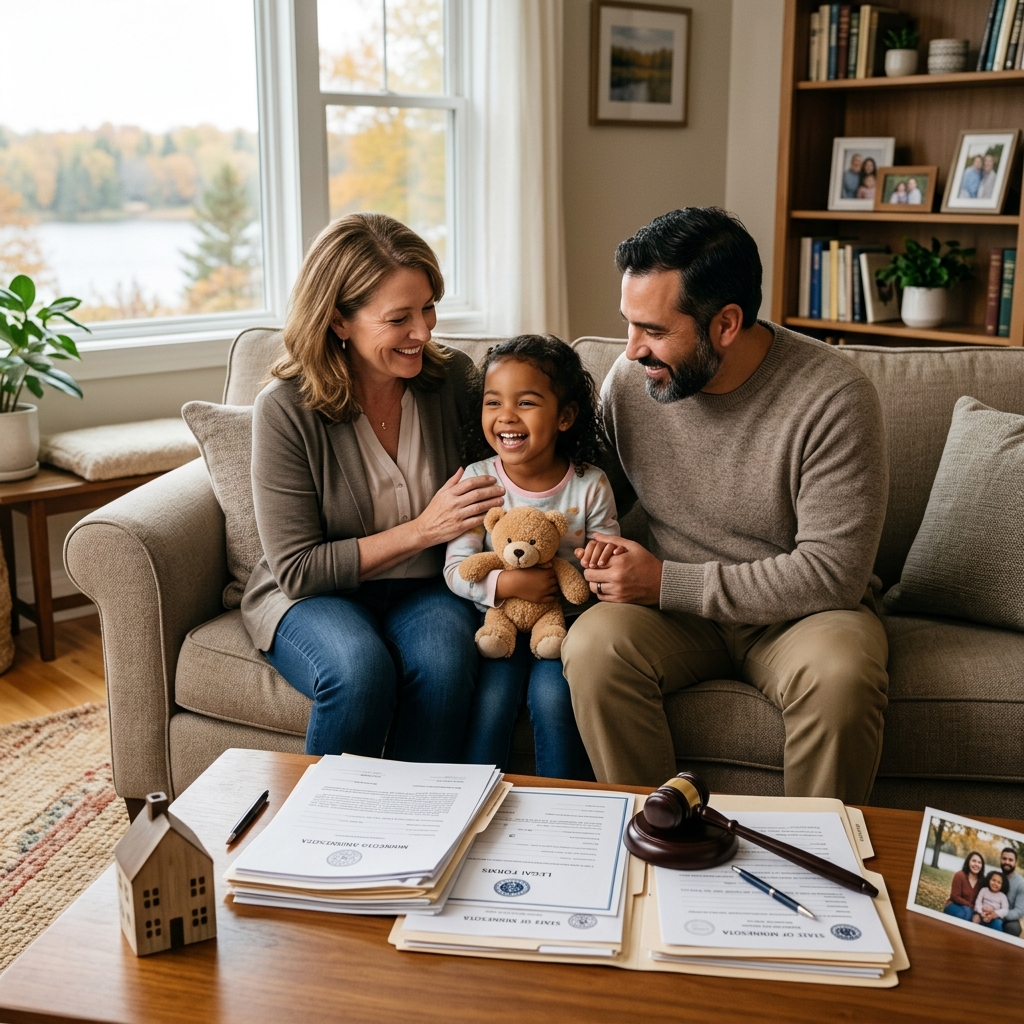
Understanding Minnesota Adoption Law
Adoption in Minnesota is governed by a mix of state statutes, court procedures, and child-welfare principles that focus on the best interests of the child. The process can look different depending on whether the adoption involves a newborn, a stepparent, a relative, or an adult adoptee, but the same basic legal idea applies: a court creates a new legal parent-child relationship and ends the old one.
For families considering adoption, it helps to think of Minnesota law as a framework that answers four core questions: who may adopt, whose consent is required, what steps must happen before finalization, and what rights remain after adoption is complete. Those issues shape the entire process, from the first home study to the final decree.
Who Can Adopt in Minnesota?
Minnesota allows a broad range of people to adopt. Adults age 21 or older may adopt, and the law does not limit adoption to married couples or heterosexual couples. Single adults, unmarried couples, and same-sex couples may also pursue adoption under state law.
Beyond the legal baseline, agencies and private professionals may apply their own screening standards. In practice, that means an applicant who meets the statute may still need to satisfy a home study, safety review, and agency-specific requirements before being approved for placement.
Common eligibility factors
- Age and legal adulthood
- Minnesota residency, when required
- Successful home study approval
- Background screening for adults in the home
- Financial and medical suitability
Residency and Court Flexibility
As a general rule, Minnesota requires prospective adoptive parents to live in the state for one year before adopting. That residency requirement is not always absolute, however. A court may waive or shorten it when doing so serves the child’s best interests.
This flexibility matters in real-life adoption cases. For example, a stepparent adoption, a relative placement, or another child-centered situation may support a request for a residency waiver. The key issue is not rigid formality alone, but whether the adoption will promote stability and permanence for the child.
Consent: The Legal Center of Most Adoptions
Consent is one of the most important parts of Minnesota adoption law. In most cases, a child cannot be adopted without the consent of the child’s parents and any legal guardian, unless an exception applies. Those exceptions include abandonment, lack of legal entitlement to notice, or a prior termination of parental rights.
When a minor parent gives consent, additional safeguards may apply. If an unmarried parent who is under 18 consents to an adoption, the consent of that parent’s own parent or guardian may also be required unless the law excuses it. These rules are designed to make sure the consent is valid, informed, and legally effective.
| Issue | General Minnesota Rule |
|---|---|
| Who must consent | Parents and guardians, unless an exception applies |
| Child consent | Children age 14 or older must generally consent in writing |
| Adult adoption | Only the adult adoptee’s written consent is required |
| Withdrawal period | Consent may generally be withdrawn within ten working days |
Timing rules for birth-parent consent
Where a birth parent is surrendering a child for adoption, the placement cannot occur until at least 72 hours after birth. In addition, written consent generally must be given within 60 days after placement in the adoptive home. The law also gives a limited period to revoke consent, which helps balance finality with the seriousness of the decision.
For adoptions handled through court or agency channels, all consents must be in writing and properly executed. Minnesota law requires the consent to be signed before two competent witnesses and formally acknowledged, which adds legal reliability to the process.
The Home Study and Background Review
Before most adoptions can move forward, prospective parents must complete a home study. This review is more than a paper exercise. It is a structured assessment of the family’s living situation, history, health, finances, and readiness to parent.
The home study typically includes in-home visits, interviews, and multiple background checks. Federal fingerprinting and criminal-history screening are standard parts of the process, and agencies often review medical records and financial records as well. Minnesota adoption law does not require a family to be wealthy, but it does look at whether the household can responsibly meet a child’s needs.
What the review often covers
- Home safety and suitability
- Criminal background checks
- Fingerprint-based screening
- Medical history and current health records
- Income, savings, and basic financial stability
- Interviews about parenting goals and family dynamics
How a Typical Adoption Moves Through the System
While each case is different, many Minnesota adoptions follow a fairly recognizable path. First, the parties develop an adoption plan. Next, the prospective parents complete the home study and background review. After approval, the matching process begins if the adoption is not already based on a known family relationship. Once placement occurs, the child usually lives with the adoptive family during a supervisory period before the court enters a final order.
That process may sound linear, but in practice it often involves overlapping legal and emotional steps. Birth parents may have approval rights depending on how and when they relinquish rights. Agencies may coordinate supervision. Courts may request additional documentation or additional post-placement visits before finalization.
Common stages in sequence
- Develop the adoption plan.
- Complete the home study and screening process.
- Identify or match the child with the adoptive family.
- Transfer custody or place the child in the home.
- Complete post-placement supervision.
- Finalize the adoption in court.
Special Rules for Stepparent and Relative Adoptions
Stepparent adoptions are common in Minnesota because they can stabilize an existing family unit. In these cases, the adopting parent is already part of the child’s daily life, but the law still requires formal steps. The other biological parent’s rights usually must be terminated or legally addressed before the adoption can be granted.
Relative adoptions may also involve modified procedures, especially when the child already lives with family members or when a placement has been arranged informally. Even in those cases, courts still want the record to show consent, proper notices, background review, and proof that the adoption serves the child’s best interests.
Some adoptive parents may request that post-placement assessments be waived in limited circumstances. Whether the court grants that request depends on the facts, the type of adoption, and the child’s needs. Home studies and background checks, however, remain a central safeguard in Minnesota adoption practice.
When the Child’s Consent Matters
Minnesota law gives older children a meaningful voice in the adoption process. A child who is 14 or older must generally provide written consent to the adoption by a particular person. That rule recognizes that adoption changes the child’s legal identity and day-to-day life in a major way.
Children are not treated as passive subjects in every case. Instead, the law reflects a balance between protecting the child and respecting the child’s developing autonomy. The court will still look at the child’s best interests, but the child’s written consent can be an essential part of the final legal record.
Finalization and Post-Placement Supervision
Before a judge finalizes an adoption, the placement usually goes through a post-placement supervision period. During this time, the agency or supervising professional checks in to make sure the child is adjusting well and that the placement is stable. Minnesota commonly uses at least one supervisory visit, and the court may request more if needed.
Once the required supervision is complete and the paperwork is in order, the court can enter the final adoption decree. At that point, the adoptive parents become the child’s legal parents in full, and the prior legal relationship is terminated according to the adoption order.
Support After Placement
Some families may qualify for state assistance after placement, depending on the circumstances of the adoption and the child’s needs. This support is generally not available before placement, so families should not assume that financial assistance is automatic or immediate.
Post-adoption obligations can also include paperwork, counseling, and follow-up tasks. These post-placement responsibilities may be especially important when the adoption was arranged through an agency or when the child’s birth family remains part of a structured adoption plan.
Access to Original Birth Records
Minnesota made an important change to adoptee records law in 2024. Adult adoptees born in Minnesota who are 18 or older may request noncertified copies of their original birth records. Under the updated rule, access is no longer controlled by the birth parent’s disclosure preference.
This change matters because original birth records often play a major role in identity, family history, and medical genealogy. For eligible adoptees, the law creates a clearer path to obtaining records that were historically difficult to access.
Questions Families Often Ask
Adoption raises practical questions that do not always fit neatly into a statute. Families often want to know whether marriage is required, whether both spouses must adopt together, how long the process takes, and whether an older child has to agree. Minnesota law answers some of these questions directly, while others depend on agency practice or the judge handling the case.
FAQs
Do you have to be married to adopt in Minnesota?
No. Minnesota allows single adults to adopt, and the law also permits unmarried couples and same-sex couples to adopt.
Is there a minimum age to adopt?
State law allows people age 21 and older to adopt. Agencies may set their own practical age standards for applicants.
Can a parent change their mind after consenting?
Yes, but only for a limited period. Minnesota law generally permits withdrawal of consent within ten working days after it is executed and acknowledged.
Does a child have to agree to the adoption?
If the child is 14 or older, written consent is generally required for the adoption by a particular person.
Can adult adoptees get their original birth records?
Yes. Minnesota law now allows eligible adult adoptees born in the state to request original birth records directly.
Practical Takeaways for Prospective Adoptive Parents
- Start with residency, age, and family-status eligibility.
- Expect a formal home study and background screening.
- Plan carefully for consent, especially if a parent is relinquishing rights.
- Remember that child consent may be required at age 14 or older.
- Prepare for post-placement supervision before finalization.
- Consider how record access and post-adoption contact may affect the family long term.
Because adoption combines legal, emotional, and practical concerns, families usually benefit from early preparation and careful documentation. Minnesota’s rules are designed to protect children, but they also create a structured path for building a permanent legal family.
References
- Minnesota Adoption Laws — FindLaw. 2026-07-09. https://www.findlaw.com/state/minnesota-law/minnesota-adoption-laws.html
- Sec. 259.24 Adoption; consent of parents — Minnesota Revisor’s Office. 2026-07-09. https://www.revisor.mn.gov/statutes/cite/259.24
- Adoption — Minnesota Judicial Branch. 2026-07-09. https://mncourts.gov/help-topics/adoption
- Birth Records and Adoption — Minnesota Department of Health. 2026-07-09. https://www.health.state.mn.us/people/vitalrecords/adoption.html
- Getting Started – Adoption — Minnesota State Law Library. 2026-07-09. https://mncourts.libguides.com/adoption
Similar Articles








Read full bio of Sneha Tete


