
Michigan Vehicle Searches: Passenger Privacy and Police Limits
Understanding when Michigan police can search cars, bags, and passengers—and how a key Supreme Court decision reshaped vehicle search rules.
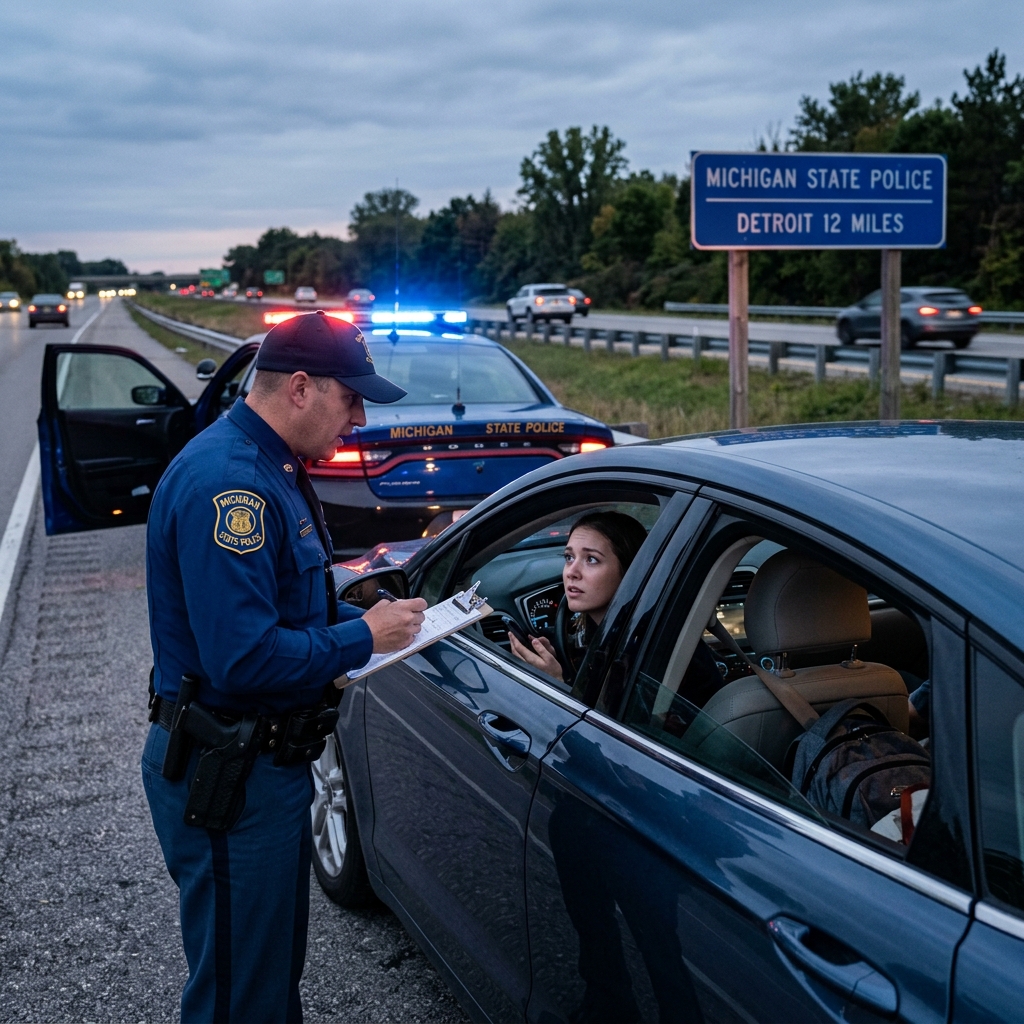
Traffic stops are stressful, especially when an officer asks to search the car or your belongings. In Michigan, a major state Supreme Court decision reshaped what police can and cannot search when you are a passenger in a vehicle. This article explains those rules in plain language, focusing on consent, privacy expectations, and how a landmark case, People v. Mead, limits police authority over your personal property.
1. The Legal Foundation: Fourth Amendment and Michigan Law
The starting point is the Fourth Amendment to the U.S. Constitution, which protects people against unreasonable searches and seizures. Generally, police must have a warrant issued by a judge, supported by probable cause, before they search someone or their property.
However, over time courts have recognized several exceptions to the warrant requirement, especially in the context of cars, where mobility and public safety concerns are higher.
1.1 Common exceptions to the warrant requirement
- Consent: You voluntarily allow officers to search you, your vehicle, or your belongings.
- Probable cause (automobile exception): Officers have a strong factual basis to believe the vehicle contains evidence of a crime, contraband, or weapons.
- Search incident to arrest: After a lawful arrest, police may search the arrestee and certain nearby areas for weapons or evidence.
- Plain view: Officers may seize illegal items clearly visible from a lawful vantage point, such as drugs on a seat.
- Exigent circumstances: Emergency situations where waiting for a warrant could risk public safety or destruction of evidence.
- Inventory search: When a vehicle is lawfully impounded, police may conduct a standardized inventory search.
These exceptions apply in Michigan just as they do in other states, but recent Michigan Supreme Court decisions refine how they work when passengers and their belongings are involved.
2. Vehicles Versus Personal Property: Different Privacy Levels
Court decisions draw a sharp line between the vehicle itself and the personal property inside it. A person usually has less privacy in a car than in a home, but still retains privacy in certain items, such as backpacks, purses, and luggage.
2.1 Reasonable expectation of privacy
To claim Fourth Amendment protection, a person must show a legitimate expectation of privacy in the place or item searched. That expectation must also be one that society is willing to treat as reasonable.
- Passengers typically do not have a strong privacy interest in a driver’s vehicle because they do not own or control it.
- Passengers do have a recognized privacy interest in clearly personal items, such as their own backpack or purse, even when those items are inside someone else’s car.
This distinction is central to understanding why the Michigan Supreme Court changed course in 2019.
3. Before and After: How People v. Mead Changed Michigan Law
For years, Michigan followed a rule from an earlier case, People v. LaBelle, which said that passengers generally could not challenge a search of a vehicle they were riding in. That rule made it harder for passengers to suppress evidence found during a vehicle search, even when the evidence came from their own belongings.
In 2019, the Michigan Supreme Court decided People v. Mead, a case involving a backpack belonging to a passenger in a vehicle. The Court unanimously held that a passenger can challenge the search of personal property inside the vehicle and that the driver’s consent is not enough to authorize a search of the passenger’s bag.
3.1 Key holdings from People v. Mead
- LaBelle overruled: The Court explicitly rejected its earlier approach that blocked many passenger challenges.
- Passenger privacy confirmed: A passenger has a legitimate and reasonable expectation of privacy in a personal backpack located inside the car.
- Driver consent limited: A driver’s consent does not automatically extend to personal items belonging to a passenger.
- Search unconstitutional: The warrantless search of the passenger’s backpack violated his Fourth Amendment rights, and the drug evidence should have been suppressed.
The Court emphasized that a person does not “leave their Fourth Amendment rights at the curb” by stepping into someone else’s vehicle. That line has now become a guiding principle for passenger searches in the state.
4. Consent Searches in Michigan: Who Can Say Yes?
Consent is one of the most common ways police obtain permission to search vehicles because it avoids the need for a warrant or probable cause. However, not everyone can consent to a search of everything in a car.
4.1 Actual and apparent authority
Courts look at whether the person giving consent had:
- Actual authority: Real, lawful control over the area or item, such as the owner of the vehicle or the owner of a particular bag.
- Apparent authority: A situation where an officer reasonably (but perhaps mistakenly) believes the person has authority over the property, based on available facts.
In Mead, the Michigan Supreme Court concluded that the driver did not have actual or apparent authority over the passenger’s backpack, particularly because the driver and passenger had only just met and the bag clearly belonged to the passenger.
4.2 Practical implications for traffic stops
| Scenario | Who can consent? | Likely scope of legal search |
|---|---|---|
| Driver consents; passenger says nothing | Driver | Vehicle areas under driver’s control (e.g., glove box), but not clearly personal passenger items like a backpack. |
| Passenger clearly owns a bag | Passenger (for their bag) | Police must obtain passenger’s consent or have another legal basis to search that bag. |
| Shared container (e.g., open box on back seat) | Possibly driver or owner of box | Fact-specific; officers must reasonably believe the person consenting has authority over the container. |
| Probable cause to believe car contains drugs | No consent needed | Police may search areas and containers where the drugs could be hidden, subject to Fourth Amendment limits. |
5. Passenger Rights During a Michigan Traffic Stop
Even as a passenger, you retain important rights. Understanding them can help you respond calmly and avoid unintentionally waiving your protections.
5.1 You can refuse consent to search your belongings
Unless officers have a warrant, probable cause, or another valid exception, you generally have the right to say, “I do not consent to a search of my belongings.” This includes backpacks, purses, briefcases, and similar containers.
Key points:
- Your refusal does not give officers a lawful basis to arrest you.
- Officers may still search if they have independent legal grounds (e.g., probable cause).
- Consent must be voluntary; it cannot be obtained through threats or coercion.
5.2 You may challenge an unlawful search later
If police search your property without valid consent or legal justification, your attorney can later ask a court to suppress the evidence, arguing that it was obtained in violation of the Fourth Amendment.
In Mead, the Michigan Supreme Court held that the drug evidence found in the passenger’s backpack should have been suppressed for exactly this reason.
5.3 Clarifying your privacy interest
Because courts examine whether you had a legitimate expectation of privacy, it can be helpful—if safe—to make it clear that a particular item belongs to you. For example:
- “That backpack is mine, and I do not consent to its search.”
- “This purse belongs to me, not the driver, and I do not consent.”
While you are not required to explain ownership, clearly identifying your property may reduce later disputes about who had authority to consent.
6. How Police Powers Are Limited After Mead
People v. Mead did not eliminate police ability to search vehicles, but it placed meaningful limits on searches of passenger property and clarified that driver consent is not a catch-all.
6.1 Limits recognized by the Michigan Supreme Court
- Officers cannot rely on a driver’s consent to justify searching a passenger’s personal bags when the driver lacks authority over them.
- Officers must consider whether a reasonable person would view the driver as having control over the passenger’s property.
- When facts show a clear boundary—such as a passenger’s closed backpack—officers must obtain consent from the owner or meet another legal standard.
State legal updates now reflect this principle, describing driver consent as invalid when it purports to cover third-party property without actual or apparent authority.
6.2 Interaction with other exceptions
Even after Mead, some circumstances still allow a search of passenger belongings without their consent:
- Probable cause that a specific container holds evidence of a crime.
- Search incident to arrest if the passenger is lawfully arrested and the container is within their immediate reach, subject to federal and state limits.
- Impound inventory if the car is lawfully impounded and an inventory search follows standardized procedures.
However, in the absence of these factors, officers are generally required to respect the passenger’s refusal of consent.
7. Practical Tips for Passengers in Michigan
Knowing the law is helpful, but it is equally important to think about how to handle real-life encounters respectfully and safely.
7.1 During the stop
- Stay calm and avoid sudden movements.
- Keep your hands visible unless instructed otherwise.
- Provide identification if required, consistent with local law and the officer’s lawful requests.
- Listen carefully to what the officer is asking—especially when they mention a search.
7.2 If an officer asks to search
You can respond in a firm but polite way:
- “I do not consent to any search of my belongings.”
- “That bag belongs to me, and I do not agree to a search.”
Avoid arguing on the roadside about whether a search is legal. If officers choose to proceed anyway, your disagreement can be raised later in court. Remaining non-confrontational is critical for your safety.
7.3 After the incident
- Write down details as soon as you can: time, location, officer names or badge numbers, and what was said.
- If you are charged with a crime, tell your attorney that you did not consent to the search and describe what happened.
- Your lawyer can evaluate whether a motion to suppress evidence is appropriate based on the facts and the law, including Mead.
8. Frequently Asked Questions (FAQs)
8.1 Can Michigan police search a passenger’s backpack if the driver says yes?
Generally, no. Under People v. Mead, a driver’s consent by itself is not enough to authorize a search of a passenger’s clearly personal backpack when the driver lacks authority over it. Police must either obtain the passenger’s consent or have some other lawful basis for the search.
8.2 Does a passenger have any privacy rights in the car itself?
Typically, a passenger does not have a strong expectation of privacy in someone else’s car, which limits their ability to challenge a search of the vehicle itself. However, the passenger does have privacy rights in their own personal property, like bags or purses, inside the car.
8.3 If I refuse consent, will that make me look guilty?
Refusing consent does not legally equal an admission of guilt and does not, by itself, create grounds for an arrest. Courts recognize that people may simply wish to exercise their constitutional rights.
8.4 Can officers search all containers in the car if they have probable cause?
When officers have probable cause that the vehicle contains evidence of a crime, they may search areas and containers where that evidence could logically be hidden, subject to Fourth Amendment limitations and Michigan case law. However, disputes can arise when containers clearly belong to a passenger, and courts will examine the facts closely.
8.5 Does Mead affect searches incident to arrest or inventory searches?
Mead specifically addressed consent and passenger property, not every type of vehicle search. Searches incident to arrest and standardized inventory searches remain governed by separate rules, though officers must still comply with constitutional limits and Michigan’s legal updates.
9. Why This Case Matters Beyond One Traffic Stop
People v. Mead is part of a broader trend of courts scrutinizing how far police may go when searching personal items—especially in mobile and digital contexts. Michigan’s own legal updates now highlight that consent by someone without authority over an item is invalid, reinforcing that the person who owns the property typically controls whether it may be searched.
For passengers, the message is clear:
- You carry your Fourth Amendment rights with you when you get into someone else’s car.
- Your personal bags are not automatically open to police inspection just because the driver said “yes.”
- Knowing how to assert your rights calmly and clearly may make a decisive difference if a case ever reaches court.
For drivers and officers, the decision underscores the importance of understanding who has authority over what property and of respecting the distinction between the vehicle and the personal items of its occupants.
References
- Mich. Supreme Court changes rule for vehicle searches — Michigan Public Radio. 2019-04-23. https://www.michiganpublic.org/law/2019-04-23/mich-supreme-court-changes-rule-for-vehicle-searches
- Officer Needed Vehicle Passenger’s Consent Before Searching His Backpack — Speaker Law Firm (case summary of People v. Mead). 2019-05-01. https://www.speakerlaw.com/blog/officer-needed-vehicle-passengers-consent-before-searching-his-backpack
- Can Police Search My Car Without a Warrant in Michigan? — White Law PLLC. 2023-06-15 (approx. last updated). https://www.whitelawpllc.com/faqs/can-police-search-car-without-warrant-michigan/
- Does Michigan Have a Stop and Identify Law? Know Your Rights — Perry & Young, PLC (Michigan criminal defense guide). 2022-11-10 (approx. last updated). https://attorneyperryman.com/blog/what-are-my-rights-during-a-police-search-in-michigan/
- Legal Updates — Michigan State Police. Various dates. https://www.michigan.gov/msp/le/legal-resources/legal-update
Similar Articles








Read full bio of Sneha Tete




