
Michigan Senior Driving Regulations Guide
Essential guide to Michigan's driving rules for seniors, covering renewals, restrictions, and safety measures for older motorists.
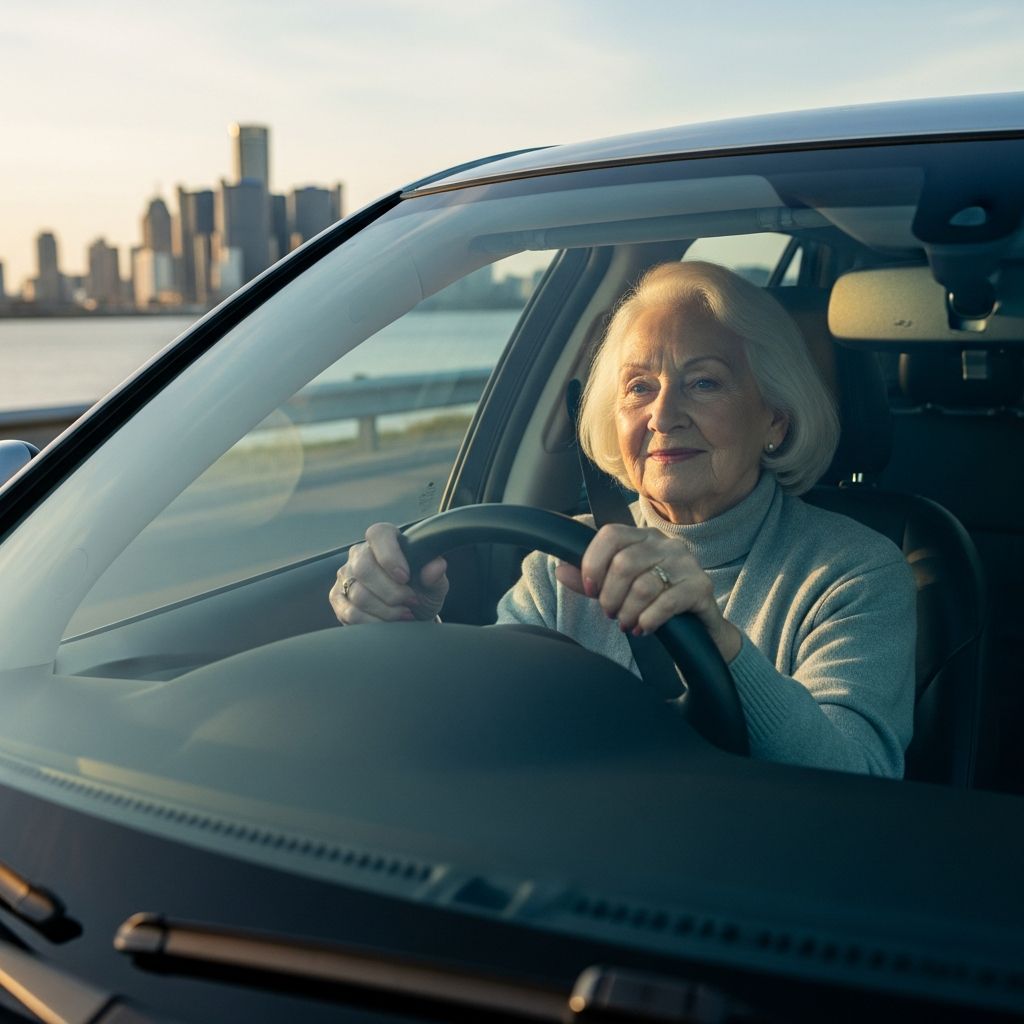
Michigan maintains uniform driving regulations across all age groups, ensuring that seniors enjoy the same licensing standards as younger drivers while prioritizing road safety through targeted assessments when necessary.
Understanding Michigan’s Approach to Aging Motorists
The state’s framework emphasizes individual capability over chronological age. With over 1.2 million licensed drivers aged 65 and older—a figure projected to make up one in five drivers by 2025—Michoigan’s policies support independence while addressing potential impairments. No automatic license revocation occurs at a specific age, distinguishing Michigan from states with stricter senior mandates.
This equitable system relies on evidence-based interventions. The Michigan Secretary of State (SOS) monitors driving fitness through crash data, medical reports, and public input, intervening only when safety risks are evident. Such measures help older adults continue driving responsibly, reducing accident rates linked to age-related conditions like diminished vision or slower reflexes.
License Renewal Procedures for Older Drivers
All Michigan driver’s licenses, including standard, Real ID-compliant, and enhanced versions, expire every four years on the holder’s birthday. Seniors follow identical renewal protocols: applications can be submitted up to one year prior or four years post-expiration, though late fees apply beyond the deadline.
Renewals occur online, by mail, or in person at branch offices, with no age-specific barriers like mandatory in-person visits or additional tests solely due to age. This flexibility accommodates varying mobility needs. However, the SOS may require vision screenings or other evaluations if prior records indicate concerns.
| Renewal Aspect | Details for All Drivers (Including Seniors) | Age-Specific Notes |
|---|---|---|
| Frequency | Every 4 years | None |
| Methods | Online, mail, in-person | Available to all |
| Expiration Grace | Up to 4 years late | Late fees apply equally |
| Required Tests | None by default | Only if safety flagged |
This table highlights the uniformity, promoting accessibility for seniors.
When Reexaminations Become Necessary
Michigan law empowers the SOS to mandate reexaminations under specific circumstances, not tied to age alone. Triggers include reasonable suspicion of physical or mental conditions impairing safe operation, involvement in a fatal crash, or at-fault responsibility in three or more injury/property damage incidents within 24 months.
- Medical Triggers: Conditions like dementia, severe vision loss, or epilepsy that could unpredictably affect control.
- Crash History: Multiple at-fault accidents signaling potential incompetence.
- Point Accumulation: 12+ points on record in two years or violations of existing restrictions.
Reexams may encompass vision tests, written knowledge assessments, and road skills evaluations. Outcomes range from license approval to restrictions, suspension, or revocation, always grounded in demonstrated ability.
Common License Restrictions for Senior Drivers
To enhance safety without outright denial, the SOS frequently imposes tailored restrictions. These are determined post-evaluation and can be adjusted as conditions improve.
- No driving on freeways or high-speed roads to minimize complex navigation demands.
- Daylight-only operation, avoiding low-visibility nighttime conditions.
- Mandatory corrective lenses or bioptic telescopic devices for vision correction.
- Geographic limits, such as city boundaries, reducing long-distance travel risks.
- Vehicle modifications like extra mirrors, supportive seating, or speed governors.
- Time-based curbs, e.g., no rush-hour driving to dodge heavy traffic.
These measures allow many seniors to retain mobility while mitigating hazards. Drivers must comply or face further penalties.
Reporting Concerns About Unsafe Senior Drivers
Family, physicians, law enforcement, and others can request SOS reviews of potentially unsafe drivers. Reports must include the submitter’s contact details—anonymous tips are not accepted—but confidentiality is protected by law.
Healthcare providers hold special authority: doctors and optometrists may report patients at risk of “episodes” (e.g., seizures) and recommend suspension periods of at least six months. Such reports prompt SOS investigations, integrating medical evidence into fitness determinations.
To file:
- Gather evidence like crash reports, observed behaviors, or medical notes.
- Submit via SOS online form, mail, or phone, specifying concerns.
- Await investigation, which may involve notifying the driver for reexam.
This proactive system balances privacy with public safety.
Medical Reporting and Professional Responsibilities
Michigan statutes encourage healthcare professionals to flag driving risks. Under MCL 333.5139, providers diagnosing disqualifying conditions must notify the SOS and advise patients/third parties. This includes progressive issues like macular degeneration or cognitive decline.
The SOS incorporates these reports into holistic reviews, potentially requiring medical clearances for license reinstatement. Seniors benefit from early interventions, such as adaptive training or alternative transport planning.
Resources and Self-Assessment Tools for Aging Drivers
Michigan offers robust support via Michigan.gov/AgingDriver, featuring Michigan’s Guide for Aging Drivers and Their Families. This resource details self-review techniques, vision checks, and mobility alternatives like paratransit or rideshares.
Key tools include:
- Online maturity driver screening quizzes.
- Lists of local occupational therapy driving rehab programs.
- Guides to vehicle adaptations and compensatory strategies (e.g., advanced GPS use).
- Family discussion prompts for voluntary license surrender.
Secretary of State Jocelyn Benson promotes these for sustained independence.
Federal Influences and Michigan Compliance in 2026
While Michigan resists age-based mandates, national trends loom. A purported U.S. DOT framework from January 2026 introduces periodic vision/reaction tests for those 70+, though implementation varies by state. Michigan aligns by enhancing existing SOS protocols rather than adopting blanket rules, focusing on individualized safety.
| Federal Proposal (2026) | Michigan Current Practice |
|---|---|
| Vision exam every 2 years (70+) | As needed, not routine |
| Reaction test every 3 years (75+) | Triggered by concerns |
| Refresher courses (80+) | Optional via resources |
Michigan’s targeted approach may preempt broader federal impositions.
Maintaining Safe Driving Habits as a Senior
Beyond regulations, personal strategies extend driving lifespans. Regular eye exams, medication reviews for drowsiness, and practice in challenging scenarios (e.g., parking lots) are vital. Join AARP Smart Driver courses for skill refreshers, often insuring discounts.
Avoid high-risk situations: plan trips during peak visibility, use mirrors proactively, and yield in intersections. Monitor for subtle declines like hesitation at yields or near-misses.
Alternatives to Driving for Michigan Seniors
When driving ends, options abound:
- Public Transit: SMART buses, DDOT in Detroit.
- Rideshares: Uber/Lyft senior discounts.
- Community Shuttles: Area Agency on Aging programs.
- Volunteer Drivers: ITN and faith-based networks.
Planning ahead preserves dignity and connectivity.
Frequently Asked Questions (FAQs)
Does Michigan revoke licenses at age 70 or 85?
No, age alone never triggers revocation; evaluations stem from safety evidence.
Can seniors renew licenses online?
Yes, like all drivers, with no age restrictions on methods.
What triggers a driving retest for seniors?
Medical doubts, fatal crashes, or multiple at-fault incidents.
Who can report an unsafe older driver?
Family, doctors, police—non-anonymous reports confidentially handled.
Are there mandatory vision tests for renewal?
Not routinely, only if concerns arise.
What restrictions might seniors face?
No night/freeway driving, mirrors, geographic limits.
References
- Michigan Driving Laws for Seniors and Older Drivers — Nolo. Accessed 2026. https://www.nolo.com/legal-encyclopedia/michigan-driving-laws-seniors-older-drivers.html
- Michigan Elderly Driving Laws: What You Need To Know — Michigan Auto Law. 2025-08-13. https://www.michiganautolaw.com/blog/2025/08/13/michigan-elderly-driving-laws/
- Important Driving Changes Every Driver Over 70 Must Know — Aspenchola. Accessed 2026. https://www.aspenchola.com/important-driving-changes-every-driver-over-70-must-know-with-new-u-s-driving-license-rule-for-seniors-beginning-january-1-2026/
- Michigan’s Guide for Aging Drivers and Their Families — Michigan.gov. Accessed 2026. https://www.michigan.gov/agingdriver/michigans-guide-for-aging-drivers-and-their-families
- Secretary Benson Shares Resources to Support Safety and Independence — Michigan.gov SOS. 2025-12-01. https://www.michigan.gov/sos/resources/news/2025/12/01/secretary-benson-shares-resources-to-support-safety-and-independence
Similar Articles








Read full bio of medha deb


