
A New Era for Justice: Michigan’s Reformist Prosecutors
How progressive prosecutors are reshaping Michigan’s criminal justice system.
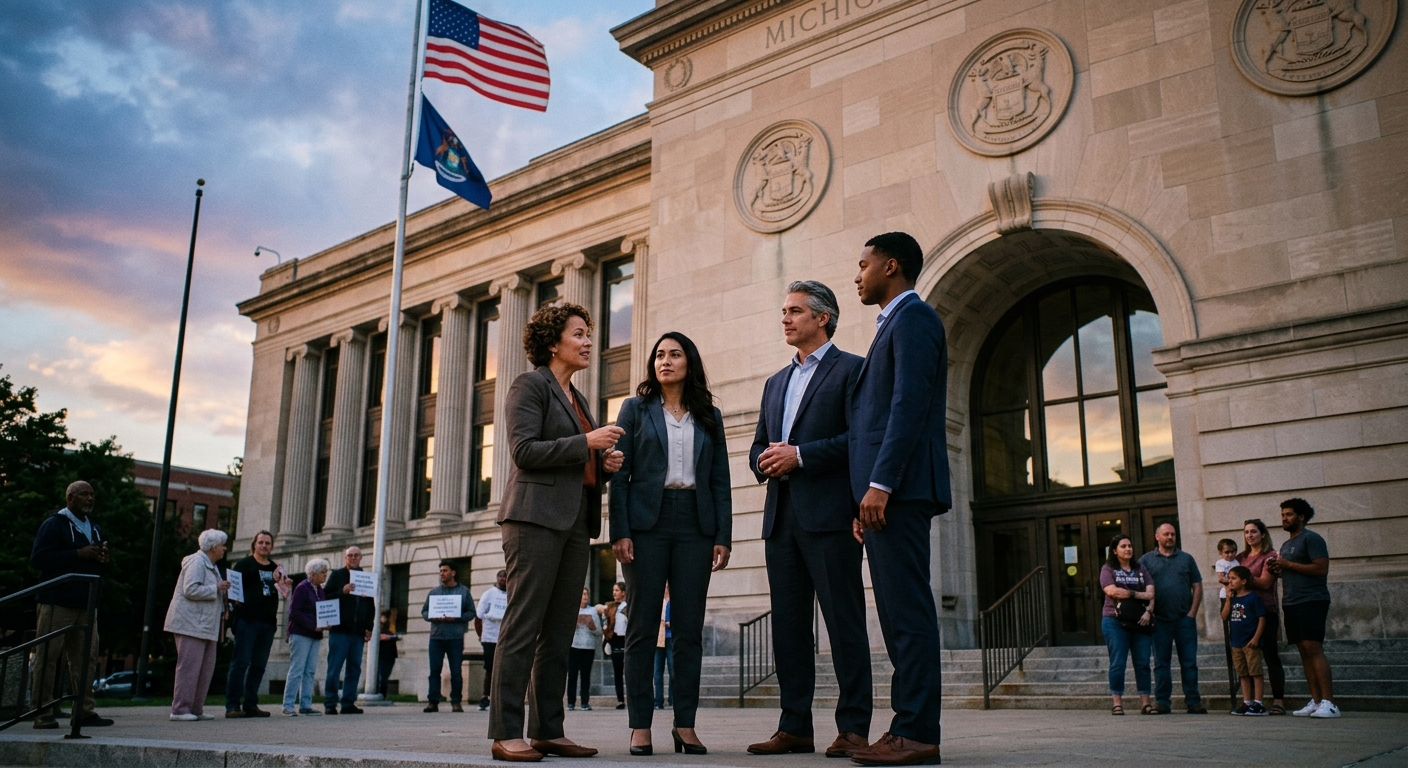
For decades, the American criminal justice system has operated under a straightforward, albeit deeply flawed, paradigm: the stricter the punishment, the safer the community. This “tough on crime” ethos permeated every level of law enforcement, but nowhere was it more deeply entrenched than in the offices of local district attorneys. As the chief decision-makers regarding criminal charges, bail recommendations, and plea negotiations, prosecutors have historically leveraged their immense discretionary power to maximize convictions and lengthen sentences. However, a seismic shift is currently underway across the United States. Voters are increasingly demanding a profound departure from the punitive models of the past, opting instead to elect reform-minded leaders committed to systemic overhaul.
Michigan has recently emerged as a pivotal battleground—and a beacon of success—for this progressive wave. Recent elections in the state demonstrate that the electorate is hungry for policies that prioritize fairness, rehabilitation, and the eradication of racial bias over mere incarceration metrics. By redefining what it means to seek justice, these newly elected officials are transforming the legal landscape and offering a blueprint for nationwide reform.
The Unchecked Power of the Prosecutor
To fully grasp the significance of these electoral shifts, one must first understand the unparalleled authority vested in a county prosecutor. While judges and police officers are highly visible figures in the criminal legal apparatus, it is the prosecutor who acts as the ultimate gatekeeper of the system. From the exact moment an individual is arrested, the prosecutor unilaterally decides whether to formally file charges, what specific criminal offenses to allege, and whether to try a defendant as an adult or a juvenile.
Crucially, they also determine whether to recommend pretrial detention or offer diversionary programs that can keep individuals out of the prison pipeline entirely. Because upwards of ninety percent of criminal cases in the United States are resolved through plea bargains rather than jury trials, prosecutors effectively serve as both judge and jury in the vast majority of instances. For generations, this unchecked discretion was largely utilized to fuel mass incarceration. Traditional prosecutors often sought the maximum possible penalties to build political capital as uncompromising enforcers of the law.
This aggressive approach not only bloated local jail and state prison populations but also disproportionately ravaged marginalized communities. Today, however, the newly elected wave of reformist prosecutors is using this exact same discretionary power to reverse engineer the carceral state. By instituting internal office policies that decline to prosecute low-level, non-violent offenses, and by actively fighting against systemic inequities, these leaders are proving that the prosecutor’s office can be a powerful engine for social justice rather than a simple tool of oppression.
Dismantling the “Tough on Crime” Legacy
The repudiation of traditional prosecutorial methods in places like Michigan is not simply a matter of changing political tastes; it is a direct, urgent response to the documented failures of the “jail-first” mentality. For years, entrenched incumbents oversaw systems plagued by glaring racial disparities and a staggering overreliance on incarceration. In many major midwestern counties, Black and Latino residents have historically been arrested, charged, and jailed at rates exponentially higher than their white counterparts, even when accounting for overall population demographics.
Furthermore, the old guard often actively resisted directives meant to inject basic humanity into the justice system. A prime example is the handling of juvenile offenders. Even after the United States Supreme Court ruled in Miller v. Alabama that mandatory life sentences without the possibility of parole for juveniles constituted cruel and unusual punishment, many traditional prosecutors continued to advocate for keeping these individuals permanently locked away. They routinely classified almost every juvenile case as an extreme exception to bypass the spirit of the Supreme Court’s ruling, ensuring that young offenders remained incarcerated for life.
The public’s rejection of these draconian stances signifies a growing awareness of the devastating human and financial costs of mass incarceration. Voters are realizing that saddling individuals with lifelong criminal records for minor offenses, or locking away youth without any hope of redemption or rehabilitation, does not fundamentally improve public safety. Instead, it fractures families, destabilizes communities, and perpetuates a vicious cycle of poverty and crime. The ousting of long-term, punitive incumbents in favor of challengers who promise a more compassionate, evidence-based approach marks a definitive end to the era where raw conviction rates were the sole metric of a prosecutor’s success.
Core Pillars of the Modern Reform Movement
The platform of a modern reformist prosecutor is fundamentally different from that of their predecessors. It is built on several key pillars designed to dismantle structural inequality and promote long-term, holistic community wellness.
Ending the Cash Bail Trap
Perhaps the most universally championed cause among progressive prosecutors is the elimination of cash bail. For decades, the money bail system has effectively criminalized poverty, allowing wealthy defendants to purchase their pretrial freedom while low-income individuals languish in jail cells for weeks or months awaiting trial. Federal civil rights commissions have noted that a significant majority of pretrial detainees are held simply because they cannot afford bail, leading to devastating collateral consequences such as job loss, eviction, and forced family separation. Reformist prosecutors are shifting their offices away from requesting cash bail, instead advocating for risk-based assessments that only detain those who pose a genuine flight risk or a direct, imminent threat to public safety.
Prioritizing Diversion and Rehabilitation
Rather than responding to substance use disorders and mental health crises with handcuffs and jail time, the new generation of prosecutors advocates for treating these complex issues as public health challenges. By greatly expanding diversion programs, these leaders aim to route non-violent offenders into treatment centers, counseling, and community service. This approach not only preserves critical space in county jails for actual violent offenders but also addresses the root causes of criminal behavior, significantly lowering the rates of subsequent recidivism.
Ensuring Law Enforcement Accountability
A functioning, healthy justice system requires the unwavering trust of the community it serves. To build and maintain this trust, reformist prosecutors have made police accountability a core cornerstone of their administrations. This involves establishing specialized, independent units to thoroughly investigate officer-involved shootings, refusing to accept testimony from law enforcement officers with known histories of perjury or excessive force, and demanding total transparency in the evidence-gathering process. By explicitly holding law enforcement to the highest ethical and legal standards, these prosecutors are sending a clear, uncompromising message that no one is above the law.
The Economic Case for Smart Justice
Beyond the moral and ethical imperatives of reforming the criminal legal system, there is a profound economic argument that resonates across the political spectrum. Mass incarceration is an extraordinarily expensive and inefficient endeavor. Taxpayers bear the brunt of funding sprawling county jails, state penitentiaries, and the massive bureaucratic infrastructure required to maintain them. The average cost to house an individual in a county jail often exceeds a hundred dollars per day, translating to tens of thousands of dollars annually per person. When these facilities are filled with individuals detained on low-level, non-violent charges—or those simply unable to afford a few hundred dollars in bail—the financial waste is staggering.
Reformist prosecutors recognize that these public funds could be exponentially more effective if reallocated toward community-based initiatives. By actively reducing the pretrial detention population, counties can save millions of dollars in daily operational costs. These savings can then be reinvested into robust diversion programs, mental health treatment facilities, public education, and affordable housing initiatives. Furthermore, when non-violent offenders are kept out of jail, they are able to maintain their current employment, pay taxes, and support their families. This directly prevents the downstream economic fallout that occurs when a family loses its primary breadwinner to the carceral system. Consequently, the shift toward progressive prosecution is not merely a crusade for civil rights; it is a highly pragmatic, fiscally responsible strategy aimed at promoting widespread community prosperity.
Case Studies: The Shifting Political Map
The theoretical appeal of this progressive agenda was put to the ultimate test during recent primary and general elections across the Midwest’s most populous regions. The results delivered a resounding mandate for systemic change. In counties that serve as vital economic and cultural hubs, voters decisively turned their backs on decades of the status quo.
Consider the political upheaval in areas historically dominated by tough-on-crime rhetoric. Incumbents who proudly boasted about high conviction rates, aggressive prosecution of minor drug offenses, and a general lack of departmental transparency suddenly found themselves facing highly organized, aggressive grassroots campaigns. Challengers ran unapologetically on platforms that sounded more like civil rights manifestos than traditional law enforcement pitches. They promised to end cash bail, establish robust restorative justice programs, and proactively audit past convictions for racial bias and prosecutorial misconduct.
The margins of victory in these races were not narrow; they were overwhelming repudiations of the past. Progressive challengers frequently secured absolute majorities, proving that criminal justice reform is no longer a fringe political issue but a central demand of the mainstream electorate. The success of these candidates serves as a blueprint for organizers nationwide, proving that educating voters on the specific, unique powers of the prosecutor can yield incredibly transformative electoral outcomes.
Overcoming Resistance and Sustaining Momentum
Despite clear electoral mandates, the path forward for these reformist prosecutors is fraught with severe institutional challenges. The moment they take office, they frequently face intense pushback from police unions, conservative judges, and even veteran attorneys within their own ranks who are accustomed to the old ways of operating. Critics often attempt to weaponize any localized, temporary uptick in crime against these new policies, peddling fear-based narratives that falsely equate reform with lawlessness.
However, empirical evidence and academic research continually suggest that the traditional punitive model was highly ineffective at generating lasting, sustainable public safety. Evaluating the true impact of progressive prosecutors requires looking far beyond immediate arrest rates and examining holistic community health metrics over time. By persisting through the intense political backlash, these prosecutors are beginning to generate concrete data that supports their methodologies: significantly lower jail populations reduce the heavy financial burden on taxpayers, while robust diversion programs yield citizens who remain employed, housed, and constructively engaged in their local communities.
Conclusion: A Blueprint for the Future
The recent wave of progressive prosecutorial victories represents much more than a routine change in political administration; it is a fundamental redefinition of what justice truly looks like in America. By thoroughly rejecting the punitive, mass-incarceration models of the past, voters have clearly signaled a deep desire for a system that heals rather than harms. As these newly elected officials continue to aggressively implement their platforms—ending the injustice of cash bail, holding police accountable, and treating addiction as the health crisis it is—they are firmly laying the groundwork for a much more equitable future. The eyes of the nation remain intently focused on these localized laboratories of democracy, watching closely as the hopeful promises of the campaign trail finally translate into the realities of a fairer, more compassionate legal system.
Frequently Asked Questions (FAQs)
What exactly is a progressive prosecutor?
A progressive prosecutor is a district attorney or local chief prosecutor who intentionally utilizes their vast discretionary power to reduce mass incarceration, eliminate structural racial disparities, and heavily promote alternatives to jail time. This often includes implementing mental health and substance abuse diversion programs rather than pursuing maximum prison sentences.
How does the cash bail system negatively affect local communities?
The cash bail system disproportionately impacts low-income individuals, forcing them to remain locked in jail cells while awaiting trial simply because they cannot afford to pay for their release. This prolonged pretrial detention frequently leads to job loss, housing instability, and forced guilty plea deals by those desperate to go home. Eliminating cash bail aims to ensure that pre-trial freedom is based entirely on public safety, not personal wealth.
Why is the prosecutor’s role so uniquely important in criminal justice reform?
Prosecutors hold immense, largely unchecked power within the legal system. They independently decide whether to bring charges, what specific crimes to charge, and what plea deals to offer defendants. Because the vast majority of criminal cases end in plea bargains rather than trials, the prosecutor’s internal office policies directly dictate the size of jail populations and the overall fairness of the entire justice system.
References
- The Civil Rights Implications of Cash Bail — U.S. Commission on Civil Rights. 2022-01-20. https://www.usccr.gov/news/2022/us-commission-civil-rights-releases-report-civil-rights-implications-cash-bail
- Miller v. Alabama — Oyez / Supreme Court of the United States. 2012-06-25. https://www.oyez.org/cases/2011/10-9646
- Federal Sentencing Disparity: 2005-2012 — Bureau of Justice Statistics. 2015-10-22. https://bjs.ojp.gov/library/publications/federal-sentencing-disparity-2005-2012
- “Progressive” Prosecutors and “Proper” Punishments — Washington University in St. Louis Scholarly Repository / Benjamin Levin. 2023-01-01. https://openscholarship.wustl.edu/law_scholarship/394
Similar Articles








Read full bio of Sneha Tete


