
Mental Illness, Divorce, and Child Custody
How mental health conditions influence divorce, money, and parenting decisions—and what you can expect in court.
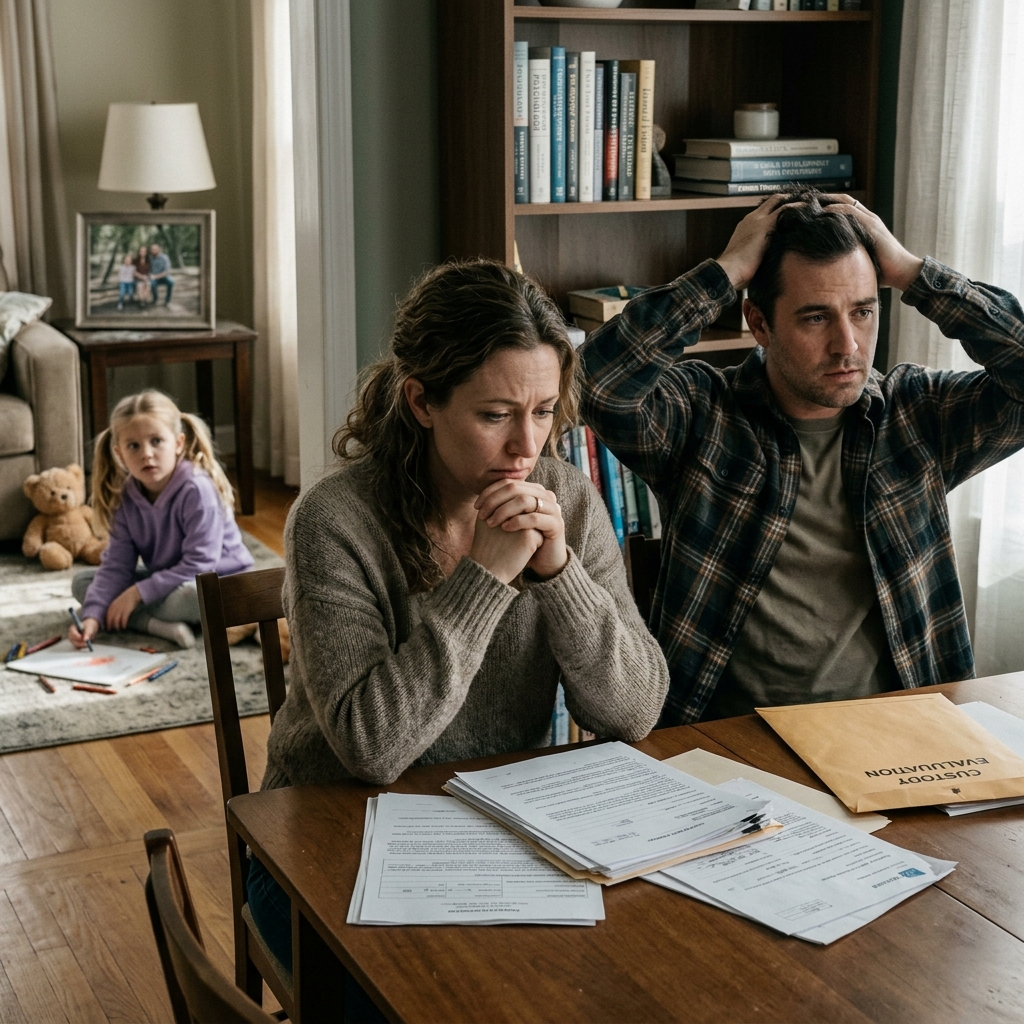
When a spouse or parent lives with a mental health condition, divorce brings not only emotional upheaval but also complex legal questions. Courts must balance fairness between spouses with the need to protect children, all while avoiding stigma around psychiatric diagnoses. This article explains how mental illness interacts with divorce, property division, alimony, and child custody, and offers practical guidance for families navigating these challenges.
Understanding Mental Health in the Context of Divorce
Mental health conditions are common and range from mild, well-managed symptoms to severe impairments that affect decision‑making and daily functioning. Research shows that divorce and separation are consistently associated with higher levels of depression, anxiety, and alcohol abuse, even after accounting for background factors such as education and childhood experiences. At the same time, pre‑existing mental health vulnerabilities can contribute to marital strain and increase the likelihood of divorce.
It is important to distinguish between two different but overlapping issues:
- Mental health as a consequence of divorce – emotional distress, depressive symptoms, anxiety, and substance use that may emerge or worsen after a separation.
- Mental health as a contributing factor – long‑standing disorders (such as bipolar disorder, psychotic disorders, severe depression, or substance use disorders) that may affect employment, parenting capacity, or financial stability.
Courts focus less on diagnostic labels and more on how a condition actually affects behavior, safety, and ability to meet obligations. A well‑treated illness may have little legal impact, while untreated or severe symptoms can shape outcomes in several ways.
Can Mental Illness Prevent a Divorce?
In modern family law, a spouse’s mental illness does not stop the divorce itself. If one partner wants to end the marriage and meets the legal requirements for filing, courts will not require them to stay married solely because the other spouse has a psychiatric condition.
However, when mental illness impairs a person’s ability to participate in the process, courts may add protections to ensure fairness. One common tool is the appointment of a guardian ad litem (GAL).
Role of a Guardian ad Litem
A guardian ad litem is a neutral person appointed by the court to represent the interests of someone who may not be able to advocate for themselves fully. In divorce cases involving serious mental illness, a GAL may be appointed when:
- A spouse is hospitalized in a psychiatric facility.
- There are credible concerns that a spouse lacks the mental capacity to understand or make informed decisions.
- Complex issues such as property division or custody require clear representation of the impaired spouse’s interests.
The GAL does not replace the spouse but provides information to the court, participates in proceedings, and seeks outcomes that protect that person’s rights. This can lengthen the timeline but offers an important safeguard against exploitation or unfair settlements.
Mental Illness, Property Division, and Financial Outcomes
Two main approaches guide how courts divide property at divorce: community property systems and equitable distribution systems. In either system, judges often begin with a presumption of roughly equal division, then adjust based on specific circumstances. Mental health can become relevant in two key ways: financial misconduct linked to symptoms, and reduced earning capacity.
Financial Misconduct and “Waste” Linked to Symptoms
Some mental health conditions, especially those involving mood swings or impaired judgment, can lead to risky spending or depletion of shared assets. For example, a manic episode might involve impulsive purchases or draining joint accounts. Courts may treat this as dissipation or waste of marital property.
When a judge finds that one spouse’s behavior significantly reduced the value of the marital estate for reasons tied to illness or impairment, the court may:
- Grant the other spouse a larger share of remaining marital assets to compensate.
- Assign responsibility for certain debts to the spouse whose actions created them.
- Consider the behavior when evaluating claims for spousal support.
Each state has its own rules about what qualifies as waste and how to document it. Detailed records—bank statements, receipts, and medical evidence—can be crucial in showing that particular transactions were related to a mental health episode.
Reduced Earning Capacity and Alimony
Severe or chronic mental health conditions may limit a person’s ability to work consistently or at the level they previously did. In those situations, courts are more likely to view alimony (spousal support) as a necessary tool to mitigate financial imbalance.
| Factor | Possible Impact on Alimony |
|---|---|
| Severity of symptoms | More severe, function‑limiting symptoms may increase the likelihood or amount of support. |
| Ability to work | If a condition limits employment, judges may award temporary or longer‑term support. |
| Treatment and prognosis | Courts may consider whether the spouse is in treatment and whether improvement is expected. |
| Other income (e.g., disability benefits) | Disability payments, such as SSDI, can be considered in determining need and ability to pay. |
Judges may order temporary support while the ill spouse stabilizes, seeks treatment, and explores disability benefits such as Social Security Disability Insurance (SSDI). The goal is to avoid leaving a vulnerable spouse immediately destitute because of health‑related unemployment.
Mental Illness as a Basis for Annulment
While most marriages end through divorce, some states allow annulment when the marriage was legally flawed from the outset. Severe mental illness can be relevant here if it affected a spouse’s ability to consent to the marriage.
In certain jurisdictions, a marriage may be considered voidable if, at the time of the wedding:
- One spouse lacked the mental capacity to understand the nature of marriage.
- A serious psychiatric condition impaired judgment to the point that meaningful consent was impossible.
Annulment is a specialized remedy with strict requirements and is typically harder to obtain than divorce. Anyone considering this option should consult a family law attorney familiar with local statutes.
How Mental Health Affects Child Custody Decisions
Custody decisions center on the best interests of the child. Mental illness becomes legally relevant when it affects a parent’s ability to provide safe, consistent, and nurturing care. Courts avoid assumptions and instead examine specific evidence about how the condition impacts parenting.
Key Questions Judges Commonly Consider
- Is the parent able to meet the child’s daily needs (food, hygiene, medical care, schooling)?
- Does the condition lead to unpredictable, dangerous, or neglectful behavior?
- Is the parent actively engaged in treatment and following medical advice?
- Are there periods of stability versus episodes of crisis, and how are those managed?
- What support systems (family, therapy, community services) are in place?
A diagnosis alone rarely decides custody. A parent with severe depression who adheres to treatment and builds a strong support network may be viewed very differently from a parent with uncontrolled substance use who refuses help and exposes children to unsafe environments.
Possible Custody and Parenting Time Arrangements
Depending on the facts, courts might order:
- Joint legal custody with modifications to parenting time if one parent has limited capacity during certain periods.
- Sole physical custody to the more stable parent, with supervised or structured visitation for the parent struggling with illness.
- Safety‑focused conditions, such as requirements for sobriety, therapy participation, or no unsupervised overnight visits until stability is demonstrated.
These arrangements are often revisited over time. As a parent’s mental health improves or deteriorates, custody orders can be modified to reflect current circumstances.
Protecting Children Emotionally During a High‑Stress Divorce
Beyond legal orders, children’s emotional wellbeing can be heavily affected when a parent has mental health challenges and the family is going through divorce. Organizations such as Mental Health America recommend practical steps to reduce harm and promote resilience.
Core Principles for Supporting Children
- Reassure and listen – Make clear that the divorce and any mental health issues are not the child’s fault, and encourage questions.
- Maintain routines – Stable schedules for school, meals, and bedtime help children feel secure during changes.
- Offer consistent discipline – Unified expectations across households minimize confusion and anxiety.
- Keep children out of conflict – Avoid arguing or speaking negatively about the other parent in front of them.
When one parent is intermittently unstable, it can be tempting to use their struggles as justification or ammunition in front of the child. This often backfires, intensifying stress and damaging the child’s relationship with both parents. Courts may look unfavorably on parents who involve children in adult disputes.
Taking Care of Your Own Mental Health During Divorce
Divorce itself is a major stressor. People going through divorce frequently report high levels of stress, anxiety, depression, and social isolation compared to the general population. This is even more pronounced when mental illness is already part of the family landscape.
Strategies to Cope and Stay Grounded
- Seek professional support – Individual therapy, group counseling, or family therapy can provide tools for managing grief, anger, and uncertainty.
- Build social connections – Rely on trusted friends, relatives, or support groups instead of isolating.
- Prioritize basic self‑care – Regular sleep, nutritious meals, physical activity, and time outdoors all help buffer against anxiety and depression.
- Avoid relying on substances – Alcohol and drugs may temporarily numb pain but are linked to worse mental health outcomes after divorce.
- Delay nonessential major decisions – When emotions are intense, postponing moves, job changes, or new relationships can reduce regret.
These habits are not a cure‑all, but they decrease the risk of developing clinical depression or anxiety and make it easier to think clearly about legal and parenting choices.
Frequently Asked Questions (FAQs)
Does a mental health diagnosis automatically mean I will lose custody?
No. Courts focus on how your condition affects parenting, not simply on the presence of a diagnosis. A parent who manages their illness responsibly, adheres to treatment, and provides a safe, stable environment often retains substantial custody or parenting time.
Can I divorce my spouse if they are currently in a psychiatric hospital?
Yes, a spouse’s hospitalization does not prevent filing for divorce. However, the court may appoint a guardian ad litem to represent your spouse’s interests and ensure they are not taken advantage of during the proceedings.
Will my spouse’s mental illness change how our property is divided?
It can, depending on the facts. If mental health symptoms led to significant financial waste—such as emptying accounts or incurring large debts—the court may award you a larger share of remaining property. Judges may also consider whether illness limits your spouse’s ability to work when deciding alimony.
Can mental illness be grounds to annul a marriage instead of divorcing?
In some states, severe mental illness at the time of the wedding may be grounds for annulment if it meant a spouse lacked capacity to consent. This is a specialized remedy with strict requirements, so it is important to obtain legal advice before pursuing it.
How can I show the court that I am a capable parent despite my diagnosis?
Courts respond well to evidence of responsibility and stability. Helpful steps include staying in treatment, following medical recommendations, maintaining consistent routines for your children, documenting your involvement in their care, and presenting supportive testimony from professionals or caregivers.
References
- The effects of divorce and separation on mental health in a national UK birth cohort — Rodgers B, et al., Psychological Medicine. 1997-09-01. https://pubmed.ncbi.nlm.nih.gov/9300516/
- Re-Adjusting After Divorce: Stress, Health Risks and Coping Tools — Oklahoma State University Extension. 2020-01-01 (approx.). https://extension.okstate.edu/fact-sheets/re-adjusting-after-divorce-stress-health-risks-and-coping-tools.html
- Coping with Separation and Divorce — Mental Health America. 2022-01-01 (approx.). https://mhanational.org/resources/coping-with-separation-and-divorce/
- Genetic Risk for Mental Health Issues Is Linked to Higher Divorce Rates — Rutgers Health. 2023-10-24. https://rwjms.rutgers.edu/news/genetic-risk-mental-health-issues-linked-higher-divorce-rates
- Divorce and Mental Health — Charlie Health Research. 2023-06-01 (approx.). https://www.charliehealth.com/research/divorce-mental-health
- The Impact of Divorce on Mental Health and How to Heal — The Supportive Care. 2024-01-01 (approx.). https://www.thesupportivecare.com/blog/the-impact-of-divorce-on-mental-health-and-how-to-heal
- How Mental Health Issues Affect Divorce and Custody — DivorceNet. 2023-01-01 (approx.). https://www.divorcenet.com/resources/mental-health-issues-and-divorce.html
Similar Articles








Read full bio of Sneha Tete


