
Understanding the Meijer Credit Card: Costs, Risks, and Key Features
Learn how the Meijer store credit card works, what it costs, and how to decide if it fits your budget and shopping habits.
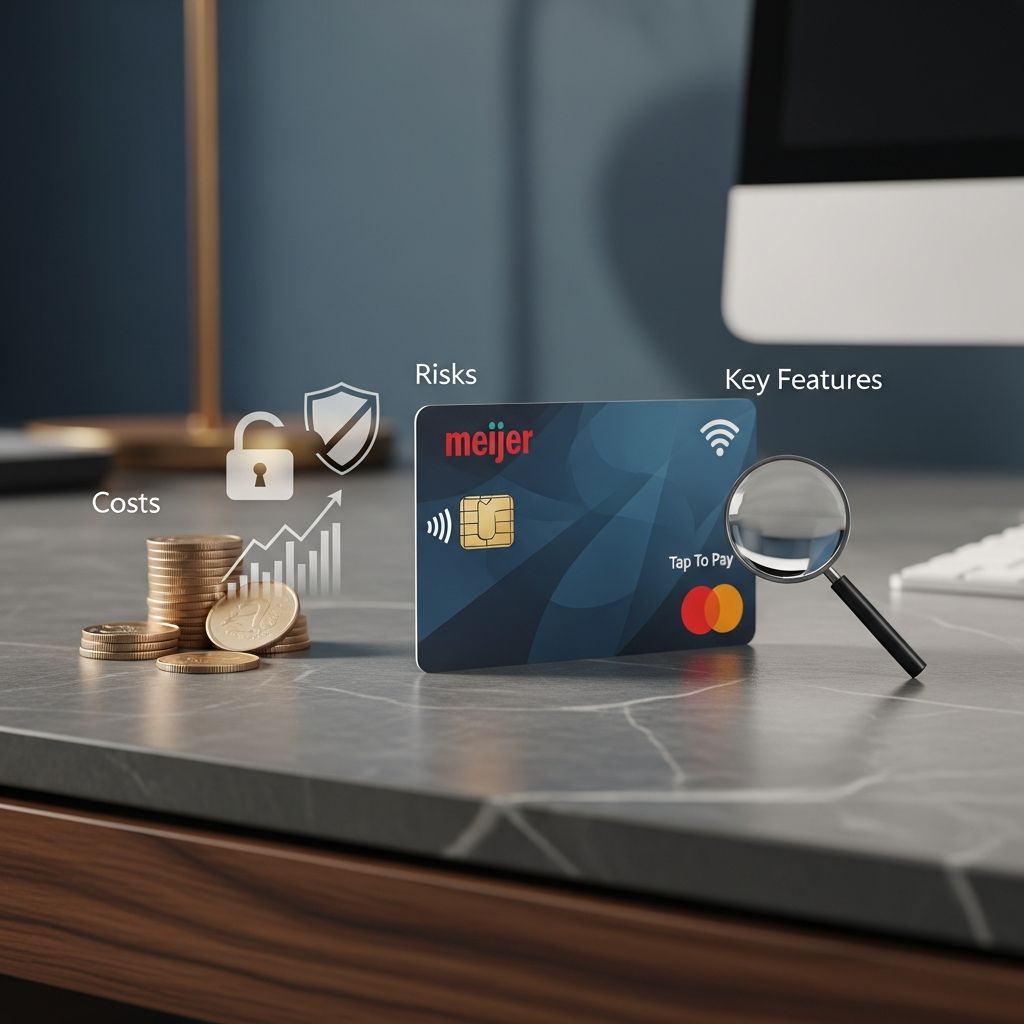
The Meijer credit card, issued by a major national bank, is a private-label retail card designed for regular Meijer shoppers. It can offer targeted discounts and convenience at checkout, but it also comes with costs and risks that may outweigh the benefits if you tend to carry a balance or miss payments.
This guide explains the key terms, typical fees, potential advantages, and common pitfalls associated with a Meijer-branded credit card so you can make an informed decision before you apply.
1. Overview of Store-Branded Credit Cards
A Meijer credit card is what regulators classify as a credit card account under open-end consumer credit, governed by federal rules such as Regulation Z (Truth in Lending Act). Like most store cards, it usually can be used at Meijer and affiliated locations, and may not function as a general-purpose card wherever Mastercard or Visa are accepted.
Common traits of store credit cards include:
- Narrow usage — Often valid only with the sponsoring retailer or its partners.
- Higher purchase APRs than many mainstream bank cards, especially compared with customers who qualify for prime rewards products.
- Discount-driven marketing, such as sign-up bonuses, first-purchase savings, or special promotional financing.
- Lower credit limits than some bank cards, which can affect your credit utilization ratio.
Because these accounts are still credit cards, they must provide a written credit card agreement and a standardized cost disclosure (the Schumer box) with interest rates and fees clearly listed.
2. Core Terms You Will See in a Meijer Credit Card Agreement
Before focusing on Meijer-specific features, it helps to understand the standard terms that appear in most U.S. credit card agreements. Regulators require issuers to list these items in a clear “cost of credit” summary.
| Term | What It Means | Why It Matters for Meijer Cardholders |
|---|---|---|
| Purchase APR | The annual interest rate applied to unpaid purchases. | A higher APR means carrying a balance on grocery or household purchases can become expensive quickly. |
| Penalty APR | Higher rate that may apply after serious delinquency, such as a late payment. | Missing payments on a Meijer card can increase your interest rate and total cost. |
| Annual Fee | Yearly cost to keep the account open, if charged. | If the card charges an annual fee, you should weigh it against expected savings from Meijer discounts. |
| Late Fee | Charge if your minimum payment is not received by the due date. | Repeated late fees can offset any rewards and may harm your credit report. |
| Returned Payment Fee | Fee if your bank rejects a payment (for example, insufficient funds). | Adds another layer of cost when your cash flow is tight. |
| Minimum Payment | The smallest amount you must pay each month to keep the account in good standing. | Paying only the minimum can keep you in debt for years and substantially increase total interest paid. |
3. How the Meijer Card Typically Works at the Checkout Line
In day-to-day use, a Meijer credit card functions similarly to other retail cards, with some features tailored to the store:
- Point-of-sale use: You swipe, insert, or tap your card at Meijer registers and fuel centers to complete purchases.
- Monthly billing: The issuer sends a statement listing new charges, payments, credits, and the total amount owed.
- Grace period: If the account offers a grace period, you can avoid interest on new purchases by paying the full statement balance by the due date each cycle.
- Rewards or discounts: The card may provide savings such as cents-off-per-gallon on fuel or percentage discounts on select store purchases. The exact offers and limitations are set in the rewards or benefits terms.
Even when a store card advertises immediate savings on your first purchase, federal law still requires the issuer to provide the underlying credit terms and for you to have an opportunity to review them before you are bound by the agreement.
4. Potential Benefits for Frequent Meijer Shoppers
For households that shop at Meijer regularly, the card can deliver targeted value. Typical advantages include:
- Store-specific discounts — Ongoing savings on groceries, general merchandise, or fuel can effectively reduce your overall cost of living if you already shop at Meijer.
- Special promotions — Cardholders sometimes receive coupons or limited-time financing options for large purchases, such as seasonal items or electronics.
- Closed-loop budgeting — Using a dedicated card only at one retailer can help you track spending at that store more easily than if those purchases are mixed across multiple cards.
- Possible credit-building opportunities — When used responsibly, store cards can contribute to a positive payment history, which is an important factor in credit scores according to major scoring models.
These features are most valuable when you pay your statement balance in full and on time, avoiding interest and penalty fees.
5. Key Risks and Costs to Consider
Despite the appeal of immediate savings, a Meijer credit card can become costly if you rely on it to cover expenses without a repayment plan. Consumer advocates emphasize several important risks.
5.1 High Interest Rates on Everyday Purchases
Retail credit cards often carry interest rates higher than many general-purpose cards available to borrowers with similar credit profiles. When this higher APR is applied to recurring purchases like groceries or household essentials, balances can grow quickly and become difficult to pay down.
Paying only the minimum each month can extend repayment for years and significantly increase the amount of interest you ultimately pay on everyday items.
5.2 Late Fees and Potential Penalty APR
Missing a payment can trigger:
- Late fees, which raise your total cost for that billing cycle.
- Penalty APR, which can push your interest rate even higher for future balances.
- Negative credit reporting if the missed payment is significantly late (typically 30 days or more past due), which can lower your credit scores.
Federal regulations limit how and when penalty APR can be applied, but once it takes effect, it may stay in place for a long period if you continue to fall behind.
5.3 Impact on Your Credit Utilization
Credit utilization — the share of available revolving credit that you are using — is a key factor in most credit scoring formulas. Because store cards often have lower credit limits, it is easy to have a high utilization ratio on a single card even with a modest balance.
For example, a $600 balance on a card with a $1,000 limit equals 60% utilization on that account, which can be viewed as riskier behavior by lenders compared with lower ratios.
5.4 Promotional Financing and Deferred Interest
Some retail cards offer special financing on certain purchases, such as “no interest if paid in full” within a set period. Regulators warn that deferred-interest offers can be confusing: if you do not fully pay the promotional balance by the deadline, you may be charged interest retroactively on the entire original purchase amount.
If the Meijer card offers promotional financing, read these terms carefully. A single misstep near the end of the promotional period could eliminate the savings you expected.
6. Comparing the Meijer Card with Other Options
Before opening a Meijer account, it is wise to compare it with at least one general-purpose credit card and possibly with using cash or debit for your Meijer shopping.
| Feature | Meijer Store Card | General-Purpose Rewards Card | Paying with Cash or Debit |
|---|---|---|---|
| Where You Can Use It | Typically at Meijer and related locations only. | Anywhere the network (e.g., Mastercard, Visa) is accepted. | Anywhere you can use cash or your bank card. |
| Rewards Structure | Usually strongest at Meijer; limited or none elsewhere. | May earn points or cashback across many categories (e.g., groceries, gas, travel). | No rewards, but also no revolving credit risk. |
| Typical Purchase APR | Often higher than average bank cards. | Wide range, may be lower for well-qualified borrowers. | No interest from card issuer. |
| Credit Impact | Can help or hurt, depending on payment history and utilization. | Same — but with broader flexibility for managing balances. | No direct revolving credit line; no credit utilization factor. |
| Best Use Case | Frequent Meijer shopper who always pays in full. | Consumer seeking broader rewards and flexibility. | Shopper prioritizing debt avoidance over rewards. |
7. How to Read the Meijer Credit Card Agreement Effectively
Federal rules require that each credit card agreement be made available in writing and, if offered online, posted in a form that consumers can review. When evaluating a Meijer card, focus on:
- The pricing information box (often near the top), which lists APRs and key fees.
- Minimum interest charges, which can affect the cost of carrying small balances.
- How payments are allocated if you have multiple balances (promotional and non-promotional).
- Changes-in-terms section, which explains how and when the issuer may alter rates or fees.
- Rewards and benefits terms, detailing exclusions, caps, and expiration of discounts or points.
Consumer financial regulators encourage reading these materials before signing up so you understand how the account may behave over time, not just on the day you receive an initial discount.
8. Practical Tips for Using a Meijer Card Safely
A Meijer credit card can be part of a healthy financial plan if you set clear rules for yourself. Expert guidance on credit card management stresses the importance of budgeting, timely payments, and preventing excessive debt.
- Limit use to planned purchases: Treat the card as a payment tool for items already in your budget, not as extra income.
- Always aim to pay the full statement balance: This allows you to capture any discounts or rewards without paying interest.
- Enroll in autopay: Setting automatic payments at least for the statement balance (or, at minimum, the required amount) reduces the risk of accidental late payments.
- Monitor utilization: Try to keep your balance well below the credit limit, ideally under 30% of the available line.
- Track promotions closely: For special financing offers, mark the payoff deadline on your calendar and calculate how much you must pay each month to clear the balance on time.
- Review statements for errors: If you see a charge you do not recognize, contact the card issuer quickly to preserve your billing rights under federal law.
9. When the Meijer Credit Card May Not Be a Good Fit
Even if you shop at Meijer frequently, the card may not suit you if:
- You routinely carry a balance and are already paying high interest on other cards.
- Your budget is tight and you sometimes struggle to make on-time payments.
- Your credit utilization is already high and another line of credit could increase your financial stress.
- You prefer simplicity and do not want to track separate store-specific rewards and promotions.
In those cases, using a debit card, cash, or a low-interest general-purpose card may better align with your financial goals.
10. Frequently Asked Questions (FAQs)
Q1: Does a Meijer credit card affect my credit score?
Yes. Like other credit cards, the Meijer account typically appears on your credit reports. On-time payments and moderate utilization can help your credit over time, while late payments, high balances, and defaults can damage your scores.
Q2: Is the Meijer card a good first credit card?
It can be an entry point for some consumers because store cards may have more flexible approval criteria. However, the relatively high APR common among retail cards means it is most appropriate for beginners who are confident they can pay statements in full each month.
Q3: Can I avoid all interest charges on my Meijer card?
You usually can avoid interest on new purchases by paying your full statement balance by the due date each cycle, assuming the account offers a grace period and you have not lost that privilege through certain types of transactions or delinquencies. Check your agreement for the exact rules.
Q4: What happens if I stop using the Meijer credit card?
If you pay off your balance and do not use the card, the account may remain open, but the issuer can close it at its discretion after a lengthy period of inactivity. Closing a card can affect your overall credit utilization and average account age, so consider your broader credit profile before requesting closure.
Q5: How should I decide whether to apply?
Estimate how much you typically spend at Meijer in a year, then compare potential rewards or discounts with the risks of interest, fees, and overspending. Review the official Meijer card agreement for current APRs, fees, and promotional terms, and compare them with at least one general-purpose credit card before deciding.
References
- 12 CFR § 1026.58 — Internet posting of credit card agreements — Consumer Financial Protection Bureau. 2023-03-01. https://www.consumerfinance.gov/rules-policy/regulations/1026/58
- Editorial Guidelines — CreditCards.com. 2023-06-15. https://www.creditcards.com/editorial-guidelines/
- Editorial Guidelines — CardRates.com. 2023-05-10. https://www.cardrates.com/editorial-guidelines/
- Best Practices for Writing Your Corporate Credit Card Policy Manual — PaymentsJournal. 2022-04-12. https://www.paymentsjournal.com/best-practices-for-writing-your-corporate-credit-card-policy-manual/
- 7 Corporate Credit Card Policy Rules to Implement — SAP Concur. 2023-02-20. https://www.concur.com/blog/article/7-corporate-credit-card-policy-rules-to-implement
Similar Articles








Read full bio of Sneha Tete




