
Medicare Part D: Your Guide to Drug Coverage
Unlock the essentials of Medicare Part D: coverage, costs, enrollment, and 2026 updates for affordable prescriptions.
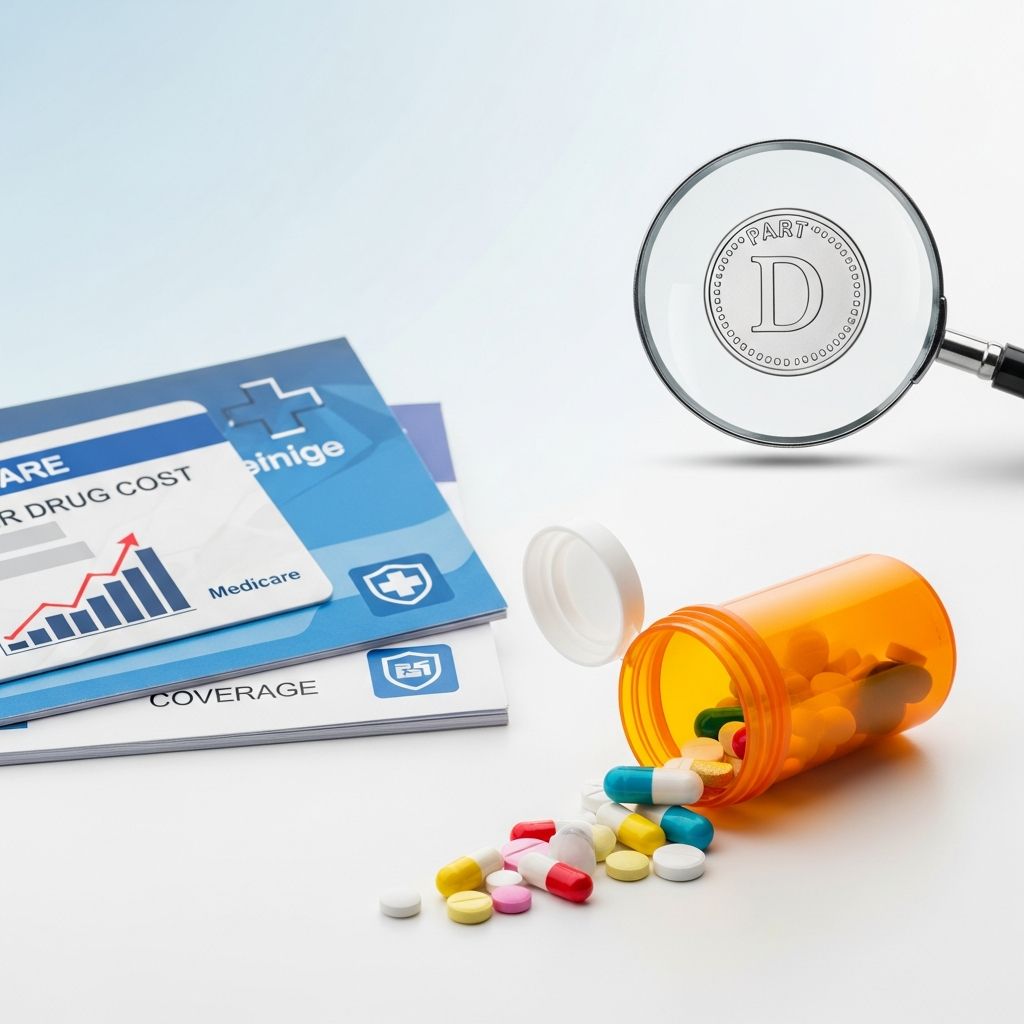
Medicare Part D provides voluntary prescription drug coverage for Medicare beneficiaries through private insurers approved by the federal government. This optional benefit helps reduce out-of-pocket expenses on medications, covering both generic and brand-name drugs listed on each plan’s formulary.
Understanding the Core of Part D Coverage
Part D plans are designed to make essential medications more affordable for individuals enrolled in Medicare. Unlike Original Medicare (Parts A and B), which does not cover outpatient prescriptions, Part D fills this critical gap by partnering with private companies to offer standalone drug plans or bundling them with Medicare Advantage (Part C) options. Coverage includes a broad range of drugs, from daily maintenance therapies to short-term treatments, ensuring beneficiaries have access to therapies for chronic conditions and acute needs.
Every Part D plan maintains a formulary, a structured list of covered medications organized into tiers based on cost and type. Lower tiers typically feature generics with minimal copays, while higher tiers include specialty drugs with greater expense sharing. Plans must adhere to federal requirements, covering drugs in protected classes such as immunosuppressants for organ transplants, antiretrovirals for HIV/AIDS, antidepressants, antipsychotics, anticonvulsants, and antineoplastics for cancer.
Typical Formulary Tiers Explained
| Tier | Description | Cost Level | Examples |
|---|---|---|---|
| Tier 1 | Preferred generics | Lowest copay | Common generics like statins |
| Tier 2 | Standard generics | Low copay | Additional generics |
| Tier 3 | Preferred brands | Moderate copay | Select brand drugs |
| Tier 4 | Non-preferred drugs | Higher copay/coinsurance | Less common brands |
| Tier 5 | Specialty tier | Highest cost | Injectables, biologics |
Tiers vary by plan, but this structure promotes cost-effective choices while ensuring access to necessary treatments.
Key Cost Components in Part D Plans
Understanding costs is vital for budgeting healthcare expenses. Part D involves several elements:
- Monthly Premium: A fixed fee paid to the plan, averaging around $30-$60 but varying widely.
- Deductible: In 2026, up to $615 under the standard benefit; some plans offer $0 deductibles.
- Copayments/Coinsurance: Fixed amounts or percentages paid at the pharmacy after the deductible.
- Out-of-Pocket Cap: A game-changer for 2026 at $2,100, after which coverage is free for the year.
These costs reset annually, providing predictability.
Evolution of Part D Benefit Phases in 2026
Part D benefits unfold in phases, simplified significantly by the Inflation Reduction Act. For 2026:
- Deductible Phase: Pay full cost up to $615.
- Initial Coverage: 25% coinsurance on covered drugs until out-of-pocket reaches $2,100.
- Catastrophic Coverage: No further costs for covered Part D drugs through year-end.
This structure eliminates the previous ‘donut hole,’ offering relief especially for high-need users. Negotiated prices on select drugs further reduce expenses starting 2026.
Enrollment Pathways for Part D
Joining Part D requires timing to avoid penalties. Options include:
- Standalone PDP with Original Medicare.
- MA-PD plans combining Parts A, B, C, and D.
The Initial Enrollment Period aligns with Medicare start. Late enrollment incurs a permanent penalty (1% of national average premium per uncovered month). Annual Open Enrollment (October 15-December 7) allows switches. Use Medicare’s Plan Finder tool for personalized comparisons.
Financial Assistance: Extra Help Program
Low-income beneficiaries may qualify for Extra Help, covering premiums, deductibles, and copays. Eligibility often ties to Medicaid, SSI, or income below 150% federal poverty level. Benefits include $0 deductibles and reduced cost-sharing. Apply via SSA.gov.
Plan Selection Strategies
Choosing a plan demands review:
- Check formulary for your medications.
- Compare premiums, deductibles, tiers.
- Evaluate pharmacy networks.
- Assess star ratings for quality.
Medicare’s annual notice highlights changes; reassess during Open Enrollment.
Exceptions and Coverage Appeals
If a drug isn’t covered, request exceptions or prior authorizations. Plans must respond timely, with appeal rights through Medicare grievance processes.
2026 Updates and Future Outlook
Key 2026 shifts include the $2,100 cap and payment plans for high costs, enhancing affordability. Medicare drug price negotiations expand, mandating coverage of negotiated drugs across plans. These reforms, from the Inflation Reduction Act, prioritize beneficiary savings.
Frequently Asked Questions
Is Medicare Part D mandatory?
No, it’s voluntary, but skipping during eligibility risks late penalties.
What if my drug isn’t on the formulary?
Request an exception; plans cover protected classes substantially.
How does the 2026 cap work?
Out-of-pocket maxes at $2,100 for covered Part D drugs, then free.
Can I get Part D with Medicare Advantage?
Yes, many MA plans include drug coverage (MA-PD).
Who qualifies for Extra Help?
Low-income with limited resources; check SSA tool.
Navigating Pharmacies and Utilization
Plans feature preferred pharmacies for lower costs and mail-order for maintenance drugs. Quantity limits and step therapy may apply to ensure appropriate use. Always present your ID card at dispensing.
Part D empowers Medicare users with flexible, cost-controlled drug access. Stay informed via Medicare.gov to optimize benefits amid evolving rules.
References
- What is Medicare Part D prescription drug coverage? — Aetna. 2025. https://www.aetna.com/medicare/understanding-medicare/what-is-medicare-part-d.html
- What is Medicare Part D prescription drug coverage? — Humana. 2025. https://www.humana.com/medicare/medicare-resources/what-is-medicare-part-d
- A Current Snapshot of the Medicare Part D Prescription Drug Benefit — Kaiser Family Foundation (KFF). 2025-10-15. https://www.kff.org/medicare/a-current-snapshot-of-the-medicare-part-d-prescription-drug-benefit/
- Understanding the Medicare Part D cap — PAN Foundation. 2025. https://www.panfoundation.org/understanding-the-medicare-part-d-cap/
- What do drug plans cover? — Medicare.gov. 2025. https://www.medicare.gov/health-drug-plans/part-d/what-drug-plans-cover
- What Is Medicare Part D? — National Council on Aging (NCOA). 2025. https://www.ncoa.org/article/what-is-medicare-part-d/
- How much does Medicare drug coverage cost? — Medicare.gov. 2025. https://www.medicare.gov/health-drug-plans/part-d/basics/costs
Similar Articles








Read full bio of Sneha Tete




