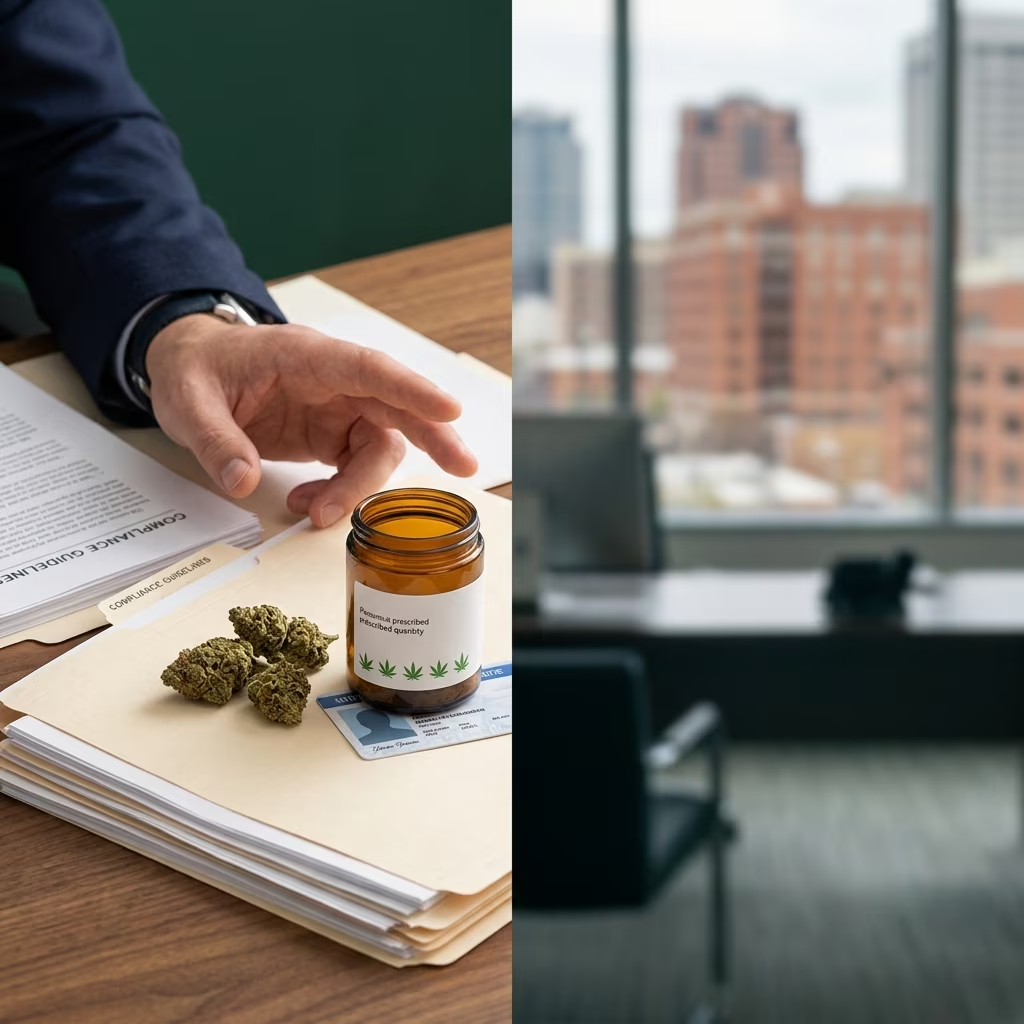
Alabama has joined the growing list of states that permit the use of medical cannabis, but its workplace rules remain firmly employer-friendly. Employees who qualify for medical marijuana may assume that a prescription or medical cannabis card will protect their job. In Alabama, that assumption is often wrong. This article explores how the state’s medical cannabis framework intersects with employment law, drug testing, and federal protections, and what both workers and employers need to know to navigate this complex landscape.
Alabama’s Medical Cannabis System in Brief
Alabama legalized medical cannabis under a law commonly known as the Compassion Act, creating a tightly controlled system for qualifying conditions, dosage forms, and licensing requirements. The law allows registered patients with specified medical conditions to obtain medical cannabis in limited, non-smokable forms such as tablets, capsules, oils, and patches. Access to medical cannabis requires:
- A diagnosis of at least one qualifying medical condition, such as cancer-related pain, epilepsy, PTSD, depression, or chronic pain that has not responded to conventional treatment.
- Certification from a registered certifying physician who holds an Alabama Medical Cannabis Commission (AMCC) permit.
- Issuance of a medical cannabis card for eligible patients, with the option for parents or caregivers to obtain products for minors.
These rules tightly regulate access to medical cannabis, but they do not create parallel protections in the employment context. Instead, the law largely leaves workplace policy decisions to individual employers.
No General Workplace Protection for Medical Cannabis Users
One of the most important features of Alabama’s medical marijuana law is what it does not do. It does not provide broad employment protections for medical cannabis users. Alabama’s framework explicitly allows employers to maintain and enforce drug-free workplace policies and offers little legal recourse to employees disciplined or terminated due to medical cannabis use.
| Issue | What Alabama Law Allows Employers to Do |
|---|---|
| Drug policies | Continue preexisting drug-free workplace policies with no legal consequences. |
| Accommodation | Refuse to accommodate medical marijuana use or modify job duties for cardholders. |
| Hiring & discipline | Refuse to hire, discipline, or terminate employees due to medical cannabis use, even if not impaired at work. |
| Drug testing | Maintain or establish drug testing policies that prohibit marijuana, including medical cannabis. |
| Employee disclosure | Require employees to disclose medical cannabis cardholder status. |
| Lawsuits | Operate without risk of a new private cause of action based on medical cannabis use; the law does not create such a claim. |
In short, medical cannabis use does not grant employees a shield against adverse employment actions. Alabama’s law makes it clear that workplace cannabis policy is primarily an employer decision, subject to federal rules such as Department of Transportation regulations.
Drug Testing, Drug-Free Workplace Programs, and Workers’ Compensation
Drug testing remains central to Alabama’s approach to workplace safety and workers’ compensation. The state encourages employers to adopt drug-free workplace programs by offering workers’ compensation premium discounts to companies that implement compliant testing and policy structures. These programs typically include:
- Written drug-free workplace policies prohibiting certain substances, including marijuana.
- Pre-employment, random, post-accident, and reasonable-suspicion drug testing.
- Procedures for handling positive test results and employee assistance or disciplinary options.
Alabama’s medical cannabis law explicitly permits employers to maintain or adopt such policies, even if they result in discipline or termination of medical marijuana cardholders. Because marijuana remains classified as a Schedule I substance under federal law, employers—especially in safety-sensitive industries—often take a conservative approach to any cannabis use, medical or otherwise.
Impact on Unemployment Benefits
The employment consequences of medical marijuana use may extend beyond job loss. Alabama’s law provides that an individual discharged due to medical marijuana use, or refusal to submit to or cooperate with a drug test, can be conclusively presumed to have been discharged for misconduct for purposes of unemployment benefits if certain conditions are met. This presumption can make it significantly harder for terminated employees to qualify for unemployment compensation after a marijuana-related discharge.
Disability and Federal Law: The Role of the ADA
Alabama does not have a broad state disability discrimination statute comparable to laws in many other states. As a result, employees alleging disability discrimination related to medical conditions or treatment must generally rely on the Americans with Disabilities Act (ADA) and pursue claims in federal court.
The ADA may provide important protections for individuals with qualifying disabilities, such as reasonable accommodation for certain conditions. However, the interaction between the ADA and medical marijuana is complex:
- Under federal law, marijuana remains illegal, even when used for medical purposes under state law.
- Federal courts have often held that employers are not required to accommodate illegal drug use, which can limit ADA protections when the requested accommodation is medical marijuana itself.
- Employees may still have ADA rights regarding underlying disabilities (e.g., chronic pain, PTSD), but those rights usually do not extend to allowing on-the-job cannabis use or excusing positive drug tests for marijuana.
For Alabama workers, this means that while a medical condition may be protected as a disability under the ADA, the specific choice to treat that condition with medical cannabis is unlikely to be protected in the workplace. Employers can often continue to enforce zero-tolerance marijuana policies without violating federal disability law, so long as they evaluate other reasonable accommodations when appropriate.
Employer Policy Options and Strategic Considerations
Although Alabama law strongly favors employer discretion, it does not dictate a single approach. Employers may choose to maintain strict zero-tolerance policies, or they may decide to craft more nuanced rules that distinguish medical cannabis use from recreational use. Key considerations include safety, regulatory obligations, litigation risk, and workforce retention.
Common Employer Approaches
- Strict zero-tolerance policy
Many employers, particularly in transportation, manufacturing, construction, and healthcare, continue to prohibit all marijuana use and treat any positive test as a violation of company policy. This approach is often required for positions regulated by federal agencies such as the U.S. Department of Transportation (DOT). - Limited flexibility for non-safety-sensitive roles
Some employers consider adjusting their policies for employees in office or non-safety-sensitive positions. For example, they may maintain testing but evaluate discipline on a case-by-case basis, considering medical documentation and performance history. However, Alabama’s law does not require any such flexibility. - Disclosure-based policies
Employers are allowed to adopt rules requiring employees to disclose medical cannabis cardholder status. This helps employers manage risk, schedule work assignments appropriately, and ensure compliance with federal regulations where applicable. - Education and supervisor training
Organizations may invest in training managers and supervisors to recognize impairment, understand company policy, and respond consistently to employee disclosures or test results. Clear training reduces the risk of inconsistent enforcement and potential discrimination claims.
Employee Perspective: Practical Risks and Planning
For employees in Alabama who use or are considering using medical marijuana, understanding the legal landscape is critical. The existence of a medical cannabis card does not prevent termination, discipline, or denial of employment, even if the employee never consumes cannabis at the workplace or arrives impaired.
Key Risks for Employees
- Positive drug tests for marijuana can lead to discipline or termination under employer policies, regardless of medical authorization or off-duty use.
- Loss of unemployment benefits is possible if termination is treated as misconduct due to medical marijuana use or refusal to cooperate with testing.
- Limited legal remedies exist under Alabama’s medical cannabis law, which does not create a private cause of action for adverse actions based on medical marijuana use.
- Federal law conflicts mean that ADA protection typically does not extend to the use of medical marijuana itself, even if the underlying condition is a protected disability.
Steps Employees Can Take
While the legal framework is restrictive, employees can take practical steps to manage risk:
- Review employer policies on drug testing, discipline, and accommodation before initiating medical cannabis treatment.
- Discuss alternatives with healthcare providers; in some workplaces, using non-cannabis medications may reduce job risk.
- Consider disclosure carefully; where employers require notification of cardholder status, employees should follow policy but might consult an attorney beforehand.
- Document performance and any non-cannabis accommodations requested (such as schedule changes or ergonomic modifications) that could help address the underlying condition without implicating drug policies.
Interaction with Federal Regulations and Safety-Sensitive Positions
Alabama’s medical marijuana law specifically acknowledges that it does not interfere with federal employment restrictions, including those imposed by agencies like the U.S. Department of Transportation. For workers in safety-sensitive roles—commercial drivers, pilots, certain healthcare providers, and others—federal rules often require strict drug policies that prohibit any marijuana use.
Employers in these industries generally cannot relax their marijuana policies without risking federal noncompliance. Even if Alabama permits medical cannabis, a DOT-regulated driver who tests positive for THC may face both employment consequences and federal sanctions. Consequently, medical cannabis is frequently incompatible with safety-sensitive employment in Alabama.
Insurance, Costs, and Coverage Issues
Another practical dimension is cost. Alabama’s law does not require employers to provide health insurance coverage or reimbursement for medical cannabis. Employees who wish to use medical marijuana for treatment typically bear the financial burden themselves. Because medical cannabis remains illegal at the federal level, most commercial health plans and public insurance programs do not treat it as a covered prescription drug.
This financial reality can influence both employee decisions about treatment and employer perceptions of medical cannabis. Some organizations view the out-of-pocket nature of medical marijuana as evidence that use is discretionary rather than medically compelled, reinforcing strict policy positions.
Regional and National Context
Across the United States, state approaches to medical marijuana and employment vary widely. Some states provide explicit protections against discrimination or require employers to engage in an interactive process when discipline or termination is based solely on off-duty medical cannabis use. Alabama is not one of those states.
Instead, Alabama’s law aligns with more restrictive jurisdictions where medical cannabis does not translate into workplace protection. For multi-state employers, this means that policies must take into account differing state rules, and that an employee’s rights may change dramatically when crossing state lines.
Policy Development Tips for Alabama Employers
Employers crafting or revising workplace drug policies in light of medical marijuana should consider both legal compliance and operational impact. Although Alabama law grants broad discretion, well-designed policies reduce confusion and limit disputes.
- Clarify scope: Define which substances are prohibited, including marijuana and THC-containing products, and specify whether medical cannabis is treated differently from recreational use.
- Address disclosure: Decide whether employees are required to notify the company if they hold a medical cannabis card and outline how that information will be handled.
- Integrate federal requirements: Distinguish policy for DOT-regulated or other federally regulated positions and explain why those roles have stricter standards.
- Standardize enforcement: Establish consistent protocols for responding to positive tests or suspected impairment to avoid unequal treatment claims.
- Provide training: Educate managers on policy, signs of impairment, and the need to separate disability accommodation analyses from decisions about medical cannabis use.
Frequently Asked Questions (FAQs)
1. Does having a medical cannabis card protect my job in Alabama?
No. Alabama’s medical marijuana law does not create general employment protections for medical cannabis users. Employers may refuse to hire, discipline, or terminate employees based on their medical marijuana use, even if that use is off-duty and the employee is not impaired at work.
2. Can my employer still drug test me for marijuana if I’m a registered patient?
Yes. Employers in Alabama remain free to establish and enforce drug testing policies that prohibit marijuana use, including medical cannabis. A positive test can result in discipline or termination according to company policy.
3. Am I entitled to a workplace accommodation for medical marijuana under the ADA?
Generally, no. While the ADA may protect the underlying medical condition as a disability, it does not require employers to accommodate the use of an illegal drug under federal law. Employers typically do not have to permit or excuse medical marijuana use as an accommodation.
4. Can I sue my employer if I am fired for using medical marijuana?
Under Alabama’s medical cannabis law, there is no new private right of action allowing employees to sue employers based solely on adverse actions related to medical marijuana use. Employees may still pursue other legal theories where applicable, but the medical marijuana statute itself does not create a specific employment claim.
5. Will losing my job for medical marijuana use affect my unemployment benefits?
Potentially. Alabama’s law states that a worker discharged due to medical marijuana use or refusal to cooperate with a drug test may be conclusively presumed to have been discharged for misconduct for unemployment purposes, if other statutory conditions are satisfied.
6. Are employers required to pay for or reimburse medical cannabis?
No. Alabama employers are not obligated to provide insurance coverage or reimbursement for the cost of medical cannabis.
References
- Alabama’s Medical Marijuana Law Doesn’t Apply at Work — Super Lawyers. 2022-05-10. https://www.superlawyers.com/resources/employment-law-employee/alabama/alabamas-medical-marijuana-law-doesnt-apply-at-work/
- Alabama Workplace Marijuana Laws Overview — Accurate Background. 2023-08-01. https://www.accurate.com/marijuana-law-state/alabama/
- What Employers Need to Know About Alabama’s Medical Marijuana Law — Wallace, Jordan, Ratliff & Brandt LLC. 2021-06-22. https://wallacejordan.com/clearing-smoke-what-employers-need-to-know-about-alabamas-medical-marijuana-law/
- Workplace Drug Testing Laws in Alabama — Health Street. 2024-01-15. https://www.health-street.net/state-laws/alabama-drug-testing-compliance/
- Frequently Asked Questions – Alabama Medical Cannabis — Alabama Medical Cannabis Commission. 2024-05-01. https://amcc.alabama.gov/frequently-asked-questions/
- Medical Cannabis – Physician Registration — Alabama Board of Medical Examiners. 2023-11-01. https://www.albme.gov/licensing/md-do/registrations/medical-cannabis/
- Alabama Legalizes Medical Marijuana While Allowing Employers Discretion — Littler Mendelson P.C. 2021-05-20. https://www.littler.com/news-analysis/asap/alabama-legalizes-medical-marijuana-while-allowing-employers-discretion