
Medicaid and CHIP for Low-Income Families
Understand who qualifies for Medicaid and CHIP, how they differ, and how to apply for low-cost health coverage.
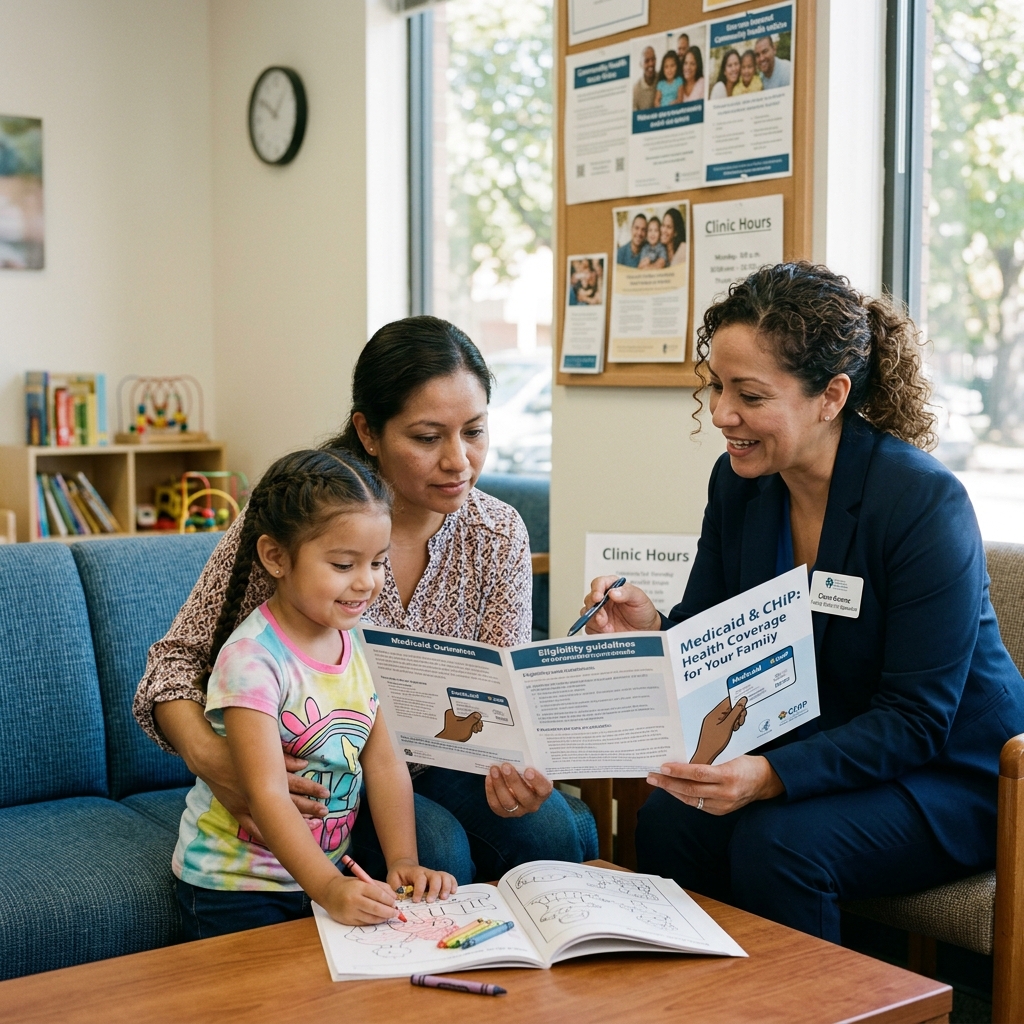
Medicaid and the Children’s Health Insurance Program, often called CHIP, are two public health coverage programs designed to help eligible households pay for medical care. Together, they offer free or low-cost insurance to many low-income adults, children, pregnant people, older adults, and people with disabilities.
Although the two programs are closely related, they are not identical. Medicaid generally serves a broader population, while CHIP is aimed at children in families that earn too much to qualify for Medicaid but still cannot afford private insurance.
How the two programs work
Both Medicaid and CHIP are operated through state systems under federal rules. That means the core structure is national, but eligibility details, covered services, and application procedures can vary by state.[10]
For families, the most important feature is affordability. Medicaid can be free or very low cost, and CHIP is also designed to keep premiums, enrollment fees, and co-pays manageable for households with limited income.
Who Medicaid is designed to help
Medicaid is a health coverage option for several low-income groups, not just one type of applicant. It may cover adults with low income, children, pregnant women, people age 65 or older, and people with disabilities.[10]
Eligibility is usually based on a combination of factors, including income, household size, age, pregnancy status, disability status, and state residency. In some states, Medicaid covers a wider range of adults, while other states keep the program focused on specific categories of people who meet financial and categorical rules.[10]
What CHIP adds to the picture
CHIP fills a gap for children who are not eligible for Medicaid but still live in families that cannot afford private health coverage. This makes it especially valuable for working families whose incomes are modest but slightly above Medicaid limits.
In many states, CHIP may also include special prenatal or perinatal coverage options, and some state programs let families apply for related child-focused benefits through the same system.
Basic eligibility factors
Eligibility rules vary by state, but several factors are commonly used to determine whether a person qualifies for Medicaid or CHIP. These include:
- Income level
- Family size
- Age
- Pregnancy status
- Disability status
- State residency
- Citizenship or immigration status requirements, where applicable
For children, states commonly require that the child live in the state and meet age and income rules. Guidance from state and federal sources also shows that children generally must be under 19 for standard children’s coverage, though some states may extend Medicaid in certain situations.
Cost differences you may notice
One of the biggest differences between Medicaid and CHIP is what families pay out of pocket. Medicaid often has very limited or no cost sharing for eligible enrollees, while CHIP may include modest enrollment fees and co-pays depending on income.
In Texas, for example, public guidance notes that Children’s Medicaid is free, while CHIP may include yearly enrollment fees and co-pays that vary by family income. That state example illustrates a broader point: CHIP is still designed to be affordable, but it may not always be completely free.
Common ways families apply
Applicants can usually apply through their state Medicaid agency or through the Health Insurance Marketplace. If the Marketplace finds that someone in the household may qualify, the application can be forwarded to the state agency for review.
People can also apply directly with their state’s Medicaid or CHIP office. USAGov explains that application pathways vary by state, but the general process usually involves submitting household, income, and residency information and waiting for the agency to make an eligibility decision.
Information you may need when applying
State agencies may ask for documents that help verify identity, income, and residency. The exact list depends on where you live, but common examples include:
- Name and date of birth
- Social Security number
- Proof of income, such as pay stubs or W-2 forms
- Proof of citizenship or immigration status
- Housing-related expense information, such as rent or mortgage payments
- Information about other insurance you may already have or have been offered
Providing complete information can reduce delays. If a state needs more details, it may contact the applicant before making a final decision.
Special situations that may expand access
Some people qualify through special categories even if they do not fit the most obvious income group. Pregnant women may be able to qualify for Medicaid in their own right, and some states provide CHIP-related prenatal services for an unborn child.[10]
Children with disabilities may also have additional pathways to coverage. Texas, for example, describes a Medicaid Buy-In for Children option for families whose income is too high for standard Medicaid but who still need access to Medicaid-level coverage for a child with a disability.
How coverage differs by state
Federal rules set the framework, but states run the programs and decide many operational details.[10] That is why income thresholds, covered benefits, premiums, and provider networks can look different depending on location.
Because of that variation, official state Medicaid pages are often the best place to confirm the local rules. A person may qualify in one state but not another, or may need different documents depending on the state agency’s process.[10]
Using providers and getting care
Not every doctor or clinic accepts Medicaid or CHIP, so enrollees should confirm whether a provider participates before scheduling care. State Medicaid agencies can usually help families find participating doctors, hospitals, dentists, and other services.
Even when a person has coverage, knowing the provider network matters. A plan may cover many services, but receiving care from a participating provider generally makes the process smoother and can reduce billing problems.
Things to watch for before you apply
It is smart to review your state’s rules before submitting an application. The most common reasons for confusion are income limits, residency rules, mixed-status household questions, and uncertainty about whether a child, parent, or caregiver should apply.[10]
If you are applying for children, remember that CHIP is often for families whose income is too high for Medicaid but not high enough to afford private coverage. That middle-income gap is exactly where CHIP is meant to help.
Quick comparison of Medicaid and CHIP
| Feature | Medicaid | CHIP |
|---|---|---|
| Primary purpose | Health coverage for eligible low-income groups | Coverage for children in families that earn too much for Medicaid but cannot afford private insurance |
| Main population | Children, adults with low income, pregnant women, seniors, and people with disabilities | Mostly children; some states offer related prenatal or special options |
| Cost | Often free or very low cost | Usually low cost, but may include premiums, fees, or co-pays |
| Administration | State-based under federal rules | State-based under federal rules |
Frequently asked questions
Can adults get Medicaid?
Yes. Medicaid can cover adults with low income, along with several other groups such as pregnant women, older adults, and people with disabilities.[10]
Is CHIP only for children?
CHIP is primarily for children, although some states may offer connected prenatal or perinatal services through their CHIP systems.
How do I know whether to apply for Medicaid or CHIP?
Start with your state’s application process or the Health Insurance Marketplace. The agency will usually decide whether you or someone in your household belongs in Medicaid, CHIP, or another coverage category.
Will I need to submit documents?
Most applicants must provide some supporting information, such as proof of income, identity, or residency. What is required depends on the state.
Can I choose any doctor?
Not always. Some providers do not accept Medicaid or CHIP, so it is important to check whether a doctor or clinic is in the network before getting care.
References
- Medicaid & CHIP coverage — HealthCare.gov. 2026. https://www.healthcare.gov/medicaid-chip/
- Children’s Health Insurance Program (CHIP) – Medicaid — Medicaid.gov. 2026. https://www.medicaid.gov/chip
- How to apply for Medicaid and CHIP — USAGov. 2026. https://www.usa.gov/medicaid-chip-insurance
- Medicaid and CHIP — Texas Health and Human Services. 2026. https://www.hhs.texas.gov/services/health/medicaid-chip
- CHIP — Texas Health and Human Services. 2026. https://www.hhs.texas.gov/services/health/medicaid-chip/medicaid-chip-members/chip
- Children’s Health Insurance Program (CHIP) and Children’s Medicaid — Texas Law Help. 2026. https://texaslawhelp.org/article/childrens-health-insurance-program-chip-and-childrens-medicaid
Similar Articles








Read full bio of medha deb




