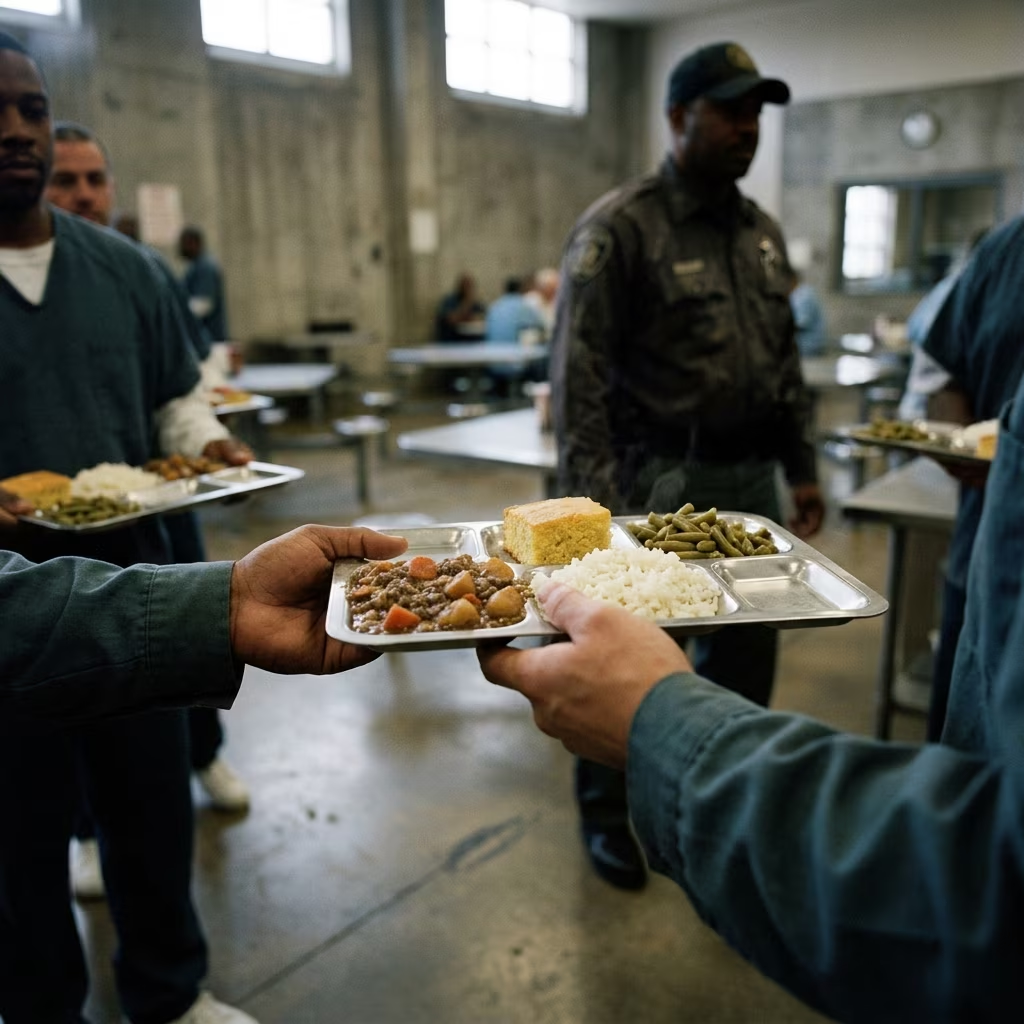
Food is one of the few parts of daily life that every person in prison shares, yet it is also one of the most contested aspects of incarceration. While the law requires that correctional facilities provide adequate meals, people behind bars often ask a deeper question: Do inmates have a legal right to choose or customize their meals? This article explores the boundaries of meal rights in U.S. prisons, focusing on religious, medical, and practical constraints, and separating common myths from the legal reality.
Basic Legal Obligations: What Prisons Must Provide
Across the United States, correctional facilities are not free to decide whether to feed the people in their custody. They are constitutionally and legally required to provide food that meets basic standards of adequacy and safety.
- Constitutional baseline: Courts treat access to adequate food as part of the Eighth Amendment protection against cruel and unusual punishment. Extremely inadequate or unsafe food can be considered unconstitutional.
- Nutrition and palatability: The food must be sufficiently nutritious and not so foul or contaminated as to pose a serious health risk. The taste can be unpleasant, but it cannot routinely be spoiled or hazardous.
- Regular meal schedule: Rules and policies typically require multiple meals per day, and often specify maximum time intervals between meals to avoid long periods of hunger.
These obligations define a minimum level of care, but they do not guarantee personal choice or comfort. Inmates are entitled to food that keeps them alive and reasonably healthy, not to restaurant-quality meals or customized menus.
How Often and What Kind of Food Is Served?
While there is variation across states and facilities, some broad patterns appear in how prisons structure daily meals.
- Most facilities serve three meals a day, though timing and portion size can differ.
- Some jails or prisons, especially at local levels, have experimented with two-meal schedules that cluster calories into fewer sittings, which has raised concerns about hunger and health.
- Budget pressures mean facilities often spend only a few dollars per person per day on food service, leading to heavy reliance on inexpensive, high-carb, low-quality options.
Typical menus include items like cereal, bread, processed meats, starchy sides, and canned vegetables. Fresh fruits and vegetables may be scarce, and quality can vary from acceptable to visibly poor. Even when food meets minimum calorie requirements, it may still be criticized for lacking variety, freshness, or cultural relevance.
Do Inmates Have a Right to Choose Their Meals?
In most situations, incarcerated people do not have a general right to choose or tailor their meals. They cannot ordinarily insist on specific dishes, brand-name products, or cooking methods. The law draws a line between essential rights and personal preferences.
However, there are important exceptions where choice is not just a preference, but connected to fundamental rights or health needs. These exceptions fall primarily into two categories:
- Religious dietary requirements
- Medical or disability-related diets
Understanding the legal framework around these exceptions is key to assessing whether a particular request is protected or discretionary.
Religious Diets: Protection Under the First Amendment and Federal Law
Religious freedom does not stop at the prison gate. Under the U.S. Constitution and statutes like the Religious Land Use and Institutionalized Persons Act (RLUIPA), prisons must accommodate sincere religious practices unless there is a compelling reason not to.
What Religious Diet Rights Typically Include
- Kosher meals for Jewish inmates, including avoidance of prohibited foods and cross-contamination.
- Halal diets for Muslim inmates, which may involve specific slaughter methods or avoidance of pork and certain additives.
- Vegetarian or vegan options for people whose faith requires abstaining from meat or animal products.
Courts generally look at whether an inmate has a sincerely held religious belief and whether the requested diet is genuinely connected to that belief. Formal membership in a religious group can be relevant, but sincerity is the core test.
Limits on Religious Meal Accommodations
Accommodation is not absolute. Prisons may restrict or modify religious diets if they can show legitimate reasons tied to security, cost, or administrative burden.
- Cost concerns: If a specialized diet is extremely expensive compared to standard menus, facilities may seek less costly alternatives as long as they still respect the core religious requirements.
- Security and logistics: Some preparation methods or ingredients may be difficult to provide safely or consistently, especially in large institutions.
- Evidence of misuse: If staff reasonably believe an inmate is requesting a religious diet for non-religious reasons (for example, to access different items), they may scrutinize the claim.
The legal standard requires prisons to avoid imposing a “substantial burden” on religious exercise without good reason, but it does not demand perfect or luxurious compliance. Compromise solutions—such as providing pre-packaged certified meals or simplified vegetarian options—are common.
Medical and Disability-Related Diets
In addition to religious considerations, prisons must address medical needs related to food. Under constitutional law and statutes protecting people with disabilities, ignoring serious health-related dietary requirements can amount to deliberate indifference Typically, a medical diet is granted only after evaluation by prison health staff. Inmates must demonstrate a clinically significant condition rather than a personal preference. Once documented, facilities are expected to take reasonable steps to adjust meals or provide alternatives. Even when a medical need is recognized, implementation can be uneven: When medically necessary diets are repeatedly ignored or poorly implemented, incarcerated people sometimes seek legal relief. Lawsuits have focused on patterns of spoiled food, constant hunger, or worsened chronic conditions due to diet, arguing that these conditions violate constitutional protections. Not every dietary preference is tied to religion or medical need. People may choose certain eating patterns—such as veganism, low-carb regimens, or culturally specific cuisines—for ethical, lifestyle, or personal reasons. In the prison context, these preferences generally do not create enforceable legal rights unless they overlap with protected categories. Facilities may choose to offer more flexible options—such as meatless trays or occasional menu variety—but these are usually policy decisions, not legal obligations. When budgets are tight, discretionary offerings are often among the first to disappear. One way inmates can exercise limited choice over what they eat is by using the commissary, a store within the facility that sells snacks, instant foods, and basic supplies. Commissary and approved vendor packages can help people supplement calories, add variety, or accommodate personal preferences. However, this option depends heavily on access to money, and prices in some systems are significantly marked up compared to outside stores. Even where law recognizes some rights related to food—especially religious and medical diets—prisons operate under practical constraints that shape how those rights are implemented. Because of these practical constraints, even rights that exist on paper may feel limited in daily practice. Advocacy and litigation continue to push institutions toward better compliance and higher standards of care. Many systems provide meatless options, but in most cases, vegetarian or vegan meals are legally required only when they are tied to a sincere religious practice or a Yes. When food is consistently spoiled, contaminated, or so inadequate that it causes or worsens serious health problems, incarcerated people sometimes file lawsuits arguing that these conditions violate the Eighth Amendment. Success depends on showing a pattern of harm and deliberate indifference by officials. Generally no. While prisons may occasionally serve menus acknowledging cultural holidays or regional tastes, these offerings are not usually treated as enforceable rights. Only when cultural practices overlap with recognized religious requirements do they gain legal significance. In most systems, outside food from families or restaurants is strictly prohibited for security and sanitation reasons. Some jurisdictions allow packages from approved commercial vendors under tightly controlled rules, but not perishable home-cooked items. For religious diets, inmates typically submit requests explaining their beliefs, sometimes supported by chaplain interviews or documentation. For medical diets, evaluation by prison healthcare staff is usually required, and records must show a diagnosis and recommended diet. Facilities then decide what accommodations are feasible. Understanding these boundaries helps explain why people in prison often experience food as both a basic necessity and a source of tension. The law sets minimum standards and protects some forms of choice, but daily reality reflects a complex negotiation between rights, resources, and institutional control.Examples of Medical Diet Needs
Challenges in Implementing Medical Diets
Personal Preference Diets: Vegan, Keto, or Cultural Choices
Common Non-Protected Preferences
Commissary and Outside Food: Supplementing Prison Meals
Source of Food Level of Choice Typical Limitations Standard prison meals Very low Set menus, minimal customization, volume controlled by policy Commissary purchases Moderate (if inmate has funds) High prices, limited selection, rules on what items are allowed Packages from approved vendors Moderate Vendor lists, item restrictions, quantity limits Security, Budget, and Administration: Why Options Are Limited
Security Concerns
Budget Limitations
Administrative Complexity
Common Misconceptions About Inmate Meal Rights
Reality: Standard menus are fixed, and only certain religious or medical needs can justify special diets.
Reality: Persistent refusal may raise health concerns, but it rarely compels new choices unless linked to protected rights.
Reality: The law requires reasonable accommodation, not exact replication of every tradition.
Reality: Courts focus on safety, nutrition, and persistent serious deficiencies rather than taste alone.Frequently Asked Questions (FAQs)
1. Are prisons legally required to offer vegetarian or vegan meals?
2. Can inmates sue over bad or unsafe food?
3. Do inmates have a right to specific cultural or regional foods?
4. Can family members send home-cooked food or restaurant meals?
5. How do inmates prove they need a religious or medical diet?
Key Takeaways for Understanding Prison Meal Rights
References