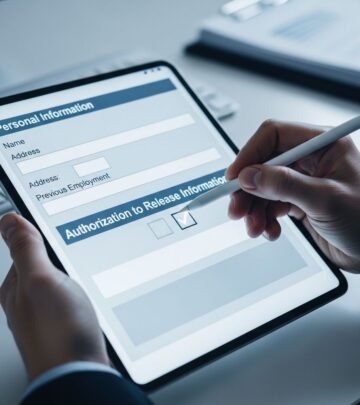
Strategic Filing: Maximizing Your Provisional Patent Benefits
Master provisional patent filing strategies to protect innovations and establish priority dates effectively.

Understanding the Foundation of Provisional Patent Protection
A provisional patent application represents a strategic entry point into the formal patent protection system in the United States. Filed with the United States Patent and Trademark Office (USPTO), this application type allows inventors to establish an official filing date for their innovations while deferring the more complex and expensive formal examination process. The provisional filing mechanism has been available to inventors since 1995, creating a pathway that balances affordability with meaningful legal protection.
The fundamental purpose of filing provisionally centers on securing priority rights. When you file a provisional application, you create a documented record establishing that you possessed and conceived of your invention as of that filing date. This becomes crucial if disputes arise regarding invention ownership or if competing patents emerge later. The provisional application serves as the foundation upon which future full patent protection can be built, with the critical advantage of establishing an earlier priority date than would otherwise be possible.
Essential Documentation and Filing Requirements
Successfully maximizing a provisional patent application begins with understanding what the USPTO requires for acceptance. The application must contain several critical components that collectively demonstrate your invention clearly and comprehensively.
Core Filing Requirements
- A detailed written description of your invention that explains how it functions and how to use it
- The complete names and residential addresses of all inventors who contributed to the invention
- A clear, descriptive title that accurately represents your innovation
- Drawings or diagrams that illustrate key aspects of your invention (when applicable)
- The appropriate filing fee as established by USPTO regulations
- A cover sheet identifying the application as provisional and providing correspondence details
The written description represents the most critical component of your provisional application. Rather than using formal patent claim language like non-provisional applications require, your description should function as a technical specification that allows someone with ordinary expertise in your field to understand, construct, and operate your invention without requiring additional experimentation. This distinction is fundamental—while provisional applications avoid the complexity of claim drafting, they demand comprehensive technical documentation.
Crafting a Compelling Technical Description
The quality of your written description directly impacts the future strength of your patent protection. An inadequate description during the provisional stage cannot be corrected later, as the USPTO prohibits amendments to provisional applications after filing (except for specific regulatory compliance matters). This permanence makes the initial documentation phase extraordinarily important.
Your technical description should progress logically through several sections. Begin with background information that contextualizes your invention within existing technology and industry practices. Identify the specific problems or limitations in current solutions that your invention addresses. Follow this foundation with a clear summary that distills your invention’s essence into concrete, specific language rather than abstract generalities.
The detailed description section should walk through your invention’s operation step-by-step, explaining each component’s function and how these elements interact. Include information about materials, dimensions, technical specifications, and operational parameters relevant to your invention. If your innovation involves a process or method, describe each step sequentially with sufficient detail that a skilled practitioner could replicate it.
Where applicable, incorporate drawings or diagrams that visually represent your invention’s structure, components, or operational flow. These visual elements supplement your written description, clarifying spatial relationships, mechanical connections, or process sequences that may be difficult to explain in text alone. While not always mandatory, drawings significantly strengthen most provisional applications.
Strategic Timing Considerations
Understanding when to file your provisional application optimizes its protective value. The ideal filing window exists before any public disclosure of your invention occurs. Public disclosure includes conference presentations, academic publications, social media announcements, product demonstrations, or informal discussions with individuals outside your organization who lack confidentiality agreements.
The USPTO provides a grace period allowing filing up to 12 months after an inventor’s public disclosure, but relying on this grace period introduces unnecessary risk. International patent protection becomes significantly more complex when public disclosure precedes filing, and many foreign jurisdictions do not recognize the US grace period. Therefore, filing before public disclosure remains the optimal strategy.
Consider filing a provisional application when you have adequately developed your invention concept and reduced it to practice—or have a concrete plan for doing so within the coming year. This application serves as an excellent precursor before meeting with potential investors, collaborative partners, or business sponsors, as it provides legal standing and demonstrates serious development commitment.
The Twelve-Month Window and Strategic Planning
Filing a provisional application triggers a critical one-year timeline that demands strategic planning. This 12-month period serves multiple purposes: it provides time to assess your invention’s commercial viability, gather market feedback, refine technical specifications, and prepare comprehensive non-provisional patent documentation.
Critical Milestones Within Your Provisional Period
| Timeline Phase | Key Activities | Purpose |
|---|---|---|
| Months 1-3 | Market research, competitive analysis, technical refinement | Validate commercial potential and identify necessary improvements |
| Months 4-8 | Comprehensive prior art searches, prototype development, performance testing | Gather evidence of novelty and technical functionality |
| Months 9-11 | Non-provisional application preparation, claims drafting, formal legal review | Develop complete patent documentation for formal examination |
| Month 12 | File non-provisional application before deadline | Preserve priority date and transition to formal examination |
Establishing an 11-month internal deadline for non-provisional filing provides a safety buffer against administrative delays. This proactive approach prevents inadvertent abandonment of your provisional application’s priority benefits. Missing the 12-month window results in automatic abandonment, losing the advantage of your earlier filing date.
Conducting Thorough Prior Art Searches
During your provisional period, invest time in comprehensive prior art research. While the USPTO does not examine provisional applications, this research informs your strategy for the non-provisional application and reveals potential patentability challenges. Understanding existing patents, published applications, and technical literature helps you refine your claims strategy and strengthen your invention’s unique aspects.
Prior art searches examine patents issued domestically and internationally, published patent applications, academic publications, product literature, and industry standards. This research may reveal that certain aspects of your invention already exist in published form, necessitating refined claims that emphasize truly novel elements. Alternatively, prior art searches might confirm that your innovation represents a genuine advance worthy of patent protection.
Leveraging Patent Pending Status
Upon successful provisional filing, you gain the legal right to mark your invention with “Patent Pending” notices. This designation serves multiple business purposes beyond legal technicalities. It signals to potential competitors, investors, and business partners that you have taken formal steps toward patent protection, discouraging others from developing similar solutions. The patent pending status provides psychological and market-based protection while your formal examination proceeds.
However, the “Patent Pending” notice carries legitimate meaning only after a provisional application is properly filed. Using this designation without an actual pending application constitutes fraud and exposes you to legal liability. Ensure your provisional application receives an official filing date confirmation before applying the patent pending designation to your materials.
Inventor Documentation and Rights Clarification
Precise inventor identification within your provisional application prevents future complications. Every individual who made a contribution to conceiving or developing the invention must be named as an inventor, whether their contributions were conceptual, mechanical, or collaborative. Conversely, individuals who provided financial support, management oversight, or other non-inventive roles should not be listed as inventors.
All named inventors must consent to the filing and understand their status as inventors. For provisional applications that later transition to non-provisional status, at least one inventor named in the provisional application must remain as an inventor in the non-provisional filing to claim benefit of the provisional priority date. This requirement becomes particularly important in organizations where personnel changes, consultant transitions, or employment terminations may occur.
Additionally, clarify ownership rights before filing. If your invention was developed within an employment context, your employer may own invention rights according to your employment agreement. If developed through a research grant or collaborative project, funding agencies or partner organizations may have ownership interests requiring disclosure.
Preparing for Non-Provisional Transition
The relationship between provisional and non-provisional applications requires careful management. Your non-provisional application must contain sufficient claim support in the provisional application to benefit from the provisional’s earlier filing date. This means the subject matter described in your non-provisional claims must have adequate description and enablement in the provisional specification.
During the provisional period, you may expand your technical descriptions, add new drawings, or refine your understanding of the invention. However, these enhancements can only be incorporated into the non-provisional application—they cannot be added to the provisional application itself. If your non-provisional claims describe subject matter absent from the provisional specification, those claims lose the benefit of the earlier filing date, reverting to the non-provisional filing date instead.
This limitation makes the initial provisional documentation unusually important. Draft your provisional description comprehensively, covering all aspects you anticipate claiming later. Err toward inclusivity rather than minimalism, ensuring broad specification coverage that supports various claim formulations.
Electronic Filing and Submission Process
The USPTO’s Patent Center platform enables secure electronic filing of provisional applications, streamlining the submission process. This modern system requires documents in Portable Document Format (PDF) and validates compatibility with USPTO automated systems before final submission. Electronic filing provides real-time payment processing and immediate filing date confirmation, eliminating uncertainties associated with mail-based submissions.
Preparing documents for electronic submission demands attention to technical specifications. PDFs should maintain clear text searchability, proper image quality for drawings, and consistent formatting throughout. The USPTO website provides detailed guidance on document preparation standards and acceptable file formats.
Costs and Financial Considerations
One significant advantage of provisional applications is their reduced filing cost compared to non-provisional applications. The substantially lower filing fee makes provisional filing accessible to independent inventors and small enterprises that might otherwise struggle with patent protection expenses. This affordability facilitates early priority establishment without substantial financial commitment.
However, provisional applications represent only the first step in the patent process. Transitioning to non-provisional examination involves higher costs, and the overall patent prosecution process (examination, responses to office actions, potential appeals) requires additional investment. Budget considerations should account for the full patent journey, not merely the initial provisional filing.
Frequently Asked Questions
Q: Can I amend my provisional application after filing?
A: No, the USPTO does not permit amendments to provisional applications except for specific regulatory compliance issues. This permanence makes thorough initial documentation essential, as errors or omissions cannot be corrected after filing.
Q: What happens if I don’t file a non-provisional application within 12 months?
A: Your provisional application automatically abandons after 12 months, and you lose the benefit of its priority date. Any subsequent patent application uses its own filing date as the priority date, potentially allowing competitors to patent similar inventions filed between your provisional abandonment and your later non-provisional filing.
Q: Can I file a provisional application for software or business methods?
A: Yes, provisional applications can cover software, algorithms, and business processes, provided they are described with sufficient technical detail and are not purely abstract. The description must enable someone skilled in the relevant field to implement the invention without undue experimentation.
Q: Does a provisional application provide patent protection?
A: No, provisional applications do not issue as patents and provide no enforceable patent rights. They establish a priority date that supports later non-provisional applications, which are the actual patents that provide legal protection. Patent pending status offers market-based deterrence but not legal enforceability.
Q: Should I hire a patent attorney for my provisional application?
A: While not required, professional guidance significantly improves application quality and future patent strength. Patent attorneys understand USPTO requirements and help craft descriptions that support desired claims while avoiding technical pitfalls that could limit protection scope.
Q: Can my provisional application claim priority to an earlier application?
A: Provisional applications can establish priority dates but do not themselves claim priority to earlier applications. However, subsequent non-provisional applications can claim priority to the provisional filing date, which may itself be related to earlier international filings under the Paris Convention.
References
- Provisional Application for Patent – USPTO — United States Patent and Trademark Office. 2024. https://www.uspto.gov/patents/basics/apply/provisional-application
- Basics of a Provisional Application — United States Patent and Trademark Office. 2024. https://www.uspto.gov/sites/default/files/documents/Basics%20of%20a%20Provisional%20Application.pdf
- Explaining the Process: How a Provisional Patent Application Works — Menteso. 2024. https://menteso.com/blog/explaining-the-process-how-a-provisional-patent-application-works/
- How to File a Provisional Patent Application — Daniel Law Offices, P.A. 2024. https://danielpatents.com/how-to-file-a-provisional-patent-application/
- Frequently Asked Questions: Provisional Patent Applications — Cooley LLP. 2020. https://www.cooley.com/protect-pages/2020/03/frequently-asked-questions-provisional-patent-applications
Similar Articles








Read full bio of medha deb