
Mastering Nevada Court E-Filing After the New Rules
A practical guide for Nevada legal professionals adapting to the latest statewide electronic filing and service requirements.
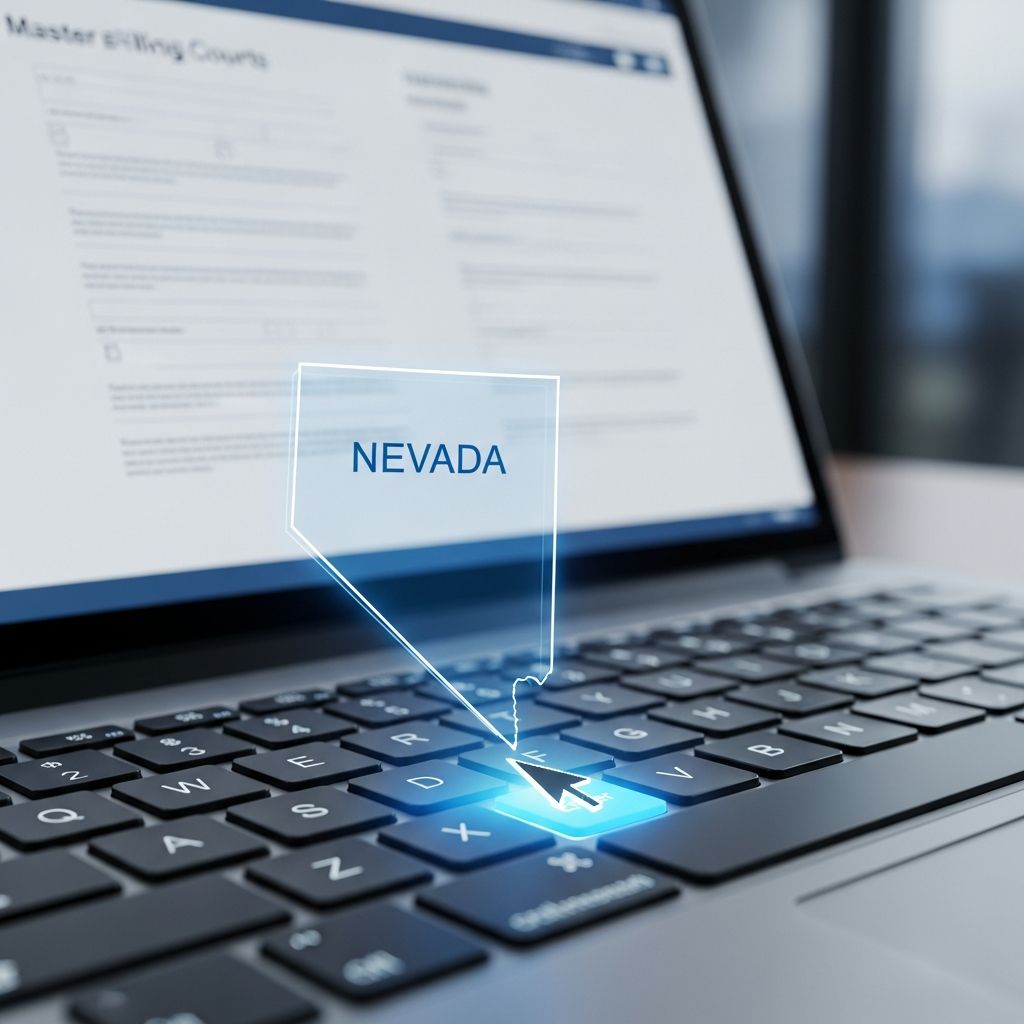
Nevada courts have entered a new phase of electronic practice, driven by a complete rewrite of the Nevada Electronic Filing and Conversion Rules (NEFCR) that took effect in 2024. These changes affect how attorneys, law firms, and self-represented litigants file, serve, and manage court documents statewide.
This guide explains the updated framework, what it means for your day-to-day work, and how to build a reliable, compliant workflow using modern e-filing tools.
1. Why Nevada’s E-Filing Landscape Has Changed
On June 26, 2024, the Nevada Supreme Court issued an order repealing and replacing the prior Nevada Electronic Filing and Conversion Rules. The revised rules became effective July 26, 2024, applying to all Nevada courts that accept electronic filings.
The goals behind the overhaul include:
- Consistency across municipal, justice, district, and appellate courts in Nevada.
- Modernization to reflect current technology, including 24/7 system availability and electronic payments.
- Clarity around timing, electronic service, and electronic signatures to reduce disputes and uncertainty.
For legal professionals, this means the technical platform you use may not change, but the rules governing your obligations almost certainly have.
2. Core Features of Nevada’s Updated E-Filing Framework
The Nevada Electronic Filing and Conversion Rules define how courts implement electronic filing systems (EFS) and how parties must use them.
2.1 What Counts as an Electronic Filing System
The NEFCR describe an electronic filing system (EFS) as a court-approved system for electronic submission, filing, and service of documents. In Nevada, examples include:
- The Nevada appellate courts’ web-based e-filing portal, which allows 24/7 filing and access to documents and docket sheets.
- County-level platforms, such as Washoe County’s eFlex system, used by attorneys and agencies for electronic filing.
Each court determines which cases and documents must be filed through its designated system, but the procedural rules now come from the statewide NEFCR.
2.2 24/7 Availability and Time of Filing
Under the updated rules, an EFS must allow submission of documents 24 hours a day, seven days a week. Timing is critical in litigation, and the rules now explicitly state:
- Any document submitted electronically by 11:59 p.m. local court time is deemed filed on that date.
- The EFS timestamp controls for questions of timeliness and statute of limitations compliance.
This codified timestamp standard is echoed in Nevada statutes governing electronic service and filing in specific case types, which similarly treat documents submitted by 11:59 p.m. as filed or served on that date.
2.3 Automatic Filing and Service Workflow
For most documents, once you submit through the EFS:
- The document is automatically filed upon submission (with narrow exceptions for initiating documents that may require fee review).
- It is simultaneously served on registered parties via electronic service under Rule 10.
- The system must send electronic notice to registered users confirming filing and service.
This automation reduces the need for separate service steps, but it also means that mistakes can propagate quickly if your service list or registration status is inaccurate.
2.4 Who Must Use E-Filing
The NEFCR require certain parties to register and use the EFS, including attorneys and other regular court users, subject to limited exemptions. Self-represented litigants are generally allowed—but not required—to e-file. However, once a self-represented litigant elects electronic filing and service, they must continue to do so for the life of the case unless the court orders otherwise.
3. Electronic Signatures, Notarization, and Compliance
Electronic filing requirements are closely tied to how documents are signed and authenticated.
3.1 Definition and Use of Electronic Signatures
Nevada law and the NEFCR define an electronic signature and incorporate that definition into various statutes governing how documents are filed and served. Recent legislative updates require that many electronically filed documents:
- Contain the electronic signature of the person filing the document.
- Use an electronic signature with the meaning set by the NEFCR (rather than informal images or typed names without safeguards).
This standard applies in multiple contexts, such as juvenile cases, criminal filings, and child welfare matters, ensuring consistency across different case types.
3.2 Electronic Notarization
Documents requiring notarization may still be submitted electronically, but the rules impose specific conditions:
- A notary public may apply an electronic notarization under Nevada statutes governing electronic notarial acts.
- If electronic notarization is unavailable or impractical, the notary may sign a printed document, which is then scanned and filed in a format that accurately reproduces the original signatures and content.
These provisions align with broader trends in U.S. courts to recognize electronically notarized documents, provided the process meets statutory safeguards.
4. Practical Workflow for Nevada E-Filing
Translating rules into daily practice requires a repeatable workflow that reduces human error and ensures compliance.
4.1 Pre-Filing Preparation
Before logging into any EFS, legal staff should verify:
- Case eligibility for e-filing in the target court (some limited case types may still require paper).
- Document format, including PDF specifications, page size, and any local rule requirements for bookmarks or text-searchability.
- Signatures are correctly applied (electronic signatures for filers; notarization handled correctly where required).
- Fee calculations are accurate and supported by the court’s fee schedule.
4.2 Submission Through the Court’s E-Filing System
When filing through Nevada’s appellate e-filing system or a county platform:
- Log in under the correct attorney or firm account with up-to-date contact information.
- Select the correct case number, party role, and document type to avoid misrouting.
- Confirm that all related documents (exhibits, proposed orders, supporting declarations) are uploaded with clear, descriptive labels.
- Review the electronic fee payment screen—many systems allow payment of filing fees electronically and may process fee waiver applications as part of filing.
Upon submission, the system should display a confirmation screen and later provide a filed, time-stamped copy in your account.
4.3 Handling Nonconforming Documents
If a document fails to meet technical or formatting requirements, the court may treat it as nonconforming. While county systems such as Washoe County’s eFlex no longer involve pre-filing clerk review under earlier iterations of the rules, the updated NEFCR clarify that:
- Timeliness is generally determined by the submission timestamp, even if nonconformities exist.
- If the court strikes a nonconforming document, timeliness questions for any resubmission are based on the EFS timestamp for the corrected filing, unless the court orders otherwise.
This makes it essential to preserve your confirmation notices and downloaded copies to document what was filed and when.
5. Electronic Service: Building a Reliable Strategy
Electronic service is no longer a convenience—it is integral to Nevada’s litigation process.
5.1 When Service Is Complete
Under the NEFCR, electronic service is complete when the EFS sends the required notice to registered users. The key implications are:
- You do not need separate email or paper service for registered parties unless a rule or order requires it.
- Time to respond is calculated from the date of electronic service, not from when the recipient actually opens or downloads the document.
5.2 Maintaining an Accurate Service List
The clerk is responsible for maintaining an official service list indicating which parties receive electronic service and which must be served by traditional means. To avoid service disputes, firms should:
- Confirm that all attorneys of record in their office are correctly registered and linked to the case.
- Monitor substitutions of counsel and withdrawals to keep service roles updated.
- Track parties who are not registered and ensure that they receive paper service where required.
6. Comparing Pre- and Post-2024 Nevada E-Filing Practice
The table below highlights several practical differences between pre-2024 practice (under the earlier NEFCR framework) and the current environment following the 2024 rule replacement.
| Area | Earlier Practice | Post-2024 NEFCR |
|---|---|---|
| Governing rules | Original NEFCR adopted in 2007, amended periodically. | Entire set of NEFCR repealed and replaced effective July 26, 2024. |
| System availability | 24/7 availability recognized but less explicitly detailed. | EFS must accept filings 24/7; filings by 11:59 p.m. deemed filed that day. |
| Electronic service | Electronic service allowed; procedures varied by court. | Statewide standard for when electronic service is complete and how time to respond is calculated. |
| Electronic signatures | Definitions existed but were not fully incorporated into related statutes. | Multiple statutes now expressly rely on the NEFCR definition of electronic signature for specific filings. |
| Notarized documents | Electronic submission permitted but less detailed guidance. | Explicit pathways for electronic notarization or scan-and-file of wet-signed originals. |
7. Best Practices for Law Firms and Legal Departments
To take full advantage of Nevada’s e-filing regime while staying safely within the rules, consider implementing the following practices.
7.1 Centralize E-Filing Responsibility
- Designate trained e-filing coordinators or docketing staff for each office.
- Require all filings to pass through a checklist review covering signatures, case number, document type, and fee status.
- Maintain a shared repository of filed-stamped PDFs and EFS receipts for audit and motion practice.
7.2 Align Internal Deadlines with the 11:59 p.m. Rule
Although Nevada rules allow filing up to 11:59 p.m. local time, treating that as your working deadline is risky:
- Network issues, EFS maintenance, or payment failures can jeopardize a just-in-time filing.
- Internal policies should create a buffer (for example, a 4:00 p.m. internal cut-off) to mitigate last-minute problems.
7.3 Track Rule Updates and Local Variations
While the NEFCR supply statewide standards, courts may publish local rules or technical guidelines for their systems. To stay current:
- Monitor the Nevada Supreme Court and Administrative Office of the Courts websites for rule orders and guidance.
- Review local court websites for announcements regarding filing format changes, downtime, or procedural adjustments.
8. Frequently Asked Questions (FAQs)
Q1: If I submit a filing at 11:58 p.m., is it timely?
Yes. Under the revised NEFCR, any document electronically submitted by 11:59 p.m. at the court’s local time is deemed filed on that date, and the EFS timestamp controls for timeliness. However, firms should build in earlier internal cutoffs to avoid technical problems.
Q2: Does electronic service count as service for all purposes?
Electronic service through the EFS is complete when the system sends the required notice to registered users, and response times run from that date. Parties who are not registered or who are exempt from e-service may still require traditional service methods as directed by rule or court order.
Q3: Can self-represented litigants use the Nevada appellate e-filing system?
Nevada appellate courts maintain a web-based e-filing system for criminal and civil cases, which allows attorneys and district court clerks to file documents and pay fees. Self-represented litigant access may be limited or subject to specific procedures, and once a self-represented party elects to e-file in a case, the NEFCR generally require consistent use of the EFS going forward.
Q4: How are electronically notarized documents handled?
Documents that require notarization may be submitted electronically if the notary uses an approved form of electronic notarization under Nevada law. If electronic notarization is not available, the notary may sign a paper version, which is then scanned and filed in a format that accurately reproduces the original signatures and content.
Q5: Where can I find official instructions for Nevada appellate e-filing?
The Nevada appellate courts provide online e-filing instructions explaining how to register, file documents, pay fees, and access docket sheets through their system. These materials are updated periodically, so practitioners should review them alongside the NEFCR and any court-specific administrative orders.
References
- Nevada Electronic Filing and Conversion Rules (NEFCR) — Supreme Court of Nevada. 2024-07-26. https://www.leg.state.nv.us/courtrules/NEFCR.html
- Nevada Supreme Court Repeals and Replaces the Nevada Electronic Filing and Conversion Rules — Supreme Court of Nevada. 2024-06-26. https://nvcourts.gov/supreme/news/nevada_supreme_court_repeals_and_replaces_the_nevada_electronic_filing_and_conversion_rules
- Nevada Assembly Bill 18 (83rd Session, 2025) — Nevada Legislature. 2025. https://legiscan.com/NV/text/AB18/id/3242472/Nevada-2025-AB18-Enrolled.pdf
- E-Filing Instructions — Nevada Appellate Courts. 2023. https://nvcourts.gov/supreme/how_do_i/training/e_filing_instructions
- Washoe County eFlex Notice on Electronic Filing Procedures — Second Judicial District Court of Nevada. 2019-07-01. https://wceflex.washoecourts.com/OBPFN/OBPF/Nevada
- Moapa Township Justice Court Electronic Filing Information — Clark County, Nevada. 2022. https://www.clarkcountynv.gov/government/departments/justice_courts/jurisdictions/moapa/efile
Similar Articles








Read full bio of Sneha Tete


