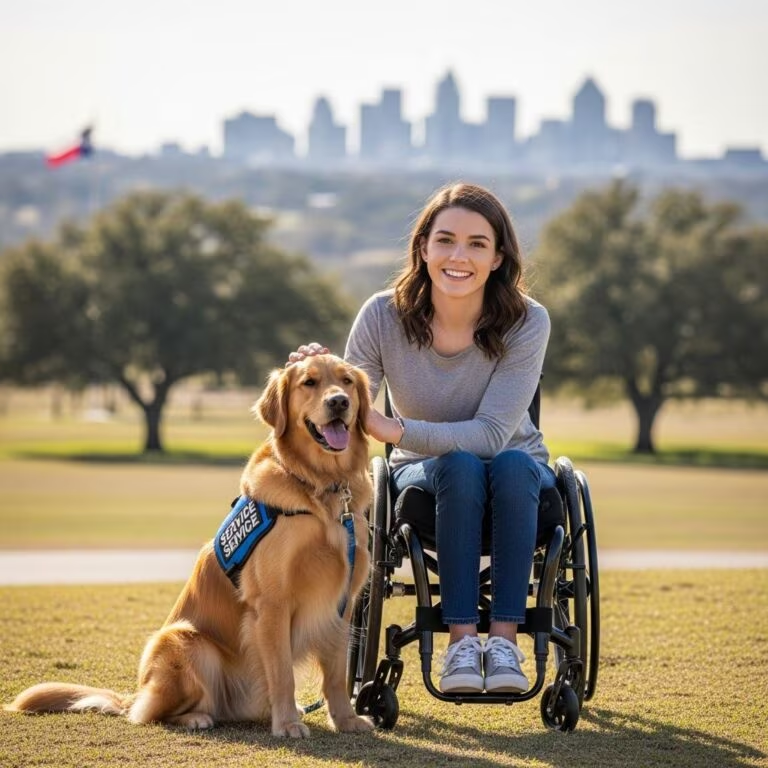
Model release forms serve as critical legal tools that grant photographers permission to use images of identifiable individuals for various purposes, particularly commercial ones. These documents protect creators from potential lawsuits related to privacy rights and unauthorized use, ensuring smooth publication and marketing of photographs.
Defining Model Releases in Photography
A model release is a binding agreement where the subject—or their guardian if a minor—authorizes the photographer to capture and utilize their likeness in photos, videos, or related media. Unlike permissions to simply take pictures, which are often unrestricted in public spaces, releases focus on post-capture distribution and commercial exploitation.
The core value lies in clarifying usage rights upfront. For instance, without such a form, publishing a photo implying endorsement of a product could lead to liability under right of publicity laws, which vary by jurisdiction but generally prohibit commercial exploitation without consent.
Legal Foundations and Privacy Considerations
Privacy laws form the backbone of model release requirements. In the United States, the right of publicity protects individuals from unauthorized commercial use of their image, name, or likeness. Photographers face no liability for snapping photos in public, but publishers do if the image advertises goods or services without permission.
State-specific statutes add layers; for example, some require releases for any identifiable person in promotional materials. Internationally, regulations like the EU’s GDPR demand explicit consent for processing personal data, including images, though simple consent forms may suffice for non-commercial contexts.
Ethical implications extend beyond law: obtaining releases fosters trust, prevents disputes where models later object to public display, and enhances marketability by assuring buyers of clear rights.
When Model Releases Are Essential
- Commercial Advertising: Any photo used to promote products, services, or your photography business requires a release, such as client images on websites or social media portfolios.
- Stock Photography Sales: Platforms like Shutterstock mandate releases for recognizable faces, tattoos, or suggestive content to indemnify against claims.
- Marketing and Portfolios: Even personal websites displaying session photos for client attraction need signed forms to link images to business promotion.
- Sensitive Content: Nude, tattooed, or mature models demand separate releases per individual, regardless of recognizability.
Conversely, no release is needed for editorial news, public domain events, or non-identifiable subjects in artistic works. Blog posts or educational uses are generally safe if not tied to sales pitches.
Key Components of an Effective Model Release
Robust forms balance comprehensiveness with clarity. Essential elements include:
- Full legal names and contact details of the model, photographer, and witnesses (if applicable).
- Clear permission statement for using the image, likeness, and voice in perpetuity, worldwide, across media types.
- Clauses allowing digital alterations, derivatives, or composites without further approval.
- Usage scope: Specify commercial, promotional, advertising, or limited editorial rights.
- Compensation details: Often ‘no fee’ for time-for-images trades, or outline payments.
- Waiver of claims for privacy invasion, defamation, or emotional distress.
- Minors: Parent/guardian signature and relationship verification.
- Dates, signatures, and printed names for all parties.
Customization is key—tailor to session specifics, like restricting use to certain platforms or timeframes.
Variations: Consent Forms vs. Full Contracts
| Type | Purpose | Binding Nature | Best For |
|---|---|---|---|
| Simple Consent Form | Acknowledges photo-taking and basic use | Withdrawable; low enforceability | Non-commercial, casual shoots |
| Property Release | Permits identifiable private locations | Legally binding | Commercial shoots on private property |
| Full Model Contract | Detailed rights, pay, restrictions | Strongly enforceable | Paid modeling, advertising gigs |
Consent forms suit informal scenarios under regulations like GDPR, while contracts provide ironclad protection for business-critical images.
Step-by-Step Guide to Creating Your Form
- Draft Core Language: Use plain English for accessibility; include irrevocable, royalty-free worldwide license grants.
- Add Session Details: Date, location, description of shoot to tie release to specific images.
- Incorporate Protections: No-representation-of-truth clause; indemnity against third-party claims.
- Handle Minors: Require guardian details; consider notary for validity.
- Digital Signing: Tools like DocuSign ensure tamper-proof records.
- Review Legally: Consult attorneys for jurisdiction-specific tweaks.
- Store Securely: Digitally archive with metadata linking to files.
Always get signatures before the shoot to avoid post-session haggling.
Common Mistakes and How to Avoid Them
- Vague Language: Be explicit on uses to prevent ‘beyond-scope’ disputes.
- Forgetting Witnesses: Adds credibility, especially for high-value shoots.
- Ignoring Property: Separate releases for venues or props if identifiable.
- Over-Reliance on Verbal OKs: Written proof trumps ‘I thought it was fine’ claims.
- Outdated Templates: Laws evolve; refresh forms biennially.
Pro tip: Present releases positively—as empowering models to see their images shine—boosting sign-off rates.
Sample Model Release Template
Here’s a basic, customizable HTML-ready template:
Model Release Form
Date: [Date]
Photographer: [Name, Address]
Model: [Full Name, Address, DOB if minor]I, [Model Name], grant [Photographer Name] irrevocable rights to use my image from [Session Date/Description] for commercial, promotional, and editorial purposes worldwide in perpetuity.
This includes alterations and no further compensation. I waive all claims.
Signature: ________________ Date: ______
Parent/Guardian (if minor): ________________
Adapt for specifics; professional templates from legal sites offer advanced versions.
Frequently Asked Questions
Do I need a release for public photos?
No, taking photos in public is generally fine without one, but commercial publication requires consent if the person is identifiable.
What if the model is a minor?
A parent or legal guardian must sign, with their full details and relationship stated.
Can models revoke a signed release?
Typically no, if worded as irrevocable, protecting perpetual use rights.
Is a verbal agreement sufficient?
No—written, signed documents are essential for legal enforceability.
What about stock sites?
They strictly require releases for any recognizable or sensitive content, often with checklists.
Advanced Strategies for Professional Photographers
Incorporate releases into client contracts for seamless workflows. For events, use group forms with checkboxes. Track via CRM software linking forms to image metadata. Internationally, align with local laws—e.g., stricter EU data protections. Building a library of pre-vetted templates accelerates shoots while minimizing risks.
For high-stakes advertising, pair with talent agencies for vetted models with standard releases. Regularly audit your portfolio for unsigned images and retroactively secure permissions where possible.
Ultimately, proactive use of model releases transforms potential liabilities into assets, enabling fearless creative expression and business growth. By prioritizing these documents, photographers not only comply with laws but also professionalize their operations, attracting premium clients who value legal clarity.
References
- Keep Your Shoot Picture Perfect with a Model Release Form — LegalZoom. 2023. https://www.legalzoom.com/articles/keep-your-shoot-picture-perfect-with-a-model-release-form
- Understanding Model Releases — Institute of Photography. 2024. https://www.institute-of-photography.com/understanding-model-releases/
- Understanding Model Releases for Photographers — TheLawTog Blog. 2023. https://blog.thelawtog.com/understanding-model-releases/
- Model Release — Wikipedia (citing U.S. legal standards). 2025-02-01. https://en.wikipedia.org/wiki/Model_release
- When You DO and DON’T Need Model Releases for Photographers — The Legal Paige. 2024. https://thelegalpaige.com/blogs/blog/model-release
- Content Publishing Standards: Legal Documentation — Shutterstock. 2025-01-15. https://submit.shutterstock.com/help/en/articles/10617411-content-publishing-standards-legal-documentation