
Mastering Legal Proofreading: Essential Strategies
Elevate your legal writing with proven proofreading techniques that ensure precision, clarity, and professionalism in every document.
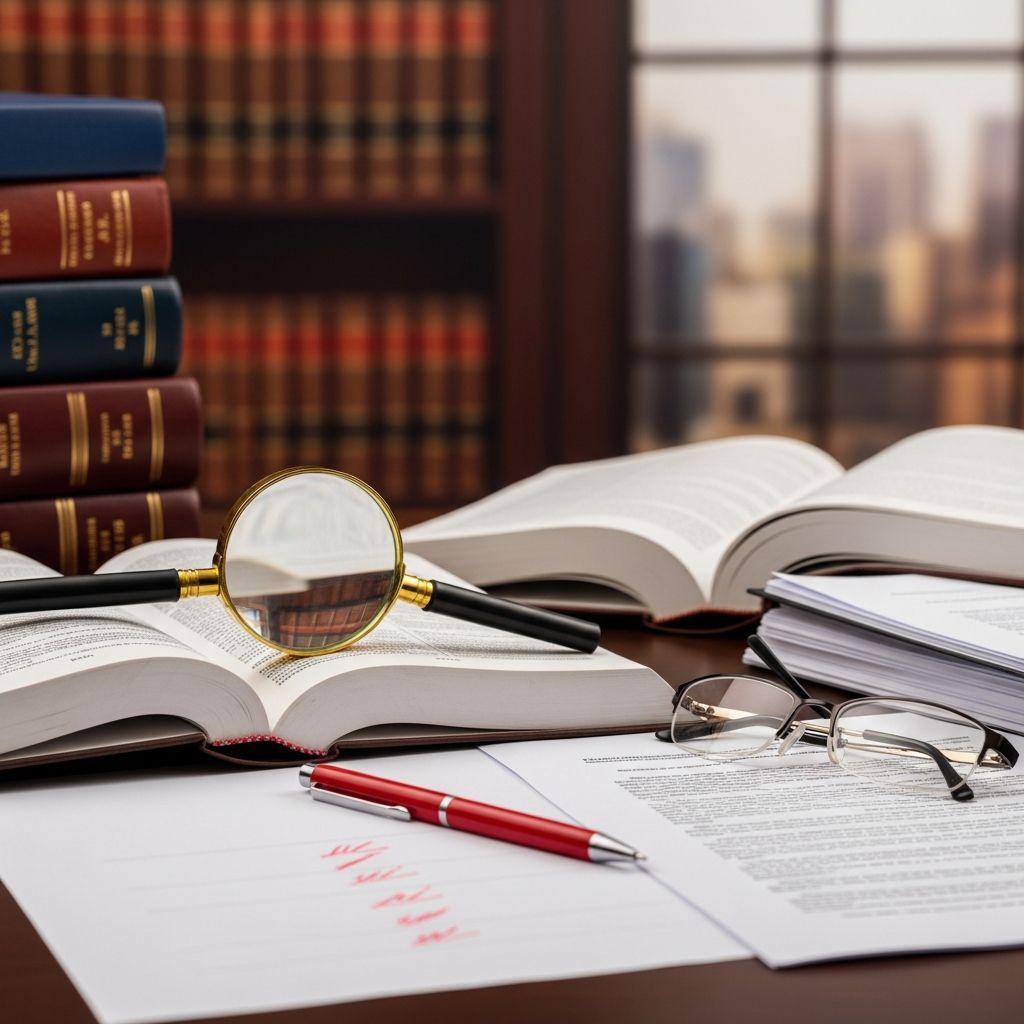
Legal proofreading stands as a critical final barrier against errors that can undermine cases, erode credibility, and lead to costly consequences. In high-stakes environments like court filings and contracts, even minor oversights in pleadings can alter interpretations or invite scrutiny from judges and opposing counsel. This guide outlines a robust framework for effective proofreading, drawing on established practices to help legal professionals produce impeccable documents.
Understanding the Stakes in Legal Document Review
Proofreading legal documents transcends simple spell-checking; it involves verifying factual accuracy, logical coherence, and adherence to jurisdictional standards. A single inconsistency in defined terms or a misnumbered clause can confuse readers or weaken arguments. Legal teams must prioritize this step to safeguard client interests and uphold professional reputations.
Errors often stem from rushed drafting under deadlines, familiarity bias where authors overlook their own mistakes, or overreliance on automated tools. By adopting structured approaches, professionals can systematically eliminate these risks, ensuring documents not only comply with rules but also persuade effectively.
Building a Multi-Stage Proofreading Framework
The cornerstone of reliable proofreading lies in dividing the process into distinct stages, allowing focused attention on specific elements without cognitive overload. This layered method outperforms single-pass reviews, catching 30-50% more issues according to legal operations best practices.
- Stage 1: Initial Comprehension Read – Scan the entire document to grasp its narrative flow, key arguments, and structure. Note any broad issues like missing sections or tonal shifts without marking details yet.
- Stage 2: Mechanical Checks – Isolate spelling, punctuation, and grammar using tools first, then manual verification.
- Stage 3: Terminological Consistency – Track defined terms, party names, and citations across the document.
- Stage 4: Structural Validation – Confirm headings, numbering, cross-references, and formatting uniformity.
- Stage 5: Final Flow and Clarity Audit – Read for readability, eliminating jargon overload or ambiguous phrasing.
Implementing these stages sequentially minimizes fatigue and enhances detection rates. For complex pleadings exceeding 20 pages, allocate separate sessions per stage, ideally spaced by hours or days.
Leveraging Auditory and Visual Techniques
Human brains process familiar text predictively, skipping actual errors. Counter this with techniques that disrupt patterns.
- Read aloud slowly, ideally in a quiet space, to expose awkward phrasing or homophone errors like ‘affect’ versus ‘effect’. Digital text-to-speech tools simulate a fresh voice.
- Reverse reading—from last sentence to first—forces word-by-word scrutiny, ideal for spelling but less for logic.
- Print or zoom to 150-200% on screen; physical distance from drafting medium reveals formatting flaws invisible digitally.
Combine these: after digital passes, print for a hybrid review. Studies from legal writing centers emphasize that multi-modal approaches catch nuanced issues automated systems miss.
Navigating Defined Terms and References
Precision in legal language hinges on consistent terminology. Defined terms must appear uniformly capitalized and applied throughout.
| Element | Common Pitfalls | Verification Steps |
|---|---|---|
| Defined Terms | Inconsistent capitalization; synonyms used interchangeably | List all definitions; search document for each; flag deviations |
| Party Names | Abbreviations varying (e.g., ‘Plaintiff’ vs. ‘Pl.’) | Standardize initial full name; ensure consistent shorthand |
| Clause References | Outdated numbers post-edits | Use auto-numbering; validate every cross-ref manually |
| Citations | Incorrect formats or missing pinpoint | Cross-check against style guides like Bluebook |
For pleadings, verify dates, exhibit labels, and statutory references match appendices. Tools like Microsoft Word’s ‘Find’ function or advanced platforms streamline this, but human oversight remains essential for context.
Optimizing Tools Without Overdependence
Software accelerates proofreading but requires supplementation. Grammarly or Word’s editor flags basics; integrate with legal-specific checkers for citation validation.
- Always follow tools with manual passes—AI misses context like ‘there’ in ‘their obligations’.
- For teams, collaborative platforms track changes transparently, enabling peer reviews.
Establish checklists: GLS’s 21-point model covers spelling through cross-indexing, adaptable for solo practitioners. Customize per document type—pleadings emphasize factual recitations, contracts payment terms.
The Power of Fresh Perspectives
Author bias blinds creators to flaws. Circulate drafts to colleagues unbound by original intent for ‘fresh eyes’ reviews. Paralegals excel here, focusing purely on mechanics.
Remote teams benefit from shared drives with version controls. Post-review, reconcile changes in a clean draft alongside tracked versions for final approval.
Addressing Common Oversights in Pleadings
Pleadings demand heightened scrutiny due to public filing and judicial review.
- Formatting Uniformity: Ensure margins, fonts (e.g., 14pt Times New Roman), and line spacing comply with local rules.
- Logical Progression: Verify claims align sequentially, supporting facts follow headers without gaps.
- Quantitative Checks: Balance damages calculations; tabulate exhibits accurately.
- Jargon and Clarity: Define acronyms on first use; avoid legalese impeding comprehension.
In multi-party cases, distinguish entities clearly to prevent misattribution.
Proofreading Under Deadline Pressure
Time constraints amplify errors. Counter with triage: prioritize high-impact sections like prayer for relief. Build buffers—aim to finish drafting 24-48 hours early for review.
Batch similar tasks: mornings for detailed checks, evenings for reads. Hydrate, stretch hourly to sustain focus.
Comprehensive Proofreading Checklist
- Run spell/grammar check
- Verify all defined terms consistency
- Audit headings and subheadings
- Confirm page/clause numbering
- Validate cross-references and citations
- Read aloud for flow
- Check calculations and dates
- Ensure formatting standards
- Peer review if possible
- Final backward read
Frequently Asked Questions (FAQs)
What is the most effective way to catch spelling errors in long legal documents?
Combine spellcheckers with backward reading and aloud recitation to bypass predictive reading, significantly improving detection.
How long should I wait before proofreading my own draft?
Ideally 24 hours to reduce familiarity bias, allowing fresh perspective akin to a new reader.
Can AI tools fully replace human proofreading for legal pleadings?
No; they excel at mechanics but falter on context, nuance, and legal accuracy—always pair with manual review.
What if I find an error after filing a pleading?
Amend promptly via motion, depending on jurisdiction; minor fixes may use errata, but substantive changes require court approval.
How do I ensure consistent formatting across a team?
Use templates with style guides and auto-formatting; conduct group training on tools like Word styles.
Conclusion: Elevating Practice Through Diligence
Mastering proofreading transforms routine tasks into strategic advantages. Consistent application of these strategies not only prevents pitfalls but enhances document persuasiveness, fostering trust in legal counsel. Commit to checklists and team protocols for sustained excellence.
References
- 20 Great Tips to Help You Proof Your Legal Documents Perfectly — GLS Legal Operations. 2023-05-15. https://www.gls-legaloperations.com/know-how/legal-team-skills-rid-your-documents-of-typos
- Legal Document Proofreading Made Simple for Legal Teams — Aline. 2024-02-20. https://www.aline.co/post/legal-document-proofreading
- Beyond Redlines And Spell-Check: Proofreading Tips — Young Conaway. 2018-06-01. https://www.youngconaway.com/content/uploads/2018/06/BeyondRedlines.pdf
- Best Proofreading Practices for the Developing Legal Writer — University of Baltimore School of Law. 2022-10-10. http://www.law.ubalt.edu/academics/academic-support/legal_writing_center/duediligenceguides/Due%20Diligence%20Guide%20Mastering%20the%20Proofreading%20Process.pdf
- How to Proofread Legal Documents — LexCheck Blog. 2023-11-08. https://blog.lexcheck.com/how-to-proofread-legal-documents-lc
Similar Articles








Read full bio of Sneha Tete


