
Mastering Law School Outlines: 1L Success Checklist
Essential strategies and tools for 1L students to create effective outlines and thrive in law school demands.
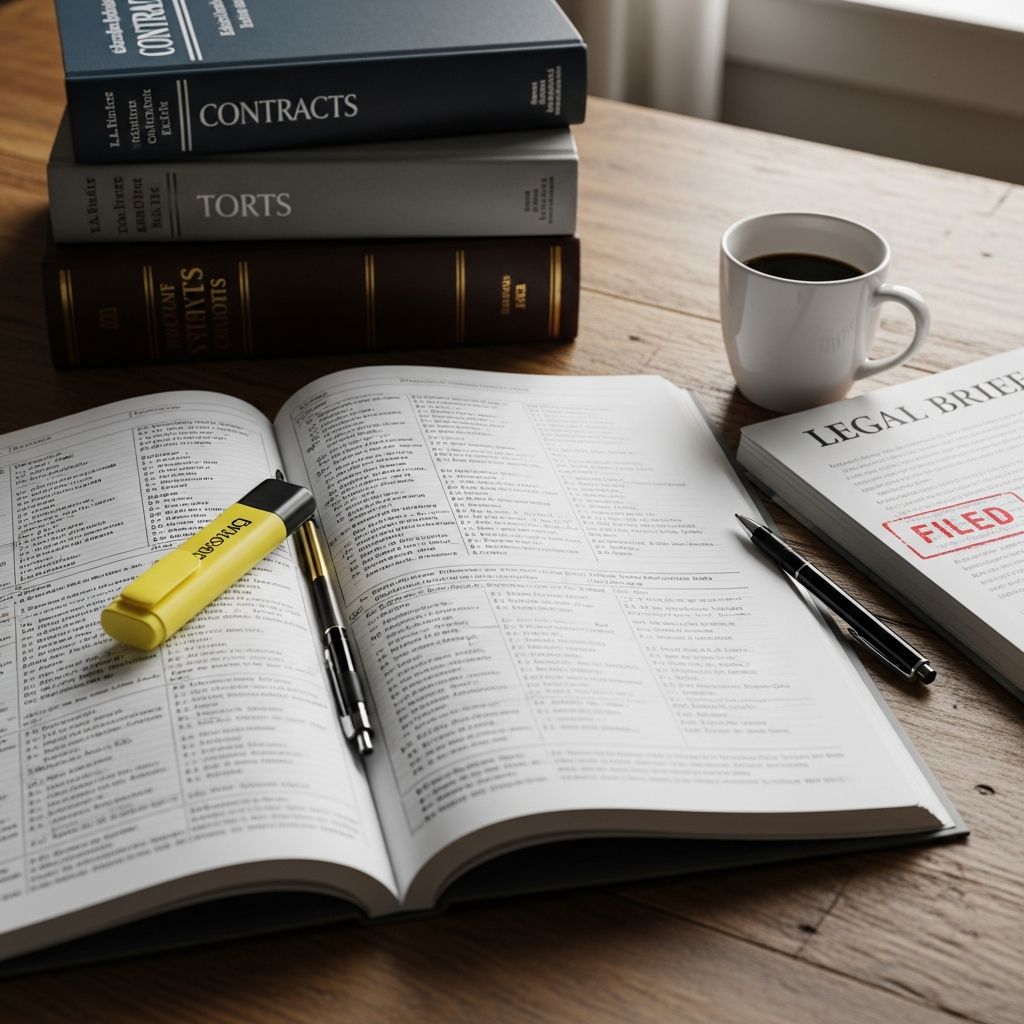
Law school demands precision, organization, and strategic preparation, especially for first-year students navigating dense casebooks and high-stakes exams. Creating effective outlines serves as the cornerstone of academic success, transforming chaotic notes into concise, exam-ready tools. This guide equips 1Ls with a complete roadmap, drawing from proven practices to streamline your workflow and maximize retention.
Why Outlines Are Your Law School Lifeline
Outlines distill complex legal doctrines into digestible frameworks, enabling quick recall during timed exams. Unlike raw class notes, they synthesize rules, exceptions, and applications from multiple sources. Starting early—ideally by mid-semester—allows iterative refinement, turning passive reading into active mastery.
Experienced students emphasize that personal outlines, crafted in your own words, deepen comprehension far beyond borrowed templates. They adapt to your professor’s emphases, hypotheticals, and exam style, providing a competitive edge in open-book or essay formats.
Building a Rock-Solid Outline Foundation
Success begins with structured information gathering. Compile case briefs, lecture notes, syllabus points, and supplemental aids into one repository. Use your casebook’s table of contents or professor’s syllabus as a blueprint to organize major topics and sub-issues hierarchically.
- Core Components: Include black-letter rules stated clearly (e.g., “Negligence requires duty, breach, causation, and damages”), policy rationales, key case holdings, and counterarguments.
- Professor-Specific Elements: Integrate classroom hypotheticals, Socratic exchanges, and emphasized distinctions to mirror exam expectations.
- Visual Aids: Employ flowcharts for element analysis (e.g., contracts formation) and tables for rule comparisons.
A sample outline structure might feature nested headings: Issue > Rule Statement > Application Examples > Exceptions & Policy Notes. Digital tools like Microsoft OneNote or Google Docs facilitate easy updates and searching.
Essential Supplies for Outline Mastery
Equipping yourself with the right tools prevents disorganization and wasted time. Prioritize items that support digital and physical workflows, as law school blends electronic exams with printed study aids.
| Item | Purpose | Why Essential for 1Ls |
|---|---|---|
| Laptop & Charger | Note-taking, outlining, exam typing | Handles virtual lectures, digital exams; student discounts available. |
| Highlighters & Colored Pens | Color-coding rules, facts, analysis | Quickly identifies key elements in cases; boosts visual memory. |
| Binders & Dividers | Organizing printed notes/outlines | Essential for open-book exams; tabs enable rapid navigation. |
| Flash Drive | Backup, printing outlines | Safeguards files; simplifies library printing quotas. |
| Day Planner | Scheduling outline sessions | Manages reading, briefing, and revision amid packed calendars. |
Invest in noise-canceling headphones for focused library sessions and a standing desk converter for long outlining marathons to combat fatigue.
Step-by-Step Process to Craft Elite Outlines
Follow this phased approach to build outlines efficiently without burnout.
- Weeks 1-4: Raw Data Collection
Brief every case with IRAC (Issue, Rule, Analysis, Conclusion). Capture verbatim rules from lectures. - Weeks 5-8: Framework Assembly
Map topics using syllabus. Draft rule statements, synthesizing casebook and notes. - Weeks 9-12: Refinement & Practice
Condense into 10-20 pages per class. Test with practice hypos; add mnemonics for elements. - Final Weeks: Polish & Attack Outlines
Print, tab, and simulate exams. Create condensed “attack sheets” for last-minute review.
Regularly review and revise—outlining is iterative. Allocate 2-3 hours weekly per class, scaling up pre-finals.
Common Outline Pitfalls and Fixes
Many 1Ls falter by copying others’ work or overloading with minutiae. Avoid these traps:
- Too Verbose: Aim for brevity; rules should fit one line where possible.
- Ignoring Professor Nuances: Tailor to class roadmaps, not generic commercial outlines.
- Neglecting Synthesis: Link rules across cases (e.g., evolution of duty standards).
- Procrastination: Incremental daily work prevents semester-end crunches.
To counter, join study groups for feedback and use commercial aids like Barbri sparingly as starting points, not crutches.
Integrating Outlines into Exam Strategy
Outlines shine in application. For issue-spotting essays, practice translating them into structured responses. Bring tabbed binders to open-book exams, including model answers and competitor outlines for breadth.
Simulate real conditions: 3-hour timed essays using only your outline. This hones issue-spotting speed and rule application under pressure.
Wellness and Time Management for Sustainability
Outlining thrives on balance. Schedule breaks with workout gear—yoga mats or running shoes—to recharge. Use planners to block non-negotiable study slots, protecting sleep and social time.
Mindfulness tools like meditation apps reduce anxiety, ensuring peak performance during finals.
Frequently Asked Questions (FAQs)
What is the best software for law school outlines?
OneNote excels for its hierarchical structure and searchability, while Google Docs suits collaboration. Choose based on your exam format—print-friendly for open-book.
How long should a law school outline be?
Target 10-25 pages per class, focusing on synthesis over volume. Finals demand speed, not encyclopedias.
Should I use commercial outlines?
Use as supplements for clarity, but always create your own to internalize concepts and match professor style.
When to start outlining for 1L classes?
Begin midway through the semester (e.g., October for fall) to allow refinement time before exams.
Can I handwrite outlines?
Possible for short attack sheets, but digital is faster for edits and most exams require typing.
Level Up Your 1L Game
Consistent outlining, paired with smart supplies and habits, positions you for top grades. Track progress weekly, adapt to feedback, and celebrate milestones. Law school rewards the prepared—start today.
References
- Law School Outlines and Note-Taking Tips — BARBRI. 2023. https://www.barbri.com/resources/law-school-outlines-and-note-taking-tips
- Law School Supplies Checklist: Top 10 — JD Advising. 2023. https://jdadvising.com/law-school-supplies-checklist-top-10/
- 15 Things to Add to Your Law School Shopping List — JD Advising. 2023. https://jdadvising.com/15-things-to-add-to-your-law-school-shopping-list/
- What Should You Bring with You to a Law School Exam? — Law School Toolbox. 2023. https://lawschooltoolbox.com/what-should-you-bring-with-you-to-a-law-school-exam/
- Law School Essentials — Black Elle Woods. 2019-08-07. https://blackellewoods.home.blog/2019/08/07/82/
- Top 10 Essential Supplies for Law Students — Enjuris. 2023. https://www.enjuris.com/students/law-school-essentials/
Similar Articles








Read full bio of medha deb




