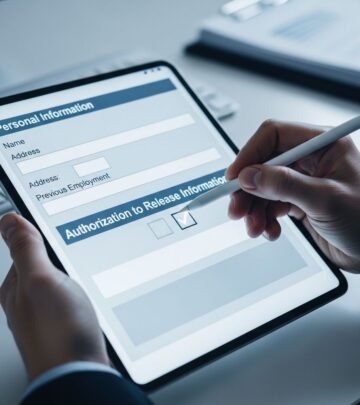
Mastering Employment Verification Letters
Essential guide to crafting and requesting employment verification letters for seamless job transitions, loans, and rentals.

Mastering Employment Verification Letters: Your Complete Guide
Employment verification letters serve as critical documents in professional and personal transactions, confirming an individual’s work history, role, and compensation details. These letters are frequently required for mortgage applications, apartment rentals, visa processes, or new job opportunities, providing third parties with reliable proof of employment status.
Why Employment Verification Matters in Today’s World
In an era of digital transactions and remote work, verifying employment remains a cornerstone of trust-building. Lenders use these letters to assess loan eligibility, landlords check tenant stability, and immigration authorities ensure compliance with work visa requirements. For employees, possessing such documentation streamlines life transitions, while employers fulfill legal and ethical obligations by responding promptly.
Statistics from human resources surveys indicate that over 70% of background checks involve employment verification, underscoring its ubiquity. Failing to provide accurate information can delay processes or lead to rejections, making familiarity with these letters indispensable.
Core Elements of a Strong Verification Letter
A well-constructed employment verification letter must convey essential facts concisely while maintaining professionalism. Key components include:
- Company Letterhead: Establishes authenticity with the employer’s logo, name, address, and contact details.
- Date of Issuance: Ensures the information is current, often required to be within the last three months.
- Employee’s Full Name: Matches official records for identity confirmation.
- Job Title and Duties: Describes the role briefly, confirming responsibilities.
- Employment Dates: Start and end dates, specifying if ongoing.
- Compensation Details: Salary, pay frequency, or hourly rate, only if requested.
- Employment Status: Full-time, part-time, or contract.
- Authorizing Signature: From HR, supervisor, or authorized personnel with name and title.
Omitting any requested detail can render the letter insufficient, so always review the request thoroughly.
How Employees Can Request Verification Effectively
Employees initiating a request should approach their HR department or supervisor professionally. Start with a written request to create a paper trail. Include your full name, the third party’s details, specific information needed, and a deadline.
Provide a pre-addressed stamped envelope if mailing is required. Digital submission via email or HR portals is increasingly common, especially post-pandemic. Sample request structure:
| Element | Description |
|---|---|
| Your Contact Info | Name, phone, email at top |
| Subject Line | “Request for Employment Verification – [Your Name]” |
| Body | Explain purpose, list needed info, thank them |
| Closing | Signature and date |
Follow up politely if no response within a week. Former employers may charge a fee or require a release form due to privacy laws.
Step-by-Step Guide for Employers Providing Verification
- Review the Request: Confirm employee’s authorization and note specifics requested.
- Verify Records: Cross-check personnel files for accuracy on dates, title, and pay.
- Draft on Letterhead: Use professional tone, bullet key facts.
- Proofread: Eliminate errors; get supervisor approval if needed.
- Sign and Send: Electronically or via certified mail for security.
Employers should limit disclosures to requested info to avoid liability. Some states restrict sharing salary without consent.
Customizable Templates for Common Scenarios
Template 1: Current Employee Verification
[Company Letterhead][Date]To Whom It May Concern:This confirms [Employee Name] is employed full-time as [Job Title] since [Start Date]. Salary: $[Amount] annually. Contact us for further details.Sincerely,[HR Name][Title][Contact]Template 2: Former Employee Verification
[Company Letterhead][Date]Re: Verification for [Employee Name][Employee Name] worked as [Job Title] from [Start Date] to [End Date]. Final salary: $[Amount].Best,[Authorized Signer]Template 3: Employee Request Letter
[Your Name and Contact][Date]Subject: Employment Verification RequestDear HR,Please verify my employment for [Purpose]. Need: title, dates, salary.Thank you,[Your Signature]Adapt these to fit specific needs, ensuring compliance.
Legal Considerations and Privacy Protections
Under U.S. law, employers aren’t obligated to provide verifications but must avoid false info. The Fair Credit Reporting Act (FCRA) governs third-party verifiers. States like California limit disclosures via Labor Code Section 432.
Internationally, GDPR in Europe mandates data minimization. Always obtain employee consent via signed release. For visas, align with USCIS Form I-9 requirements, using List A/B/C documents for authorization.
Disclose only facts; avoid performance opinions unless requested, to mitigate defamation risks.
Alternatives to Traditional Letters
Modern tools streamline verification:
- Online Portals: Services like The Work Number provide instant access.
- Pay Stubs/W-2s: Supplements for income proof.
- Digital Signatures: DocuSign for secure, trackable delivery.
- HR Software: BambooHR auto-generates letters.
These reduce paperwork but may not suffice for all verifiers.
Common Pitfalls and How to Avoid Them
Avoid delays by responding within 3-5 business days. Double-check accuracy to prevent disputes. Don’t volunteer unrequested data like reasons for leaving. For requests from unknown parties, verify legitimacy first.
| Pitfall | Solution |
|---|---|
| Inaccurate Dates | Consult HR database |
| Missing Signature | Always include authorized sign-off |
| No Consent | Require signed release |
| Outdated Info | Issue within 90 days |
Frequently Asked Questions (FAQs)
What if my employer refuses to provide a letter?
Contact HR for policy details or use alternatives like pay stubs. Former employers may refer to services like The Work Number.
Can I include performance reviews in the letter?
Only if specifically requested; stick to facts to avoid bias claims.
How long does verification take?
Typically 1-5 days; specify deadlines in requests.
Is salary info always required?
No, only when asked, respecting state privacy laws.
What’s the difference from a reference letter?
Verification is factual; references are opinion-based.
Best Practices for the Future
As remote work evolves, standardize digital verifications. Train HR on compliance. Employees: keep records organized. Employers: automate via software for efficiency.
By mastering these letters, professionals navigate opportunities seamlessly in 2026’s dynamic job market.
References
- Employment Verification Letter — BambooHR. 2024. https://www.bamboohr.com/resources/hr-glossary/employment-verification-letter
- How to Write an Employment Verification Letter — ScoutLogic Screening. 2024. https://www.scoutlogicscreening.com/blog/how-to-write-employment-verification-letter/
- Complete Guide to Employment Verification Letters — Checkr. 2024. https://checkr.com/resources/articles/employment-verification-letters
- How To Request an Employment Verification Letter — Indeed.com. 2025-06-06. https://www.indeed.com/career-advice/career-development/how-to-request-an-employment-verification-letter
- Employer Verification Letter Template — DocuSign. 2024. https://www.docusign.com/templates/employer-verification-letter
- An In-Depth Guide to the Employment Verification Letter — Career.io. 2024. https://career.io/career-advice/guide-to-the-employment-verification-letter
Similar Articles








Read full bio of medha deb