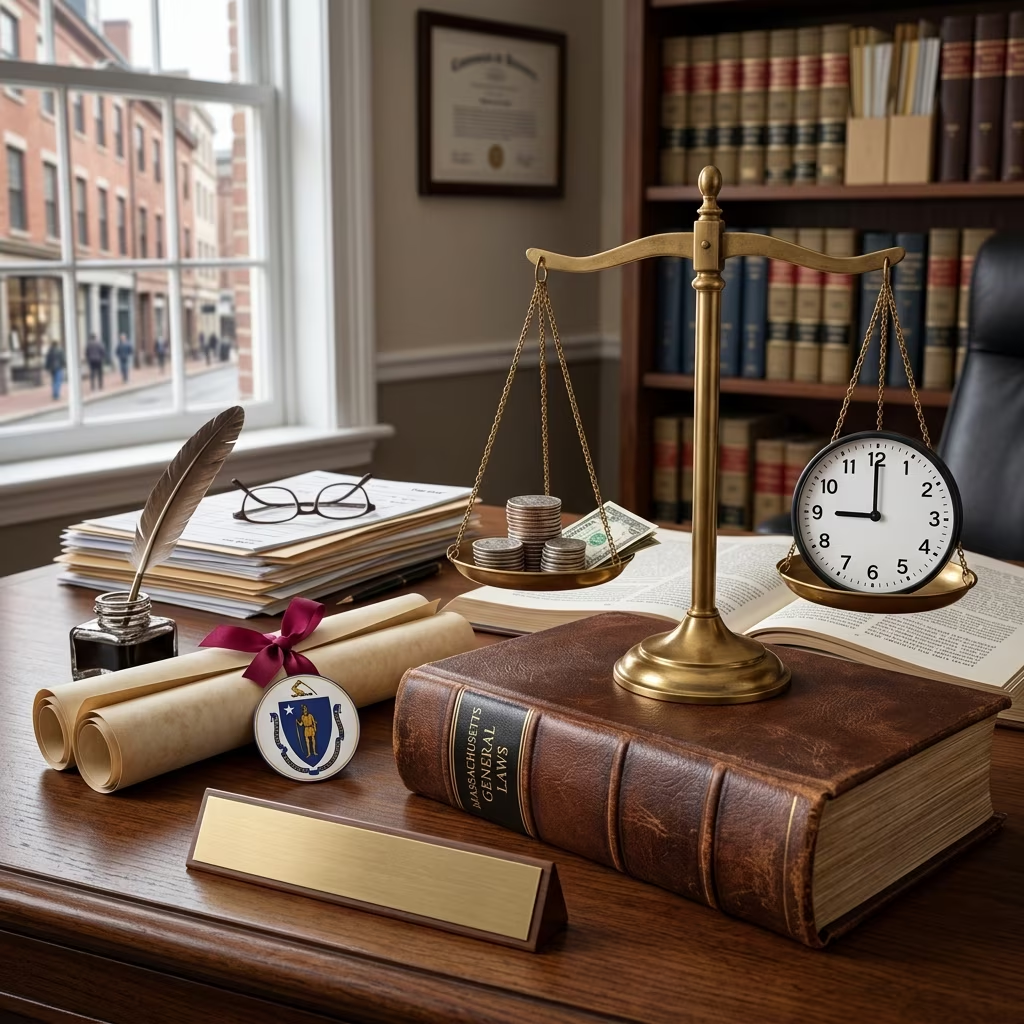
Massachusetts has some of the strongest wage and hour protections in the United States, designed to ensure that workers are paid fairly and on time. These rules govern how much employees must be paid, when they must receive their wages, and what kinds of working conditions are allowed, including meal breaks, overtime, and youth employment.[10]
This guide explains the core features of Massachusetts wage and hour law in clear terms, highlighting what both employees and employers need to know to stay compliant and avoid costly legal disputes.
1. Foundations of Wage and Hour Law in Massachusetts
Massachusetts wage and hour rules are mainly set out in the state’s Minimum Fair Wage Law and the Wage Act, along with related regulations and guidance from the Attorney General’s Office. These laws work together to regulate pay, working time, and basic labor standards.
1.1 Key Objectives of the Laws
Massachusetts wage and hour regulations pursue several core objectives:
- Guarantee a minimum standard of pay for most workers, including tipped employees.[10]
- Require employers to pay wages promptly and regularly on established paydays.
- Protect workers from wage theft, including nonpayment or late payment of earned wages, overtime, and certain benefits.[10]
- Set rules on working hours, breaks, and overtime to prevent exploitation and overwork.
- Establish special protections for minors and for employees taking certain types of leave.
1.2 Who Is Covered?
In Massachusetts, workers are generally presumed to be employees, not independent contractors, and are therefore covered by wage and hour laws unless a specific exemption applies. Typical covered workers include:
- Full-time and part-time employees in private businesses.
- Most service, retail, and hospitality workers.
- Nonexempt office staff and manual laborers.
Certain categories, such as agricultural workers, outside salespeople, and members of religious orders, may be exempt from some provisions or subject to different minimum rates. Employers must carefully review the rules before classifying any worker as exempt.
2. Minimum Wage and Tipped Employee Rules
Massachusetts sets a statewide minimum wage that is higher than the federal rate, and applies special rules for tipped workers in restaurants and other service industries.[10]
2.1 Standard Minimum Wage
As of 2023, the general minimum wage in Massachusetts is $15.00 per hour for most employees.[10] This rate is established under the Minimum Fair Wage Law and applies unless an exemption or a different specific rate is provided by statute.
Employers must ensure that all covered employees receive at least this amount for every non-overtime hour worked. Paying less than the statutory minimum wage is unlawful and can result in penalties and liability for unpaid wages.[10]
2.2 Tipped Minimum Wage
Massachusetts allows a lower cash wage for tipped employees, but only if the employee’s total hourly earnings (cash wage plus tips) reach at least the full minimum wage.
| Employee Type | Base Hourly Wage | Required Total per Hour | Key Condition |
|---|---|---|---|
| Non-tipped employee | $15.00 | $15.00+ | Receives full minimum wage directly from employer.[10] |
| Tipped employee | $6.75 (service rate) | $15.00+ | Tips plus service rate must reach at least the minimum wage. |
If tips do not bring the employee up to the minimum wage, the employer must make up the difference. Failing to do so violates state wage law and may expose the employer to damages and enforcement proceedings.[10]
3. Overtime Pay Requirements
Massachusetts law requires most nonexempt employees to receive overtime pay when they work more than 40 hours in a single workweek.
3.1 Basic Overtime Rule
For covered employees, overtime must be paid at least 1.5 times the regular hourly rate for all hours worked over 40 in a workweek. This rule applies regardless of whether the employee is paid hourly or on a salary, as long as they are nonexempt.
- Overtime is calculated on a weekly basis, not daily.
- Paid time off or holidays generally do not count as worked hours for overtime unless actually worked.
- Employers must keep accurate records of hours worked for nonexempt employees.
3.2 Exemptions and Special Sunday/Holiday Pay
Some categories of workers may be exempt from state overtime requirements, such as certain executive, administrative, and professional employees, or specific industries covered by different rules. Employers must rely on statutory and regulatory definitions to determine whether an employee qualifies as exempt.
Retail employers with eight or more employees may be required to pay at least 1.1 times the regular rate for work on Sundays and certain holidays, separate from standard overtime obligations. These requirements can be complex, so many businesses consult legal or HR experts when scheduling work on those days.
4. Pay Frequency, Paydays, and Wage Statements
Massachusetts strictly regulates how often employees must be paid and sets a timetable for when wages must be delivered after a pay period ends.
4.1 Required Pay Frequency
Under the Wage Act, employers must pay most nonexempt workers either weekly or biweekly, while exempt employees may be paid biweekly or semi-monthly. The statute sets clear deadlines from the end of a pay period:
- Employees working five or six days in a calendar week must be paid within six days after the pay period ends.
- Employees who work seven days in a calendar week must be paid within seven days after the pay period ends.
- Casual employees who work fewer than five days must be paid within seven days after the end of that work period.
4.2 Timing of Final Paychecks
Massachusetts places strong emphasis on prompt payment after employment ends. Employers must follow specific rules when an employee leaves:
- If an employee is terminated, they must be paid in full on their last day of work, including owed wages and certain accrued benefits such as vacation, if applicable.
- If an employee resigns, they must be paid in full on the next regular payday or, if there is no regular payday, by the following Saturday.
Failure to pay final wages on time can constitute wage theft and may entitle the worker to multiple damages under Massachusetts law.[10]
4.3 Pay Slips and Methods of Payment
Employers must provide a wage statement each time they pay an employee, showing key details about the pay period and compensation.
- Name of the employer and employee.
- Date (day, month, year) of the pay period.
- Number of hours worked and hourly rate, if applicable.
- Amounts and reasons for deductions or increases.
Employers may pay wages in cash or by check, but if payment is by check or draft, they must provide reasonable facilities for cashing it at face value without charge. Many employers also use direct deposit, provided employees have access to their full wages without unlawful deductions.
5. Meal Breaks and Rest Periods
Massachusetts law requires employers to provide a minimum meal break to employees who work long shifts, and sets additional rules for minors.
5.1 Adult Employees
Workers who are required to work more than six hours in a calendar day must receive a 30-minute meal period at some point during that day. Core features of this rule include:
- The meal period may be paid or unpaid, depending on whether the employee is relieved of all work duties.
- Employees must be free to leave the work premises during the break and may use the time for personal activities, including prayer.
- Employers who fail to provide required meal breaks can be fined by the state.
5.2 Minors and Break Requirements
For workers under 18, Massachusetts law sets stricter rules on breaks and working hours. Minors who work more than six hours in a day must receive an unpaid meal break of at least 30 minutes. These protections are part of a broader scheme regulating youth employment.
6. Youth Employment and Working Time Limits
Massachusetts imposes special child labor rules to protect young workers from dangerous conditions and excessive hours.
6.1 Age-Based Restrictions
Under state law, a “child” is generally defined as a person under 18 years of age. Massachusetts restricts when minors can work:
- Children may not work before 6:00 a.m. or after 10:00 p.m. in most establishments.
- Minors aged 16 or older may work until 11:30 p.m. on nights that do not precede a regularly scheduled school day.
- Those 16 or older working in restaurants or racetracks may work until midnight, again subject to school-day limits.
Additional restrictions address the types of work minors can perform and the number of hours they may work on school days and non-school days. Employers must verify age and comply with all relevant rules to avoid penalties.
7. Sick Time, Family and Medical Leave
Beyond basic wage and hour protections, Massachusetts also grants workers certain rights to earned sick time and paid family and medical leave.
7.1 Earned Sick Time
Employees in Massachusetts accrue at least one hour of sick time for every 30 hours worked. Key features of the sick time law include:
- Employees can generally earn and use up to 40 hours of sick time per year if they work sufficient hours.
- Sick time begins accruing on the employee’s first day of work, though use may be subject to a short waiting period.
- Employers with 11 or more employees must provide paid sick time, while smaller employers may provide unpaid sick time.
Sick time can typically be used for the employee’s own health needs, to care for a family member, or for certain preventive care and domestic violence-related circumstances, as further explained in state guidance.
7.2 Paid Family and Medical Leave (PFML)
Separate from sick time, Massachusetts’ Paid Family and Medical Leave (PFML) law allows eligible employees to take up to 26 weeks of family and medical leave per year, with wage replacement funded through a state program. This law interacts with wage and hour rules by protecting the employee’s job and ensuring access to income during certain extended absences.
8. Wage Theft, Remedies, and Enforcement
Massachusetts treats wage theft—the failure to pay earned wages, overtime, or required benefits—as a serious violation. State law gives workers multiple ways to enforce their rights and pursue compensation.[10]
8.1 What Counts as Wage Theft?
Wage theft can take many forms, including:
- Failure to pay minimum wage or overtime for all hours worked.
- Not paying employees on time or withholding final paychecks.
- Nonpayment of earned commissions or nondiscretionary bonuses when they are due.
- Refusing to pay for earned vacation time where it is treated as wages.
- Improper deductions that reduce take-home pay below lawful levels.[10]
8.2 Remedies and Damages
Under Massachusetts law, employees who suffer wage violations often have the right to recover multiple damages. For many claims, workers can sue for three times the unpaid amount plus reasonable attorneys’ fees and costs.[10] This strong remedy is intended to deter wage abuse and encourage compliance.
8.3 Role of the Attorney General’s Office
The Massachusetts Attorney General’s Office is the primary enforcement authority for wage and hour laws. Workers can:
- File complaints with the Attorney General’s Office regarding suspected wage violations.
- Request information or assistance by contacting the office’s Fair Labor Division.
- Use the results of an investigation, where applicable, to support private legal claims.
In addition, employees generally have the right to sue employers directly in court after meeting any procedural requirements, allowing them to seek damages for violations of the Wage Act and related laws.[10]
9. Practical Tips for Employers and Employees
Understanding wage and hour rules is easier when both sides focus on a few practical steps.
9.1 For Employers
- Establish clear timekeeping systems for all nonexempt employees.
- Review job descriptions and duties carefully before classifying anyone as exempt from overtime.
- Track and pay all earned wages, including overtime, commissions, and vacation where applicable.
- Ensure that pay periods and paydays meet the deadlines set by the Wage Act.
- Train supervisors on meal break requirements and youth employment restrictions.
9.2 For Employees
- Keep your own record of hours worked, especially if you suspect underpayment.
- Review each pay slip for accuracy in hours, rates, and deductions.
- Ask questions if your final paycheck is delayed or appears incomplete.
- Contact the Massachusetts Attorney General’s Office or a qualified attorney if you believe your wage rights have been violated.[10]
- Learn about your rights to sick time and family leave so you can plan time off appropriately.
10. Frequently Asked Questions (FAQs)
10.1 Does Massachusetts require a higher minimum wage than federal law?
Yes. Massachusetts sets its own minimum wage, which is higher than the federal minimum. Most employees must be paid at least the state minimum wage for each non-overtime hour worked.[10]
10.2 How is overtime calculated for nonexempt employees?
Nonexempt employees must receive at least 1.5 times their regular hourly rate for every hour worked over 40 in a single workweek. Employers cannot average hours across multiple weeks to avoid paying overtime.
10.3 When must I receive my final paycheck in Massachusetts?
If you are terminated, you must be paid all wages owed on your last day of work. If you resign, you must be paid by the next regular payday or, in the absence of a regular payday, by the following Saturday.
10.4 Are meal breaks paid or unpaid?
Massachusetts requires a 30-minute meal period for employees working more than six hours in a day. The break may be unpaid if the employee is fully relieved of work duties and free to leave the premises.
10.5 How can I report wage theft or other violations?
You can file a complaint with the Massachusetts Attorney General’s Office, which enforces wage and hour laws, or consult a private attorney to discuss a civil claim for unpaid wages and potential multiple damages.[10]
References
- Wage and Hour Laws — Commonwealth of Massachusetts. 2024-01-01. https://www.mass.gov/wage-and-hour-laws
- Massachusetts Wage & Hour Laws Poster — Commonwealth of Massachusetts. 2023-01-01. https://www.mass.gov/doc/massachusetts-wage-hour-laws-poster/download
- Massachusetts General Laws, Chapter 149, Section 148 — Massachusetts Legislature. 2022-07-01. https://malegislature.gov/Laws/GeneralLaws/PartI/TitleXXI/Chapter149/Section148
- Massachusetts & Federal Labor Laws — Hobart and William Smith Colleges HR. 2023-01-01. https://www.hws.edu/offices/hr/pdf/massachusetts-labor-laws.pdf
- Massachusetts Wage & Hour Laws Notice — Kingsbridge Shared Services, Inc. 2023-06-01. https://www.kingsbridgess.com/wp-content/uploads/2023/06/MassachusettsEnglish.pdf
- Massachusetts Employment Law Overview — Brightmine. 2023-09-01. https://www.brightmine.com/us/resources/hr-compliance/massachusetts-employment-law/
- Massachusetts Wage Law: Massachusetts Wage and Overtime Rights — Massachusetts Wage Law. 2023-03-01. https://masswagelaw.com/