
Massachusetts Tenant Rights: A Practical Legal Guide
Understand key Massachusetts tenant protections, landlord duties, and practical steps to safely rent, resolve disputes, and avoid unlawful eviction.
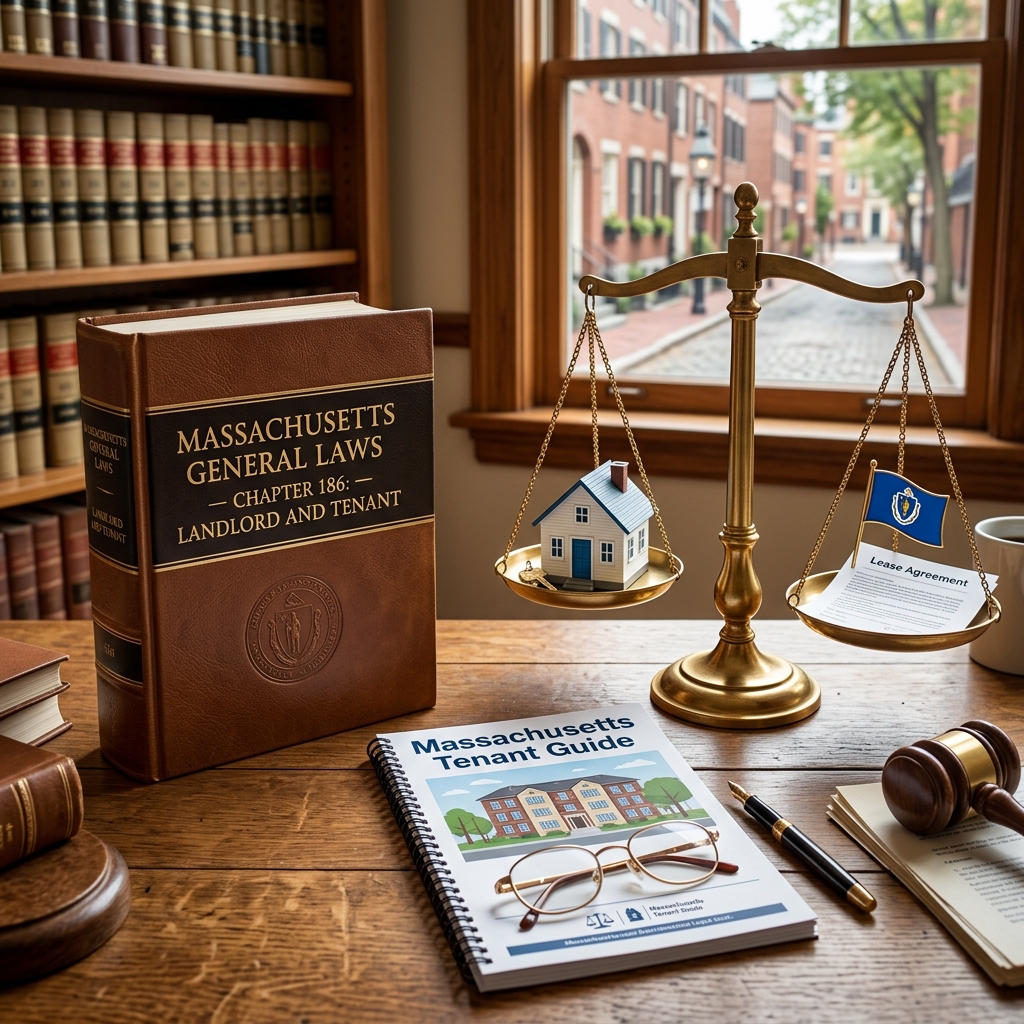
Massachusetts has some of the strongest tenant protections in the United States, balancing the rights of renters with the legal obligations of landlords. Understanding these rules helps you avoid disputes, protect your housing, and recognize when you may need legal help.
This guide explains essential tenant rights and landlord duties under Massachusetts law, using accessible language and practical examples. It is not legal advice, but a starting point for renters who want to know how the law works in day-to-day renting.
1. How Rental Agreements Work in Massachusetts
Most residential tenancies in Massachusetts take one of two basic forms: a written lease for a fixed term or a tenancy-at-will, which usually runs month-to-month.
1.1 Common Types of Tenancies
| Type of Tenancy | Main Features | Rent Changes |
|---|---|---|
| Fixed-term lease | Written agreement for a set period (often 12 months). Rules and rent are locked in unless the lease allows changes. | Typically only at the end of the lease term, unless the lease itself permits increases. |
| Tenancy-at-will | Usually month-to-month. Either side can end it with proper notice. Fewer formalities, but also less stability. | Landlord may raise rent with at least one full rental period’s notice, and not less than 30 days. |
1.2 Basic Tenant Responsibilities
Whether you have a written lease or a tenancy-at-will, Massachusetts law expects tenants to meet certain basic obligations.
- Pay rent in the amount and on the schedule agreed with the landlord.
- Follow reasonable rules contained in the lease or rental agreement.
- Avoid damage beyond normal wear and tear, and be responsible for damage caused by you or your guests.
These duties exist alongside your rights; failing to meet them can lead to lawful eviction.
2. Security Deposits and Move-In Costs
Security deposits are tightly regulated in Massachusetts to prevent abuse and surprise charges.
2.1 Limits on Upfront Payments
At the start of most tenancies, a Massachusetts landlord may only charge a limited set of fees.[10]
- First month’s rent.
- Last month’s rent.
- Security deposit up to one month’s rent.
- A reasonable lock and key fee, if new keys or locks are provided.
Landlords generally cannot impose extra “application” or other junk fees on tenants, and must comply with disclosure rules when taking deposits.
2.2 Handling and Returning Security Deposits
Massachusetts law sets detailed requirements for how security deposits are held and returned.
- Deposits must be kept in a separate interest-bearing account in a Massachusetts bank, and tenants are entitled to information about that account.
- The landlord must provide a written statement of condition within a statutory period, listing any existing damage.
- At the end of the tenancy, the security deposit must be returned within 30 days, minus any lawful deductions for unpaid rent or documented damage beyond ordinary wear and tear.
Carefully documenting the condition of the unit when you move in and when you move out—through photos, videos, and written notes—helps avoid disputes over deductions.
3. Habitability and Safe Living Conditions
One of the most important rights for Massachusetts tenants is the right to a home that meets basic health and safety standards. This comes from the Massachusetts Sanitary Code and related laws.
3.1 What “Habitable” Means
A rental unit must be reasonably safe, clean, and fit for human occupation throughout the tenancy.
- Compliance with the Massachusetts Sanitary Code (for example, adequate heat, running water, and structurally sound premises).
- Working plumbing and sufficient hot and cold water.
- Heat at legal minimum temperatures during winter months.
- Protection against serious leaks, pests, and other conditions that can endanger health.
The obligation to keep the unit habitable applies to all occupants, not only those who signed the lease.
3.2 Tenant Options When Conditions Are Unsafe
If your unit has serious health or safety problems, you have several possible remedies, but you must follow legal procedures carefully.
- Notify the landlord in writing about the problem and request repairs as soon as you notice the issue.
- Contact the local Board of Health or inspectional services department for an official inspection, especially for serious violations.
- In some cases, tenants may withhold rent or use a “repair and deduct” strategy, but this usually requires code violations documented by health officials and strict adherence to statutory rules.
Because withholding rent can lead to eviction proceedings if done incorrectly, many tenants consult legal services or tenant advocacy organizations before taking this step.
4. Privacy, Entry, and Utility Protections
Massachusetts law protects tenants against unlawful intrusions and cutoffs of essential utilities.
4.1 Landlord Entry and Tenant Privacy
Although landlords own the property, they cannot treat your home as if it is freely accessible at all times. You have a right to reasonable privacy.
- Landlords may enter for legitimate reasons such as repairs, inspections, or showings to prospective tenants or buyers.
- Except in emergencies, entry should be at reasonable times and with prior notice or agreement.
- Repeated or unannounced entries without justification may amount to harassment or violate privacy rights.
4.2 Illegally Cutting Off Utilities or Locking You Out
Self-help tactics such as changing locks or cutting utilities to force tenants out are strictly forbidden.
- Landlords cannot shut off heat, electricity, or water, except temporarily for repair or during emergencies.
- They may not remove doors, lock tenants out, or physically remove belongings without a court order.
- Any attempt to evict without following the formal court process can lead to legal penalties for the landlord.
5. Protection Against Housing Discrimination
Massachusetts tenants are protected by both federal fair housing law and state civil rights statutes, which forbid discrimination in almost all aspects of renting.
5.1 Protected Characteristics
Landlords generally may not refuse to rent, impose different terms, or otherwise treat tenants differently because they belong to a legally protected class.
- Race, color, national origin, and ancestry.
- Religion and sex.
- Marital status and age.
- Disability, including many physical and mental impairments.
- Sexual orientation, gender identity or expression.
- Source of income, including public assistance and rental subsidies such as Section 8.
- Veteran or active military status.
With narrow exceptions, it is also illegal to refuse to rent to families with children, including families where young children may trigger lead paint compliance obligations.
5.2 Recognizing Discriminatory Practices
Discrimination is not always obvious. It can occur through subtle differences in treatment.
- Charging higher rent or deposits to tenants from certain backgrounds.
- Denying repair requests or responding more slowly based on protected characteristics.
- Applying stricter screening standards (for example, income thresholds) only to certain groups.
Tenants who suspect discrimination can contact fair housing organizations, legal aid offices, or the Massachusetts Attorney General’s Office to discuss complaints.
6. Retaliation and Your Right to Speak Up
Massachusetts law protects tenants who assert their rights or report violations to authorities. Landlords are not allowed to punish tenants for engaging in legally protected activity.
6.1 What Counts as Protected Activity?
Examples of protected activity include:
- Contacting the Board of Health about unsafe conditions.
- Joining or organizing a tenants’ association or union.
- Filing a complaint for discrimination or unfair practices.
- Exercising lawful rights such as withholding rent in response to serious, documented code violations.
6.2 Retaliatory Actions by Landlords
Retaliation often appears as negative changes shortly after you assert your rights.
- Sudden rent increases without business justification.
- Attempts to terminate your tenancy soon after a complaint.
- Unjustified change in services or maintenance levels.
In many cases, the law presumes retaliation if the landlord takes adverse action within a defined period after protected activity, and the landlord must prove that the decision was not retaliatory.
7. Lawful Eviction: The Required Court Process
Removing a tenant in Massachusetts almost always requires going through the formal summary process eviction procedure in court.
7.1 No Self-Help Evictions
Landlords may not evict tenants on their own.
- No changing locks without a court order.
- No removing tenant belongings.
- No threats or actions that force tenants out without judicial involvement.
7.2 Steps in a Typical Eviction Case
Although details vary, most lawful evictions follow a similar structure.
- Notice to Quit: The landlord first serves written notice ending the tenancy, with the length depending on the reason (for example, nonpayment versus lease violation) and type of tenancy.
- Filing in Court: If the tenant does not move out by the date in the notice, the landlord may file a summary process eviction case.
- Hearing: Both sides can present evidence. Tenants may raise defenses, such as improper notice, discrimination, retaliation, or serious habitability issues.
- Judgment and Execution: If the landlord wins, the court issues an execution permitting removal. Only a proper officer carrying out the court order may physically remove the tenant.
Tenants who receive any eviction paperwork should seek legal advice as early as possible, as failing to appear in court can lead to a default judgment.
8. Practical Tips for Massachusetts Tenants
The legal protections discussed above are most effective when tenants keep good records and act promptly.
8.1 Documentation and Communication
- Keep copies of your lease, notices, emails, and texts with your landlord.
- Take dated photos or videos when you move in and move out, and whenever serious damage or health issues appear.
- Send important communications (like repair requests) in writing, and keep proof of delivery.
8.2 When to Seek Help
- If conditions in your home are unsafe or unsanitary and the landlord will not act.
- If you suspect discrimination or retaliation.
- If you receive a Notice to Quit or court papers.
- If your landlord threatens to lock you out or shut off utilities.
Massachusetts offers various resources, including legal aid organizations, municipal housing offices, and state consumer protection agencies that can help tenants understand and enforce their rights.
9. Frequently Asked Questions (FAQs)
9.1 Can my landlord charge an application fee in Massachusetts?
Massachusetts imposes tight controls on fees related to renting. In many situations, landlords cannot charge separate application or screening fees beyond permitted move-in costs like first and last month’s rent, one month’s security deposit, and a lock and key fee.
9.2 How much time does my landlord have to return my security deposit?
In most residential tenancies, the landlord must return the security deposit, with any lawful itemized deductions, within 30 days after the tenancy ends.
9.3 Is a landlord allowed to enter my apartment without notice?
Except in genuine emergencies, landlords should give notice and enter at reasonable times for legitimate purposes such as repairs or inspections. Repeated unannounced entries can violate privacy rights and may be legally challenged.
9.4 What if my landlord raises my rent right after I report code violations?
Rent increases or termination of tenancy soon after you engage in protected activity—such as reporting health code violations—may be considered retaliation. Massachusetts law restricts retaliatory actions, and in many cases the landlord must show that changes are not in response to your complaint.
9.5 Can my landlord evict me by changing the locks?
No. Lockouts, utility shutoffs, and removal of belongings without a court order are illegal self-help evictions. A landlord must obtain a judgment in a summary process case and use an authorized officer to carry out any physical eviction.
References
- Massachusetts Law About Landlord and Tenant — Mass.gov. 2023-06-01. https://www.mass.gov/info-details/massachusetts-law-about-landlord-and-tenant
- The Attorney General’s Guide to Landlord and Tenant Rights — Office of the Massachusetts Attorney General. 2023-05-15. https://www.mass.gov/guides/the-attorney-generals-guide-to-landlord-and-tenant-rights
- Tenant Rights in Massachusetts: Understanding Your Legal Protections — Zaheer Law Group. 2024-02-10. https://zaheerlawgroup.com/massachusetts-tenant-rights-guide/
- Massachusetts Consumer Guide to Tenant Rights (Summary Handout) — Worcester Polytechnic Institute / Massachusetts Resources. 2022-09-01. https://www.wpi.edu/sites/default/files/inline-image/Student-Experiences/International-House/Tenants%20Rights%20and%20Responsibilities%20Summary%20Handout.pdf
- Massachusetts Landlord Tenant Rental Laws & Rights 2025 — Innago Legal Resource. 2025-01-05. https://innago.com/massachusetts-landlord-tenant-laws/
- Landlords and Tenants: Rights and Responsibilities — Mass.gov. 2023-03-20. https://www.mass.gov/landlords-and-tenants-rights-and-responsibilities
- Tenants’ Rights — Massachusetts Legal Help. 2025-08-01. https://www.masslegalhelp.org/housing-apartments-shelter/tenants-rights
Similar Articles








Read full bio of Sneha Tete


