Getting married in Massachusetts involves more than choosing a venue and planning a celebration. To make the marriage legally valid, couples must follow specific marriage license rules set out under state law and local procedures. This guide explains who can marry, how to apply for a license, required documents, timelines, fees, and key responsibilities before and after the ceremony, so you can navigate the process with confidence.
Big Picture: How Marriage Licenses Work in Massachusetts
Massachusetts requires a valid marriage license issued by a city or town clerk before any legal marriage can take place in the state. The license confirms that both parties meet legal requirements, such as age and eligibility to marry, and it authorizes the officiant to perform the ceremony. Licenses are issued at the local level but governed by statewide rules, including a mandatory waiting period and a fixed window of time during which the license may be used.
- You may apply at any city or town clerk’s office in Massachusetts, regardless of where you live or where the ceremony will be held.
- The license is valid for 60 days from the date your intention to marry is filed and may only be used within the Commonwealth.
- There is a three-day waiting period between filing your intention and when the license becomes available, although a court can waive this delay in limited circumstances.
Who Is Eligible to Marry in Massachusetts?
Before you apply for a marriage license, make sure you meet the basic eligibility requirements. Massachusetts law focuses primarily on age, capacity, and prohibited relationships.
Age Requirements
Under current Massachusetts rules, both people must be at least 18 years old to marry. Town and city clerk offices routinely ask for documentation to confirm age, such as a birth certificate, passport, or other official records.
- Minimum age: 18 for both parties.
- Proof of age: birth certificate, passport, or similar official record may be required.
- Clerks will not issue a license if age requirements are not satisfied.
Residency and Citizenship
Massachusetts does not require residency to marry in the state. You do not have to live in Massachusetts or be a U.S. citizen to obtain a marriage license, although you must apply in person to a Massachusetts clerk. If you do not have a Social Security number because you are not a U.S. resident or have never been issued one, local guidance typically requires you to explain that on the application.
Prohibited Relationships and Legal Capacity
As in other states, Massachusetts law bars marriage between close relatives, and you must have the capacity to consent to marriage. Clerks rely on the information you provide, and misrepresenting your relationship or identity can have legal consequences.
- You may not marry a close relative as defined by Massachusetts General Laws.
- Both parties must be legally capable of entering into a marriage, meaning they understand the nature of the marriage and are not already married to someone else.
Step-by-Step: How to Apply for a Marriage License
Although every city or town can set its own detailed procedures, the basic steps for obtaining a marriage license are similar across Massachusetts and governed by statewide rules. Many municipalities now use appointments and, in some cases, online preparation to streamline the process.
1. Schedule an Appointment with the Clerk
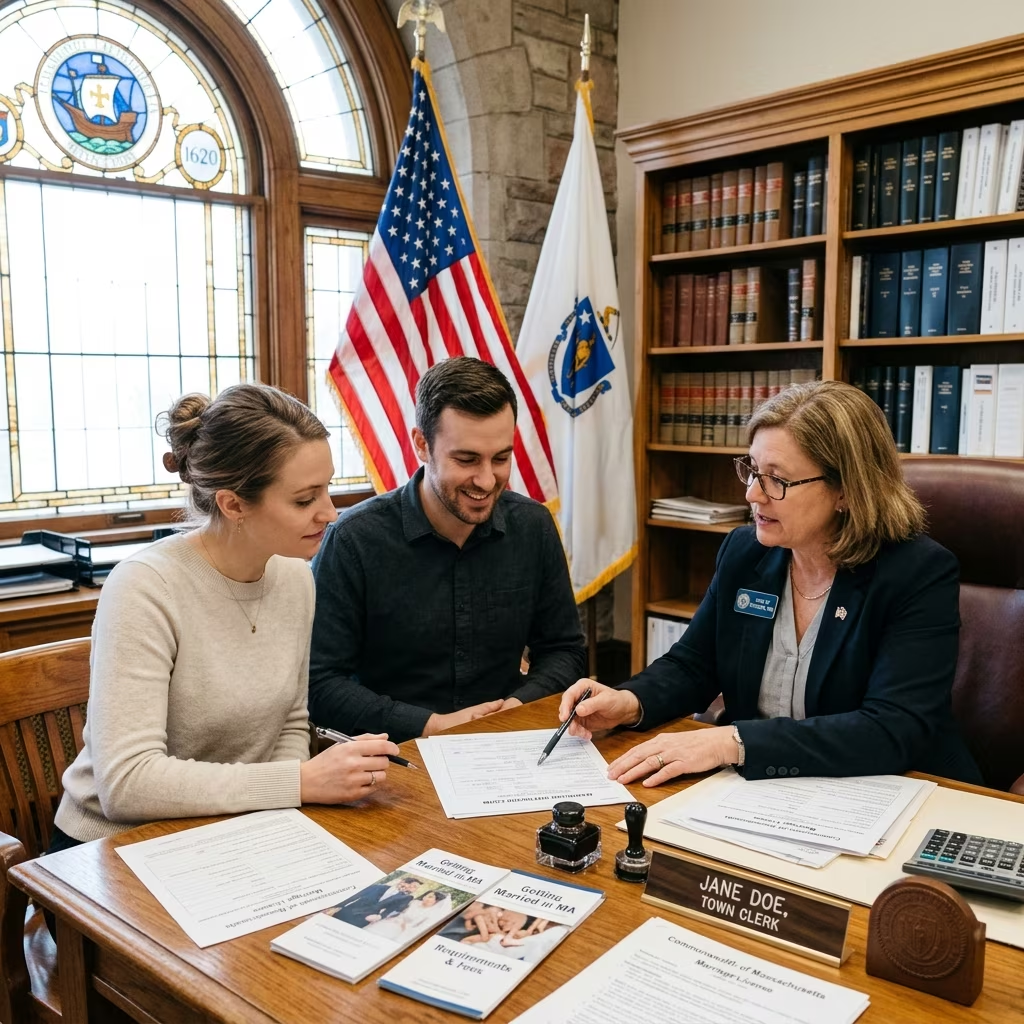
Most clerk offices prefer or require couples to schedule an appointment to file marriage intentions. Examples include Belmont, Boston, and other towns that publish appointment schedules.
- Contact the city or town clerk where you plan to file your intention.
- Ask about available appointment times and any local requirements, such as fees and acceptable forms of payment.
- Some municipalities allow you to complete forms online in advance and then visit in person to finalize and sign them.
2. Appear in Person to File Your Notice of Intention
Massachusetts requires couples to file a Notice of Intention of Marriage in person before a license can be issued. Generally, both parties must attend together, though there are limited exceptions when one person cannot appear.
At the appointment, you will be asked for detailed information, such as:
- Your full legal names and addresses.
- Your dates and places of birth.
- Your parents’ names (often their surnames at birth or adoption).
- The date and location of the planned wedding, including the venue address.
- The name and mailing address of the officiant who will perform the ceremony.
- The name you plan to use after marriage if you intend to change it.
The clerk will review the information, verify your identification, and have you sign the intention form. They will also sign and formally accept the paperwork.
3. Provide Required Documentation
To complete the application, be prepared to show proof of identity and age and, when applicable, Social Security numbers.
- Photo ID: A valid passport, driver’s license, state ID, or military ID is commonly accepted.
- Proof of age: Birth certificate or passport may be requested to confirm you meet the minimum age.
- Social Security number: If you have one, you must provide it. If you do not, you must document the reason (for example, you are not a U.S. resident).
4. Pay the Application Fee
Every municipality sets its own fee for filing marriage intentions and issuing a license. The amount typically ranges from about $25 to $50, sometimes including one certified copy of the marriage certificate.
Examples from Massachusetts towns include:
| Municipality | Typical Fee (illustrative) | Notes |
|---|---|---|
| Wrentham | $25 | Fee for filing marriage intentions. |
| Belmont | $50 | Includes intention filing fee and one certified copy of the certificate. |
| Salem | $40 | Includes one certified copy of the marriage certificate. |
| Boston | $50 | Payable by cash, card, or money order to the City of Boston. |
Because fees and payment methods differ, always confirm the current amount and acceptable payment types with the clerk before your appointment.
5. Observe the Three-Day Waiting Period
Once you file your Notice of Intention, Massachusetts law requires a three-day waiting period before the marriage license can be issued.
- The three days are calendar days, and Sundays and holidays count.
- The waiting period is mandated by state law and applies statewide.
- In urgent situations, you may request a court waiver from the probate or district court in the same community where you filed your intention.
If the court grants a waiver, you can return to the clerk with the signed waiver and receive the license without waiting all three days. If the waiver is denied, the standard waiting period still applies.
6. Pick Up Your Marriage License
After the waiting period ends (or after a court waiver is granted), you must return to the clerk’s office to collect your marriage license.
- Clerks will typically explain when and how to pick up the license at the time you file intentions.
- The license becomes valid once issued and can be used anywhere in Massachusetts, but not outside the state.
Timing Rules: Waiting Period and 60-Day Validity
Two key timing rules govern every marriage license in Massachusetts: the three-day waiting period and the 60-day validity window.
Mandatory Waiting Period
By statute, there is a three-day delay between filing your intention to marry and when your license is available. Couples who need to wed sooner must seek a waiver from the appropriate court, which may or may not be granted.
License Valid for 60 Days
Once issued, a Massachusetts marriage license is valid for 60 days from the date your intentions were filed. You must complete the ceremony and have the officiant sign the license within that period.
- After 60 days, the license expires, and you must file a new intention and pay any applicable fees again.
- The license is valid only within Massachusetts and cannot be used for ceremonies performed in other states or countries.
Officiants and Their Legal Responsibilities
Choosing an officiant is both a personal and legal decision. Massachusetts law recognizes several types of officiants, including religious leaders, certain public officials, and people granted one‑day authorization. Regardless of type, the officiant has important responsibilities in handling the marriage license.
- The officiant must receive the original marriage license before the ceremony and ensure all required information is complete.
- Immediately after the ceremony, the officiant must sign the license to certify that the marriage took place.
- The officiant must return the executed license to the city or town clerk that issued it, generally within the 60‑day validity window.
Failure to return the license promptly can delay the official recording of the marriage and may complicate efforts to obtain certified copies.
Common Practical Questions About Massachusetts Marriage Licenses
Couples often have similar concerns when planning a wedding under Massachusetts law. The answers below summarize frequent issues using statewide rules and typical local practices.
FAQs
- Do we have to live in Massachusetts to get married there?
- No. You do not need to be a Massachusetts resident to obtain a marriage license or get married in the state. You must, however, apply in person to a Massachusetts city or town clerk.
- Can we apply online?
- Some towns allow you to complete forms online in advance, but you still must appear in person to finalize and sign your Notice of Intention. Always check your local clerk’s website for current procedures.
- How far in advance should we apply for the license?
- The license is valid for 60 days from the date intentions are filed, and there is a three-day waiting period before it is issued. Many couples apply 2–6 weeks before the ceremony to avoid expiring the license while still allowing enough time for scheduling and paperwork.
- What happens if we don’t get married within 60 days?
- If the ceremony does not occur within 60 days, the license expires and is no longer valid. You must file a new Notice of Intention, repeat the waiting period, and pay applicable fees again.
- Can the waiting period be waived?
- Yes, but only by the probate or district court in the town where you filed intentions. The court reviews your request and may issue a waiver, allowing the clerk to release the license without waiting three full days. Waivers are discretionary and not guaranteed.
- Is the marriage license valid outside Massachusetts?
- No. Massachusetts marriage licenses may only be used for marriages performed within the Commonwealth. They are not valid for ceremonies in other states or countries.
- Are there special rules for previously divorced individuals?
- If you were divorced in another state and now live in Massachusetts, some clerk offices recommend contacting them in advance to confirm whether additional documentation is needed. The underlying requirement is that you must be legally free to marry.
- What if one of us cannot attend the appointment?
- As a general rule, both parties should appear together to file the Notice of Intention. Limited exceptions may exist in specific towns for serious reasons, but they are handled case‑by‑case; you must speak directly with the clerk for guidance.
Practical Tips for a Smooth Licensing Experience
Although the legal rules are fixed, planning ahead makes the licensing process faster and less stressful. Consider the following practical steps:
- Check local requirements early: Visit your chosen city or town’s official website or call the clerk to confirm fees, appointment availability, and acceptable documents.
- Bring extra documentation: If there is any doubt about your proof of age or identity, bring multiple forms of ID and official records.
- Avoid last‑minute applications: Filing too close to the ceremony can be risky if appointments are limited or if you need a court waiver.
- Confirm officiant details: Make sure your officiant understands Massachusetts rules and knows to return the license promptly after the ceremony.
- Plan for certified copies: If you need certified copies of your marriage certificate for name changes or immigration, ask the clerk about the cost and process when you apply.
References
- Getting Married in Massachusetts: Before the Wedding — Commonwealth of Massachusetts (Mass.gov). 2024-01-10. https://www.mass.gov/guides/getting-married-in-massachusetts-before-the-wedding
- Applying for a Marriage License — Town of Belmont, MA. 2023-05-01. https://www.belmont-ma.gov/378/Applying-for-a-Marriage-License
- Marriage Licenses & Records — City of Salem, MA. 2020-08-01. https://www.salemma.gov/376/Marriage-Licenses-Records
- How to Get Married in Boston — City of Boston. 2023-09-15. https://www.boston.gov/departments/registry/how-get-married-boston
- Marriage Licensing — Town of Norfolk, MA. 2022-10-26. https://www.norfolkmass.gov/departments/town_clerk/marriage_licensing.php
- How to Obtain a Marriage License — Town of Wrentham, MA. 2022-06-30. https://www.wrentham.gov/268/How-to-Obtain-a-Marriage-License
- Marriage License – Appointment Recommended — Town of Northborough, MA. 2021-04-20. https://www.northboroughma.gov/town-clerk/pages/marriage-license-appointment-recommended