
Massachusetts Employment Rights and Criminal History
Understand when Massachusetts employers can use criminal records, what questions are off-limits, and how to protect your rights.
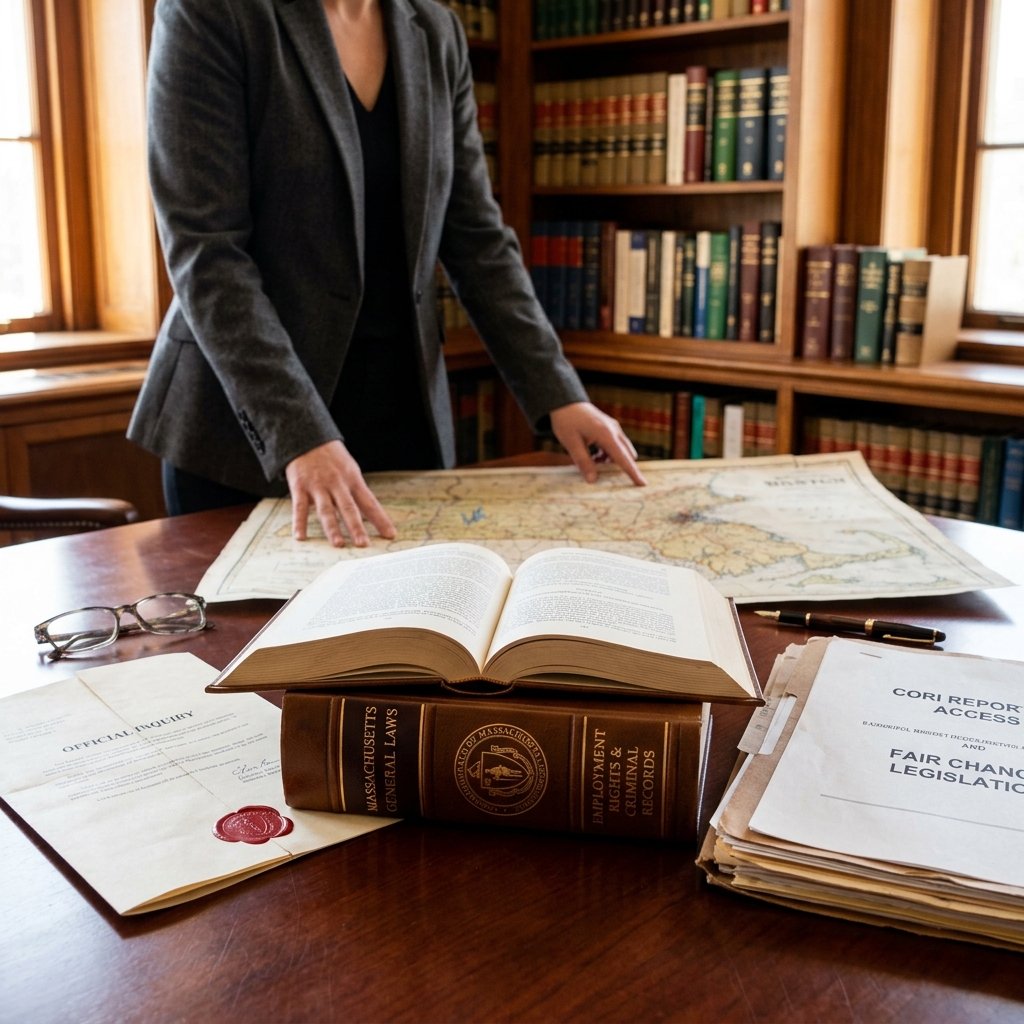
In Massachusetts, your criminal history cannot be used freely by employers when they decide whether to hire, fire, or promote you. State law sets strict limits on what information can be requested, what can be considered, and how employers must handle criminal records during the hiring process. These protections are designed to reduce unfair employment discrimination while still allowing employers to address legitimate safety and compliance concerns.
Why Criminal Record Rules Matter in Employment
A criminal record can follow a person for years, sometimes long after they have completed a sentence or changed their life circumstances. Recognizing this, Massachusetts has adopted a mix of anti-discrimination rules and procedural safeguards to prevent automatic exclusion of people with records from the job market. At the same time, certain industries and positions must comply with strict legal requirements concerning who they hire.
Understanding these rules helps you:
- Recognize when an employer is asking illegal questions about your record.
- Know which past offenses are off-limits in hiring decisions.
- Respond effectively if you are denied a job based on criminal history.
- Use sealing or expungement to strengthen your legal protections.
The Role of CORI and “Ban the Box” in Massachusetts
Massachusetts maintains a statewide criminal records system known as Criminal Offender Record Information, or CORI. It centralizes information about charges, convictions, and dispositions and is used widely by employers, housing providers, and certain licensing authorities. Because CORI information can significantly affect an individual’s opportunities, the state has paired it with strong privacy and anti-discrimination rules.
One major set of protections is the so‑called “ban the box” law. This law limits when and how employers can ask you about your criminal record during the hiring process and is aimed at preventing early, automatic rejection based solely on past involvement with the justice system.
Key Features of “Ban the Box” Protections
- Most employers cannot ask about criminal history on the initial written job application.
- Questions about certain older or minor offenses are prohibited, even later in the hiring process.
- Special protections apply to sealed and expunged records, which generally cannot be used against you.
- Limited exceptions exist for jobs where other laws require screening for specific offenses (for example, working with children or in certain financial institutions).
What Employers May Not Ask About Your Criminal History
Massachusetts law makes some topics completely off-limits when employers screen job applicants or make decisions about current employees. If an employer requests or relies on these categories of information, that conduct may violate state anti-discrimination and criminal records rules.
Information Generally Off-Limits
Under state guidance, employers may not ask about, keep a record of, or base employment decisions on the following kinds of criminal history information:
- Arrests or prosecutions that did not lead to a conviction.
- A first conviction for certain minor misdemeanors such as drunkenness, simple assault, speeding, minor traffic violations, affray, or disturbance of the peace.
- Misdemeanor convictions where the conviction or incarceration ended more than three years ago, as long as there have been no new convictions in the meantime.
- Any record that has been sealed by a court under Massachusetts law.
- Juvenile records, including delinquency matters and child‑in‑need‑of‑services complaints, unless the case was handled in adult court.
Employers are also prohibited from asking you to provide copies of certain records yourself, such as probation or arrest records, or to sign releases giving direct access to those records.
Comparison of Permitted vs. Prohibited Questions
| Type of Question | Generally Allowed? | Notes |
|---|---|---|
| “Have you ever been arrested?” (no conviction) | No | Arrest-only information is off-limits. |
| “Do you have a sealed or expunged record?” | No | Sealed and expunged records cannot be used in employment decisions. |
| “Have you been convicted of a felony in the last three years?” | Sometimes | May be allowed after the initial application, depending on timing and job requirements, but still subject to other protections. |
| “Have you ever been convicted of speeding?” (first conviction only) | No | First conviction for specified minor offenses cannot be used. |
| Questions required by another statute (for example, child‑care jobs) | Yes, with limits | Separate laws may mandate disqualification for certain roles. |
How “Ban the Box” Changes the Application Stage
The initial written application is a critical point in the hiring process. To prevent automatic rejection based on a checked box about criminal history, Massachusetts restricts what can appear on that first form.
Initial Applications: No Criminal Record Questions
For most jobs, employers cannot ask any questions about criminal history on the initial written job application. This includes questions about:
- Past arrests, charges, or periods of incarceration.
- Any criminal convictions, whether felonies or misdemeanors.
- General prompts such as “Have you ever been convicted of a crime?”
The main goal is to allow applicants to be evaluated first on their skills, experience, and qualifications rather than on criminal history alone.
Limited Exceptions
There are narrow exceptions for certain positions where another law disqualifies people with particular convictions or where an employer is legally required not to employ individuals with certain records. Common examples include:
- Jobs working closely with children, elders, or vulnerable populations where statutory screening is mandated.
- Certain financial or security‑sensitive positions that involve legal restrictions on hiring individuals with specific offenses.
Even in these settings, employers must still comply with rules about sealed records, prohibited questions, and proper use of CORI or other background check information.
Employer Use of CORI and Background Checks
Massachusetts employers can obtain criminal record information through CORI or through private background check services, but they must follow procedural safeguards designed to protect applicants from unfair treatment and inaccurate data.
Notice and Copy Requirements
When an employer relies on CORI or similar criminal history information to make an employment decision, it must provide you with a copy of the record and an opportunity to respond. In practice, that includes:
- Giving you a copy of the CORI or background report before asking questions based on its contents.
- Providing another copy if the employer makes a negative decision (such as refusing to hire you) based on that report.
- Informing you how to correct inaccuracies in your criminal record if you believe the information is wrong.
Accuracy and Fairness Obligations
Employers and background check agencies have duties to ensure that the information used in hiring is accurate and up to date. Agencies conducting background checks must take reasonable steps to verify data and investigate disputes, while employers must handle records consistently with state rules on retention and access.
Sealed and Expunged Records: Strong Protections
Massachusetts law offers robust protections for individuals whose records have been sealed or expunged. Once a conviction has been properly sealed, it is generally illegal for an employer to base hiring or firing decisions on that conviction. Expungement offers similar protection by removing certain records from view.
What Sealing and Expungement Mean for Employment
- Employers cannot ask about sealed court appearances or sealed convictions.
- If a record is sealed, you typically have the right to answer “no record” when asked about that offense.
- Expunged records must not be requested or considered, and employers must include special notice when requesting criminal record information to prompt a “no record” response if expungement applies.
- Decisions based on sealed or expunged convictions may violate state anti-discrimination provisions.
Because sealing and expungement can significantly change your employment rights, it may be helpful to discuss these options with an attorney or a legal aid organization if you have an eligible record.
Connection Between Criminal History and Job Duties
Even when employers are allowed to consider certain convictions, they must act in a way that is consistent with anti-discrimination principles. Guidance from state and federal authorities indicates that employers should consider whether there is a meaningful relationship between the criminal offense and the job being performed.
Evaluating the Relationship to the Job
Factors that employers are encouraged to consider include:
- The nature and seriousness of the offense.
- How much time has passed since the conviction or completion of sentence.
- The specific duties and risks associated with the position.
- Evidence of rehabilitation or positive conduct since the offense.
If an employer treats criminal history as an automatic bar to employment without considering these factors, the practice may raise discrimination concerns, particularly if it disproportionately impacts protected groups.
Practical Steps for Applicants with a Criminal Record
If you have a criminal record and are seeking work in Massachusetts, there are concrete steps you can take to protect your rights and improve your chances of fair consideration.
Preparing Before You Apply
- Review your CORI: Obtain your own CORI or criminal history information so you know what employers might see, and check it for accuracy.
- Explore sealing or expungement: Determine whether any of your past offenses qualify to be sealed or expunged under Massachusetts law.
- Understand prohibited questions: Learn which topics employers cannot legally ask about so you can recognize improper applications or interviews.
- Prepare explanations: For permissible questions, be ready to explain the circumstances, time passed, and steps you have taken since the offense.
Responding to Possible Discrimination
If you believe an employer has discriminated against you because of your criminal history in a way that violates Massachusetts law, you have several options:
- Ask for a copy of any CORI or background report used in making the decision, if it was not already provided.
- Request clarification on which part of your record led to the negative decision.
- Challenge inaccurate or outdated information and seek correction through the appropriate agency.
- Contact the Massachusetts Commission Against Discrimination (MCAD) or a legal professional to discuss potential claims under state anti-discrimination and criminal record laws.
Frequently Asked Questions (FAQs)
1. Can an employer ask about my criminal record on a job application in Massachusetts?
For most jobs, no. The “ban the box” law prohibits employers from asking about your criminal record on the initial written job application, with only narrow exceptions for positions where another law requires specific screening.
2. Are arrest records that did not lead to conviction relevant to hiring decisions?
Generally, no. Employers may not ask about or base employment decisions on arrests or prosecutions that did not result in a conviction.
3. What happens if a conviction on my record has been sealed?
Once a record is sealed, employers are not allowed to request, receive, or rely on that information when making hiring or firing decisions, and it is typically legal for you to respond that you have “no record” with respect to that offense.
4. Can an employer refuse to hire me solely because I have a criminal record?
Employers may sometimes refuse to hire based on certain convictions, especially when there is a clear connection between the record and the job duties, but they must follow state rules about prohibited questions, timing, and use of CORI. They also must provide you with a copy of the record used and information on how to correct inaccuracies.
5. What should I do if I think a background check report is wrong?
You can dispute the accuracy with the background check agency, which must take reasonable steps to investigate and correct errors, and you can seek correction of your CORI through state procedures. You may also want legal advice if the inaccurate report led to a denial of employment.
6. Who enforces criminal record discrimination rules in Massachusetts?
The Massachusetts Commission Against Discrimination (MCAD) and other state agencies enforce laws related to employment discrimination and criminal record misuse, and they can provide guidance or accept complaints from individuals who believe their rights have been violated.
References
- Criminal Record Discrimination in the Workplace — Massachusetts Commission Against Discrimination / Mass.gov. 2023-05-01. https://www.mass.gov/info-details/criminal-record-discrimination-in-the-workplace
- Guide to Criminal Records in Employment and Housing — Mass.gov. 2023-04-10. https://www.mass.gov/guides/guide-to-criminal-records-in-employment-and-housing
- “Ban the Box” Updates in Massachusetts — Mintz. 2018-06-08. https://www.mintz.com/insights-center/viewpoints/2018-06-08-ban-box-updates-massachusetts
- Massachusetts Law on Employer Use of Conviction Records — Nolo. 2020-09-15. https://www.nolo.com/legal-encyclopedia/massachusetts-law-employer-use-arrest-conviction-records.html
- Employment Discrimination Based on Criminal History — Super Lawyers. 2019-11-20. https://www.superlawyers.com/resources/employment-law-employee/massachusetts/employment-discrimination-based-on-criminal-history/
- The Latest Development in Criminal History Checks — Holland & Knight. 2010-08-24. https://www.hklaw.com/en/insights/publications/2010/08/the-latest-development-in-criminal-history-checks
- New Law Restricts Ability of Massachusetts Employers To Ask About Criminal Convictions — Fisher Phillips. 2010-09-13. https://www.fisherphillips.com/en/insights/insights/new-law-restricts-ability-of-massachusetts-employers-to-ask-about-criminal-convictions
Similar Articles








Read full bio of Sneha Tete




