
Undefined Maryland Power Of Attorney: Essential Guide For 2025
Comprehensive guide to Maryland's power of attorney laws, requirements, agent duties, and 2023 updates for effective planning.
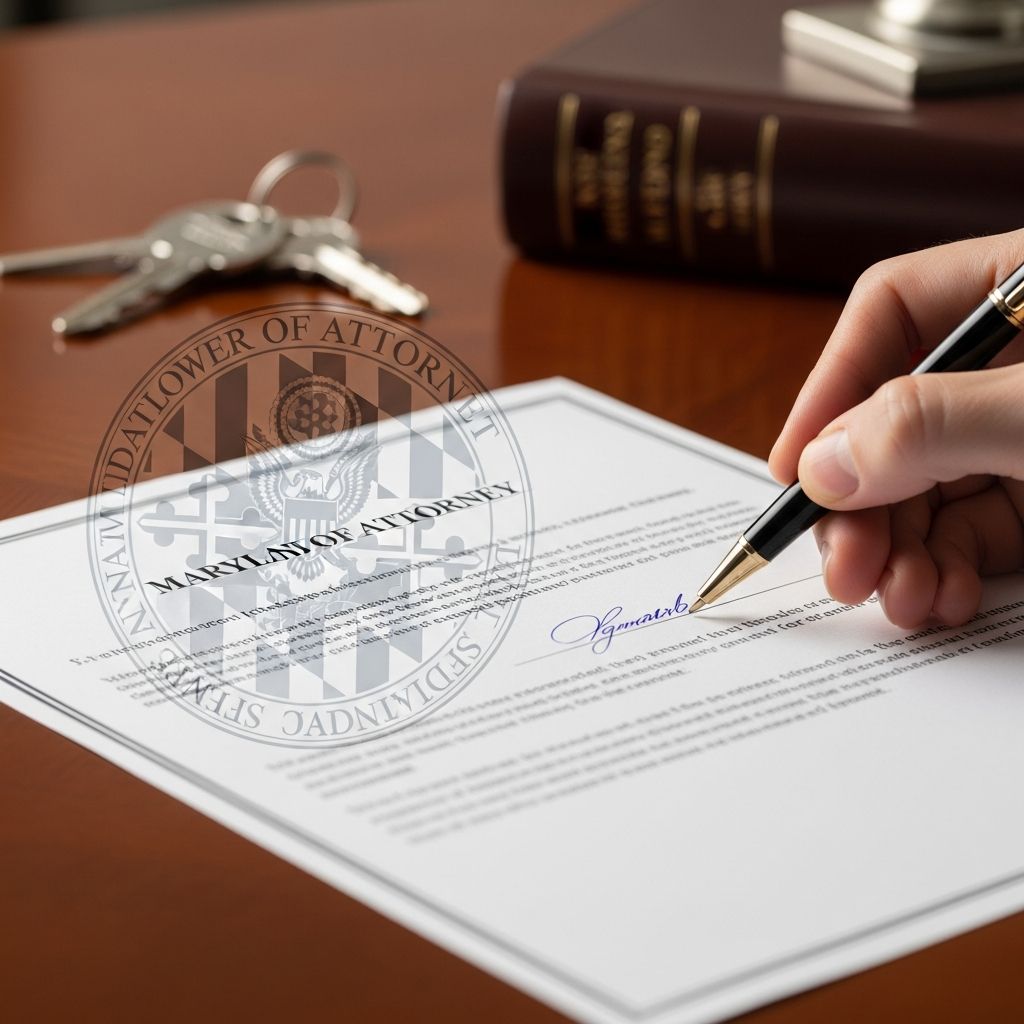
Powers of attorney (POAs) enable individuals in Maryland to designate trusted agents to manage their affairs when incapacity arises. These documents are foundational in estate planning, ensuring seamless handling of finances, property, and health decisions without court intervention.
Defining Powers of Attorney in Maryland Law
A power of attorney is a written instrument where the principal authorizes an agent to act on their behalf. Maryland’s framework distinguishes statutory forms, which follow prescribed templates for broad acceptance, from custom documents. Statutory POAs grant predefined powers, simplifying enforcement across institutions like banks and government agencies.
Agents, also termed attorneys-in-fact, owe fiduciary duties, prioritizing the principal’s interests. This setup proves vital during illness, travel, or cognitive decline, preventing guardianship proceedings that are costly and invasive.
Types of POAs Available to Maryland Residents
- General POA: Permits wide-ranging actions like asset management and contract signing while the principal remains capable. It terminates upon incapacity or revocation.
- Limited/Special POA: Restricts authority to specific tasks, such as selling property or managing a single transaction.
- Durable POA: Persists through incapacity unless stated otherwise, presumed durable under Maryland code.
- Springing POA: Activates only upon a triggering event, typically verified incapacity by physicians, adding safeguards but potential delays.
Maryland presumes durability for written POAs absent explicit termination language, ensuring continuity during disability. Health care POAs, separate from financial ones, address medical choices and require distinct formalities.
Execution Requirements for Valid Maryland POAs
Crafting a enforceable POA demands precision. Post-October 1, 2010, documents must be written, with the principal signing or directing a signatory in their presence. Notarization and two witnesses are mandatory; the notary can witness.
Remote execution, updated for modern needs, allows electronic or physical presence with a supervising attorney. All parties must convene remotely or in-person, with the principal in Maryland or residing there. The attorney certifies the document, affirming signatures, identities, and compliance.
| Requirement | Details |
|---|---|
| Writing | Must be documented; no oral POAs valid. |
| Signature | Principal signs, or proxy in presence. |
| Witnesses | Two present; notary may count as one. |
| Supervision | Attorney oversees, certifies for remotes. |
| Location | Principal in MD at signing. |
Executive orders from the pandemic era validated certain remote POAs, maintaining their force. Pre-2023 POAs endure without invalidation.
Key Updates from Maryland’s 2023 Statutory POA Law
Effective October 1, 2023, revisions broadened agent capabilities, reducing supplemental needs. New powers encompass:
- Trading titled assets like vehicles, vessels, aircraft.
- Managing trusts, estates, escrows as beneficiary interests dictate.
- Renouncing property interests, trust powers, non-testamentary appointments.
- Gifting for Medicaid/public aid eligibility.
- Creating joint accounts, appointing successors (opt-in).
Compensation shifts: agents now claim reasonable pay unless document prohibits, reversing prior reimbursement-only norms. These enhancements streamline elder care transitions and benefit qualifications.
Agent Responsibilities and Fiduciary Standards
Agents bear stringent duties: act loyally per known expectations or best interests, with care and diligence, solely within granted scope. They must maintain records, avoid self-dealing, and keep principals informed where feasible.
Breach invites liability, including surcharge for losses. Agents should decline if unable to uphold standards, notifying principals promptly.
Obligations of Third Parties Accepting POAs
Maryland mandates honoring valid statutory POAs without alternative forms. Refusal exposes parties to damages, penalties, attorney fees via court order. Third parties cannot demand recent execution or extra verification beyond certification.
Banks, insurers, and agencies must promptly accept agent’s authority upon POA presentation, fostering reliability.
Revoking or Terminating a POA
Competent principals revoke via written notice to agents and relevant parties. Durable POAs end at death; others upon incapacity (non-durable), completion, or explicit terms. Destroying copies aids clarity.
Practical Steps for Establishing Your POA
- Assess Needs: Decide scope—financial, health, limited.
- Select Agent: Choose reliable, accessible successor.
- Use Forms: Leverage statutory templates from Md. Code Estates & Trusts §§17-201 et seq.
- Execute Properly: Follow witnessing/notarization rules.
- Distribute Copies: Share with agents, banks, doctors.
- Review Periodically: Update post-2023 for new powers.
Attorneys or software ensure compliance, especially for complexities.
Frequently Asked Questions About Maryland POAs
Is a POA needed before incapacity?
Yes, proactive creation avoids court-appointed guardianships, which are expensive and slow.
Can POAs be signed electronically?
Yes, under attorney supervision with certification.
Does the new law invalidate old POAs?
No, prior documents remain valid.
Must agents be paid?
Reasonable compensation presumed unless opted out.
What if a bank rejects my POA?
They face liability; seek court enforcement with fee recovery.
Can POAs handle real estate?
Yes, statutory forms explicitly authorize property transactions.
Is a separate health POA required?
Financial POAs exclude health; use advance directives for medical powers.
This guide equips Maryland residents for informed POA decisions. Consult professionals for tailored advice.
References
- Maryland Has a New Statutory Power of Attorney Law — Miller, Miller & Canby. 2023-10-01. https://www.millermillercanby.com/maryland-has-a-new-statutory-power-of-attorney-law-what-you-should-know/
- New Legislation in Maryland Power of Attorney Law — Altman Associates. 2023. https://altmanassociates.net/new-legislation-in-maryland-power-of-attorney-law-and-supported-decision-making/
- Estate Planning Update: New Maryland Statutory Power of Attorney — DARS Law. 2023. https://www.darslaw.com/estate-trust-administration/estate-planning-update-new-maryland-statutory-power-of-attorney/
- Understanding Your Maryland Power of Attorney — Gershberg Law. N/A. https://gershberglaw.com/understanding-your-maryland-power-of-attorney/
- Maryland Statutes §17-110 — Maryland General Assembly. 2026. https://mgaleg.maryland.gov/mgawebsite/laws/StatuteText?article=get§ion=17-110
- Powers of Attorney — Maryland People’s Law Library. N/A. https://www.peoples-law.org/powers-attorney
Similar Articles








Read full bio of medha deb


