
Marriage-Based Green Card Interviews Turned Into Arrest Traps
How coordinated enforcement at marriage-based green card interviews is reshaping the risks for immigrant families seeking lawful status.
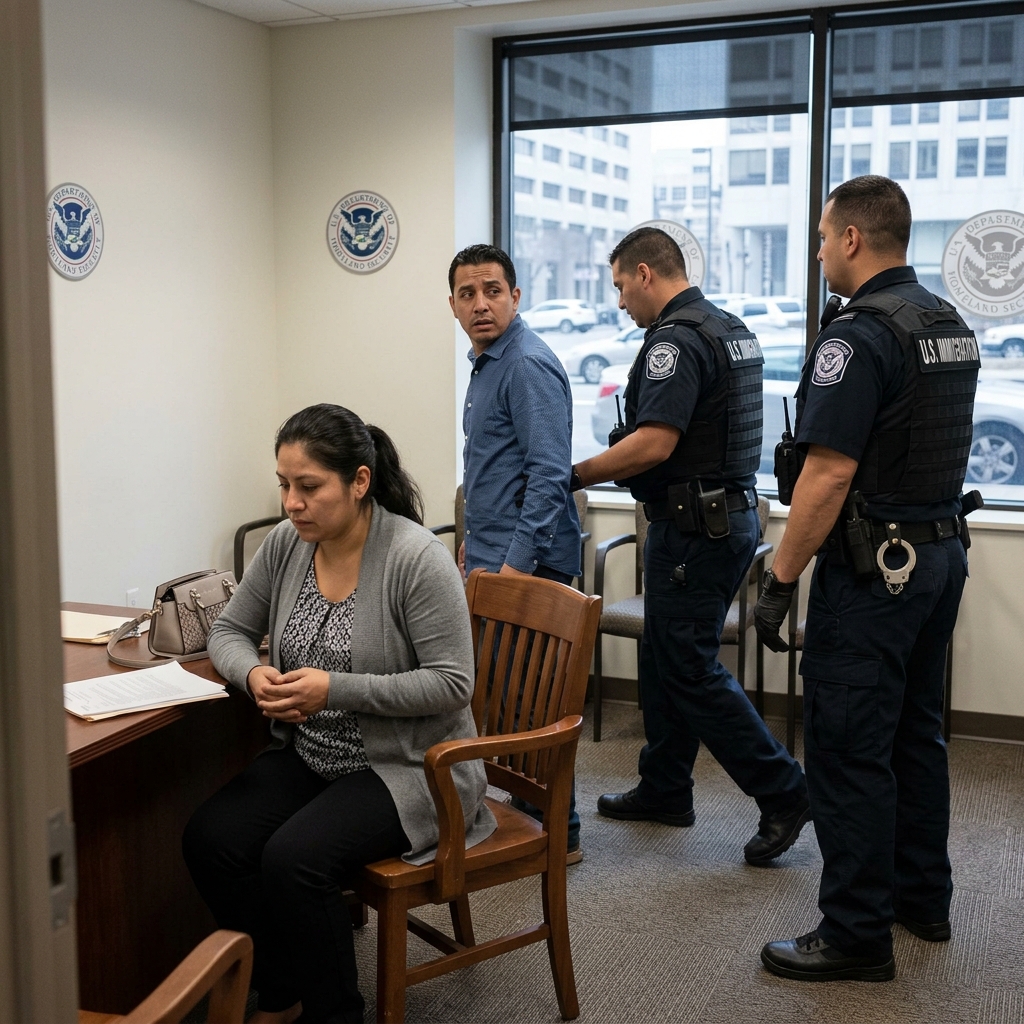
For decades, the marriage-based green card interview was viewed as a hopeful final step: a chance for U.S. citizens and their immigrant spouses to prove a genuine relationship and secure lawful status. In recent years, however, families and advocates have reported a troubling shift. Instead of walking out with approval notices, some immigrants are leaving these interviews in handcuffs, detained by Immigration and Customs Enforcement (ICE) and placed into removal proceedings.
This article explains how marriage-based interviews work, why they have become high-risk enforcement points, what legal challenges have been filed, and how families can better prepare and protect themselves when attending these appointments.
From Pathway to Status to Point of Arrest
U.S. immigration law allows citizens and permanent residents to petition for their spouses to obtain lawful permanent residence, commonly called a “marriage-based” green card. The process typically culminates in an in-person interview at a U.S. Citizenship and Immigration Services (USCIS) office, where an officer evaluates whether the marriage is bona fide, not entered into solely for immigration benefits.
Historically, these interviews were treated as routine administrative events. While applicants might face intense questioning, the expectation was that people who attended in good faith were taking a step toward regularizing their status, not exposing themselves to arrest.
Reports and lawsuits now allege that ICE and some USCIS officers have coordinated to use these same appointments as opportunities to detain immigrants with prior removal orders or other immigration issues, turning a pathway into a trap.
How the Traditional Marriage-Based Interview Works
- Petition and application: The U.S. citizen or permanent resident files a petition (Form I-130), and the immigrant spouse files a green card application (commonly Form I-485) when eligible.
- Document review: USCIS assesses the forms, supporting evidence of the relationship, and background checks.
- Scheduled interview: The couple is invited to attend an interview at a local USCIS field office.
- Questioning: An officer asks questions about the relationship, shared life, and sometimes separates the spouses to compare answers.
- Decision: If satisfied the marriage is genuine and the applicant is otherwise eligible, USCIS approves the petition and the green card application.
None of these steps inherently require ICE involvement. The controversy arises when enforcement officers use foreknowledge of the interview to arrest the applicant while they are on federal property, often in front of their spouses and children.
Coordinated Enforcement: When USCIS and ICE Work Together
Advocates and journalists have documented instances where emails or internal communications show coordination between USCIS and ICE around marriage-based interviews. In these accounts:
- ICE requests interview schedules in advance.
- USCIS space out appointments so multiple arrests do not attract public attention.
- ICE officers position themselves nearby and enter near the end of the interview to detain the applicant.
For affected families, this joint activity transforms what was supposed to be a step toward compliance into a moment of arrest.
Why These Interviews Are Attractive Enforcement Targets
| Factor | Why It Matters for Enforcement |
|---|---|
| Known time and place | ICE knows exactly when and where the immigrant will appear, reducing the effort needed to locate them. |
| Controlled environment | Federal buildings are secure and monitored, minimizing risks associated with field arrests. |
| Pre-screened records | USCIS files already contain immigration histories, prior removal orders, and other information relevant to enforcement. |
| Perception of safety | Applicants attend voluntarily, often believing the interview is a safe step toward legalization. |
Critics argue this strategy discourages individuals from engaging with the legal system at all, undermining the goal of encouraging lawful status and compliance.
Stories Behind the Lawsuits
Multiple couples have brought cases challenging arrests during marriage-based interviews, alleging violations of constitutional rights and of USCIS policies that encourage family unity.
Class Action Allegations
A class action lawsuit filed in federal court alleges that immigration officials used marriage interviews as bait to detain immigrant spouses in Baltimore and other locations. According to public reporting:
- U.S. citizens and their noncitizen spouses received interview notices suggesting a routine adjudication.
- Applicants arrived, provided testimony, and in some cases were told their cases appeared approvable.
- Near the end of the interview, ICE officers entered, detained the immigrant spouse, and moved toward removal.
Advocacy groups argue that this practice “cruelly twists” the family-based immigration system by punishing individuals who attempt to legalize their status through marriage to U.S. citizens.
Individual Accounts and Human Impact
Case stories described in news reports and by legal organizations share common patterns:
- Long-term residence: Many detained applicants have lived in the United States for years, sometimes since childhood.
- No serious criminal history: Several reported cases involve immigrants with no significant criminal record and strong family ties.
- Old removal orders: Some were subject to removal based on past orders, often tied to missed hearings or earlier immigration issues.
- Approved petitions: In some instances, USCIS approved the marriage petition, confirming the relationship was genuine, even as ICE proceeded with detention.
Families are often left grappling with sudden separation, economic instability, and complex legal choices, including whether to continue pursuing status, seek bond, or focus on defending against removal.
Legal and Policy Concerns Raised by Advocates
Civil rights organizations, immigration attorneys, and community groups raise several legal and policy objections to the use of marriage interviews as enforcement traps.
Due Process and Fairness
- Reliance on government representations: Couples argue they attended interviews based on implied assurances that these were administrative appointments for adjudication, not enforcement stings.
- Chilling effect: When attending an interview may lead to arrest, eligible applicants might avoid applying at all, losing access to lawful pathways.
- Procedural justice: Critics contend that arresting individuals mid-process undermines basic fairness, especially when they are actively trying to correct past immigration violations.
Family Unity and Humanitarian Principles
U.S. immigration law contains multiple provisions recognizing the importance of family unity, including immediate relative petitions and waivers based on hardship to U.S. citizen spouses and children. Advocates argue that enforcement at marriage interviews conflicts with this framework by:
- Penalizing families for pursuing lawful status.
- Separating spouses and children unexpectedly.
- Discouraging mixed-status families from seeking regularization.
Policy Consistency and Messaging
Agencies have long encouraged individuals to appear at scheduled proceedings and interviews as part of an orderly system. When attendance increases the risk of arrest, the policy messaging becomes contradictory: immigrants are simultaneously asked to comply and punished when they do.
Practical Risks for Different Categories of Applicants
Not all marriage-based applicants face the same level of risk at interviews. The following table illustrates common categories and potential enforcement concerns, based on reports and legal commentary.
| Applicant Situation | Potential Risk at Interview |
|---|---|
| Entered lawfully, no prior violations | Generally lower risk, though outcomes depend on agency priorities and any background findings. |
| Prior removal order, still present in U.S. | Higher risk of ICE coordination and detention, even if marriage petition is likely approvable. |
| Previous failed applications or fraud findings | Risk of adverse adjudication and potential referral to enforcement. |
| Minor criminal record | Risk depends on offense type, timing, and current enforcement priorities. |
Because enforcement patterns can vary by region and over time, individualized legal advice is crucial before attending any interview where past immigration problems may exist.
Preparation Strategies for Couples Facing Interviews
Although no strategy can eliminate risk, couples can take steps to understand their exposure, assert their rights, and prepare for difficult outcomes.
Before Scheduling or Attending the Interview
- Consult an experienced immigration attorney: Legal counsel can review prior orders, entries, and any criminal history to assess enforcement risks and potential relief.
- Obtain and review records: Request immigration files, court records, and prior applications to clarify your status and identify unresolved issues.
- Discuss local patterns: Attorneys and community organizations often track whether ICE is active at local USCIS offices and can share recent observations.
- Consider timing and strategy: In complex cases, lawyers may advise pursuing waivers, motions, or other legal steps before or alongside a marriage-based application.
At the Interview: Conduct and Awareness
- Know who is in the room: USCIS officers conduct the interview; ICE officers are separate and may enter later if enforcement has been coordinated.
- Answer truthfully: Providing accurate information is essential; misrepresentation can create new legal problems.
- Stay calm and focused: Interviews can be stressful even without enforcement; maintaining composure helps present a clear, consistent account of the relationship.
If Enforcement Occurs During or After the Interview
- Request to contact counsel: Individuals have the right to seek legal representation in immigration proceedings.
- Avoid signing documents you do not understand: Do not sign statements or forms without fully understanding their purpose and consequences.
- Document events when possible: The U.S. citizen spouse and family members can take notes about what happened, which may be relevant for later litigation or complaints.
- Ask about custody and next steps: Understanding where the detained person will be held and what hearings will follow is critical for immediate legal response.
Frequently Asked Questions
Can attending a marriage-based green card interview lead to arrest?
Yes. Reports and lawsuits indicate that, in some jurisdictions, ICE has coordinated with USCIS to detain immigrants at or immediately after marriage-based interviews, particularly those with prior removal orders or other immigration issues.
Is it illegal for the government to use interviews this way?
Federal authorities have broad power to enforce immigration laws, including detaining individuals with outstanding removal orders. However, lawsuits argue that using interviews as traps may violate constitutional protections, agency policies, or commitments to family unity. Courts are still evaluating these claims.
Are all marriage-based applicants at risk?
No. Risk varies greatly based on the person’s immigration history, criminal record, and local enforcement practices. Individuals with prior removal orders or significant past violations face higher risk than those who entered lawfully and have clean records, but policy changes can alter risk over time.
Should couples avoid applying for marriage-based status?
Many couples successfully obtain lawful status through marriage-based applications each year. Deciding whether to apply requires individualized assessment of benefits and risks. Consulting a qualified immigration attorney is strongly recommended before making this decision.
What can families do if a loved one is detained at the interview?
They can seek legal representation immediately, explore options such as bond, motions to reopen or terminate removal proceedings, and possible waivers or other relief. Community organizations and legal aid groups may provide support, especially where class actions or impact litigation are underway.
Broader Consequences for the Immigration System
The use of marriage-based interviews as enforcement points has consequences beyond individual families. It affects how communities perceive the immigration system, how willing people are to trust government processes, and whether legal pathways are seen as genuine options.
- Reduced trust: When ordinary, law-abiding families see interviews turn into arrests, they may lose confidence in government assurances and avoid engagement.
- Hidden populations: Enforcement in supposedly safe spaces, like USCIS offices, can push undocumented individuals deeper into the shadows, making outreach and compliance more difficult.
- Policy debate: Public controversies around these practices contribute to broader debates about how immigration enforcement should balance security, fairness, and family unity.
Whether courts or policymakers will restrict or reshape these enforcement practices remains an open question. Ongoing litigation and public scrutiny continue to highlight the tension between encouraging lawful status and using lawful processes as points of arrest.
References
- Lawsuits say feds used marriage interviews as a trap to deport immigrants — PBS NewsHour. 2019-10-08. https://www.pbs.org/newshour/nation/lawsuits-say-feds-used-marriage-interviews-as-a-trap-to-deport-immigrants
- ICE detains man during marriage interview — Americans for Immigrant Justice. 2018-10-01. https://aijustice.org/2018/10/01/ice-detains-man-during-marriage-interview-thinkprogress/
- Terrible and Terrifying: Marriage Interviews Become Another Cog in the Deportation Machine — American Immigration Lawyers Association. 2018-07-19. https://www.aila.org/blog/terrible-and-terrifying-marriage-interviews-become-another-cog-in-the-deportation-machine/
- Federal agents are using marriage interviews as an immigration trap, lawsuit says — NBC News. 2019-10-09. https://www.nbcnews.com/news/latino/federal-agents-are-using-marriage-interviews-immigration-trap-lawsuit-says-n1063651
- ICE traps immigrants at green card interviews — Axios. 2025-12-23. https://www.axios.com/2025/12/23/trump-ice-green-card-interviews-immigration
Similar Articles








Read full bio of medha deb


