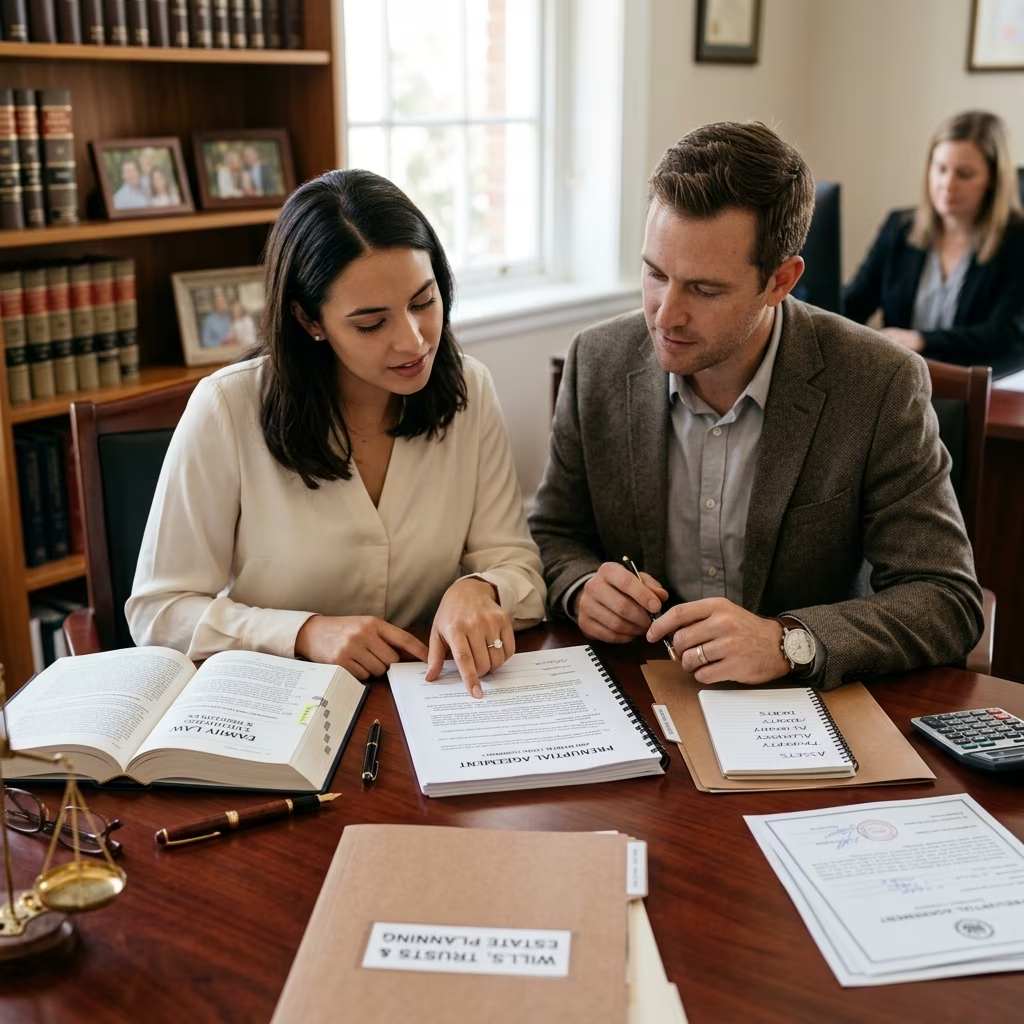
Marriage is not only a personal and emotional commitment; it is also a significant legal event. When two people marry, they enter a legally recognized relationship that reshapes their rights, responsibilities, property, and financial obligations in ways that many couples do not fully appreciate beforehand. Understanding the legal side of marriage can help you make informed decisions, avoid surprises, and protect both partners as you build a life together.
This guide explains major legal aspects of marriage in accessible terms. It covers how to legally form a marriage, what changes once you are married, how property and debts are treated, name changes and identity documents, planning tools like prenuptial agreements, and key questions to ask before saying “I do.” While specific rules vary by state, the principles discussed here reflect common legal themes across the United States.
1. Marriage as a Legal Relationship
Legally, marriage is more than a ceremony or social milestone. It is a formal status recognized by the government that creates a host of rights and duties between spouses. Once you are legally married, you are treated as a family unit for many purposes under state and federal law.
1.1 What Makes a Marriage “Legal”?
For a marriage to be legally valid, each jurisdiction sets specific requirements. These typically include:
- Capacity to marry – Both parties must be legally capable of entering into a marriage contract, which generally means being of minimum age, not currently married to someone else, and mentally able to consent.
- Consent – Both partners must voluntarily agree to marry without fraud, coercion, or duress.
- Compliance with formalities – Most states require a marriage license and a ceremony performed or witnessed by a legally authorized officiant within a specified time.
If these requirements are not met, the marriage can be invalid or subject to annulment. For example, a marriage entered into under coercion or while one party lacked mental capacity may be challenged in court.
1.2 Who Can Marry Whom?
Modern U.S. law recognizes marriage between two consenting adults, regardless of gender, subject to certain restrictions like age and close family relationships. States generally prohibit:
- Marriages between close blood relatives (such as parent–child or siblings).
- Marriages where one person is already legally married to another (bigamy).
- Underage marriages that do not meet age and consent requirements.
At the same time, many states have updated their laws to ensure that marriage rights are applied equally. For instance, New York’s Marriage Equality Act requires that same-sex couples receive the same rights, benefits, and protections as different-sex couples, and that gender-specific language in spousal laws be interpreted in a gender-neutral way.
2. Practical Requirements Before the Wedding
Before you can legally marry, there are procedural steps you must follow. These may seem routine, but small mistakes can cause delays or validity issues, so it is worth understanding them.
2.1 Age, Consent, and Competency
States set a minimum age for marriage and may allow younger people to marry with parental or court consent. Common elements include:
- Age of consent – Most states require parties to be at least 18 to marry without parental consent, and often at least 16 with parental or judicial approval.
- Sound mind – Individuals must be mentally capable of understanding the nature of marriage and deciding to enter it.
- No existing marriage – Being already married disqualifies you from validly marrying someone else.
In some jurisdictions, severe intoxication or drug impairment at the time of the ceremony may be treated similarly to incapacity, since the person cannot reasonably consent.
2.2 Licenses and Ceremonies
Most states require a marriage license, followed by a solemnization (ceremony) within a specified period. For example, New York requires that the ceremony occur within 60 days after obtaining the license and that it involve both parties, at least one witness, and a valid officiant. Common points include:
- Applying for a license from the county clerk or similar office, often with identification and basic personal information.
- Using the license within the time window set by state law.
- Having an officiant authorized by state law—such as a judge, religious leader, or other approved official—perform or oversee the ceremony.
While many couples plan elaborate celebrations, the law cares mainly about the license, the presence of the parties and witness, and the officiant’s authority.
3. How Marriage Changes Your Legal Status
Once your marriage is legally valid, the law begins to treat you differently. These changes touch everything from property to taxes to decision-making in emergencies.
3.1 Becoming Each Other’s Next of Kin
Marriage typically makes spouses each other’s closest legal relatives, or next of kin. This may affect:
- Inheritance rights – If a spouse dies without a will, the surviving spouse often receives a substantial share of the deceased’s estate, sometimes ahead of parents or siblings.
- Decision-making authority – Spouses are commonly authorized to make medical and legal decisions for an incapacitated partner, unless other documents say otherwise.
- Access to information – Hospitals and institutions may share information with spouses more readily than with other relatives.
While couples can and should use wills and healthcare directives for precise planning, marriage itself opens default legal channels for support and decision-making.
3.2 Government Benefits and Recognition
Marriage can influence access to government and employment-based benefits. For example:
- Social Security – Spouses may qualify for spousal or survivor benefits based on the other’s work history, subject to federal rules.
- Pensions and retirement plans – Many employer-sponsored retirement plans grant surviving spouses rights in plan benefits, and some pensions can be divided or shared as marital assets subject to legal rules.
- Immigration – Legally recognized marriage can support immigration petitions for foreign-born spouses, although federal immigration law has its own criteria.
These benefits often depend on the marriage being legally valid and properly documented, so keeping records and updating plan administrators is important.
4. Property, Debts, and Financial Responsibilities
One of the most significant legal consequences of marriage involves property and finances. Many couples discover only later that marriage reshaped ownership of assets and obligations in ways they did not anticipate.
4.1 Marital vs. Separate Property
In most states, property acquired during marriage is treated as marital property, regardless of which spouse’s name is on the title. Although details vary, many laws follow these general concepts:
- Marital property – Assets obtained by either spouse during the marriage (e.g., salary, homes bought after marriage, joint bank accounts, vehicles) may be considered jointly owned and subject to division if the marriage ends.
- Separate property – Assets owned before marriage or received individually by gift or inheritance may remain separate under certain conditions.
- Transformation of property – In some equitable distribution states, even property owned before marriage can effectively become marital if it is heavily mixed with marital resources or treated as shared.
These rules matter not only in divorce but also in estate planning and creditor issues. Understanding them helps couples decide how to hold title to property and whether to use agreements to clarify ownership.
4.2 Debts and Financial Support Duties
Marriage can affect how debts and support obligations are allocated:
- Spousal support duties – Many states impose a mutual duty of support, meaning spouses are expected to contribute to each other’s maintenance through their labor or property.
- Marital debts – Debts incurred during the marriage for family or household purposes may be considered joint obligations for legal or practical reasons, even when only one spouse signs a contract.
- Alimony and support after divorce – If the marriage ends, courts may order one spouse to pay support (alimony) or child support, depending on circumstances.
Couples can reduce conflict by discussing financial expectations early and keeping clear records of major debts and assets.
4.3 Summary of Common Legal Effects on Property
| Aspect | Before Marriage | After Marriage |
|---|---|---|
| Ownership of salary | Each person’s income is individually owned. | Income may be treated as marital property in many states. |
| Home purchased together | Co-owners can define rights by contract/titles. | Often considered marital property, subject to division in divorce. |
| Gifts between partners | Gifts may have tax implications and separate ownership. | Most gifts between spouses are not taxed and may be treated as shared. |
| Inheritance received by one partner | Generally that person’s separate property. | Often still separate if kept distinct, but can become marital if commingled. |
5. Names, Identity Documents, and Personal Details
Marriage frequently leads to changes in names, addresses, tax filings, and beneficiary designations. While tradition shapes many decisions, the law gives spouses choices.
5.1 Name Changes at Marriage
Spouses usually have the legal right to change their surnames upon marriage. Typically:
- Either spouse may adopt the other’s last name.
- Couples may choose a hyphenated or combined surname, subject to state rules.
- Government agencies and financial institutions require documentation of the marriage to update records.
Although changing one’s name is optional, it affects identification documents, professional licenses, and signature recognition, so planning and consistency are important.
5.2 Updating Legal and Financial Records
After marriage, it is prudent to review and update:
- Driver’s license, passport, and Social Security records.
- Health and life insurance policies, including beneficiary designations.
- Bank accounts, credit cards, and property titles.
- Wills, powers of attorney, and healthcare directives.
These updates ensure that your new marital status is reflected in official records and that benefits flow to your spouse as intended.
6. Prenuptial Agreements and Other Planning Tools
Not every couple needs a prenuptial agreement, but many benefit from discussing one. A prenuptial (or premarital) agreement is a contract signed before marriage that outlines how property and certain financial matters will be handled if the marriage ends.
6.1 What Prenups Can and Cannot Do
State laws differ, but a typical prenuptial agreement can:
- Define which assets will remain separate and which will be treated as marital.
- Set rules for dividing property and certain spousal support obligations if the marriage ends.
- Clarify responsibility for specific debts.
However, prenups generally cannot dictate child custody, visitation, or child support, since courts decide these issues based on the child’s best interests at the time of separation.
6.2 Requirements for a Valid Agreement
For a prenuptial agreement to hold up in court, many states require that it be fair and genuinely voluntary. Common safeguards include:
- Voluntary signing – The agreement must be signed without coercion, undue influence, or duress.
- Full financial disclosure – Each partner must provide a clear picture of their assets and debts.
- Opportunity to seek independent legal advice – Both parties should have the chance to consult their own lawyers.
- Reasonable timing – Some states require a waiting period between receiving the agreement and signing it to allow for review.
Even couples who do not sign prenups can benefit from discussing expectations about money, property, and future plans before marriage.
7. Everyday Legal Responsibilities within Marriage
Marriage law does not only address what happens at the beginning or end of a relationship; it also shapes everyday obligations while spouses are together.
7.1 Mutual Support and Household Duties
Some states explicitly require spouses to support themselves and each other from their property and labor. In practice, this can mean:
- Sharing responsibility for basic living expenses and housing.
- Contributing to childcare and family obligations.
- Not abandoning a spouse without support, which may factor into divorce or support proceedings.
Courts rarely manage day-to-day household chores, but these legal duties can matter if one spouse seeks support or relief during separation.
7.2 Liability Between Spouses
Marriage can also change how spouses can sue or be sued. In many jurisdictions, laws limit lawsuits directly between spouses for certain claims once they are married, while allowing remedies in divorce or separation proceedings. However, serious misconduct or criminal acts are still subject to civil and criminal accountability.
8. Key Questions to Ask Before Saying “I Do”
Given the breadth of legal changes, it is wise for couples to discuss practical issues before marrying. Consider exploring these questions together:
- How will we manage and share money, savings, and debts?
- Do we need a prenuptial agreement, and are we willing to seek legal advice?
- What are our expectations around work, childcare, and household responsibilities?
- How will we handle name changes and identity documents?
- Have we planned for emergencies—wills, healthcare directives, and powers of attorney?
- Do we understand our state’s basic marriage and property laws?
These conversations may feel practical or even uncomfortable, but they can strengthen trust and reduce conflict later.
9. Frequently Asked Questions
9.1 Do we automatically have marriage rights if we live together?
No. Simply living together does not automatically create the legal rights of marriage. Most states require a formal marriage license and ceremony to confer full spousal rights. A few jurisdictions recognize common law marriage under specific conditions, but this is increasingly rare and complex to prove.
9.2 Can we be married in one state and recognized in another?
As a general rule, a marriage validly performed in one U.S. state is recognized in other states. Couples should still comply with the laws of the state where they marry, including licensing and eligibility requirements, to ensure nationwide recognition.
9.3 Does marriage change how my property is taxed?
Yes, marriage can change tax treatment. For example, many property transfers and gifts between spouses are not subject to certain taxes, and married couples may file joint income tax returns. Estate tax rules also often provide significant exemptions for transfers to a surviving spouse. Because tax law is complex and can change, couples should consult a qualified tax or legal professional for personalized advice.
9.4 What happens to our property if we divorce?
If a marriage ends, the court typically divides marital property according to state law, which may follow equitable distribution or community property principles. Separate property may be treated differently, but commingling or jointly using assets can blur the lines. Prenuptial or postnuptial agreements may shape the outcome if they are valid and enforceable.
9.5 Do we need a lawyer before getting married?
There is no legal requirement to hire a lawyer before marrying. However, consulting a family law attorney can be helpful if you have significant assets, children from prior relationships, business interests, or concerns about property and support. Legal advice is particularly useful when drafting or reviewing prenuptial agreements.
References
- State Laws on Marriage — FindLaw. 2023-04-10. https://www.findlaw.com/family/marriage/state-laws-on-marriage.html
- What Should I Know About Marriage? — GeorgiaLegalAid.org. 2021-06-01. https://www.georgialegalaid.org/resource/what-should-i-know-about-marriage-1
- Frequently Asked Questions About New York’s Marriage Equality Act — New York Civil Liberties Union. 2011-06-24. https://www.nyclu.org/resources/know-your-rights/know-your-rights-frequently-asked-questions-about-new-yorks-marriage-equality-act
- 9 Ways Marriage Changes Your Legal Rights — Lynch & Owens, P.C. 2019-01-15. https://www.lynchowens.com/blog/2019/january/nine-ways-marriage-changes-your-legal-rights-and/
- Law Facts: Ohio’s Marriage Laws — Ohio State Bar Association. 2018-05-01. https://www.ohiobar.org/public-resources/commonly-asked-law-questions-results/law-facts/law-facts-ohios-marriage-laws/
- Legal Rights in Marriage & Divorce in Maryland — Maryland Department of Human Services. 2012-09-01. https://dhs.maryland.gov/blog/wp-content/uploads/2012/09/Legal-Rights-in-Marriage-and-Divorce-2012.pdf
- Marriage Law — Overview. 2019-11-15. https://en.wikipedia.org/wiki/Marriage_law