
Maritime Worker Injuries: Rights and Remedies
Essential guide to protections, compensation, and legal options for injured seafarers under U.S. maritime laws.
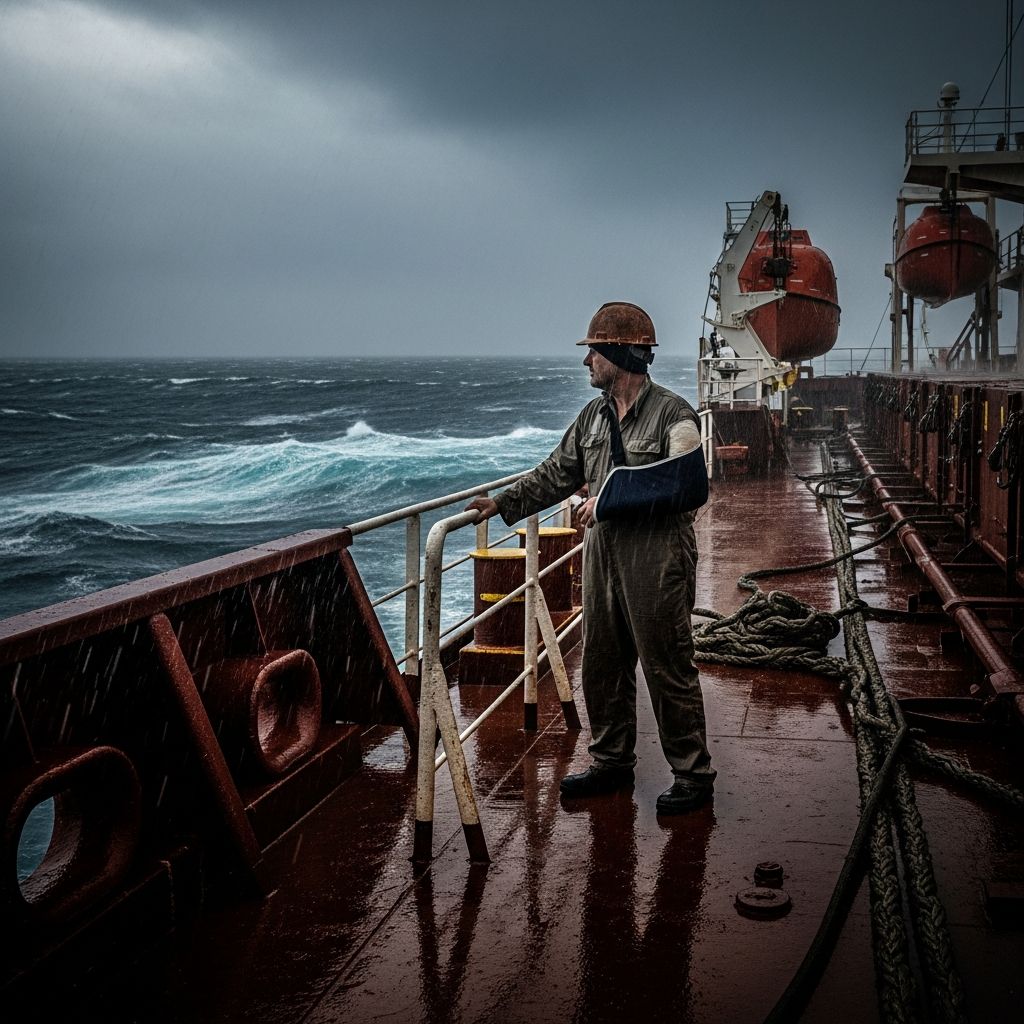
Maritime work involves unique hazards on vessels, rigs, and docks, where injuries can lead to severe consequences. Unlike traditional employment, seafarers and related workers benefit from specialized federal laws providing robust protections and compensation pathways. This article examines the primary legal frameworks, eligibility criteria, common injury types, and practical steps for pursuing claims, empowering injured workers to secure rightful remedies.
Core Legal Protections for Seafarers and Dock Workers
The maritime industry operates under a distinct body of law known as admiralty or maritime law, which supersedes standard state workers’ compensation systems. This framework ensures that workers on navigable waters receive fair treatment for on-the-job harms. Key statutes include the Jones Act for seamen, the Longshore and Harbor Workers’ Compensation Act (LHWCA) for harbor workers, and general maritime doctrines like unseaworthiness and maintenance and cure.
The Jones Act: Safeguard for Seamen
Enacted as part of the Merchant Marine Act of 1920, the
Jones Act
grants seamen the right to sue employers for negligence causing injury or death. It mirrors Federal Employers’ Liability Act (FELA) principles, allowing recovery even if employer fault contributed minimally to the incident. Eligible workers can claim medical expenses, lost wages, pain and suffering, and punitive damages in some cases.Compensation under this act covers a broad spectrum:
- Medical costs: All reasonable treatment until maximum medical improvement.
- Lost earning capacity: Past and future wages, including promotions foregone.
- Non-economic damages: Physical pain, emotional distress, and reduced quality of life.
- Punitive damages: For egregious employer misconduct.
Longshore and Harbor Workers’ Compensation Act (LHWCA)
For workers not qualifying as seamen—such as longshoremen, shipbuilders, or those on fixed platforms—the
LHWCA
provides no-fault workers’ compensation. Administered by the U.S. Department of Labor, it offers scheduled benefits for disabilities, medical care, and survivor payments without proving negligence.| Benefit Type | Description | Typical Amount (2026 Rates) |
|---|---|---|
| Temporary Total Disability | Two-thirds of average weekly wage | Up to $1,800/week max |
| Permanent Partial Disability | Scheduled body part payments | Varies by injury site |
| Medical Benefits | Unlimited reasonable care | Employer-paid |
| Death Benefits | To dependents | Two-thirds wages + funeral |
Note: Benefits adjust annually based on national average weekly wage.
General Maritime Law Doctrines
Beyond statutes, common law principles apply universally:
- Maintenance and Cure: Employers must cover living expenses (maintenance, about $30-60/day) and all medical care until recovery plateaus, regardless of fault.
- Unseaworthiness: Strict liability if the vessel, gear, or appurtenances are unfit for use, even without employer knowledge.
- Death on the High Seas Act (DOHSA): For fatalities beyond 3 nautical miles offshore, families recover dependency damages.
Who Qualifies as a Protected Maritime Worker?
Classification determines applicable laws.
Seamen
under the Jones Act must:- Contribute to vessel function (e.g., deckhands, engineers, fishermen).
- Spend at least 30% of time on navigable waters aboard vessels in navigation.
- Maintain an employment relationship with the vessel owner/operator.
Examples include crew on supply boats, tugboats, offshore rigs (jack-up or floating), derrick barges, and pipelay vessels. Platform workers on fixed structures fall under LHWCA or Outer Continental Shelf Lands Act (OCSLA).
Hybrid roles require case-by-case analysis; courts assess total duties. Offshore oil/gas workers on mobile units often qualify as seamen, unlike fixed-platform peers.
Prevalent Hazards and Injury Types in Maritime Environments
Maritime injuries stem from harsh conditions: heavy machinery, slippery decks, confined spaces, and extended voyages. Common incidents include:
- Falls overboard or on deck: Due to waves, poor railings.
- Crushings/amputations: Winches, cranes, rigging failures.
- Burns/electrocutions: Engine room fires, faulty wiring.
- Respiratory/musculoskeletal issues: Chemical exposure, repetitive lifting, noise-induced hearing loss.
- Traumatic events: Collisions, groundings, explosions on rigs.
Employers must furnish safe workplaces, proper training, and equipment per Jones Act duties. Violations like inadequate PPE or unseaworthy gear trigger liability.
Navigating the Claims Process: Essential Steps
Timely action maximizes recovery. Follow these steps post-injury:
- Report immediately: Notify supervisor in writing, detailing incident, witnesses, and injuries.
- Seek medical care: Document all treatments; employers cover under maintenance/cure.
- Preserve evidence: Photos, videos, logs, equipment states before alterations.
- Track losses: Wages, bills, daily impacts via journals.
- File promptly: Jones Act has 3-year statute; LHWCA, 1-year notice.
- Consult counsel: Experienced attorneys handle complexities, negotiations.
Claims often settle pre-trial, but jury trials under Jones Act can yield higher awards.
Compensation Comparison: Jones Act vs. LHWCA
| Aspect | Jones Act (Seamen) | LHWCA (Harbor Workers) |
|---|---|---|
| Fault Required | Negligence (contributory OK) | No-fault |
| Damages | Full (economic + non-economic) | Scheduled benefits only |
| Jury Trial | Yes | No (administrative) |
| Medical Coverage | Until MMI | Unlimited reasonable |
| Employer Defense | Limited | None |
Jones Act offers potentially greater payouts but demands proof; LHWCA provides quicker, guaranteed aid.
Special Considerations for Offshore and Oil/Gas Workers
Outer Continental Shelf (OCS) operations invoke OCSLA, incorporating state laws or LHWCA extensions for fixed platforms. Floating rigs qualify under Jones Act. Additional protections cover pollution injuries via Oil Pollution Act. Hearing loss from noisy environments exemplifies compensable cumulative trauma under LHWCA.
Frequently Asked Questions (FAQs)
What if my injury occurred partly on land?
Status hinges on overall duties; minimal land time doesn’t disqualify seaman status if 30%+ afloat.
Can I sue fellow crew members?
Typically employer-focused, but third-party negligence (e.g., contractor) allows separate suits.
Does maintenance and cure end if I recover partially?
No, continues to maximum medical improvement, even for pre-existing conditions aggravated at work.
What about international waters injuries?
U.S. laws apply if under American flag or employer; DOHSA for deaths far offshore.
Should I accept first settlement offer?
Rarely; lowballs common. Attorney review ensures full value.
Why Partner with a Maritime Injury Specialist?
These cases involve intricate rules, multi-jurisdictional issues, and aggressive defenses. Specialized lawyers secure higher settlements, counter retaliation risks, and manage maintenance disputes. Free consultations reveal claim viability without commitment.
Maritime workers face extraordinary risks yet possess powerful legal tools. Understanding these empowers informed decisions, transforming adversity into recovery.
References
- How Can I Get Maritime Injury Compensation Through the Jones Act? — Kopfler & Hermann. 2023. https://kopflerhermann.com/blog/how-can-i-get-maritime-injury-compensation-through-the-jones-act/
- What Laws Protect Maritime Workers? — Morris Bart, LLC. 2025. https://www.morrisbart.com/faqs/what-laws-protect-maritime-workers/
- Understanding Your Rights: A Comprehensive Guide to Maritime Injury Laws — Tobias Comer Law. 2024. https://www.tobiascomerlaw.com/understanding-your-rights-a-comprehensive-guide-to-maritime-injury-laws/
- Maritime Laws When Workers Are Injured Aboard a Vessel — Super Lawyers. 2025-10-30. https://www.superlawyers.com/resources/admiralty-and-maritime-law/maritime-laws-when-workers-are-injured-aboard-a-vessel/
- Maritime Law: Protecting Injured Oil and Gas Workers Like You — Anderson Blanda. 2024. https://www.andersonblanda.com/maritime-law-protecting-injured-oil-and-gas-workers-like-you/
- Maritime Injury Claims — The Young Firm. 2025. https://www.jonesactlaw.com/maritime-injury-claims/
Similar Articles








Read full bio of Sneha Tete


