
Maritime Arrest and Attachment Explained
A clear guide to two powerful admiralty remedies used to secure claims and bring vessel owners into court.
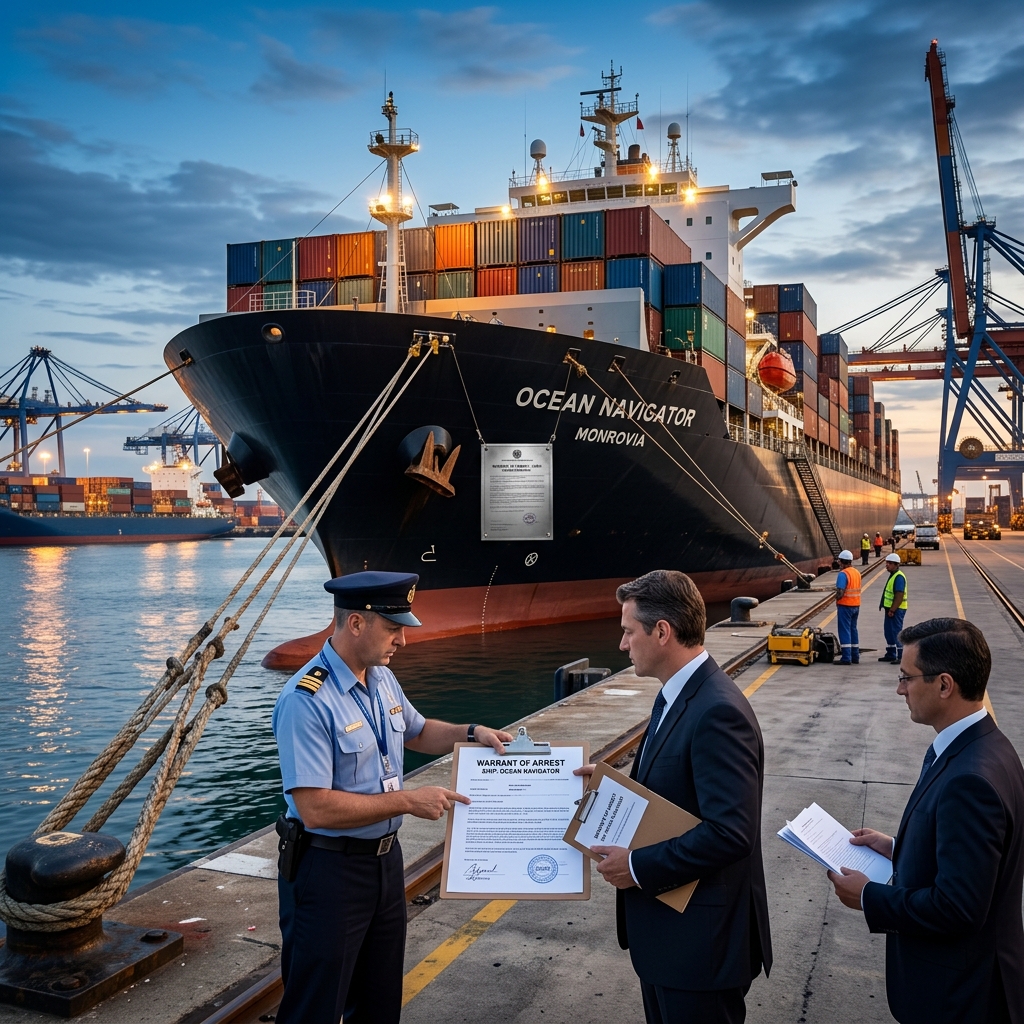
Understanding the two remedies
In admiralty practice, arrest and attachment are procedural tools that help a claimant secure a maritime claim before a final judgment is entered. They are not criminal punishments and do not depend on wrongdoing in the ordinary sense. Instead, they are designed to give a court control over property or secure property value while a dispute is pending.
Although the two remedies are often mentioned together, they serve different purposes. A maritime attachment is generally used to reach a defendant’s property when the defendant is not found in the district, while a maritime arrest is used to proceed directly against a vessel or other property that is itself subject to a maritime lien.
Because these remedies can immediately affect a vessel, cargo, or funds, they are governed by specialized federal admiralty rules and strict procedural requirements.
Why maritime claimants use these remedies
Maritime disputes often involve parties, vessels, and assets that move quickly across borders and jurisdictions. That mobility can make it difficult for a claimant to secure payment or ensure that the opposing party participates in the case. Arrest and attachment address that problem by creating leverage at the outset of the lawsuit.
These remedies can serve several practical goals:
- they help obtain security for a future judgment;
- they encourage a defendant to appear and respond;
- they preserve property connected to the dispute; and
- they allow a court to exercise authority over claims that would otherwise be hard to enforce.
In many maritime cases, that early security is the difference between a collectible claim and an empty judgment.
How maritime attachment works
Maritime attachment is tied to what federal admiralty practice calls a quasi in rem proceeding. In simple terms, the claimant is not suing the property itself as the direct wrongdoer. Instead, the claimant uses the defendant’s property in the district to support a claim against a defendant who cannot be found there.
Under the federal rules, a plaintiff must generally show a valid admiralty claim, that the defendant cannot be found within the district, that the defendant’s property is located in the district, and that no statute or maritime doctrine bars the attachment.
Attachment is especially useful when the claimant has a maritime claim but does not have a maritime lien against the property to be seized. The property does not need to be the direct subject of the dispute, which makes this remedy broader than arrest in one key respect.
How maritime arrest works
Maritime arrest is different because it is an in rem proceeding. That means the action is brought directly against the vessel or other property. The remedy is available when the claimant has a maritime lien or another legally recognized basis for proceeding against the property itself.
This feature makes arrest especially important in classic admiralty disputes such as collision claims, salvage claims, unpaid seamen’s wages, certain cargo disputes, and other matters where maritime liens may arise. The U.S. Marshals Service explains that execution of a warrant of arrest is necessary to acquire jurisdiction in an in rem action.
Unlike attachment, arrest does not depend on the defendant being absent from the district. The critical question is whether the property is subject to arrest because a maritime lien or comparable interest exists.
Attachment versus arrest
| Feature | Maritime Attachment | Maritime Arrest |
|---|---|---|
| Core purpose | Secures property to support a claim against a defendant | Proceeds directly against property that is subject to a maritime lien |
| Type of action | Quasi in rem | In rem |
| Need for maritime lien | Not required | Required |
| Defendant’s presence in district | Defendant must generally not be found in the district | No similar requirement |
| Main use | Obtain security and possible jurisdictional leverage | Enforce rights against the vessel or property itself |
The distinction matters because it determines not only whether the court can issue the remedy, but also what kind of claim the plaintiff must be able to show at the outset.
The role of the federal rules and the marshal
Maritime arrest and attachment are governed by the Supplemental Rules for Admiralty or Maritime Claims, especially Rules B, C, and E. These rules set out the pleading requirements, the judicial review process, and the steps for issuing process to the U.S. Marshal.
As a practical matter, the claimant usually must file a verified complaint and supporting papers, and the court must review the request before process is issued. If the requirements are met, the clerk or the court authorizes the writ or warrant, and the marshal carries out the seizure.
The U.S. Marshals Service also notes that seizure must occur within the district issuing the process, unless a statute specifically provides otherwise. That territorial limitation makes early planning important in maritime litigation.
Typical steps in a maritime seizure case
Although details vary by court, the sequence often follows a familiar pattern:
- The claimant evaluates whether the case fits Rule B attachment or Rule C arrest.
- A verified complaint and supporting affidavit or declaration are prepared.
- The claimant files proposed process, warrants, or orders for judicial review.
- The court determines whether the rule-based requirements are satisfied.
- The clerk issues the writ or warrant if authorized.
- The U.S. Marshal executes the process against the vessel, cargo, or other property.
This is not a routine collection procedure. Because the remedy can disrupt commercial operations immediately, courts require strict compliance with the governing rules.
Common strategic questions for claimants
Maritime claimants usually focus on three questions before seeking arrest or attachment:
- Is there a maritime claim? The dispute must fall within admiralty jurisdiction or another recognized maritime basis.
- Is the right remedy available? A claim with a maritime lien may support arrest, while a claim without a lien may still support attachment if the Rule B conditions are met.
- Is the property reachable? The vessel, cargo, or funds must be located in the proper district at the right time, and the procedural rules for service must be followed.
These questions are often answered quickly in commercial shipping disputes because the relevant assets can depart within hours or days. That urgency is one reason admiralty law gives claimants these specialized tools.
What happens after seizure
After a vessel or other property is seized, the defendant usually must decide whether to appear, post security, challenge the seizure, or negotiate a resolution. In attachment cases, the defendant’s response may determine the extent of the court’s leverage over the underlying claim.
In arrest cases, the vessel itself remains under the court’s authority until the lien dispute is resolved or adequate security is posted. That can create strong settlement pressure, especially when the property is commercially valuable and time-sensitive.
At the same time, courts remain attentive to wrongful or unsupported seizures. The procedural rules are designed to protect defendants from overbroad use of these remedies while still giving claimants a meaningful way to secure maritime rights.
Why legal guidance matters
Maritime arrest and attachment are technical, fast-moving, and highly procedural. Small mistakes can lead to delay, dismissal, or the loss of leverage over the asset. A claimant must think carefully about jurisdiction, the nature of the claim, the exact property to be seized, and the timing of the filing.
For vessel owners and operators, the consequences are equally serious. A seizure can interrupt trade, affect financing, and create immediate operational pressure. That is why both sides benefit from counsel who understands the intersection of admiralty jurisdiction, federal procedure, and practical vessel operations.
Frequently asked questions
Is maritime attachment the same as a lawsuit against the vessel?
No. Attachment is a procedure used to secure a claim against a defendant’s property when the defendant is not found in the district. It is different from an in rem arrest, which is a direct action against property subject to a maritime lien.
Do you need a maritime lien to seize a vessel?
Yes, if you are seeking maritime arrest under Rule C. A maritime lien is the foundation for an in rem proceeding against the vessel or other property.
Can attachment be used even if the vessel is not the cause of the dispute?
Yes. Maritime attachment can reach property that is not itself the subject of the underlying claim, so long as the rule requirements are met.
Who actually carries out the seizure?
The U.S. Marshal executes the warrant or writ after the court or clerk authorizes the process.
Why are these remedies limited to federal admiralty practice?
Because they arise from specialized maritime procedure and federal supplemental rules that govern admiralty and maritime claims in federal court.
References
- Maritime Attachment & Arrest — MMWR. 2026-07-10. https://www.mmwr.com/maritime-attachment-arrest/
- What Are Arrest and Attachment Proceedings? — Super Lawyers. 2026-07-10. https://www.superlawyers.com/resources/admiralty-and-maritime-law/what-are-arrest-and-attachment-proceedings/
- Admiralty — U.S. Marshals Service. 2026-07-10. https://www.usmarshals.gov/what-we-do/service-of-process/civil-process/admiralty
- In Rem Admiralty Jurisdiction and the Supplemental Rules — IRMI. 2026-07-10. https://www.irmi.com/articles/expert-commentary/a-vessel-doesnt-have-to-be-a-criminal-to-be-arrested-in-rem-admiralty-jurisdiction-and-the-supplemental-rules
- Rule E. Actions in Rem and Quasi in Rem: General Provisions — Cornell Law School, Legal Information Institute. 2026-07-10. https://www.law.cornell.edu/rules/frcp/rule_E
- Maritime Attachment and Vessel Arrest in the US — Seward & Kissel LLP. 2026-07-10. http://www.sewkis.com/wp-content/uploads/Maritime-Attachment-and-Vessel-Arrest-in-the-US-w-001-8160.pdf
- The Contemporary Justification for Maritime Arrest and Attachment — William & Mary Law Review. 2026-07-10. https://scholarship.law.wm.edu/context/wmlr/article/2011/viewcontent/wmlr30_no3_p541_rutherglen.pdf
- Rule E. Actions in Rem and Quasi in Rem: General Provisions — Cornell Law School, Legal Information Institute. 2026-07-10. https://www.law.cornell.edu/rules/frcp/rule_E
Similar Articles








Read full bio of medha deb




