
Marijuana Legalization and Attorney Ethical Obligations
Navigating the ethical tightrope for lawyers amid evolving marijuana laws and federal conflicts.
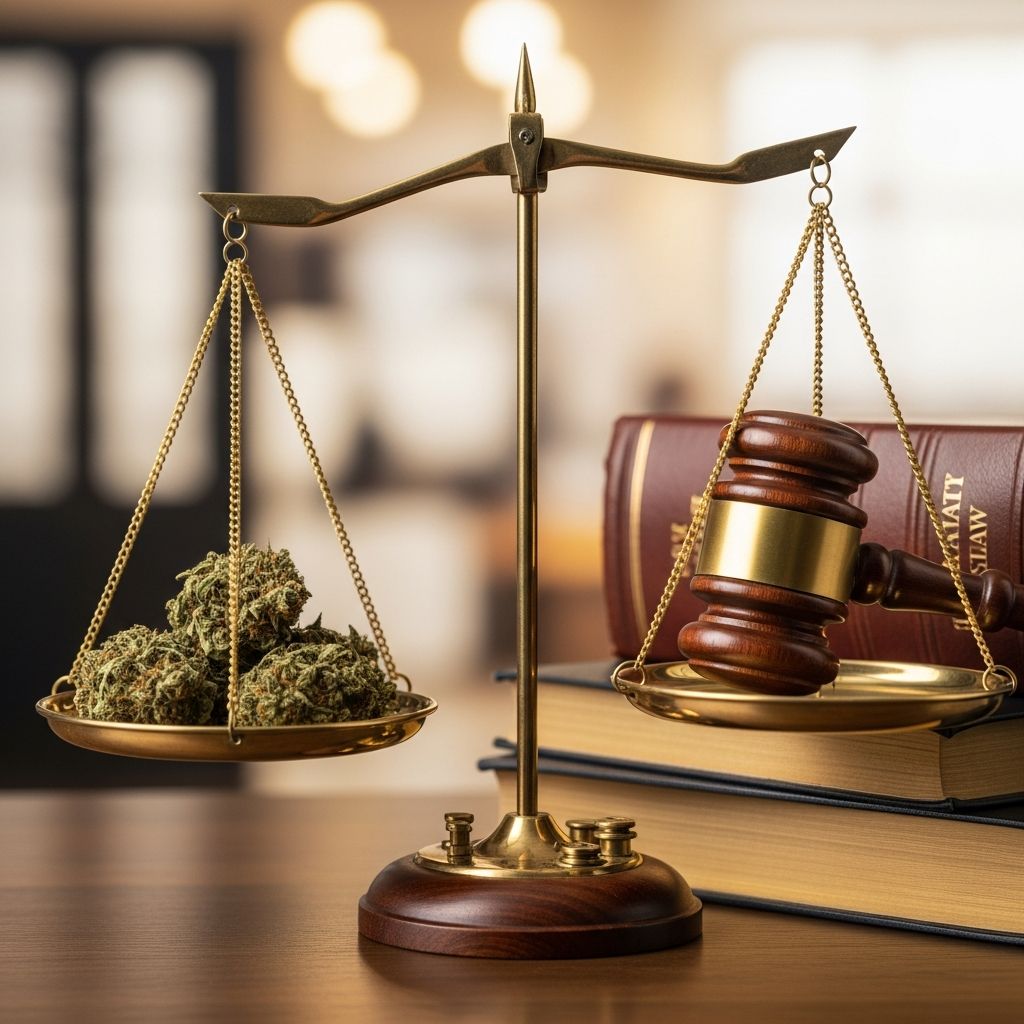
In an era where numerous states have embraced marijuana for medical or recreational purposes, attorneys confront a complex landscape of ethical considerations. Federal law continues to classify marijuana as a Schedule I controlled substance under the Controlled Substances Act (21 U.S.C. § 811), creating tension with state permissions. This conflict demands careful navigation to uphold professional standards.
Understanding the Federal-State Divide
The U.S. Constitution’s Supremacy Clause ensures federal law overrides conflicting state laws, as affirmed in Gonzales v. Raich (545 U.S. 29, 2005). Despite state legalizations, marijuana activities remain federally criminal. Lawyers must recognize this duality when advising clients or engaging personally, as ethical rules hinge on both jurisdictions.
State bar associations have issued opinions adapting to this reality. For instance, Colorado’s Formal Ethics Opinion 125 clarifies that mere use of medical marijuana does not inherently breach rules if it does not impair professional duties.
Personal Marijuana Use by Lawyers
Attorneys pondering personal marijuana consumption must evaluate implications under ABA Model Rule 8.4(b), which prohibits criminal acts reflecting adversely on honesty, trustworthiness, or fitness to practice. Simple possession or use, absent aggravating factors, typically does not qualify as moral turpitude.
- Off-duty use: Consuming marijuana recreationally on a weekend, followed by sobriety at work, generally avoids ethical violations, per Colorado Bar Association guidance.
- On-duty impairment: Appearing in court or meeting clients while under the influence breaches Rule 1.1 (Competence) and Rule 1.16 (Declining or Terminating Representation), as impairment materially hinders representation.
- Colleague reporting: Rule 8.3 mandates reporting a colleague’s misconduct if it raises substantial questions about fitness, potentially including observed substance abuse during work.
New Jersey’s Advisory Committee on Professional Ethics (Opinion 744, 2022) echoes this, stating compliant state-regulated use does not adversely reflect on a lawyer’s character.
Representing Clients in the Cannabis Industry
Advising marijuana businesses presents unique challenges under Rule 1.2(d), barring counsel to engage in criminal or fraudulent conduct. Lawyers may discuss legal consequences and state compliance but cannot assist in federally illegal activities.
| State Ethics Opinion | Key Ruling | Year |
|---|---|---|
| Colorado Ethics Op. 125 | May advise on state/federal laws but not draft contracts violating federal law. | 2013 |
| Arizona Ethics Op. 11-01 | Permissible to assist under state medical marijuana act, with federal warnings. | 2011 |
| Connecticut Ethics Op. 2013-02 | Advise on licensing but inform of federal risks; no assistance in crime. | 2013 |
| New York Op. 1024 | Allows broader assistance, considering Rule 8.4(b). | 2014 |
These opinions emphasize informing clients of federal risks. Changes like Attorney General Sessions rescinding the Cole Memorandum heightened scrutiny, yet state bars largely uphold permissive stances for state-compliant activities.
Competence and Specialization in Cannabis Law
Rule 1.1 demands competence, crucial in cannabis law’s regulatory maze. Attorneys must master evolving state statutes, licensing, and federal overlays. The Arizona State Bar’s early opinion stressed explaining federal violations alongside state aid.
Firms like Harris Sliwoski highlight IOLTA account perils; one Colorado lawyer faced sanctions for using bank accounts for dispensaries knowing bank policies forbade it, violating Rule 8.4(b).
Ownership and Investment in Cannabis Ventures
Lawyer ownership in marijuana businesses invokes Rule 8.4(b). New York’s Bar Association permits it if non-excessive and state-compliant, but caution prevails elsewhere. Personal consumption mirrors this: regulated use is often acceptable.
California’s new Rule 1.2.1 Comment 6 explicitly allows advising on state laws conflicting with federal or tribal law, signaling adaptation.
Financial and Banking Ethical Pitfalls
Cannabis’s cash-heavy nature complicates trust accounting. Rule 1.15 requires safeguarding client funds, but banks shun marijuana proceeds federally. Lawyers must avoid commingling or facilitating illegal laundering.
- Disclose federal illegality to clients.
- Use compliant financial structures.
- Monitor for money laundering red flags under Rule 1.2(d).
Conflicts of Interest and Disclosure Duties
Rule 1.7 mandates disclosing marijuana-related risks. Lawyers must detail federal exposure in engagement letters. Rule 1.4(a)(5) requires explaining conduct limitations.
For multi-jurisdictional practices, choice-of-law issues arise per Rule 8.5, prioritizing the jurisdiction with most contact.
Reporting Obligations Among Peers
Observing impaired colleagues triggers Rule 8.3 duties. Substance abuse at work demands intervention or reporting to protect clients and the profession.
Future Trends and Best Practices
As legalization expands—over 20 states for recreational use by 2026—ethics bodies evolve. Lawyers should:
- Obtain tailored ethics opinions.
- Pursue cannabis law CLE.
- Document all federal risk disclosures.
- Implement impairment policies.
Harvard’s Center on the Legal Profession notes surging demand for cannabis counsel, underscoring ethical navigation’s importance.
Frequently Asked Questions
Can lawyers ethically use marijuana recreationally?
Yes, if off-duty, non-impairing, and state-compliant; impairment at work violates competence rules.
May attorneys own cannabis businesses?
In states like New York, yes if regulated; disclose conflicts and ensure no adverse reflection.
What if a client wants help starting a dispensary?
Advise on state laws, warn of federal risks, but avoid assisting illegal acts.
Do banks pose ethical issues for cannabis clients?
Yes; avoid non-compliant accounts to prevent Rule 8.4 violations.
How to handle colleague marijuana impairment?
Report if it questions fitness under Rule 8.3.
References
- The Ethics of a Lawyer’s Use of Marijuana — Fairfield and Woods P.C. 2015-10-01. https://www.fwlaw.com/insights/the-ethics-lawyers-use-marijuana
- Advisory Committee on Professional Ethics Opinion 744 — Gannons Law. 2022. https://www.gannlaw.com/ALERTS/2022/adv_comm_744.pdf
- Legal Ethics and Marijuana: Representing Clients — American Agricultural Law Association. 2018. https://www.aglaw-assn.org/wp-content/uploads/14-AALA-2018-Legal-Ethics-and-Marijuana-Representing-Clients-Richardson-PP.pdf
- The Ethical Cannabis Lawyer — Harris Sliwoski LLP. (Accessed 2026). https://harris-sliwoski.com/cannalawblog/the-ethical-cannabis-lawyer/
- Marijuana Legal Ethics 101 — Holland & Knight LLP. 2019-05. https://www.hklaw.com/-/media/files/insights/publications/2019/05/marijuana101drivolume20issue1_jarvis.pdf?la=en
- Cannabis Lawyers — Harvard Law School Center on the Legal Profession. (Accessed 2026). https://clp.law.harvard.edu/article/cannabis-lawyers/
Similar Articles








Read full bio of medha deb




