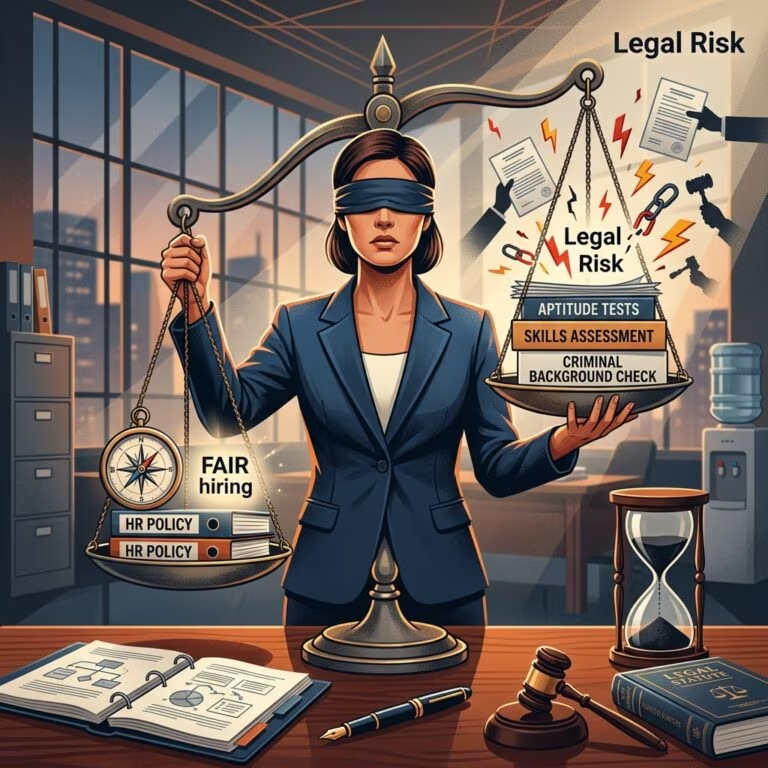
Small business owners often find themselves caught between legitimate performance or restructuring needs and the strict job protections of the Family and Medical Leave Act (FMLA). Understanding how FMLA works, when job protection applies, and how to document decisions is essential to avoid wrongful termination claims and expensive litigation.
This article explains the basics of FMLA, explores when termination might still be lawful, and offers practical steps for small employers to manage risk while treating employees fairly.
1. FMLA in Plain Language: What the Law Guarantees
The FMLA is a federal law that gives eligible employees the right to take unpaid, job-protected leave for certain family and medical reasons, while retaining their group health insurance on the same terms as if they were still working.
1.1 Core Protections Under FMLA
- Job protection — an eligible employee who takes qualifying FMLA leave must be allowed to return to the same or a substantially equivalent position, with equivalent pay, benefits, and working conditions.
- Continuation of health coverage — the employer must maintain the employee’s group health insurance benefits during FMLA leave under the same terms that applied before the leave.
- Protection from retaliation — employers may not terminate, discipline, or otherwise retaliate against an employee because they requested or used FMLA leave.
1.2 When Employees Qualify for FMLA Leave
Not every small business or employee is covered. Eligibility is a two-step analysis: the employer must be covered and the employee must meet individual criteria.
| Requirement Type | Key FMLA Criteria |
|---|---|
| Covered employer | Private employers with at least 50 employees for 20+ workweeks in the current or prior year, plus all public agencies and schools. |
| Employee tenure | At least 12 months of employment (which need not be consecutive). |
| Hours worked | At least 1,250 hours worked during the 12 months preceding the start of leave. |
| Worksite size | At least 50 employees within 75 miles of the employee’s worksite. |
1.3 Qualifying Reasons for FMLA Leave
Eligible employees may take up to 12 workweeks of unpaid leave in a 12‑month period for specific reasons.
- Birth of a child and care of the newborn (within one year of birth).
- Placement of a child for adoption or foster care and care for that child (within one year of placement).
- Care for a spouse, child, or parent with a serious health condition.
- The employee’s own serious health condition that makes them unable to perform essential job functions.
- Certain qualifying exigencies related to a family member’s active military duty.
Some leave can be intermittent or on a reduced schedule, depending on medical necessity and the nature of the job.
2. Job Protection vs. Lawful Termination: Where the Line Is Drawn
FMLA does not grant absolute immunity from termination. Instead, it prohibits adverse actions because of the exercise of FMLA rights or in ways that interfere with those rights.
2.1 Termination That Is Generally Prohibited
An employer risks violating FMLA when termination is connected to leave in any of the following ways:
- Firing an employee for requesting FMLA leave, even if the leave has not yet begun.
- Terminating an employee during or after FMLA leave because of their absence.
- Using FMLA leave as a negative factor in performance reviews, promotion decisions, or disciplinary actions.
- Eliminating the employee’s position as a pretext to avoid reinstatement after leave.
These actions can lead to claims for lost wages, benefits, reinstatement, and attorneys’ fees in court.
2.2 Termination That May Be Lawful While FMLA Applies
At the same time, FMLA does not stop an employer from making legitimate business decisions that are unrelated to the leave itself.
- Performance-based termination — if an employee would have been terminated for documented poor performance or misconduct regardless of FMLA leave, the employer may still proceed, provided the reasons are well‑supported and consistent with past practice.
- Layoffs and restructuring — company-wide layoffs or position eliminations may apply to employees on FMLA leave, as long as they are selected under neutral criteria not targeted at leave takers.
- End of employment for reasons predating leave — termination based on events that occurred before leave (for example, theft or serious policy violations) can be lawful if handled consistently with how similar cases are treated.
The legal risk arises when the timing of the termination and poor documentation suggest the decision is retaliatory or connected to the employee’s request for leave rather than to independent, legitimate reasons.
3. Notice, Certification, and Documentation: Building a Clear Record
One of the most effective ways to reduce FMLA-related risk is to follow the law’s notice and documentation requirements, and to maintain clear records of performance issues separate from leave.
3.1 Employer Notice Obligations
Employers covered by FMLA must inform employees of their rights and responsibilities.
- General notice — posting the Department of Labor’s FMLA notice and including basic FMLA information in employee handbooks or policy manuals.
- Eligibility notice — informing employees in writing whether they are eligible for FMLA leave when they request it or when the employer learns of a possible qualifying reason.
- Rights and responsibilities notice — outlining any certification requirements, how leave will be counted, and consequences for failing to meet obligations.
3.2 Employee Notice and Medical Certification
Employees also have duties when seeking FMLA leave.
- Provide 30 days’ advance notice when the need for leave is foreseeable, such as scheduled surgery or childbirth.
- Give notice as soon as practicable when emergencies or sudden illnesses arise.
- Submit timely and complete medical certification if the employer requests it in compliance with FMLA rules.
Failing to provide adequate notice or certification can give an employer grounds to delay or deny FMLA protection, but any discipline or termination still needs to follow neutral, consistently applied policies.
3.3 Documentation That Supports Lawful Termination
When termination is considered for an employee who has used or requested FMLA leave, careful documentation is crucial:
- Separate performance records from leave documentation so it is clear that problems existed before or independent of FMLA usage.
- Use objective criteria for performance reviews, disciplinary actions, and layoffs.
- Record decision-making timelines to show when concerns arose, who was involved, and how similar situations were handled.
- Maintain consistency with how non‑FMLA employees are treated for comparable issues.
These records can be critical if the termination is later challenged as retaliatory.
4. Special Considerations for Small Businesses
Many very small employers are not subject to FMLA, but they may be covered by state family leave laws or other employment statutes. For those who are covered, the impact of one employee’s extended absence can be significant.
4.1 Determining Whether FMLA Applies to Your Business
Before making any termination decision that might touch on medical or family leave, small employers should confirm whether FMLA applies.
- Check your employee count and whether you meet the 50 employees / 75‑mile radius threshold.
- Consider whether you are a public employer or school, which are covered regardless of size.
- Review state laws, such as New Jersey’s Family Leave Act, which may apply at lower employee thresholds and provide additional protections.
4.2 Operational Challenges During FMLA Leave
For small businesses, job-protected leave can strain operations. Common challenges include:
- Redistributing work among remaining staff without causing burnout.
- Hiring temporary replacements while remembering that the original position remains protected.
- Maintaining customer service and deadlines with reduced staff.
These pressures do not override FMLA protections, but recognizing them can help employers plan ahead rather than resorting to reactive termination decisions.
5. Practical Steps Before Firing an Employee Who Used FMLA
When a business is considering termination involving an employee who has requested or taken FMLA leave, a structured approach can significantly reduce legal risk.
5.1 Review Eligibility and Leave History
- Confirm whether the employer and employee were covered by FMLA at the time of the leave.
- Check that the leave was for a qualifying reason and within the 12‑week entitlement.
- Verify whether the employee has exhausted their FMLA entitlement or whether some leave remains.
5.2 Examine the Stated Reasons for Termination
Scrutinize the basis for termination and ask whether it would apply equally to an employee who had never taken leave.
- Is the termination based on documented performance issues or policy violations?
- Did those issues arise before the employee requested leave, or only afterward?
- Have other employees with similar issues been treated the same way?
If the answers show that FMLA usage is playing a role, the employer should reassess the decision and seek legal guidance.
5.3 Check Consistency with Policies and Past Practice
- Confirm that disciplinary procedures in the employee handbook have been followed.
- Ensure progressive discipline steps were applied where required.
- Compare the proposed action with how the company handled similar misconduct or performance problems in the past.
5.4 Consult Legal Counsel When Necessary
Because FMLA violations can lead to reinstatement, back pay, liquidated damages, and attorneys’ fees, consulting an employment law attorney before termination in borderline cases is often a prudent investment.
6. Reinstatement Obligations and Exceptions
Once FMLA leave ends, an employer must generally return the employee to the same or a substantially equivalent job, subject to some narrow exceptions.
6.1 What Counts as a “Substantially Equivalent” Position
- Equivalent pay, including salary rate and opportunity for bonuses or incentives.
- Equivalent benefits, such as health insurance, retirement plans, and paid time off.
- Similar working conditions, including shift, location, and level of responsibility.
Assigning an employee to a lesser role or reducing pay because they took leave can amount to unlawful interference with FMLA rights.
6.2 Situations Where Reinstatement May Not Be Required
FMLA allows limited exceptions, such as when the employee would not otherwise have a job at the end of leave.
- The employee’s position was legitimately eliminated in a layoff or restructuring unrelated to leave.
- The business shut down the relevant department or location.
- The employee is a “key employee” (as defined by FMLA) and certain economic conditions are met, subject to specific notice requirements.
Employers relying on these exceptions should carefully document the business reasons and ensure they comply with the detailed conditions set out in FMLA regulations.
7. Best Practices to Minimize FMLA-Related Termination Risk
Integrating FMLA compliance into everyday HR practices helps small businesses avoid reactive decisions that can look retaliatory.
7.1 Build Clear Written Policies
- Include FMLA information in your employee handbook, even if your company is currently below coverage thresholds, and update it as you grow.
- Define how leave requests are made, who receives them, and how they are documented.
- Describe how performance issues and attendance problems are identified and addressed, independent of FMLA usage.
7.2 Train Managers and Supervisors
- Teach managers to recognize when a request may qualify as FMLA, even if an employee does not use legal terms.
- Emphasize that negative reactions to leave requests can create evidence of retaliation.
- Require managers to consult HR or senior leadership before disciplining or firing an employee who has requested or taken leave.
7.3 Separate Attendance Policies from Protected Leave
Attendance tracking systems should distinguish between FMLA‑protected absences and ordinary lateness or unexcused absences.
- Avoid counting FMLA absences as points in a no‑fault attendance system.
- Review automated disciplinary triggers to ensure they ignore protected leave.
- Audit past terminations to check whether protected leave may have been wrongly treated as a negative factor.
8. Frequently Asked Questions (FAQs)
8.1 Can I fire an employee while they are on approved FMLA leave?
Yes, but only if the termination is based on legitimate reasons unrelated to the leave, such as documented misconduct, performance problems, or a neutral layoff. The employer bears the burden of showing that the decision would have happened regardless of the employee’s FMLA usage.
8.2 What happens if my business drops below 50 employees?
If your workforce falls below the FMLA coverage threshold, future requests may not be protected under FMLA, but leaves that have already begun while the employer was covered remain protected. State laws with lower thresholds may still apply, so it is important to review local requirements.
8.3 Do I have to hold a job open if the employee exceeds 12 weeks of FMLA leave?
FMLA guarantees up to 12 workweeks of job‑protected leave in a 12‑month period for most qualifying reasons. Once the entitlement is exhausted, FMLA no longer requires job protection, although other laws, such as disability discrimination statutes, may still affect how termination is handled.
8.4 Can I discipline an employee for not following call‑in procedures while on FMLA?
Employers may enforce reasonable, consistently applied call‑in and notice procedures, even for employees who are on FMLA leave. However, discipline must be based on those procedural violations, not on the underlying need for leave, and policies must be applied equally to all employees.
8.5 Should I request medical certification before approving FMLA leave?
Employers are allowed to request medical certification for most serious health condition leaves, provided the request complies with FMLA rules and timelines. Certification can help confirm eligibility, but the information must be handled confidentially and used only for leave administration.
References
- Family and Medical Leave Act — U.S. Department of Labor. 2023-06-27. https://www.dol.gov/agencies/whd/fmla
- Family Medical Leave Act (FMLA) — New York State Business Services Center. 2023-04-10. https://bsc.ogs.ny.gov/fmla
- FMLA for Small Businesses: 4 FAQs That You Should Know — Employers Resource. 2022-08-15. https://employersresource.com/business-compliance/what-is-fmla/
- Are You Protected If You Take Family or Medical Leave? — Semeraro & Associates, P.C. 2023-05-02. https://semerarolaw.com/blogs/news/are-you-protected-if-you-take-family-or-medical-leave-a-new-jersey-employee-s-guide
- Small Business Guide to FMLA — Americas Back Office. 2023-03-21. https://americasbackoffice.com/blog/small-business-guide-to-fmla/
- New Jersey Family Leave Act — The Law Office of Alan H. Bosin. 2022-11-30. https://www.bosinlaw.com/fmla