
Making Internet Wiretaps Easier: Law, Technology, and Civil Liberties
How evolving surveillance laws and technologies shape government internet wiretaps and redefine digital privacy rights.
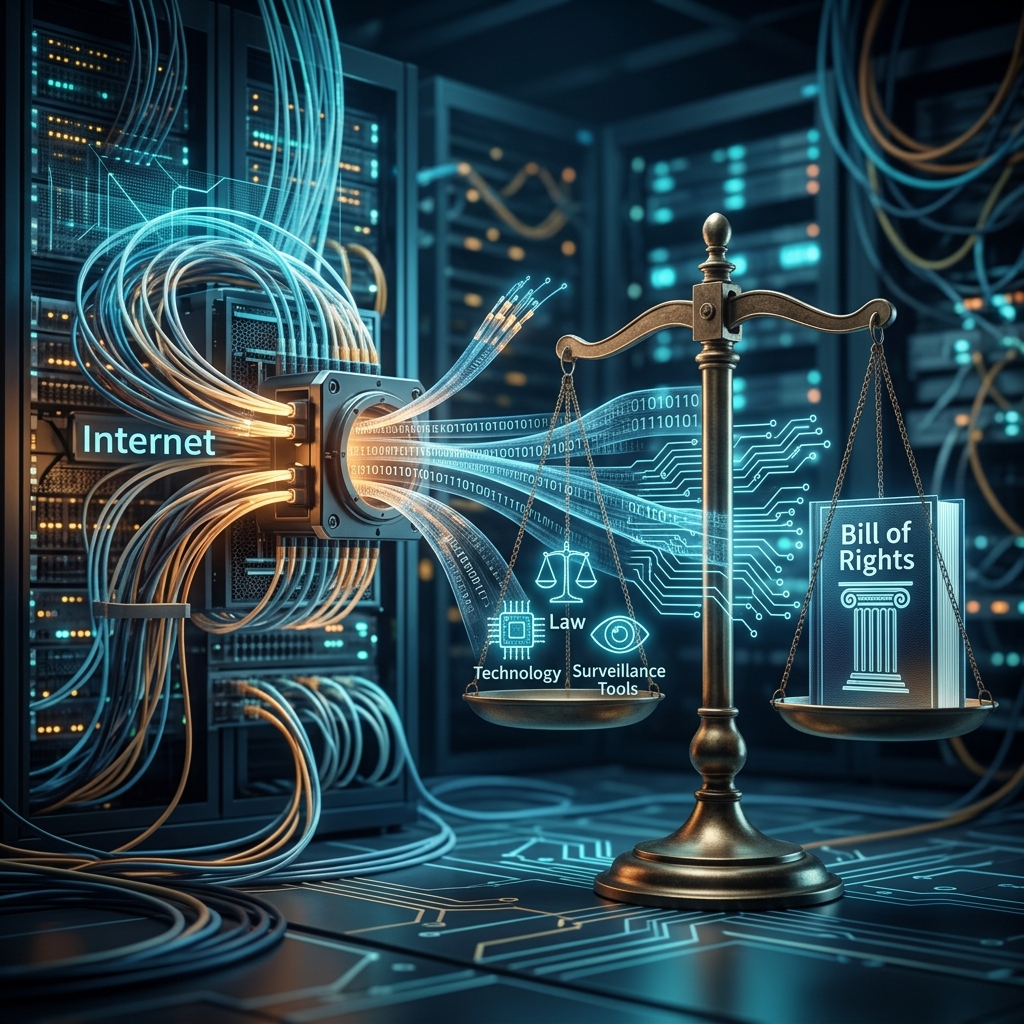
As communication has shifted from traditional phone lines to internet-based services, law enforcement agencies have sought ways to adapt wiretap tools and legal frameworks to the digital environment. Government proposals to make internet wiretaps easier raise complex questions about privacy, civil liberties, and the technical realities of modern networks.
This article explains how lawful interception works online, which federal statutes shape surveillance, why internet wiretaps create unique technical challenges, and what changes could mean for individual rights.
From Telephone Taps to Digital Surveillance
Wiretapping historically referred to physically connecting listening equipment to a telephone line. Today, the term encompasses monitoring a broad range of communications: emails, voice-over-IP (VoIP) calls, messaging apps, and other forms of electronic communication.
- Traditional wiretaps focused on circuit-switched phone networks.
- Internet wiretaps target data packets flowing over IP networks.
- Lawful interception is the phrase often used for court-authorized government surveillance.
The transition from analog telephony to digital communications forced lawmakers to update surveillance laws and compelled service providers to design networks that can be monitored while still protecting user privacy.
Core Legal Framework Governing Internet Wiretaps
In the United States, several overlapping laws define what the government may do when intercepting communications and what constraints apply. Internet wiretaps sit at the intersection of these statutes.
Electronic Communications Privacy Act (ECPA)
The Electronic Communications Privacy Act of 1986 (ECPA) extended existing wiretap rules to modern electronic communications. It is commonly described as having three main parts:
- Wiretap Act (Title I): Governs interception of wire, oral, and electronic communications during transmission.
- Stored Communications Act (Title II): Protects contents of communications stored with service providers and certain account records, like subscriber data and IP addresses.
- Pen Register and Trap and Trace provisions (Title III): Regulate devices or methods that collect dialing, routing, or addressing information but not the content of communications.
Under ECPA and related provisions, intentional interception of communications is generally unlawful unless authorized by a court order, subject to specific statutory exceptions.
Wiretap Act Requirements
The federal Wiretap Act, now codified in chapter 119 of Title 18 of the U.S. Code, imposes detailed conditions for lawful interception. Court orders authorizing wiretaps must specify, among other things:
- The identity of the person, if known, whose communications will be intercepted.
- The type of communications and the facility or location targeted.
- The time period for interception, typically limited and subject to extension only on renewed judicial approval.
Congress emphasized that interception of communications without consent of any party should be rare, limited to serious offenses, and subject to careful judicial supervision to protect the privacy of innocent persons.
Communications Assistance for Law Enforcement Act (CALEA)
The Communications Assistance for Law Enforcement Act (CALEA) requires certain telecommunications carriers and service providers to design and operate their networks in a manner that allows authorized interception.
Key concepts associated with CALEA include:
- Carriers must be able to deliver intercepts to law enforcement when presented with a lawful order.
- The obligation applies to communication content and associated signaling information, subject to legal limits.
- There is ongoing debate about how far CALEA obligations extend to modern internet-based services.
Foreign Intelligence Surveillance and National Security Context
For foreign intelligence and national security investigations, the Foreign Intelligence Surveillance Act (FISA) provides a separate framework. Federal agencies may seek approval from the Foreign Intelligence Surveillance Court, a specialized court that operates largely in secret.
Following the terrorist attacks of September 11, 2001, amendments to FISA expanded the government’s power to conduct certain wiretaps related to terrorism, including shortened or modified warrant requirements in specified circumstances. These changes intensified public debate about the balance between security and privacy in the digital age.
Why Internet Wiretaps Are Technically Complicated
Even with legal authority in place, carrying out an internet wiretap is technically challenging. Unlike legacy telephone networks, internet communications are decentralized, encrypted, and often routed dynamically around the world.
Complex Network Architecture
Internet traffic typically travels through multiple networks, routers, and service providers. A single communication session may involve:
- An access provider (such as a broadband ISP).
- A backbone network provider.
- Application-layer services (email platforms, messaging apps, cloud providers).
This layered architecture makes it harder to determine where and how to intercept a particular communication without affecting unrelated traffic.
Content vs. Metadata
Law often distinguishes between content (the substance of a communication) and metadata (routing, addressing, or signaling information). Pen register and trap-and-trace authorities focus on metadata, while wiretap orders usually cover content.
| Type of Information | Example | Typical Legal Tool |
|---|---|---|
| Content | Email text, voice in a VoIP call, chat messages | Wiretap order under ECPA/Title I |
| Metadata | IP addresses, phone numbers dialed, email headers | Pen register/trap-and-trace order |
| Stored Data | Archived emails, server logs, account details | Stored Communications Act order or warrant |
Distinguishing content from metadata online is not always straightforward, especially when protocol headers may contain significant information about user behavior or when addressing details can reveal sensitive patterns.
Encryption and End-to-End Security
Widespread use of encryption complicates interception efforts. When services implement end-to-end encryption, the communication content is accessible only to the endpoints, not to intermediaries such as network providers.
Law enforcement agencies argue that strong encryption can frustrate lawful access, while privacy advocates contend that encryption is essential to protect users from cybercrime and intrusive surveillance. Proposals to make internet wiretaps easier often intersect with broader debates about whether providers should be required to maintain technical capabilities for decryption or access.
Government Efforts to Simplify Online Wiretaps
Efforts to make internet wiretaps easier typically focus on improving both legal clarity and technical feasibility. These initiatives can involve statutory amendments, regulatory guidance, and technical standards that define interception capabilities.
Clarifying and Updating Statutes
Legal commentators have noted that statutes such as ECPA, originally drafted in the 1980s, do not fully reflect the realities of modern cloud computing and mobile communications. Suggested reforms include:
- Modernizing definitions of electronic communications and storage.
- Providing clearer rules for cross-border data access.
- Adjusting thresholds and procedures for access to stored communications.
From a government perspective, clearer rules can reduce litigation and uncertainty when pursuing internet-based investigations. From a civil liberties viewpoint, reforms are an opportunity to strengthen protections that may be perceived as outdated or too permissive.
Expanding Lawful Interception Obligations
Some proposals involve extending CALEA-style obligations to a wider range of service providers, including certain internet platforms and VoIP providers. The idea is to ensure that:
- Providers can isolate and deliver data related to a specific target when served with a court order.
- Interception systems minimize collection of unrelated communications.
- Technical standards are used to ensure compatibility and security.
However, expanding interception obligations requires careful consideration of how such requirements might affect innovation, security, and the privacy expectations of users.
Civil Liberties and Privacy Concerns
Making internet wiretaps easier for law enforcement inevitably raises concerns about civil liberties. These concerns center on the risk of overbroad surveillance, insufficient oversight, and potential misuse of collected data.
Judicial Oversight and Minimization
Federal law and legislative history stress that non-consensual interception should be tightly controlled and justified. Important safeguards include:
- Probable cause standards for many wiretap orders.
- Judicial review of applications and conduct of intercepts.
- Minimization procedures designed to limit interception of irrelevant conversations.
- After-the-fact review for individuals whose communications were intercepted.
Advocacy organizations have argued that some newer surveillance authorities, especially in the national security context, may weaken or sidestep these traditional safeguards by allowing broader or more secret collection of data.
Scope Creep and Mission Expansion
Another concern is scope creep, where authorities designed for serious crimes or national security gradually extend to less serious offenses. Analyses of wiretap statutes show that the list of offenses eligible for interception has expanded over time, sometimes reaching conduct far removed from the originally contemplated targets.
Efforts to make internet wiretaps easier risk accelerating such expansion if technical capabilities are normalized and legal standards become more permissive.
Impact on Vulnerable and Marginalized Communities
Enhanced surveillance powers can have disproportionate effects on marginalized communities, particularly when enforcement practices concentrate on specific demographics or neighborhoods. While statutes are formally neutral, their application in the real world can reflect broader social and political dynamics.
Consequently, debates about internet wiretaps frequently intersect with broader discussions about racial justice, political freedom, and the role of technology companies in mediating state power.
Implications for Service Providers and Users
Obligations and Risks for Service Providers
Service providers face both legal obligations and business risks related to government interception requests. Under ECPA and related laws, providers can be liable if they knowingly disclose communications or stored data outside of lawful processes or exceed authorized access to facilities where electronic communications are stored.
Key considerations for providers include:
- Developing robust compliance procedures for lawful requests.
- Ensuring interception systems do not become security vulnerabilities.
- Maintaining user trust while meeting statutory duties.
What Users Should Understand
For individual users, the technical and legal details can be complex, but some practical insights are important:
- Many forms of communication, including email and VoIP calls, are protected by federal privacy laws, but protection is not absolute.
- Government agencies generally require judicial authorization to intercept content, subject to specific exceptions.
- Metadata may be subject to lower legal thresholds, even though it can reveal significant information.
- Service providers’ policies, use of encryption, and data retention practices significantly influence privacy outcomes.
Key Takeaways in the Debate Over Easier Internet Wiretaps
- Law and technology must evolve together: Statutes drafted decades ago are being stretched to cover cloud-based and mobile systems.
- Technical feasibility shapes legal practice: Without workable interception tools, legal authority alone may be ineffective.
- Civil liberties concerns remain central: Oversight, minimization, and transparency are critical to maintaining public trust.
- Reform debates are ongoing: Scholars, advocates, and policymakers continue to propose revisions to surveillance laws to address modern realities.
Frequently Asked Questions (FAQs)
1. What is an internet wiretap?
An internet wiretap is a form of lawful interception in which government agencies monitor electronic communications, such as emails or VoIP calls, transmitted over networks, pursuant to legal authority like a court order.
2. How does the Electronic Communications Privacy Act affect online surveillance?
ECPA sets rules for government access to electronic communications during transmission and storage, generally making intentional interception or disclosure unlawful absent judicial authorization or a specific statutory exception.
3. Are metadata and content treated differently under U.S. law?
Yes. Content such as the text of an email or the audio of a call is typically subject to stricter standards, while metadata like phone numbers dialed or certain addressing information can be obtained under pen register and trap-and-trace authorities with different thresholds.
4. Do service providers have to help the government perform wiretaps?
Telecommunications carriers and certain providers are required to make their systems capable of lawful interception under statutes such as CALEA, meaning they must assist law enforcement when presented with valid orders, within defined limits.
5. What are the main civil liberties concerns with easier internet wiretaps?
Concerns include the possibility of broad or indiscriminate surveillance, weakening of judicial oversight, expansion of surveillance to less serious offenses, and disproportionate impact on vulnerable communities, all of which may undermine privacy and freedom of expression.
References
- Electronic Communications Privacy Act of 1986 (ECPA) — Bureau of Justice Assistance, U.S. Department of Justice. 2022-01-10. https://bja.ojp.gov/program/it/privacy-civil-liberties/authorities/statutes/1285
- Wiretapping — Wikimedia summary based on multiple primary sources (used for background, not cited as authority in text).
- Chapter 119 — Wire and Electronic Communications Interception and Interception of Oral Communications — United States Code, U.S. House of Representatives Office of the Law Revision Counsel. 2024-01-01. https://uscode.house.gov/view.xhtml?path=/prelim@title18/part1/chapter119&edition=prelim
- Revitalizing the Federal Wiretap Laws to Enhance Privacy and Civil Liberties in the Digital Age — Center for Democracy & Technology (Albany Law Journal of Science & Technology). 1997-01-01. https://cdt.org/wp-content/uploads/publications/lawreview/1997albany.shtml
- Wiretapping & the War on Terrorism — EBSCO Research Starters. 2014-01-01. https://www.ebsco.com/research-starters/political-science/wiretapping-war-terrorism
- Communications Privacy Law — Justia. 2023-06-01. https://www.justia.com/communications-internet/communications-privacy-law/
- Wiretap Provisions Comparison Chart — American Civil Liberties Union. 2001-11-01. https://www.aclu.org/documents/wiretap-provisions-comparison-chart-administration-house-senate-versions-aclu-comments
- Wiretapping the Internet — Hayden Driscoll, Washington and Lee Journal of Civil Rights and Social Justice. 2023-01-01. https://scholarlycommons.law.wlu.edu/crsj/vol29/iss1/7/
Similar Articles








Read full bio of medha deb


