
Maine’s New Limits on Workplace Surveillance
A practical guide to Maine’s workplace monitoring law and what it means for employers and workers.
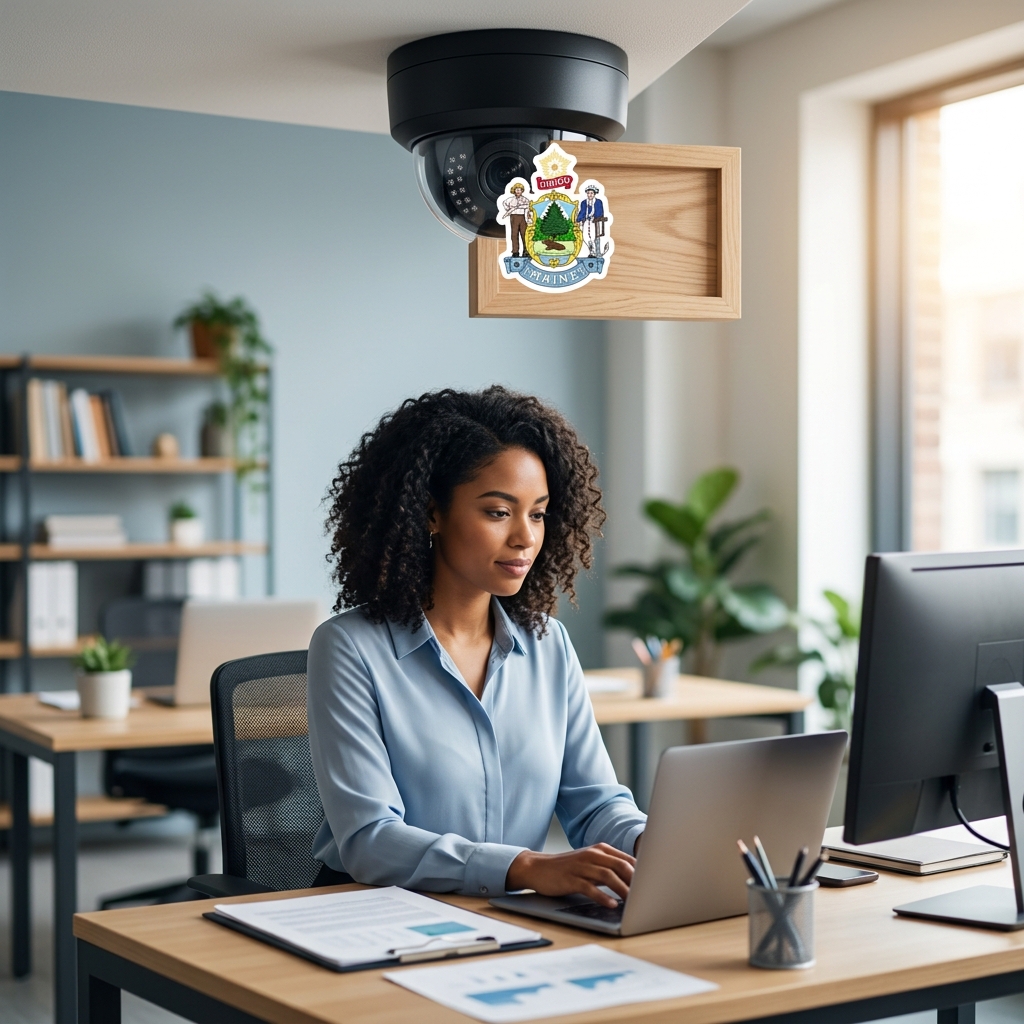
Maine has taken a significant step toward protecting employee privacy by placing new boundaries on how employers monitor workers. The state’s law, enacted to regulate employer surveillance, is aimed at making workplace monitoring more transparent while preserving limited uses of security and safety tools. For employers, the change means new notice obligations and tighter restrictions on where and how electronic monitoring can happen. For workers, it means more control over personal devices and stronger protection against hidden tracking.
Why the law matters
Workplace monitoring is not new. Many employers already use time-tracking systems, productivity software, call recording tools, GPS features, and video surveillance. What has changed is the legal expectation that employees should know when monitoring is occurring and should not be forced into intrusive surveillance in places that are traditionally private. Maine’s law reflects growing concern that digital tools can collect far more information than a simple security camera ever could.
The law is especially important in an era of hybrid work, remote work, and bring-your-own-device policies. When personal phones, home internet connections, and private spaces become part of the job, the line between work and personal life can blur quickly. Maine’s rules try to redraw that line by requiring advance notice and limiting certain forms of monitoring that would otherwise reach into a worker’s home or personal vehicle.
What counts as employer surveillance
The statute uses a broad definition of employer surveillance. In practical terms, that can include monitoring through computers, telephones, and other electronic systems. The term is wide enough to cover many common technologies used in modern workplaces, including software that records keystrokes, captures screenshots, tracks internet activity, records calls, or measures employee activity across devices.
This broad approach matters because employers often think of surveillance as a camera in a store or warehouse. Maine’s law recognizes that monitoring can also happen invisibly through software and connected devices. That means a tool installed on a laptop, tablet, or phone may fall within the law even if the employee never sees a camera or security guard.
| Type of monitoring | Likely treatment under Maine law |
|---|---|
| Keylogging or screen capture software | Generally covered as electronic surveillance |
| Email and internet activity tracking | Generally covered as electronic surveillance |
| GPS in an employer-owned vehicle | Often excluded when used as a safety device |
| Security cameras in public work areas | Usually allowed for safety or security |
| Cameras in a worker’s home or personal car | Restricted unless job duties require it |
What employers now have to do
Maine’s law does not ban all monitoring. Instead, it conditions most surveillance on clear disclosure. Before beginning surveillance, an employer must notify the employee. The law also requires employers to tell job applicants during the interview process that the employer uses surveillance tools. In addition, current employees must receive written notice at least once each year.
These requirements are designed to prevent monitoring from happening in secret. The law favors open disclosure over hidden data collection, which means employers should not wait until after software is installed to explain how it works. They need a notice system that is consistent, understandable, and repeated over time.
- Provide notice before surveillance begins.
- Tell job applicants during the interview process.
- Give current employees written notice at least once per year.
- Review internal policies so they match actual monitoring practices.
That last step is especially important. A written policy is not enough if employees are actually being monitored in ways the policy never described. Maine’s approach suggests that notice should be meaningful, not merely technical.
Limits on monitoring in homes, personal vehicles, and private property
One of the most employee-friendly parts of the law is the restriction on audiovisual monitoring in an employee’s residence, personal vehicle, or personal property. In general, an employer may not place cameras or similar monitoring tools in those private spaces unless the monitoring is required for the employee’s job duties. This exception is narrow and likely applies only in roles where recording in a private space is truly part of the work.
This protection is important because remote work has made home life more exposed to work-related technology. Even when an employee works from home voluntarily, that does not mean the employer can treat the home like a branch office. Maine’s law reflects the view that a private residence deserves special protection from unwanted visual or audio surveillance.
The same logic applies to personal vehicles and private property. If an employee uses a personal car for work, that does not automatically allow the employer to install a camera or recording device. The law creates a presumption against that kind of intrusion unless the job itself requires it.
Personal devices and the right to refuse tracking software
Another central feature of the law is the protection for personal electronic devices. Employers generally cannot require workers to install data-collection or tracking applications on phones, tablets, or other personal devices. Employees also have the right to refuse such a request.
This provision matters because many workplaces rely on employee-owned devices for convenience. A company may want a worker to download a scheduling app, productivity tracker, location tool, or authentication system. Maine draws a line when those tools are used for surveillance purposes on a device that belongs to the worker.
For employers, this means the old assumption of “use your own phone if you want the job” may no longer be enough. If a monitoring app is tied to the employer’s surveillance goals, the employee can say no. Companies may need to issue employer-owned devices instead of relying on personal phones and the worker’s consent.
Important exceptions to the rule
Maine did not create a blanket ban on all workplace monitoring. The law preserves room for legitimate security and care-related uses. Surveillance cameras remain permissible when they are used for safety purposes. That includes many common security setups in stores, warehouses, parking areas, and other public-facing locations.
The law also recognizes a special exemption for certain personal care settings. Where a patient is alone with a caregiver, some forms of surveillance may still be allowed. This reflects the realities of care environments, where privacy, safety, and service delivery all need to be balanced carefully.
- Security cameras for safety are still allowed.
- GPS or safety devices in employer-owned vehicles are generally exempt.
- Personal care service settings have a limited special exemption.
- The exceptions are narrow and should not be treated as a loophole for broad monitoring.
Penalties and enforcement
Employers that violate the law face civil penalties enforced by the Maine Department of Labor. Reported penalties range from $100 to $500 for each violation. That may sound modest compared with some employment-law penalties, but repeated violations could add up quickly, especially if the employer uses multiple tools or fails to give required notices to many workers.
The law also treats interference with compliance as a separate problem. Preventing an employee from following the law is itself a violation. That matters because some employers may try to discourage workers from exercising their right to refuse a tracking app or from questioning a monitoring policy. Under Maine’s framework, pressure or retaliation can create additional legal exposure.
Although the law is focused on administrative enforcement, the practical risk goes beyond fines. A company that mishandles surveillance may also face employee mistrust, recruitment difficulties, union grievances, internal complaints, or parallel claims under other privacy or employment rules.
What employers should do now
Employers in Maine should treat this law as a compliance project, not a simple policy update. The first step is to identify every tool used to monitor workers, whether it is visible or hidden inside software. The next step is to decide whether each tool is still necessary and whether it falls within an exception. If it does, the employer should build the required notice language and timing into its onboarding and annual compliance processes.
Companies should also review remote work arrangements. A policy written for a physical office may not fit employees working from kitchens, spare rooms, or personal vehicles. The safer approach is to map the monitoring practice to the location and device involved, then ask whether the law permits it.
- Inventory all surveillance tools and software.
- Separate security uses from employee-monitoring uses.
- Update applicant and employee notices.
- Remove or redesign any rule that requires personal-device tracking.
- Train supervisors not to demand monitoring beyond what the law allows.
How workers can read the new protections
For employees, the law creates several practical rights. Workers should know that monitoring is not supposed to be hidden. They should receive notice before surveillance begins, and they should be informed about the employer’s practices during hiring and each year afterward. If a company asks them to install tracking software on a personal device, they may refuse.
Workers should also pay attention to where monitoring is happening. Cameras or audio tools in a home office, personal car, or private property are not ordinary workplace tools under this law. If a monitoring practice feels intrusive, it may be worth asking whether the device, location, or purpose falls within one of the law’s exceptions.
Frequently asked questions
Does the law ban all workplace cameras?
No. Maine still allows surveillance cameras for safety or security purposes. The law mainly restricts hidden monitoring and certain audiovisual recording in private spaces.
Can an employer make me install tracking software on my own phone?
Generally no, if the software is being used for employer surveillance. The worker has the right to decline a request to install data-collection or tracking applications on a personal device.
Can my employer record me in my home office?
Not usually. Audiovisual monitoring in an employee’s residence is generally prohibited unless the monitoring is required by the employee’s job duties.
Do employers have to tell applicants about monitoring?
Yes. The law requires disclosure during the interview process so job seekers know before accepting a position.
What happens if a company violates the law?
Violations can lead to civil penalties of $100 to $500 per violation, enforced by the Maine Department of Labor.
How this law fits into a broader trend
Maine is part of a broader movement toward workplace privacy rules that respond to more advanced monitoring technology. As employers adopt tools that can track performance in real time, states are increasingly asking whether workers should be told what is being collected, when it is being collected, and how far monitoring can reach. Maine’s law answers those questions by favoring transparency and by limiting surveillance in private settings.
That trend is likely to continue as more work happens across connected devices and outside traditional office walls. In that environment, laws like Maine’s may become less unusual and more representative of a new baseline for workplace privacy.
References
- Maine Law Prevents Secret Surveillance Tools at Work — FindLaw. 2026-01-11. https://www.findlaw.com/legalblogs/law-and-life/new-maine-law-prevents-secret-surveillance-tools-at-work/
- Maine Joins Three Northeastern States in Regulating Workplace Electronic Monitoring — Littler. 2026-01-??. https://www.littler.com/news-analysis/asap/maine-joins-three-northeastern-states-regulating-workplace-electronic-monitoring
- Maine Passes Employer Surveillance Law — Brightmine. 2026-01-??. https://www.brightmine.com/us/resources/hr-compliance/employee-privacy/maine-passes-employer-surveillance-law/
- Maine Sets New Restrictions on Workplace Monitoring and Surveillance — Fisher Phillips. 2026-01-??. https://www.fisherphillips.com/en/insights/insights/maine-sets-new-restrictions-on-workplace-monitoring-and-surveillance
- L.D. 61, An Act to Regulate Employer Surveillance to Protect Workers — Maine Legislature. 2026-01-11. https://legislature.maine.gov/backend/App/services/getDocument.aspx?documentId=121771
Similar Articles








Read full bio of Sneha Tete




