
Understanding Mail Tampering Laws and Your Legal Rights
Explore federal mail crimes, penalties, defenses, and proper procedures for handling misdelivered correspondence.
Federal Mail Crimes: Protecting Postal Privacy and Security
The United States postal system operates under strict federal protections designed to safeguard the privacy and security of mail delivery. One significant area of criminal law addresses the unauthorized opening, destruction, or tampering with mail belonging to others. These offenses fall under federal jurisdiction and carry substantial legal consequences. Understanding the scope of these prohibitions, the penalties involved, and the circumstances that may protect you from prosecution is essential for anyone who regularly handles mail or lives in shared housing situations.
The Federal Offense of Mail Interference
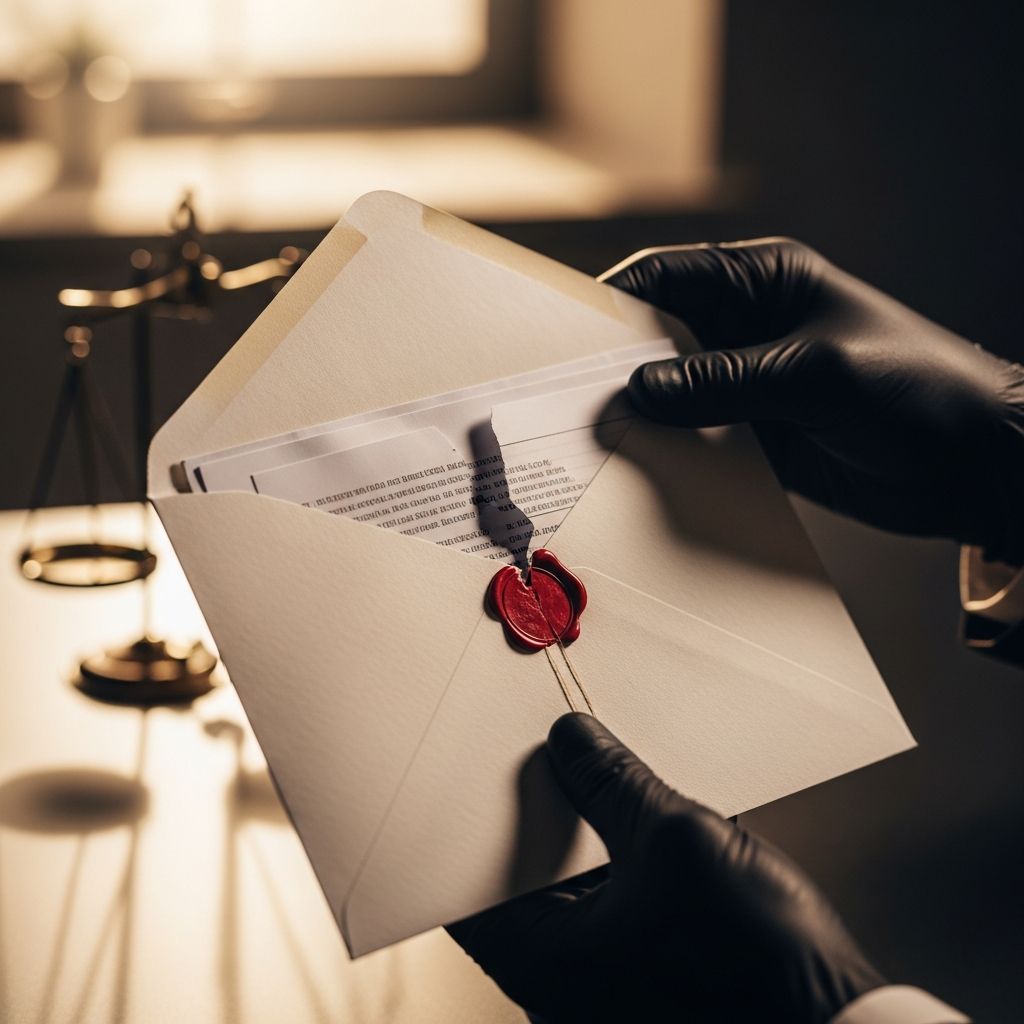
Opening mail addressed to another person constitutes a serious federal violation commonly referred to as “obstruction of correspondence.” This crime extends beyond simply reading someone else’s correspondence; it encompasses any interference with mail that is not addressed to you, including opening, destroying, or deliberately preventing its delivery. The federal government takes these violations seriously because mail often contains sensitive financial, medical, legal, or personal information that requires protection.
The statute prohibiting mail interference was established to maintain the integrity of the postal system and protect individual privacy rights. When you violate this statute by opening mail not addressed to you, you are committing a felony offense regardless of your intentions or whether you believed you had legitimate reasons to access the contents. This classification as a felony distinguishes mail crimes from minor misdemeanor offenses, indicating the severity with which federal law treats postal interference.
Understanding Criminal Penalties and Sentencing
The consequences of committing mail tampering offenses are substantial and can significantly impact your life. Federal law provides for imprisonment terms of up to five years for individuals convicted of opening or destroying mail belonging to someone else. In addition to incarceration, convictions can result in substantial monetary fines that add financial hardship to the criminal penalty.
Beyond the immediate penalties of prison time and fines, a federal conviction creates lasting consequences that affect employment opportunities, housing eligibility, professional licensing, and personal reputation. A felony record remains permanently on your criminal history unless formally expunged or pardoned, making it difficult to secure employment, obtain housing, or pursue higher education. Insurance companies may raise premiums, and certain professional fields permanently exclude individuals with federal convictions.
The severity of penalties increases when the mail tampering involves additional criminal elements, such as mail fraud or identity theft. If opening someone else’s mail is part of a scheme to obtain money, credit, or personal information fraudulently, prosecutors can add charges that carry additional prison sentences and substantially higher fines.
Intent as a Critical Element of Prosecution
The prosecution must establish several elements to secure a conviction for mail tampering, with criminal intent being among the most important. Prosecutors must prove beyond a reasonable doubt that you intentionally and knowingly opened mail not addressed to you. This requirement means that accidental or mistaken opening of another person’s mail may not constitute a criminal offense if you genuinely believed the mail was addressed to you.
Intent distinguishes criminal conduct from innocent mistakes. For example, if mail for a former roommate or previous tenant arrives at your address and you open it without realizing the addressee no longer lives there, the lack of intent to commit a crime may provide a complete defense to prosecution. However, once you discover the mail belongs to someone else, you cannot legally open additional pieces of that person’s correspondence, as your knowledge of the misaddressing eliminates the defense of innocent mistake.
The distinction between intentional and accidental conduct is why circumstantial evidence plays a crucial role in mail tampering cases. Prosecutors examine factors such as your relationship to the mail recipient, the nature of the contents, any financial benefit you received, and patterns of behavior that demonstrate deliberate conduct rather than isolated accidents.
Legitimate Legal Defenses Against Mail Tampering Charges
Several defenses may protect you if you are charged with mail tampering offenses. Understanding these defenses helps you work effectively with a criminal defense attorney to build the strongest possible case.
Reasonable Mistaken Identity Defense
If you reasonably believed the mail was addressed to you, this defense may completely protect you from conviction. This commonly occurs when mail arrives with your name but belongs to someone else, or when mail for a previous occupant arrives years after they moved away. Courts recognize that people cannot be expected to instantly verify every detail of mail they receive, particularly when names are common or similar to their own. The key factor is whether your belief was reasonable under the circumstances, not whether it ultimately proved correct.
Express Consent of the Recipient
If the actual recipient of the mail gave you permission to open it, no crime occurred. Consent eliminates the criminal element of the offense because mail tampering requires interference without authorization. However, you must be able to demonstrate this consent to the court through communications records, witness testimony, or other evidence. Verbal consent alone may be more difficult to prove than written consent through text messages, emails, or signed documents.
Insufficient Evidence Standard
Because mail tampering is a criminal offense, prosecutors bear the burden of proving guilt beyond a reasonable doubt. This rigorous standard requires clear and convincing evidence of each element of the crime. If the prosecution cannot produce sufficient evidence demonstrating that you intentionally opened mail not addressed to you, the charges may be dismissed.
Constitutional Rights Violations
If law enforcement officers violated your Fourth Amendment rights during their investigation or evidence collection, the illegally obtained evidence may be excluded from trial. The Fourth Amendment protects individuals from unlawful searches and seizures by government agents. If police searched your home, seized your mail, or gathered other evidence without proper warrants or justification, a skilled defense attorney can file motions to suppress this evidence, potentially eliminating the prosecution’s case.
Distinguishing Mail Tampering from Related Offenses
Federal postal crimes include several distinct offenses that often overlap with mail tampering but carry different elements and penalties:
- Mail Fraud: Involves using the mail system to execute a scheme to defraud someone of money or property through deception or false pretenses. Mail fraud requires an additional element of fraudulent intent and typically carries sentences of up to 20 years imprisonment for serious schemes.
- Mail Theft: Encompasses stealing mail from mailboxes or postal facilities. Unlike mail tampering, which focuses on opening or destroying mail, mail theft emphasizes the unlawful taking of mail from its secure location.
- Identity Theft Using Mail: Involves using someone else’s mail to commit identity theft by obtaining credit, making purchases, or accessing accounts fraudulently. This offense combines mail tampering with identity theft statutes, carrying enhanced penalties.
Understanding these distinctions matters because charges may be brought under multiple statutes, significantly increasing potential penalties and requiring more comprehensive legal defense strategies.
Proper Procedures for Handling Misdelivered Correspondence
If you receive mail addressed to someone else, following legally proper procedures protects you from inadvertently committing a federal offense:
- Do Not Open: The most critical step is to absolutely avoid opening mail not addressed to you, even if you are curious about its contents or believe you have a legitimate reason for wanting to know what it contains.
- Mark “Return to Sender”: Write clearly on the envelope that the addressee does not live at your address or that the address is incorrect. Use “Return to Sender” or “Wrong Address” notations.
- Redeposit in Outgoing Mail: Place the unopened mail in your outgoing mailbox or in a postal service mailbox. The mail will be returned to the sender or routed to the correct address through postal service procedures.
- Direct Delivery: If you know the current address of the intended recipient and have a friendly relationship with them, you may deliver the mail directly to them unopened. This personal delivery ensures they receive their correspondence and documents your good faith efforts to return it properly.
- Never Destroy: Destroying mail belonging to someone else—throwing it away, burning it, or otherwise rendering it undeliverable—constitutes a separate federal offense with penalties up to five years imprisonment, even if you never opened it.
These procedures respect the federal mail system while protecting you from criminal liability. They demonstrate to authorities, if questions ever arise about your handling of someone else’s mail, that you acted responsibly and legally.
Special Circumstances and Exceptions
Certain situations create nuanced legal questions about mail handling. For instance, if you are an authorized agent or representative of the mail recipient—such as a power of attorney, executor of an estate, or guardian—you may have legal authority to open and handle that person’s mail. Similarly, employers may have limited authority to handle mail received at business addresses on behalf of employees, though personal mail should still be treated with caution.
Parents and guardians have broader authority over mail for minor children in their care, though this authority is not absolute. Parents should not open mail clearly marked as private, confidential, or explicitly intended for the minor’s eyes only, as this can create legal questions about privacy rights and child abuse allegations.
When to Seek Criminal Defense Representation
If you are contacted by postal inspectors, law enforcement officers, or receive charges related to mail tampering, you should immediately consult with a qualified federal crimes defense attorney. Federal prosecution involves highly specialized procedures, rules, and strategies that differ substantially from state criminal proceedings. An experienced federal defense attorney can evaluate the evidence against you, identify possible defenses, protect your constitutional rights during investigation, and negotiate with prosecutors for reduced charges or dismissals when appropriate.
Do not attempt to handle federal mail crime charges without legal representation. The consequences of conviction are too severe, and the federal criminal justice system’s complexity requires expert guidance. Even if you believe the charges are minor or that you have an obvious defense, an attorney’s involvement protects your rights and often leads to better outcomes than attempting to navigate the system independently.
Frequently Asked Questions About Mail Tampering Laws
Q: Is opening mail by accident a crime if I didn’t realize it wasn’t addressed to me?
A: Accidental opening of mail you reasonably believed was addressed to you typically does not constitute a crime because the criminal offense requires intent. However, once you realize the mail belongs to someone else, you cannot continue to open additional correspondence from that person. The lack of intent defense only applies to genuinely mistaken situations, not negligence or willful blindness.
Q: Can I face federal charges if I threw away mail that wasn’t addressed to me without opening it?
A: Yes, destroying mail belonging to someone else is a federal crime separate from the offense of opening it. Throwing away misdelivered mail in the trash carries the same penalties as opening it—up to five years imprisonment. Always mark misdelivered mail “Return to Sender” and place it back in outgoing mail rather than discarding it.
Q: Does the recipient’s permission to open their mail give me legal protection?
A: Yes, if the person whose mail it is explicitly authorizes you to open it, this provides a complete defense to prosecution. You should document this consent through text messages, emails, or written notes to strengthen your defense if questions arise about your actions.
Q: What are the penalties for mail fraud versus simply opening someone’s mail?
A: Opening mail carries penalties up to five years imprisonment, but mail fraud—using the mail system to deceive someone and obtain money or property—can result in sentences up to 20 years or longer depending on the scheme’s severity. Mail fraud is a more serious offense because it involves additional criminal intent beyond mere interference with mail.
Q: Should I contact law enforcement if I accidentally open someone else’s mail?
A: There is no legal requirement to self-report an accidental opening of misdelivered mail. Instead, simply follow proper procedures by marking it “Return to Sender” and placing it in outgoing mail. Self-reporting may create unnecessary complications unless you are already under investigation for other matters.
References
- Is it a Federal Crime to Open Someone Else’s Mail? — Garfinkel Criminal Law. 2026. https://www.garfinkelcriminallaw.com/chicagocriminalblog/is-it-a-federal-crime-to-open-someone-else-s-mail
- Is it a Crime to Open Someone Else’s Mail by Mistake? — Adam Cain Law. 2026. https://www.adamcainlaw.com/blog/is-it-a-crime-to-open-someone-elses-mail-by-mistake/
Similar Articles








Read full bio of Sneha Tete




