
Will the LSAT Endure in Legal Education?
Examining the LSAT's evolving role amid digital tests, AI tools, and admissions shifts in law school entry.
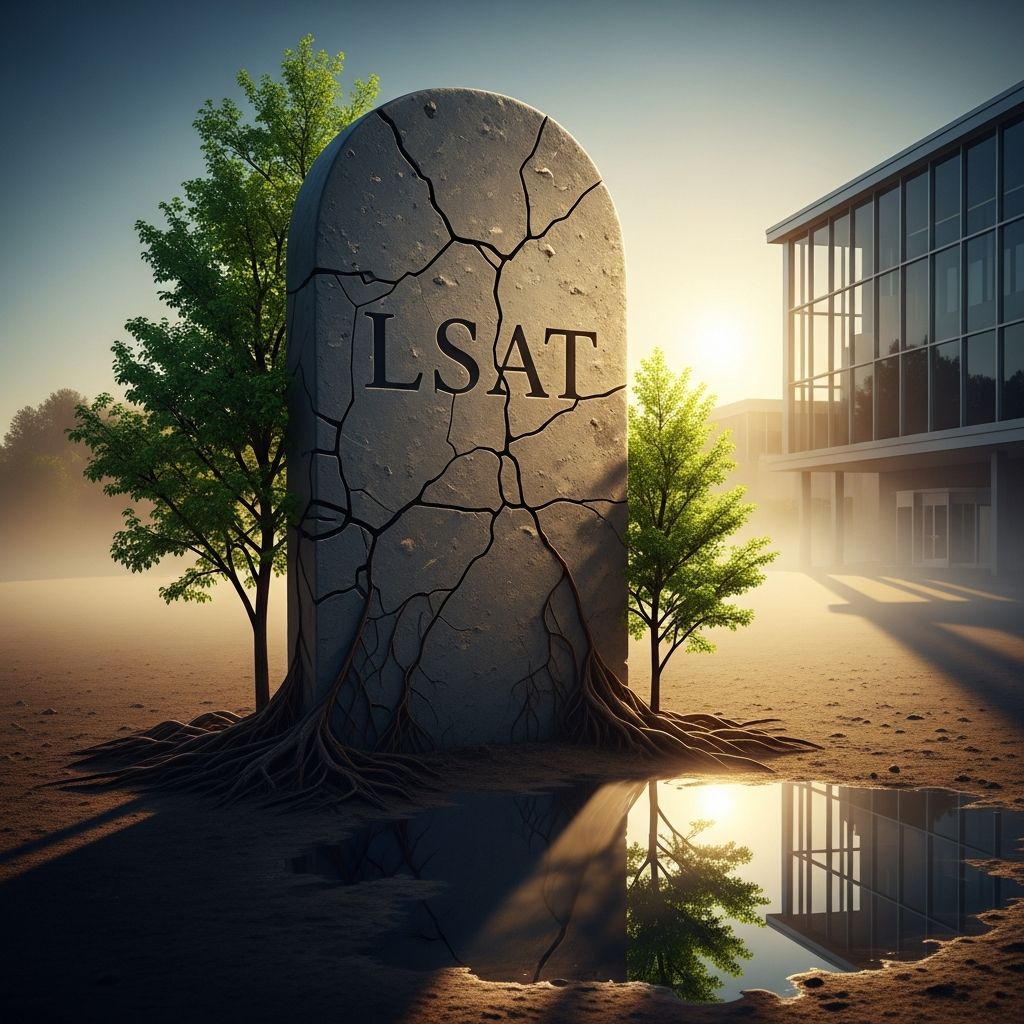
The Law School Admission Test (LSAT) has long served as a cornerstone of law school admissions, rigorously assessing critical thinking and analytical skills essential for legal practice. As educational landscapes evolve with technology and alternative pathways emerge, questions arise about its continued dominance.
Historical Foundations of the LSAT
Introduced in the 1940s, the LSAT was designed to standardize admissions by evaluating logical reasoning, reading comprehension, and analytical abilities. For decades, it provided law schools with a consistent metric to compare applicants from diverse backgrounds, helping predict first-year law school performance effectively.
Its structure emphasized skills directly transferable to legal work: dissecting arguments in Logical Reasoning sections, navigating complex texts in Reading Comprehension, and solving intricate puzzles in Analytical Reasoning, commonly known as logic games. This format remained largely unchanged, cementing its status as the gold standard.
Key Components and Their Purpose
The traditional LSAT featured multiple sections, each targeting distinct competencies. Logical Reasoning, often comprising two scored sections, presented short arguments requiring identification of flaws, assumptions, or strengthenings—mirroring courtroom analysis.
Reading Comprehension tested the ability to parse dense, academic passages akin to legal documents, with around 27 questions per set. Analytical Reasoning challenged test-takers with conditional rules and deductions, fostering the precision needed for statutory interpretation.
An unscored experimental section ensured continuous improvement without affecting scores, while the Writing Sample evaluated argumentative essay skills.
Recent Overhauls: From Paper to Digital
By 2019, the LSAT transitioned to a fully digital format administered at test centers, streamlining delivery and scoring. This shift reduced logistical burdens and introduced features like built-in timers, aiding pacing under strict constraints.
The multiple-choice portion now totals about 2 hours and 20 minutes across four 35-minute sections: two Logical Reasoning, one Reading Comprehension, and one experimental, with a 10-minute break. The separate Argumentative Writing component, completed online within a week, lasts around 50 minutes, focusing on multi-perspective prompts.
| Component | Duration | Questions | Skills Tested |
|---|---|---|---|
| Logical Reasoning (x2) | 70 minutes | ~24-26 per section | Argument analysis, flaw detection |
| Reading Comprehension | 35 minutes | ~27 | Text interpretation, inference |
| Experimental Section | 35 minutes | Varies | Test development (unscored) |
| Break | 10 minutes | N/A | Rest |
| Argumentative Writing | 50 minutes (separate) | 1 essay | Persuasive writing |
Mastering Time Management on the Modern LSAT
With sections limited to 35 minutes, pacing is crucial. Test-takers average 80-90 seconds per question in Logical Reasoning, but strategies like skipping tough items and quick-guessing prevent time sinks. Practice under simulated conditions builds stamina for this mental marathon.
Official LSAC resources recommend full-length practice tests to mimic exam day, including breaks and minimal materials like pencils only. Advanced techniques include stopwatch tracking for upward time counts, enabling precise progress monitoring.
Major Controversies: The Logic Games Saga
A pivotal change came in 2024 when LSAC eliminated Analytical Reasoning (logic games) following a 2019 lawsuit alleging disability discrimination. Critics argued the diagramming-intensive format disadvantaged those with certain learning differences.
The settlement prompted replacement with an additional Logical Reasoning section, altering the test’s balance but aiming for fairness. This move sparked debates: some praise increased accessibility, while purists lament the loss of a unique skill-builder proven predictive of law school success.
Alternatives Challenging LSAT Supremacy
The GRE has gained traction as a flexible substitute accepted by over half of ABA-accredited schools. Its broader scope tests verbal, quantitative, and analytical writing skills, appealing to non-traditional applicants.
Additionally, some institutions now weigh GPAs more heavily or adopt holistic reviews incorporating soft skills and experiences. The 2024-2025 ‘test-optional’ trend in undergraduate admissions hints at similar shifts in graduate programs, questioning standardized testing’s monopoly.
2026 and Beyond: In-Center Testing Revival
Starting August 2026, LSAC mandates in-center testing for most U.S. and international takers, phasing out remote options except for accommodations. This returns to proctored environments, combating cheating concerns from the pandemic era while standardizing conditions.
Digital tools persist, but physical centers ensure equity. Scheduling via Prometric remains mandatory, with preferences noted during registration.
Effectiveness Data: Does the LSAT Still Predict Success?
Studies affirm the LSAT’s superior correlation with law school GPA and bar passage rates over alternatives like the GRE. LSAC data shows it accounts for 70-80% of variance in first-year performance, underscoring its validity.
Yet, evolving legal practice—emphasizing tech proficiency, emotional intelligence, and interdisciplinary knowledge—prompts scrutiny. Will the LSAT adapt further, perhaps integrating AI ethics or data analysis?
Preparation Strategies in a Changing Landscape
- Simulate Real Conditions: Dedicate 2.5-3 hours for full mocks, using official LSAC PrepTests on LawHub.
- Prioritize Weak Areas: Double Logical Reasoning practice post-games removal.
- Build Endurance: Train with timers; aim for 30-minute sections to buffer test-day pressure.
- Argumentative Writing: Practice concise, evidence-based responses to multi-view prompts.
- Holistic Prep: Balance with GPA maintenance and compelling personal statements.
Prospects for Aspiring Law Students
For 2026 applicants, the LSAT remains pivotal, especially at top-tier schools. Scores above 170 open elite doors, but mid-range performers can shine via strong narratives. Diversifying applications with GRE options hedges bets.
Long-term, AI grading, adaptive testing, or VR simulations could redefine it. Until then, the LSAT endures as a rite of passage honing indispensable legal minds.
Frequently Asked Questions (FAQs)
What is the current length of the LSAT multiple-choice section?
As of 2026, it spans 2 hours 20 minutes of testing plus a 10-minute break, totaling about 2 hours 40 minutes.
Has the LSAT removed logic games?
Yes, since 2024, Analytical Reasoning was replaced by a second Logical Reasoning section following legal challenges.
Can I take the LSAT remotely in 2026?
No, most test-takers must attend in-center sessions starting August 2026, with limited exceptions.
Is the GRE a viable LSAT alternative?
Yes, many law schools accept it, offering flexibility in quantitative and verbal assessments.
How predictive is the LSAT of law school success?
It strongly correlates with first-year GPA and bar exam results, outperforming other metrics.
References
- How Long Is the LSAT? – 3 hours and 45 minutes — TestMax. 2023. https://testmaxprep.com/blog/lsat/how-long-is-the-lsat
- How Long is the LSAT? Full Test & Section Breakdown — Leland. 2026. https://www.joinleland.com/library/a/how-long-is-the-lsat-duration-and-format-of-the-law-school-admission-test
- Lesson 8: LSAT Timing and Test-Taking Strategies — YouTube (LSAT Demon). 2023. https://www.youtube.com/watch?v=HDC7T09js7Y
- Free LSAT Practice Test (2026) — Mometrix. 2026. https://www.mometrix.com/academy/lsat-test/
- About the LSAT | Frequently Asked Questions — The Princeton Review. 2025. https://www.princetonreview.com/law/lsat-information
- How to Beat the LSAT Clock and Maximize Your Score — YouTube (LSAT Demon). 2024. https://www.youtube.com/watch?v=yJwChvsXVpo
- How to Schedule Your LSAT Testing Time — LSAC. 2026-04-01. https://www.lsac.org/lsat/taking-lsat/how-schedule-your-lsat-testing-time
- Official LSAT Practice Tests — LSAC. 2026. https://www.lsac.org/lsat/prepare/official-lsat-practice-tests
- Law School Admission Test — Wikipedia (citing LSAC data). 2026. https://en.wikipedia.org/wiki/Law_School_Admission_Test
Similar Articles








Read full bio of medha deb




