
Louisiana Alcohol Liability Laws Explained
Discover Louisiana's unique approach to alcohol liability, limiting dram shop and social host responsibility in alcohol-related incidents.
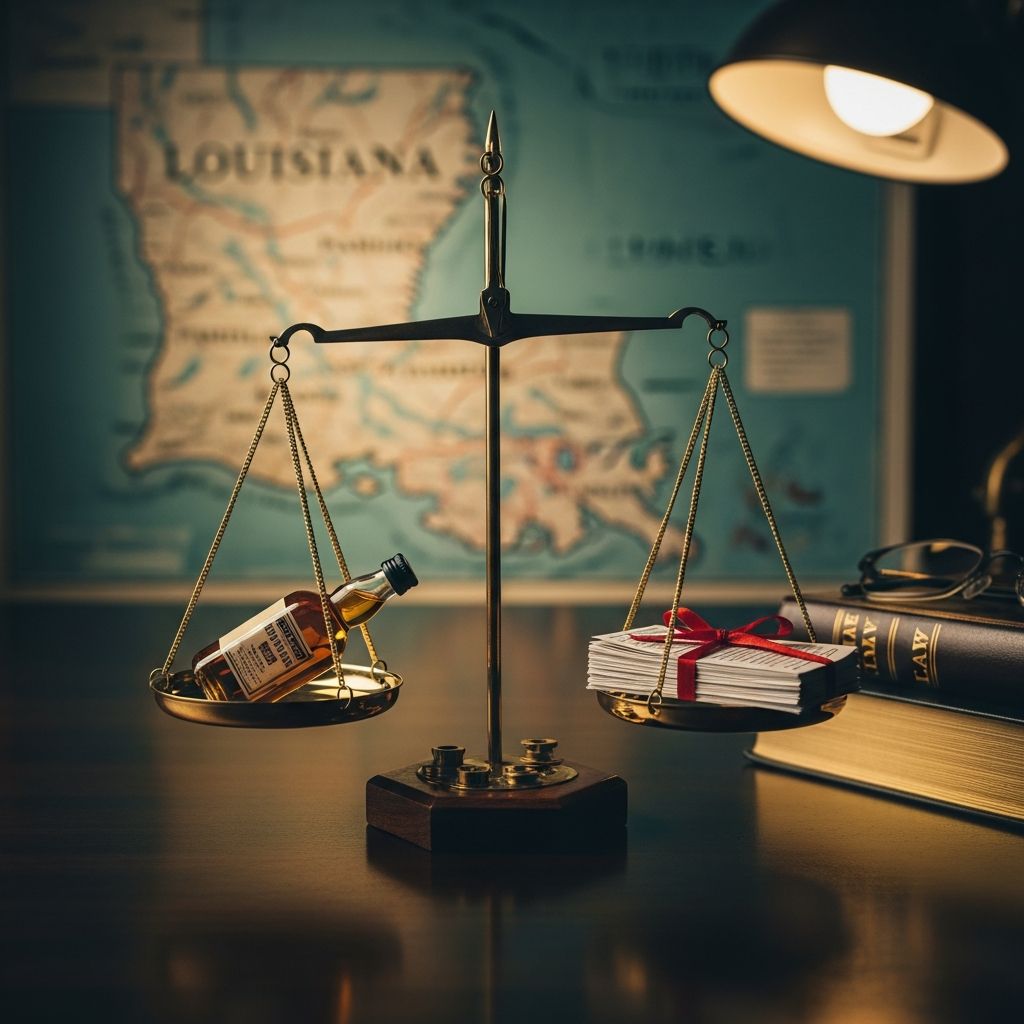
Louisiana maintains one of the most restrictive frameworks for holding alcohol servers accountable in incidents involving intoxication. Unlike many states, its statutes prioritize the consumer’s actions over those of providers, significantly curbing lawsuits against businesses and private individuals.
The Foundation of Louisiana’s Liquor Liability Framework
At the heart of Louisiana’s approach is La. Rev. Stat. § 9:2800.1, often called an “anti-dram shop” provision. This law explicitly states that consumption of alcohol, not its sale or serving, is the proximate cause of any resulting injury, death, or property damage. Enacted to shield providers from broad liability, it reflects a policy emphasizing personal accountability for intoxication-related harms.
This stance diverges sharply from traditional dram shop laws in other jurisdictions. There, establishments like bars or restaurants can face claims if they overserve visibly intoxicated patrons or minors, even for off-site accidents. In Louisiana, such broad accountability is absent, protecting commercial sellers and social hosts alike from most third-party claims.
Defining Dram Shop Liability Nationwide vs. Louisiana
Dram shop laws originated from historical taverns selling liquor by the “dram,” a small unit of measure. Today, they impose civil liability on licensed alcohol sellers for damages caused by overserved customers. Key elements typically include:
- Serving alcohol to minors under 21.
- Providing drinks to patrons showing obvious intoxication.
- Proximate causation linking service to subsequent harm.
In contrast, Louisiana’s version is narrowly tailored. Businesses are generally immune unless specific exceptions apply, fostering a business-friendly environment but potentially leaving victims with fewer recourse options.
| Aspect | Typical Dram Shop States | Louisiana |
|---|---|---|
| Liability for Overserving Adults | Yes, if visibly intoxicated | No, consumption is proximate cause |
| Liability for Minors | Yes | Yes, limited exception |
| Off-Premises Harm | Often covered | Not covered |
| On-Premises Harm by Adults | Sometimes | Not covered |
This table highlights Louisiana’s outlier status, where liability hinges on rare conditions rather than routine overservice.
Key Exceptions: When Liability Can Arise for Commercial Providers
Despite the general immunity, Louisiana law carves out two primary exceptions for liquor licensees—bars, restaurants, liquor stores, and similar entities:
- Serving Minors: Licensees are liable for injuries or deaths caused by a minor (under 21) to whom they sold or served alcohol, regardless of location.
- On-Premises Harm by Legal Drinkers: If a lawful adult patron causes injury or death while still on the premises, the establishment may be responsible.
These exceptions demand proof of direct service to the at-fault individual and a clear causal link to the harm. Courts scrutinize evidence like security footage, witness statements, or sales records to establish violations. Notably, off-premise sellers (e.g., grocery or liquor stores) escape liability even for minors unless the harm occurs on-site, underscoring the law’s limits.
Social Host Liability in Private Settings
Private individuals hosting parties face similar protections under the same statute. Social hosts—those furnishing alcohol at homes or events—are not liable for off-site harms caused by adult guests of legal age. Liability attaches only if:
- Alcohol is provided to a minor who then causes injury or death anywhere.
- A legal-age guest injures someone on the host’s property.
This mirrors commercial rules, promoting caution around underage service without broadly penalizing hospitality. For instance, a homeowner allowing excessive drinking at a barbecue incurs no risk if the guest drives away and crashes later—responsibility falls squarely on the driver.
Proving a Claim: Evidence and Legal Hurdles
Successful claims under these exceptions require plaintiffs to demonstrate:
- The defendant served alcohol directly to the at-fault person.
- The recipient met the exception criteria (minor or on-premises).
- The service proximately caused the injury.
Challenges abound: Louisiana’s one-year statute of limitations for personal injury (La. Civ. Code Art. 3492) or wrongful death (La. Civ. Code Art. 2315.2(B)) demands swift action. Victims must gather compelling proof amid defenses emphasizing consumption over provision.
Practical Implications for Businesses and Hosts
Alcohol-serving businesses benefit from this framework but must implement safeguards:
- ID Checks: Rigorous verification prevents minor-service claims.
- Training: Staff education on intoxication signs, though not legally mandated for immunity.
- Insurance: Liquor liability coverage hedges rare exposure risks.
Hosts should similarly monitor gatherings, confiscating keys from impaired adults and refusing underage access, though legal shields remain robust.
Comparative Analysis: Louisiana Amid National Trends
While 43 states plus D.C. enforce some dram shop liability, Louisiana joins a minority (including Texas and Montana) with strong immunities. Federally, excessive alcohol consumption ties to dram shop enforcement, yet Louisiana’s model prioritizes individual deterrence via criminal laws like DWI statutes over civil suits.
Critics argue this under-deters overserving; proponents claim it avoids overburdening legitimate enterprises. Recent data shows alcohol-impaired driving fatalities persist, prompting calls for reform, though legislative inertia prevails.
Frequently Asked Questions (FAQs)
Can I sue a bar if a drunk driver they served hits me in Louisiana?
Generally no, unless the driver was a minor served by the bar or the crash occurred on the bar’s premises.
Does serving alcohol to a 21-year-old guest make a host liable for a later accident?
No, social hosts are protected unless the guest was underage or harm happened on the property.
What is the time limit to file a liquor liability lawsuit in Louisiana?
One year from the injury or death date.
Are liquor stores liable if they sell to someone who later causes harm?
Typically not, even for minors, unless the incident is on-premises.
Why is Louisiana’s law called ‘anti-dram shop’?
It reverses the trend by declaring consumption, not service, as the cause of harm, limiting provider liability.
Navigating Alcohol-Related Incidents: Steps for Victims
If injured in an alcohol-fueled mishap, prioritize:
- Medical attention and documentation.
- Police reports capturing service details.
- Consulting attorneys specializing in personal injury, as direct driver suits remain viable regardless of provider immunity.
Understanding these nuances empowers informed decisions, whether pursuing exceptions or focusing on primary tortfeasors.
References
- Louisiana Dram Shop Law — The Law Offices of Ossie Brown. 2023. https://ossiebrown.com/blog/dram-shop-laws/
- Limited Liability Arising From Service Of Liquor In Louisiana — Milling Law. 2023-06-26. https://millinglaw.com/2023/06/26/limited-liability-arising-from-service-of-liquor-in-louisiana/
- Understanding Louisiana’s Dram Shop Laws — Womac Law Firm. 2025-07. https://www.edwardwomac.com/blog/2025/july/understanding-louisianas-dram-shop-laws2/
- Dram Shop Laws in Your State — Insureon. 2024. https://www.insureon.com/small-business-insurance/liquor-liability/dram-shop-laws
- Louisiana Dram Shop Laws and Social Host Liability — Nolo. 2024. https://www.nolo.com/legal-encyclopedia/dram-shop-laws-social-host-liability-alcohol-related-accidents-louisiana.html
- Louisiana Dram Shop Laws — Rice & Kendig. 2024. https://ricekendig.com/blog/what-are-dram-shop-laws
- La. Rev. Stat. § 9:2800.1 — Louisiana State Legislature. 2024. https://legis.la.gov/legis/Law.aspx?d=107251
Similar Articles








Read full bio of Sneha Tete


