
Locating a Parent for Child Support Enforcement
Practical and legal strategies to find a missing parent so you can establish, enforce, or modify child support for your child’s financial security.
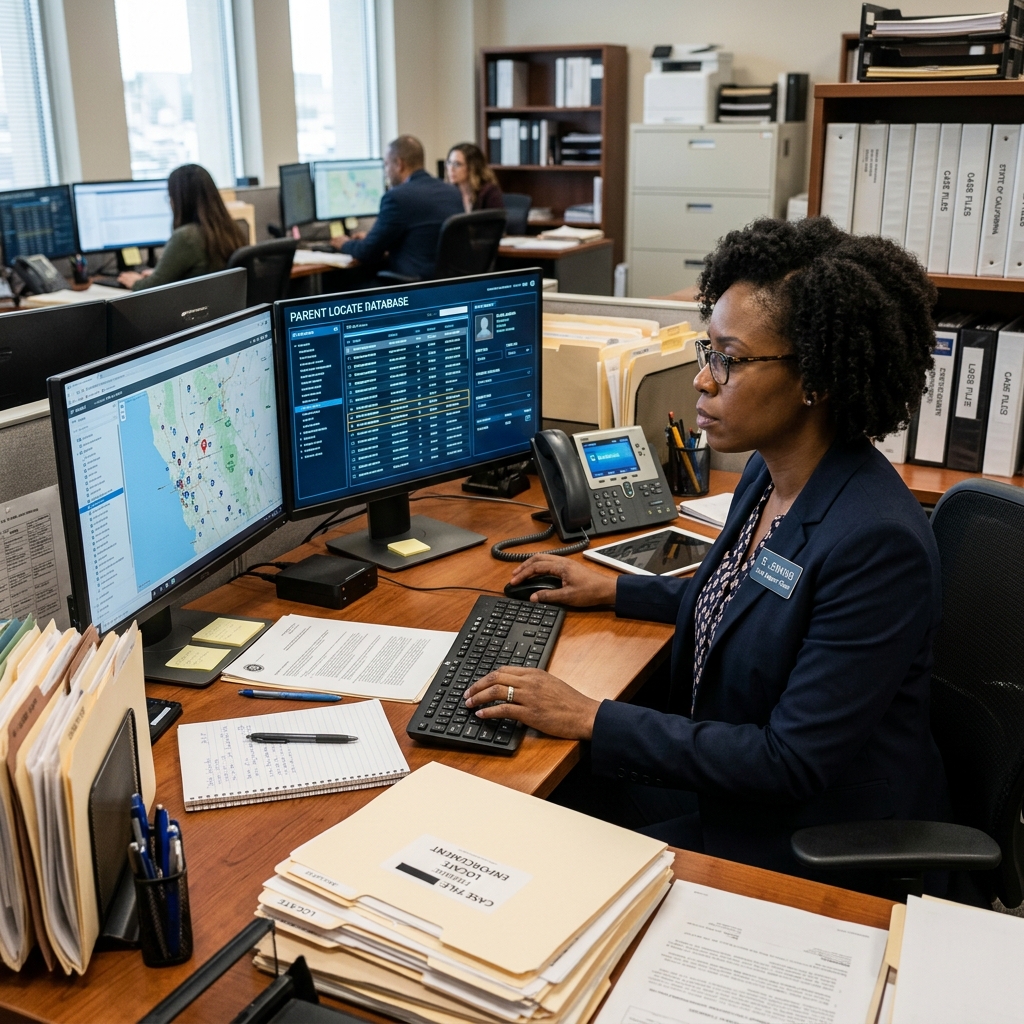
When a parent disappears or stops responding, the child who depends on their financial support is often the one who suffers most. Finding a noncustodial parent is frequently the first step toward establishing, enforcing, or modifying a child support order. This guide explains how child support programs search for parents, which tools are available at the state and federal level, and what you can do to support the process.
Why Locating the Other Parent Matters
Courts and child support agencies generally cannot establish or enforce support orders without knowing where the noncustodial parent lives or works. Agencies need a physical or mailing address to send legal notices, and employment information to withhold wages or intercept other income.
Locating the other parent is crucial because it allows authorities to:
- Serve legal documents to establish paternity and child support obligations.
- Enforce existing court orders when payments are past due.
- Verify employment and income to calculate an appropriate support amount.
- Coordinate with other states or countries when parents move across borders.
Key Information That Helps Locate a Parent
Child support agencies and courts have access to many databases, but the process is faster and more accurate when you provide detailed information about the other parent.
Essential Identifying Details
The following pieces of information are especially valuable:
- Full legal name, including any aliases, maiden names, or former names.
- Social Security number (if known).
- Date of birth and place of birth.
- Past and current home addresses or mailing addresses (including P.O. boxes).
- Names of close relatives or friends who may know their location.
Employment and Financial Clues
Information about work and finances can be used to identify and confirm the parent’s location and income:
- Current or recent employer names and addresses.
- Work history and typical type of job or industry.
- Professional licenses (for example, nursing, plumbing, real estate).
- Business ownership or self-employment details.
Legal Documents and Case Information
Legal records help child support workers understand what orders already exist and what needs to be done:
- Copies of any existing child support order or divorce decree.
- Prior case numbers from family court or child support agencies.
- Any known criminal records, probation, or parole information, which may provide contact addresses.
How State Child Support Agencies Help
Every U.S. state and many tribal governments operate a child support program that offers locate services. These programs help find parents, establish paternity, obtain support orders, and enforce existing orders.
Opening or Updating a Child Support Case
To receive help, you typically must open a child support case with your state or tribal agency. Many agencies allow you to apply online, by mail, or in person. When you apply, you will be asked to provide:
- Information about yourself and the child.
- Known details about the other parent (identity, address history, employer information).
- Copies of relevant court orders, if they already exist.
Some parents are automatically referred to the child support office when they receive certain public benefits, such as Temporary Assistance for Needy Families (TANF) or Medicaid, because federal law encourages states to seek child support to offset public assistance costs.
Databases and Tools State Programs Can Access
State child support agencies can check a wide range of government and private databases that are not available to the general public. Examples include:
- State employment and wage data, often collected through workforce or labor departments.
- State and federal tax information, used for address and income updates.
- Driver’s license and motor vehicle records.
- Criminal justice and corrections databases, where allowed by law.
- Credit reporting data and utility records, which may show new addresses or employers.
Because these databases are updated regularly, they can reveal when a parent changes jobs, files taxes, earns unemployment insurance, or moves to a new address.
Locate-Only Services
Some states offer a specific “locate-only” service for people who do not need full child support case management but do need the other parent’s address or employer for a case they are handling themselves. For example, a state attorney general’s office may provide a service that searches state and federal records and then sends the results to the requesting individual, court, or attorney.
| Purpose | Who May Request |
|---|---|
| Establish a new child support order | Custodial parent, legal guardian, or attorney |
| Enforce an existing order (support or medical coverage) | Parent, court, or child’s legal representative |
| Assist with custody or visitation enforcement | Courts or parties in a custody case |
The Federal Parent Locator Service (FPLS)
When a parent moves across state lines or becomes particularly difficult to find, state agencies can request help from the Federal Parent Locator Service (FPLS). The FPLS is managed by the U.S. Office of Child Support Services in the Department of Health and Human Services.
How the FPLS Works
The FPLS is a nationwide system that compiles data from several federal and state sources, including:
- The National Directory of New Hires, which collects information from employers and state workforce agencies.
- The Federal Case Registry, containing data on child support cases and orders from across the country.
- Other federal records, such as Social Security and some tax-related records, to the extent allowed by law.
Using these data sources, the FPLS helps state agencies:
- Locate noncustodial parents and alleged fathers in child support cases.
- Identify their current employers for possible wage withholding.
- Confirm or update information that states already have in their files.
Who Can Use FPLS Information
Individual parents do not access the FPLS directly. Instead, a state or tribal child support agency submits a query as part of an open case. The agency then uses the information to establish paternity, set support orders, or enforce existing orders.
Working With Courts and Across State Lines
Child support obligations follow parents wherever they go, but enforcing an order is more complex when a parent lives in a different state. Federal law encourages cooperation among states through an act known as the Uniform Interstate Family Support Act (UIFSA), which has been adopted in every U.S. state.
Interstate Cooperation
When a parent lives in another state, your local child support agency can:
- Forward your case to the child support program in the other state.
- Share information, such as existing orders and payment history.
- Request help serving documents and enforcing orders through wage withholding, tax refund intercepts, or other tools.
In many situations, you do not need to travel to the other state because agencies and courts communicate electronically or by mail.
Role of the Court
Courts must generally confirm that they have legal authority (jurisdiction) over the other parent before issuing or modifying a support order. Locating the parent is essential to establishing jurisdiction and providing proper notice of court hearings. Once jurisdiction is established, courts can order income withholding, liens, or other enforcement measures.
Your Own Investigative Steps
While agencies have powerful tools, parents often contribute vital information that makes the difference in locating someone. Simple actions you take can provide leads that agencies can follow.
Gather Contact and Social Information
You may be able to find helpful clues by:
- Reviewing old emails, text messages, and social media accounts for addresses or workplace information.
- Talking to mutual friends, relatives, or former coworkers.
- Looking at public postings, such as online business listings or professional profiles.
Consider Professional Help
Some parents choose to hire a licensed private investigator, especially if the missing parent has been evasive for a long time or may be living under a different name. Private investigators can:
- Conduct in-depth database searches of public and proprietary records.
- Perform surveillance within legal limits.
- Prepare reports that your attorney or the court may use as evidence.
If you consider this option, check your state’s licensing rules and confirm that the investigator understands child support and family law issues.
Privacy, Safety, and Ethical Limits
Locating a parent must be balanced with privacy protections and safety considerations, especially when there is a history of domestic violence. Federal law and many state laws include safeguards designed to protect victims while still allowing child support enforcement.
Address Confidentiality
Child support agencies can take steps to prevent your address from being disclosed to the other parent in certain circumstances, particularly when there is a risk of violence. For example, agencies may:
- Use a designated agency address instead of your home address for correspondence.
- Limit disclosure of information in federal and state databases when safety concerns are documented.
Legal Restrictions on Information Use
Information obtained from parent locator services can only be used for specific legal purposes, such as establishing or enforcing child support, paternity, or custody orders. Misusing sensitive data may violate privacy laws and could result in legal consequences.
Common Challenges and How to Handle Them
Certain situations make it particularly difficult to locate or enforce against a noncustodial parent. Understanding these challenges can help you and your caseworker choose the right strategy.
Parent Frequently Changes Jobs or Addresses
Some parents try to avoid support obligations by moving often or working off the books. In these cases:
- Regularly update your child support agency with any new information you learn.
- Ask the agency to use all available databases, such as new hire reporting and unemployment insurance data.
- Keep copies of any communication or social media posts that reveal a new location or job.
Parent Lives Abroad
When the noncustodial parent is in another country, options depend on whether that country cooperates with the United States on child support issues. Many countries have formal agreements or participate in international conventions that support enforcement across borders.
Your state or tribal child support agency can tell you:
- Whether the other country has a reciprocity agreement or treaty with the United States.
- What steps are necessary to file or enforce an order internationally.
- Whether translation, authentication, or additional court actions are required.
Parent Is Incarcerated
If a parent is in jail or prison, corrections databases and court records can usually confirm their location. Child support agencies may still establish or modify orders, but the parent’s ability to pay may be limited while incarcerated. Once released, updated employment information from new hire reporting can help restart payments.
Practical Tips to Strengthen Your Case
Even when you have professional help, staying organized and proactive can increase your chances of success.
- Document everything: Keep a folder with court papers, agency letters, payment records, and copies of any information about the other parent.
- Respond promptly: Answer mail, emails, and calls from the child support office quickly to avoid delays.
- Update contact details: Inform the agency whenever you move, change phone numbers, or get a new email address.
- Ask questions: If you do not understand a step in the process, ask your caseworker or a legal professional to explain it.
Frequently Asked Questions
Can I get child support if I do not know where the other parent is?
You generally need at least some information about the other parent to start a case, but you do not have to know their exact current address. The state or tribal child support agency can use the details you provide, along with federal and state databases, to try to locate them.
How long does it take to locate a missing parent?
Time frames vary widely. In some cases, agencies find a new address or employer in weeks through new hire or tax records. In more complex cases, especially when parents move frequently or live outside the country, the process can take many months or longer.
Do I have to pay for parent locator services?
Many child support services are low-cost or free, especially when you apply through a state or tribal child support agency. Some states may charge modest application or service fees, while private investigators and attorneys charge their own rates.
Can I use these services only to find someone for visitation or custody issues?
Some states allow courts, parents, or guardians to request locate-only services for custody or visitation enforcement, as long as the information is used for legitimate legal purposes related to the child. Check your state’s rules or consult an attorney about your specific situation.
What if the other parent is paying some support but I still do not know where they live?
It is still important for the agency and court to have updated contact information in case orders need to be reviewed, modified, or enforced. Provide any new leads to your child support office so they can keep records current.
References
- How Do I Find a Parent for Child Support? — FindLaw. 2023-01-10. https://www.findlaw.com/family/child-support/how-do-i-locate-a-parent-for-child-support.html
- Locate a Parent to Pay Support — Central Sierra Child Support Agency. 2022-06-01. https://cscsa.org/services/locate-parent-to-pay-support
- Locate a Parent — Office of the Attorney General of Texas, Child Support Division. 2023-05-15. https://www.texasattorneygeneral.gov/child-support/get-started/locate-a-parent
- What Is the Parent Locator Service? — LawInfo. 2022-09-20. https://www.lawinfo.com/resources/child-support/what-is-the-parent-locator-service.html
- How to Get Help Collecting Child Support — USA.gov. 2024-02-05. https://www.usa.gov/child-support
Similar Articles








Read full bio of Sneha Tete


