
The Role of Local Sheriffs in Immigration Enforcement
How local elections and sheriff policies shape community trust and federal immigration enforcement.
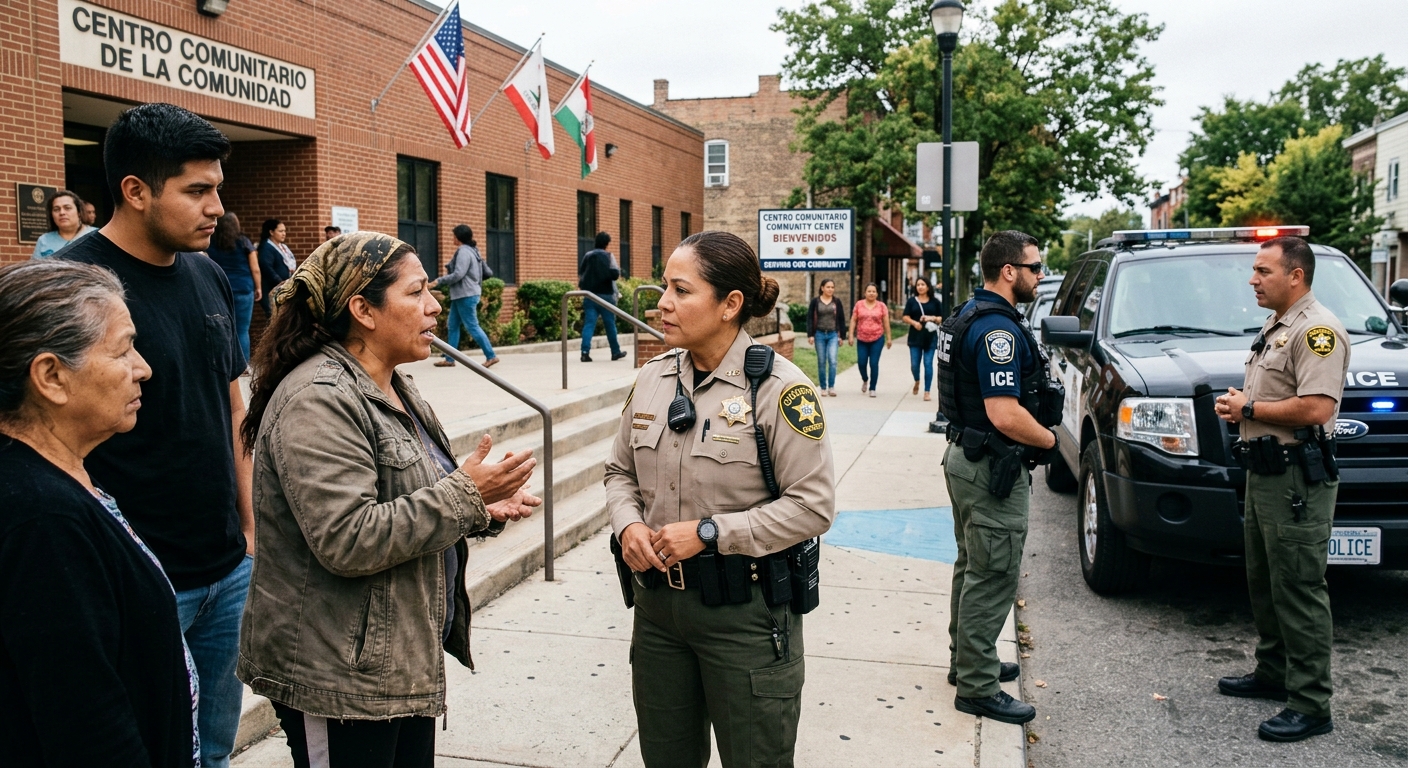
The landscape of immigration enforcement in the United States is frequently viewed through a national lens, focusing heavily on the overarching actions of the President, the legislative priorities of Congress, and the directives of federal agencies like U.S. Immigration and Customs Enforcement (ICE). However, the practical reality of how immigration policies are implemented on the ground is deeply tied to the decisions made by local law enforcement, particularly county sheriffs. County sheriffs hold immense discretionary power, directly dictating the extent to which their deputies and local jail facilities cooperate with federal immigration authorities. This complex intersection of local community policing and federal immigration enforcement has increasingly become a major focal point for civil liberties advocates, community organizers, and engaged voters across the country.
The specific operational policies adopted by a local sheriff can profoundly impact the daily lives of immigrant communities. These administrative decisions influence whether a routine traffic stop for a minor violation has the potential to escalate into deportation proceedings, or whether local taxpayer resources are strictly devoted to community safety initiatives rather than federal immigration enforcement tasks. By examining the intricate mechanics of federal-local enforcement partnerships and analyzing the pivotal 2020 sheriff election in Gwinnett County, Georgia, observers can better understand the profound, real-world stakes of these localized political races and the broader implications for constitutional rights.
The Mechanics and Controversy of the 287(g) Program
At the absolute center of the ongoing debate over local involvement in immigration enforcement is Section 287(g) of the Immigration and Nationality Act (INA), which was enacted by Congress in 1996. The 287(g) program allows U.S. Immigration and Customs Enforcement (ICE) to enter into formal, written Memorandums of Agreement (MOAs) with willing state, local, and tribal law enforcement agencies. Under these specialized legal agreements, ICE formally delegates specific immigration enforcement authorities to designated local law enforcement officers. These deputized officers must undergo a specialized, federally mandated training program, after which they are officially permitted to operate under federal supervision while carrying out their regular law enforcement duties. The program typically operates under distinct operational frameworks, with the most widely utilized being the Jail Enforcement Model. In this particular setup, trained local officers are legally authorized to identify and process individuals for potential removal if they happen to be booked into the county jail on state or local criminal charges. Additionally, the Task Force Model allows designated officers to perform immigration enforcement duties during regular policing activities within the community, though this broader model has seen varying levels of implementation over the years.
Proponents of the 287(g) program strongly argue that it acts as an indispensable force multiplier for ICE, fundamentally enhancing overall public safety by identifying and quickly removing individuals who have committed serious crimes within the local jurisdiction. According to official federal perspectives and supporting sheriffs, these formalized partnerships dramatically streamline the transfer of individuals from local custody directly into federal custody, theoretically keeping dangerous criminal offenders off the streets and ensuring that local and federal law enforcement agencies act in seamless operational coordination. Furthermore, advocates for the program frequently highlight that the federal government covers the cost of the specialized training and provides ongoing operational support, which they argue brings valuable federal resources to local police departments.
However, the 287(g) program has continuously faced intense national scrutiny and widespread opposition from civil rights organizations, legal scholars, and community advocates. Critics vehemently argue that 287(g) agreements inherently incentivize systemic racial profiling, as local officers may be tempted to use minor traffic infractions, broken taillights, or petty offenses as convenient pretexts to stop, interrogate, and thoroughly investigate an individual’s federal immigration status. Furthermore, civil liberties advocates consistently point out that the program fundamentally damages the essential, trust-based relationship between law enforcement and the communities they are sworn to serve and protect. When local police are actively viewed as an extension of the federal deportation apparatus, undocumented immigrants and their mixed-status family members become far less likely to report crimes, serve as cooperative witnesses in criminal investigations, or seek urgent help during critical emergencies. Critics suggest this chilling effect ultimately makes the entire community substantially less safe, as a large segment of the population is systematically driven into the shadows. Additionally, opponents emphasize that local taxpayers invariably bear the hidden financial burdens of these agreements. Despite the provision of federal training, local county funds are frequently redirected from pressing local policing priorities—such as combating violent crime or funding mental health programs—to subsidize the extensive administrative holding and processing costs associated with federal immigration enforcement efforts.
The Legal Battle Over ICE Detainers and the Fourth Amendment
Beyond the formal boundaries of 287(g) agreements, another highly critical and heavily contentious mechanism of local-federal cooperation is the widespread use of ICE detainers, frequently referred to in legal circles as “immigration holds.” An ICE detainer is essentially a written administrative request issued by a federal immigration officer to a local law enforcement agency. It formally asks the local jail administrators to maintain continuous custody of a specific individual for up to 48 hours beyond the exact time they would otherwise be legally released (for example, after posting their bail, completing a short criminal sentence, or having their charges formally dismissed by a local judge). The primary operational goal of this hold is to provide ICE field agents with a sufficient window of time to arrive at the local facility and physically assume custody of the individual for subsequent federal deportation proceedings.
The aggressive deployment of these detainers has ignited significant, high-stakes legal controversies across the nation, primarily centered around the strict constitutional requirements of the Fourth Amendment of the U.S. Constitution, which vehemently protects all individuals against unreasonable searches and seizures by the government. Numerous federal courts have delivered landmark judicial rulings stating that complying with an ICE detainer effectively constitutes a brand-new legal arrest, which must invariably be supported by established probable cause. Because ICE detainers are merely administrative requests—often rapidly issued by ICE field agents without the necessary legal review, rigorous oversight, or formal approval of a neutral judge or magistrate—many legal experts and civil rights advocacy groups argue that holding individuals solely on the basis of a federal detainer explicitly violates their foundational constitutional rights.
This lingering, unresolved legal ambiguity has led to massive financial liabilities for county governments across multiple states. When local county jails hold individuals unlawfully based solely on administrative ICE detainers, they directly expose the county administration and local taxpayers to costly civil rights lawsuits and massive financial settlements. Consequently, an increasing number of cautious, financially prudent, and rights-oriented sheriffs across the country have instituted strict local policies refusing to honor ICE detainer requests entirely, unless they are officially accompanied by a valid judicial warrant signed by a federal judge. This firm, legally sound stance not only shields the vulnerable county from crippling civil litigation but also strongly aligns with a steadfast commitment to upholding constitutional due process and equal protection under the law for all individuals residing within their jurisdiction, regardless of their current immigration status or background.
Gwinnett County: A Microcosm of the National Debate
The highly polarized, national debate over the extent of local immigration enforcement found a defining, high-profile battleground in Gwinnett County, Georgia, during the heated 2020 election cycle. Gwinnett County, situated in the sprawling, dynamic metropolitan Atlanta area, stands out as one of the most racially, ethnically, and culturally diverse counties in the entire southeastern United States. Despite its diverse and rapidly evolving demographics, the county administration had stubbornly maintained a long-standing, deeply controversial 287(g) agreement under the unwavering leadership of its previous sheriff, who had comfortably held the influential office for nearly a quarter of a century. During that extensive tenure, Gwinnett County gained national notoriety by becoming one of the leading jurisdictions in the entire nation for processing federal deportations strictly through local jail facilities. This aggressive, unrelenting enforcement posture resulted in the tragic separation of thousands of local families and fostered a deep-seated, pervasive climate of fear, anxiety, and profound distrust among the county’s significant immigrant resident population.
As the pivotal 2020 election steadily approached, the high-stakes race for Gwinnett County Sheriff rapidly evolved into a definitive, widely watched public referendum on the county’s continued collaboration with ICE. Numerous civic advocacy groups, heavily including the ACLU of Georgia, alongside dedicated local community organizers, worked tirelessly around the clock to mobilize, register, and properly educate voters on exactly where the competing candidates stood on these crucial, life-altering civil liberties issues. The election featured a stark, uncompromising contrast in policy platforms between the two primary candidates: Keybo Taylor and Lou Solis.
Candidate Keybo Taylor explicitly and repeatedly pledged to completely terminate the county’s highly criticized 287(g) agreement and to immediately end the controversial practice of honoring warrantless ICE detainers. He passionately argued on the campaign trail that these federal programs promoted systemic racial profiling, destroyed essential community trust, and continuously drained vital local tax resources that could be better spent elsewhere. In sharp contrast, candidate Lou Solis firmly supported the continuation of these collaborative enforcement efforts with federal immigration authorities, mirroring the established policies of the outgoing administration and arguing they were necessary tools for maintaining strict law and order.
The intense, months-long grassroots mobilization by concerned community members, established civil rights organizations, and passionate immigrant advocates successfully transformed the electorate’s fundamental understanding of the sheriff’s role in daily life. Local voters were presented with a very clear, unambiguous choice between continuing an aggressive, nationally aligned posture on immigration enforcement or definitively shifting toward a localized model of policing focused entirely on community trust, local safety priorities, and equal constitutional protection under the law.
The Aftermath and Broader Implications for Local Law Enforcement
The final outcome of the 2020 Gwinnett County sheriff election marked a historic, paradigm-shifting turning point. Keybo Taylor successfully won the election, and remaining completely true to his central campaign promises, he officially announced the immediate termination of the 287(g) program on his very first day in office in January 2021. Furthermore, he systematically instituted new departmental policies to permanently end the honoring of warrantless ICE detainers, signaling a profound, structural shift in the county’s approach to law enforcement, policing, and community relations.
The broader implications of this dramatic policy shift extend far beyond the geographical borders of Gwinnett County. It serves as a highly powerful, nationally visible testament to the direct impact of local democratic elections on systemic criminal justice and comprehensive immigration reform. By actively dismantling the entrenched mechanisms of local-federal immigration collaboration, the new sheriff administration aimed to intelligently redirect taxpayer funds toward local safety initiatives, enhanced mental health resources, and robust community outreach programs. More importantly, the abrupt policy reversal initiated the slow, necessary, and difficult process of actively rebuilding trust between local law enforcement and historically marginalized communities. When local residents finally know that a routine interaction with county deputies will not automatically lead to a referral to ICE, they are significantly more empowered to willingly participate in community safety efforts, bravely report crimes, and seek necessary police assistance without paralyzing fear.
This specific case study perfectly illustrates a rapidly growing trend in diverse, changing suburban counties across the United States. As local demographics dramatically shift and sustained community organizing efforts gain significant political momentum, voters are increasingly holding their local law enforcement officials strictly accountable for their policies regarding civil liberties and constitutional rights. The Gwinnett County experience strongly highlights that while overarching federal legislation and presidential executive actions establish the broad legal parameters of immigration law, the actual, day-to-day enforcement—and its immediate, devastating human impact—very often rests entirely in the hands of independently elected local county sheriffs.
Frequently Asked Questions (FAQs)
- What exactly does a county sheriff do regarding immigration?
A county sheriff directly manages local law enforcement operations, including running the county jail. Their direct involvement in federal immigration enforcement depends heavily on their internal departmental policies. They can legally choose to enter formal, voluntary agreements with ICE, like the 287(g) program, and independently decide whether or not to hold individuals in jail past their scheduled release times based purely on ICE detainer requests. - What is the fundamental difference between a judicial warrant and an ICE detainer?
A judicial warrant is officially issued by a neutral judge who has carefully reviewed evidence and determined that there is legal probable cause to believe a crime has been committed. An ICE detainer is simply an administrative request issued by a federal immigration enforcement officer asking a local jail to hold an individual, almost always without any judicial review or a formal demonstration of probable cause. - How does ending the 287(g) program impact overall public safety?
Many law enforcement experts, criminologists, and civil rights advocates strongly argue that ending 287(g) actually improves broad public safety. When local police are functionally decoupled from federal immigration enforcement, undocumented immigrants and their families are far more likely to trust the local police, report violent crimes, and serve as crucial witnesses in investigations without the paralyzing fear of impending deportation. - Can a local sheriff completely ignore all federal immigration laws?
Local sheriffs absolutely do not have the legal authority to alter, override, or ignore federal law. However, immigration enforcement is strictly a federal responsibility. The U.S. Constitution’s Tenth Amendment legally prevents the federal government from forcing local state agencies to enforce federal immigration mandates. Therefore, sheriffs can legally choose not to voluntarily utilize their limited local taxpayer resources to assist federal agencies.
Conclusion
The ongoing national narrative surrounding local immigration enforcement is fundamentally one of balancing necessary public safety, strict constitutional rights, and essential community trust. The implementation of the 287(g) program and the controversial use of ICE detainers represent highly significant points of political and legal friction where local community policing directly intersects with aggressive federal mandates. The pivotal 2020 election in Gwinnett County serves as a poignant, highly instructive example of exactly how engaged, educated communities can effectively leverage local democratic processes to enact sweeping, systemic reforms. By electing responsive leadership deeply committed to officially severing ties with aggressive federal immigration enforcement programs, local voters fundamentally reshaped the civil liberties landscape of their entire community. This critical paradigm shift underscores a vital, enduring democratic reality: while massive national debates predictably dominate the daily headlines, the most direct, tangible impacts on individual constitutional rights and overall community well-being are frequently decided directly at the local ballot box. For civic-minded voters across the nation, fully understanding the immense discretionary power wielded by county sheriffs is the essential first step toward ensuring that law enforcement practices accurately reflect the core values of the diverse communities they are legally sworn to protect and serve.
References
- Delegation of Immigration Authority Section 287(g) Immigration and Nationality Act — U.S. Immigration and Customs Enforcement (ICE). 2026-06-02. https://www.ice.gov/identify-and-arrest/287g
- The New Era of 287(g) — Immigrant Legal Resource Center. 2021. https://www.ilrc.org/sites/default/files/resources/the_new_era_of_287g.pdf
- Policy Statement Concerning Treatment of Undocumented Inmates — Fairfax County Sheriff’s Office. 2024-07-25. https://www.fairfaxcounty.gov/sheriff/policy-statement-concerning-treatment-undocumented-inmates
- Learn About Where the Gwinnett County Sheriff Candidates Land on Immigration — American Civil Liberties Union (ACLU). 2020-10-02. https://www.aclu.org/news/civil-liberties/learn-about-where-the-gwinnett-county-sheriff-candidates-land-on-immigration
Similar Articles








Read full bio of medha deb


