LLC for Independent Contractors: Key Benefits
Discover if forming an LLC protects independent contractors from risks while boosting credibility and tax options.
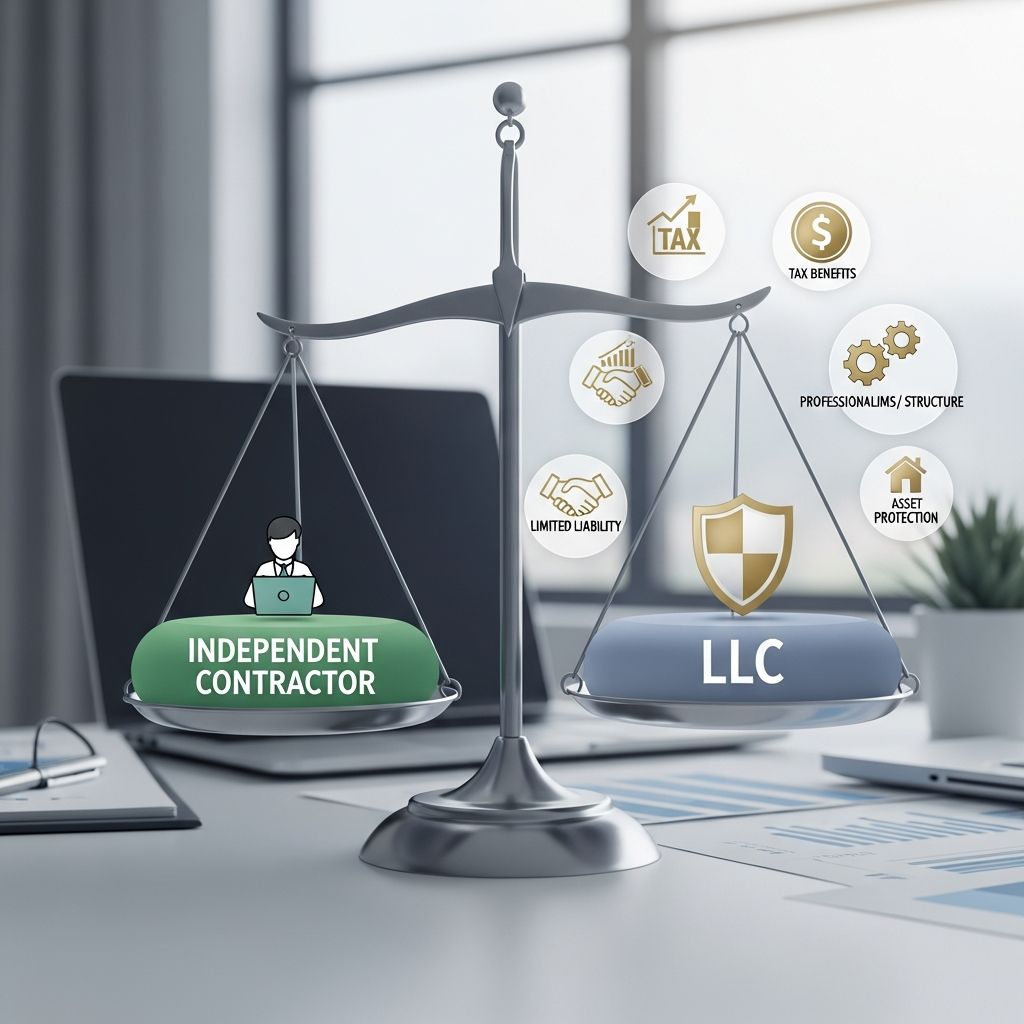
Independent contractors often operate as sole proprietors by default, exposing personal assets to business risks. Forming a
Limited Liability Company (LLC)
creates a separate legal entity, shielding homeowners, savings, and vehicles from lawsuits or debts tied to work. This structure appeals to freelancers, consultants, and service providers aiming for security without corporate complexity.Understanding Independent Contractor Status
Independent contractors differ from employees by controlling their methods, schedules, and tools. They receive 1099 forms, handle quarterly taxes, and lack employer benefits like health insurance or paid leave. This autonomy suits creative fields, IT, or trades, but leaves individuals vulnerable since there’s no entity barrier between business and personal life.
- Autonomy in client selection and project terms.
- Potential for higher earnings without salary caps.
- Responsibility for all taxes, including self-employment levies up to 15.3%.
While flexible, this setup risks personal financial ruin from client disputes, accidents, or unpaid invoices. Transitioning to an LLC addresses these gaps.
Core Advantages of LLC Formation
LLCs provide a hybrid of sole proprietorship ease and corporate safeguards. Key gains include liability limits and operational perks tailored for solo operators.
Robust Liability Protection
The primary draw is asset separation. In a lawsuit—say, a freelance graphic designer errs on a project—the LLC absorbs claims, not the owner’s home or car. Courts view LLCs as distinct entities, barring creditors from personal pursuits unless fraud is proven. This is vital for high-risk fields like construction or consulting.
Tax Optimization Opportunities
Single-member LLCs default to pass-through taxation, reporting income on personal Schedule C without entity-level taxes. Owners can elect S-corp status, paying themselves a salary (subject to payroll taxes) while distributions avoid self-employment tax, potentially saving thousands annually. For example, high earners reduce the 15.3% FICA burden on profits above salary.
Professional Credibility Boost
Clients perceive LLCs as stable enterprises, aiding contract wins and banking. Business accounts separate finances, easing audits and offering credit lines unavailable to individuals. This elevates proposals from hobbyist to established firm.
| Aspect | Sole Proprietor (Default) | Single-Member LLC |
|---|---|---|
| Liability | Personal assets at risk | Business entity shields personal assets |
| Taxes | Full self-employment tax on net income | Pass-through; S-corp election possible |
| Credibility | Informal image | Professional business presence |
| Setup Cost | None | $50–$500 state filing fees |
Potential Drawbacks to Consider
LLCs aren’t ideal for everyone. Initial fees range from $50 in low-cost states to $500+, plus annual reports costing $20–$800. Compliance demands operating agreements, even for solos, and multi-state work complicates filings.
- Added paperwork: Annual renewals, EIN acquisition.
- No self-employment tax elimination—only optimization.
- Possible veil piercing if commingling funds.
Low-volume contractors may find costs outweigh benefits, but scaling operations tip the scale.
Steps to Form Your LLC
Launch requires state-specific actions, typically online in days.
- Choose a Name: Unique, compliant with state rules (e.g., includes ‘LLC’).
- File Articles: Submit formation docs with fees via secretary of state portal.
- Get EIN: Free IRS number for banking/taxes.
- Draft Agreement: Outline operations, even solo.
- Open Accounts: Business bank, licenses if needed.
- Elect Taxes: File Form 2553 for S-corp if desired.
Professional help from services accelerates this, avoiding errors.
PLLC Option for Licensed Pros
Licensed fields like law, medicine, or accounting may require Professional LLCs (PLLCs). These protect against general liabilities but not personal malpractice. States regulate PLLCs separately, demanding proof of licensure. Standard LLCs suffice for non-professionals.
Tax Implications Deep Dive
Default LLC taxation mirrors proprietorships: profits flow to personal returns. S-corp election mandates ‘reasonable’ salary, taxing remainder as dividends. A contractor netting $100K might salary $50K (payroll taxed), saving ~$7K on the rest. Deduct health insurance, retirement, and mileage regardless. Consult CPAs for personalized math.
Insurance and Risk Management
LLCs complement insurance. General liability covers third-party claims; errors & omissions suits professionals. Even protected, uncovered gaps expose the entity—pair structures wisely.
Frequently Asked Questions
Does every independent contractor need an LLC?
No, low-risk, low-revenue solos may skip it. High earners or litigious fields benefit most.
How much does an LLC cost yearly?
Varies: $0–$800 franchise taxes, plus $100–$300 reports. Budget $200 average.
Can LLCs hire employees?
Yes, expanding liability protection to staff-related issues.
Is an LLC right for multi-state work?
Foreign qualification adds fees, but protection follows.
What if I dissolve the LLC?
File articles of dissolution; settle debts first.
Final Thoughts on Making the Switch
Evaluate based on revenue, risk, and growth. Contractors billing $50K+ annually often justify LLCs for peace of mind and savings. Start by assessing exposures—tools like state fee calculators aid decisions.
References
- Independent Contractor vs. LLC: Full Guide — Gloroots. 2023. https://www.gloroots.com/blog/independent-contractor-vs-llc
- PLLC vs LLC for Independent Contractors — Manay CPA. 2024-05-15. https://www.manaycpa.com/pllc-vs-llc-for-independent-contractors/
- Why Independent Contractors Should Consider an LLC — Northwest Registered Agent. 2025-01-10. https://www.northwestregisteredagent.com/llc/independent-contractor
- Pros and Cons of Hiring Independent Contractors — Nolo. 2024. https://www.nolo.com/legal-encyclopedia/pros-cons-hiring-independent-contractors-30053.html
Similar Articles








Read full bio of Sneha Tete