
Understanding Limited Liability Companies: Structure, Benefits, and Operations
Master the essentials of LLC formation, taxation, and management for your business.
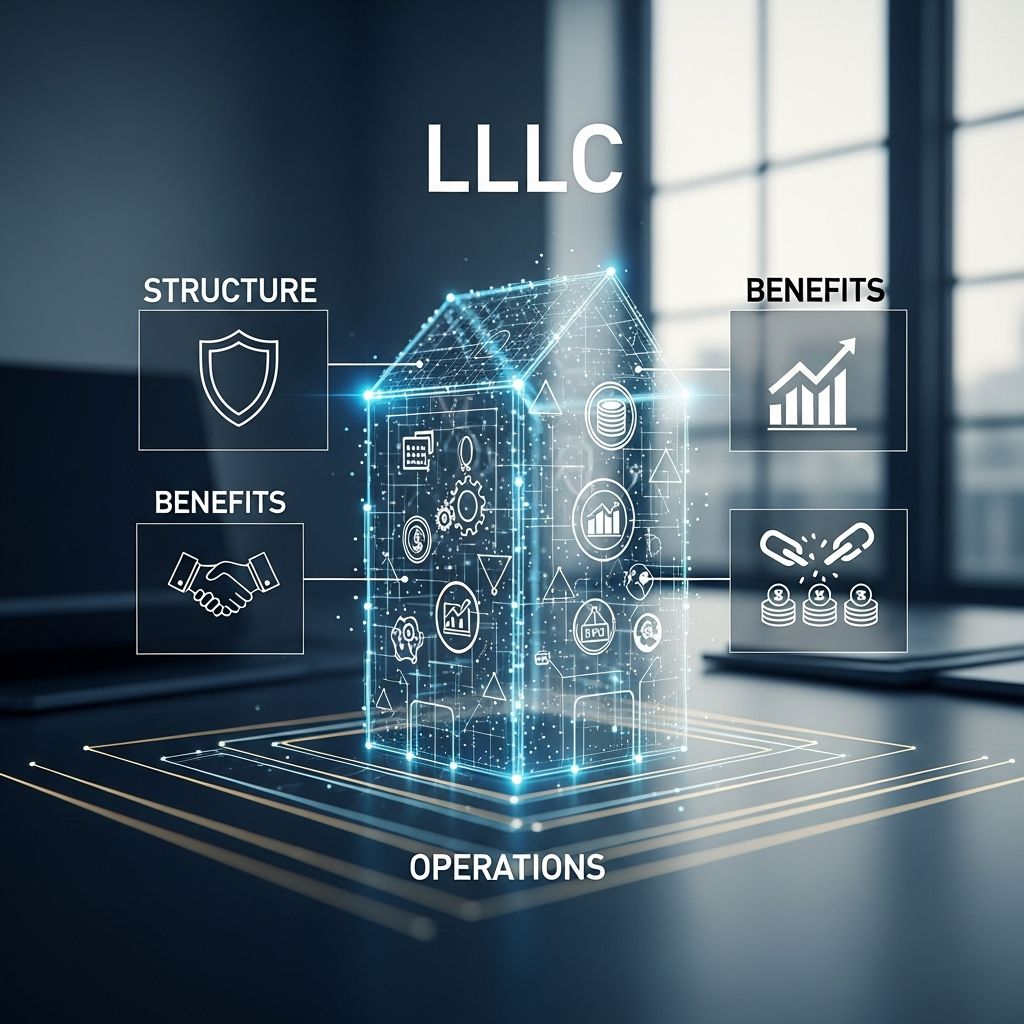
What is a Limited Liability Company?
A Limited Liability Company, commonly referred to as an LLC, represents one of the most popular business structures available to entrepreneurs in the United States. Unlike sole proprietorships where personal and business assets are merged, an LLC creates a legal separation between the owner’s personal wealth and the business’s financial obligations. This fundamental distinction means that if the business faces financial difficulties or legal challenges, the owner’s personal property—such as a home, savings account, or vehicle—remains protected from creditors and lawsuits.
The LLC structure is governed by state statutes, and each state maintains its own set of regulations and requirements for formation and operation. This state-by-state variation means that an entrepreneur forming an LLC in New York will encounter different rules and procedures compared to someone establishing one in Delaware or California. Despite these variations, the core benefits and operational characteristics remain consistent across most jurisdictions.
The Hybrid Nature of LLC Structures
One of the defining characteristics of an LLC is its hybrid composition, blending desirable features from both corporate and partnership business models. From corporations, LLCs inherit the critical advantage of limited liability protection, which shields owners from personal responsibility for company debts and legal judgments. From partnerships, LLCs adopt pass-through taxation, meaning the business entity itself does not pay income taxes; instead, profits and losses flow directly to the owners’ personal tax returns.
This combination creates a uniquely flexible business vehicle that appeals to entrepreneurs seeking protection without the rigid formality and administrative burden typically associated with traditional corporations. The LLC structure allows business owners to maintain control and management authority while enjoying the liability shield that protects their personal assets.
Ownership Structure and Membership
The owners of an LLC are referred to as “members,” a terminology that distinguishes them from shareholders in corporations or partners in partnerships. The flexibility of LLC membership extends to both the number and type of owners permitted. An LLC can operate as a single-member entity with just one owner, making it an ideal choice for solo entrepreneurs just beginning their business journey. Alternatively, multi-member LLCs can have two or more owners, allowing flexibility as businesses grow and expand.
What further distinguishes LLC membership is the diverse range of entities that can serve as members. While individuals naturally comprise many LLC members, the structure also permits corporations, partnerships, other LLCs, trusts, estates, and even foreign entities to hold membership interests in certain states. This flexibility enables sophisticated business structures where one LLC can own another LLC, creating nested corporate hierarchies suited to complex business arrangements.
Ownership stakes in an LLC are represented through “membership interests” rather than corporate shares. These interests are typically expressed as percentages of the overall business, which determine each member’s voting rights, profit distribution rights, and overall control over business decisions. This percentage-based system provides clarity and flexibility in how ownership and control are divided among members.
Limited Liability Protection Explained
The “limited liability” component of an LLC constitutes its most valuable protection mechanism. When properly maintained, this protection ensures that members’ personal assets are separated from business liabilities. Should the LLC face bankruptcy, contract disputes, or legal judgments, creditors cannot pursue the personal assets of individual members to satisfy business debts.
This liability shield operates in multiple directions. If one member acts negligently or commits wrongdoing on behalf of the business, other members generally cannot be held personally responsible for that individual member’s actions. Similarly, the personal debts and obligations of individual members do not attach to the business or other members’ assets.
However, it is crucial to understand that the liability shield is not absolute. Members can pierce the liability protection if they fail to maintain proper separation between personal and business finances, engage in fraudulent activity, or violate state law requirements. Courts may hold members personally liable if they treat the LLC as merely an extension of their personal affairs rather than a distinct legal entity.
Tax Treatment and Financial Flexibility
The tax treatment of LLCs represents a significant advantage over traditional corporate structures. By default, LLCs are treated as pass-through entities for federal tax purposes, meaning the business itself does not pay corporate income tax. Instead, all profits and losses pass through to the members’ personal tax returns, where they are taxed at individual income tax rates. This approach typically results in lower overall tax burden compared to traditional C corporations, which face double taxation—once at the corporate level and again at the individual level when dividends are distributed.
The flexibility extends further because LLC members can elect different tax classifications if doing so benefits their specific situation. A single-member LLC can elect to be treated as a sole proprietorship for tax purposes, while a multi-member LLC can elect partnership taxation. Alternatively, if corporate taxation proves advantageous, an LLC can file IRS Form 8832 to be taxed as a C corporation or S corporation, provided it meets the necessary qualifications.
This flexibility allows business owners to optimize their tax strategy based on their unique circumstances, growth stage, and income levels, providing adaptability that many other business structures cannot match.
Operational Governance and Management Authority
LLCs benefit from substantially fewer regulatory requirements and compliance obligations compared to corporations, making them attractive to entrepreneurs who prefer operational simplicity. The governance structure of an LLC is largely determined by the members themselves through the operating agreement, rather than being prescribed by state statute.
Members can choose between two primary management structures: member-managed or manager-managed. In a member-managed LLC, all members participate directly in operational decisions and day-to-day management. This approach works well for small businesses with few owners who are actively involved. In contrast, a manager-managed LLC designates specific individuals (who may or may not be members) to handle operational decisions while other members maintain a passive investment role. This structure suits larger businesses or situations where some members prefer to remain uninvolved in daily operations.
The flexibility extends to voting arrangements as well. Members can establish voting rights proportional to their ownership percentages, or they can create alternative voting structures where each member receives equal voting power regardless of ownership stake. This customization allows businesses to structure governance in ways that reflect the intentions and relationships of the members.
The Operating Agreement: Your LLC’s Blueprint
While not always legally required by every state, an operating agreement represents one of the most important documents an LLC can create. This internal governance document serves as a comprehensive blueprint outlining how the business will be operated, managed, and dissolved if necessary.
A comprehensive operating agreement typically addresses the following elements:
- Each member’s capital contribution and ownership percentage
- Management structure and decision-making authority
- Member roles, responsibilities, and duties
- Procedures for profit and loss distribution
- Voting rights and requirements for major decisions
- Protocols for admitting new members or transferring ownership interests
- Buy-sell provisions and valuation formulas for member departures
- Dispute resolution mechanisms and procedures for handling conflicts
- Conditions triggering voluntary or involuntary dissolution
The operating agreement functions similarly to a prenuptial agreement, establishing clear expectations and procedures before disputes arise. By addressing these matters proactively, members can avoid costly litigation and misunderstandings that might otherwise damage business relationships. Even in states where operating agreements are not mandatory, creating one demonstrates professionalism and provides essential documentation that courts may reference during disputes.
Formation Requirements and State Variations
Establishing an LLC requires filing formation documents with the appropriate state authority, typically the Secretary of State’s office. The primary document submitted is the Articles of Organization (sometimes called a Certificate of Formation), which provides basic information about the business including its name, registered address, management structure, and member information.
State regulations vary significantly regarding formation requirements, filing fees, ongoing compliance obligations, and renewal procedures. Some states impose minimal requirements and modest filing fees, while others maintain more stringent standards and higher costs. Entrepreneurs must research their specific state’s requirements or consult with a business attorney to ensure complete compliance with local regulations.
Beyond the initial formation documents, some states require LLCs to publish formation notices in local newspapers, maintain registered agents, file annual reports, or renew registrations periodically. Understanding these ongoing obligations is essential to maintaining the LLC’s good standing and preserving the liability protection that makes the structure attractive.
Advantages and Considerations
The LLC structure offers compelling benefits for many entrepreneurs. The liability protection shields personal assets from business risks, while pass-through taxation often reduces overall tax burden. The flexible management structure accommodates various operational preferences, and the reduced regulatory burden minimizes administrative overhead compared to corporations.
Additionally, LLCs can employ creative strategies to address specific business scenarios. Real estate investors, for example, can establish separate LLCs for individual properties, isolating liability to specific assets and preventing cross-liability across the investor’s portfolio. This approach protects other properties if one becomes involved in litigation.
However, prospective LLC owners should consider certain limitations. Self-employment taxes are typically not reduced for LLC members compared to sole proprietors, though certain corporate tax elections may provide relief. Some states impose annual fees or franchise taxes on LLCs regardless of profitability. Additionally, banks and investors may view LLCs as less established than incorporated businesses, potentially affecting access to capital.
Specialized LLC Variations
Beyond the standard LLC structure, several specialized variations exist to serve specific business purposes. An L3C, for instance, combines the legal and tax flexibility of an LLC with the social mission orientation of a nonprofit, allowing entrepreneurs to pursue socially beneficial goals alongside profit generation. This structure appeals to social enterprises seeking to balance financial viability with community impact.
Anonymous LLCs represent another variation, available in certain states where ownership information is not publicly disclosed. This structure provides privacy for members while maintaining liability protection and pass-through taxation benefits. However, anonymity is limited by federal tax obligations and potential state-specific requirements.
Frequently Asked Questions
Q: Can an LLC have just one owner?
A: Yes, most states permit single-member LLCs with just one owner. This structure provides the same liability protection and pass-through taxation as multi-member LLCs, making it ideal for solo entrepreneurs.
Q: What is the difference between an LLC and a corporation?
A: Corporations typically face double taxation and require more formalities, while LLCs offer pass-through taxation and fewer compliance requirements. Both provide liability protection, but LLCs generally offer greater flexibility in management and operations.
Q: Do all states have the same LLC requirements?
A: No, each state maintains different regulations, filing fees, and ongoing compliance requirements for LLCs. Entrepreneurs must research their specific state’s requirements to ensure proper compliance.
Q: Is an operating agreement required?
A: While not required in most states, creating an operating agreement is strongly recommended. It provides legal protection, clarifies member expectations, and helps prevent future disputes by establishing governance procedures in advance.
Q: Can an LLC be taxed as a corporation?
A: Yes, an LLC can elect to be taxed as a C corporation or S corporation by filing appropriate IRS forms, which may provide tax advantages in certain situations.
Q: What types of entities can be LLC members?
A: Members can include individuals, corporations, partnerships, other LLCs, trusts, estates, and foreign entities in most states, providing considerable flexibility in ownership structure.
References
- Articles of Organization for Domestic Limited Liability Company — New York Department of State. Accessed 2026-02-09. https://dos.ny.gov/articles-organization-domestic-limited-liability-company-0
- Limited Liability Company — Wikipedia. Accessed 2026-02-09. https://en.wikipedia.org/wiki/Limited_liability_company
- What is an LLC? Limited Liability Company – Complete Guide — Tailor Brands. Accessed 2026-02-09. https://www.tailorbrands.com/llc-formation/what-is-an-llc
- What Is An LLC? — Salesforce. Accessed 2026-02-09. https://www.salesforce.com/blog/what-is-an-llc/
- Limited Liability Company (LLC) — Internal Revenue Service. Accessed 2026-02-09. https://www.irs.gov/businesses/small-businesses-self-employed/limited-liability-company-llc
Similar Articles








Read full bio of Sneha Tete




