
Living Will vs Durable Power of Attorney
Understand how living wills and durable powers of attorney work together to protect your wishes and your family in a medical crisis.
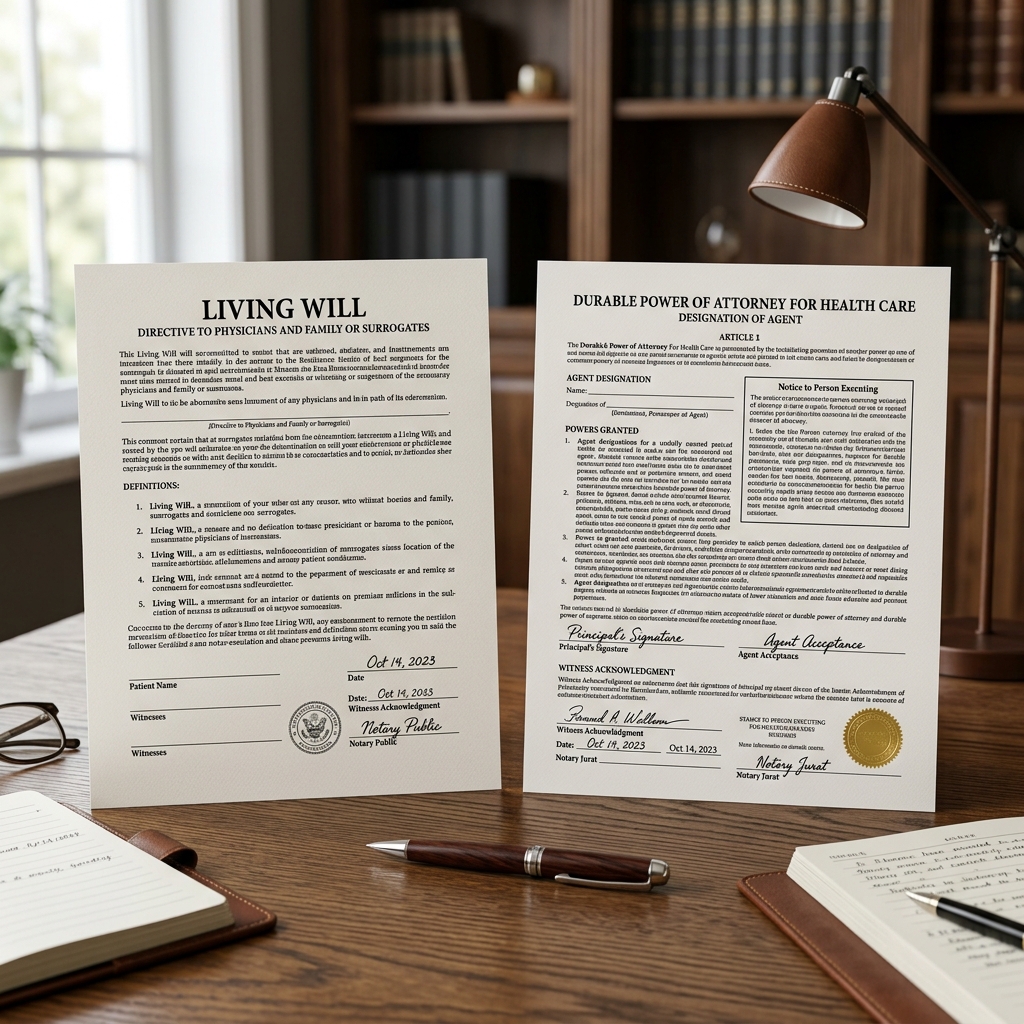
Planning for the possibility of illness or incapacity is uncomfortable, but it is one of the most important steps in protecting yourself and your family. Two core tools in that planning are the living will and the durable power of attorney. Although they are often mentioned together, they serve different purposes and operate in different ways. Understanding how each document works, and how they can complement each other, will help you make thoughtful decisions about your future.
Why These Documents Matter Before a Crisis
Modern medicine can keep people alive in situations that once would have been fatal, and families are frequently asked to make difficult choices about treatment, life support, and long-term care. Advance planning with a living will and durable power of attorney can:
- Clarify your wishes about medical treatment when you cannot speak for yourself.
- Designate a decision-maker you trust to act on your behalf.
- Reduce conflict among relatives by providing clear guidance.
- Prevent delays in treatment or financial management when time is critical.
- Avoid court intervention, such as guardianship proceedings, in many situations.
Without these documents, health care providers may turn to default state laws about who can consent to treatment, and family members may need to seek court orders to manage finances or make complex decisions. That can be stressful, costly, and slow at the very moment rapid decisions are needed.
What Is a Living Will?
A living will is a written, legally recognized statement describing the kinds of medical care you do or do not want if you are unable to communicate and your condition is very serious, often terminal or permanently unconscious. In many states, a living will is part of a broader category called an advance directive or health care directive.
Core Purpose of a Living Will
The main function of a living will is to document your preferences regarding medical treatment so that doctors and hospitals can follow your wishes even when you cannot speak. Typical topics addressed include:
- Use or withdrawal of life-sustaining treatments (such as ventilators or feeding tubes).
- Resuscitation preferences, such as whether to attempt CPR in certain circumstances.
- Pain management and comfort care, including palliative or hospice care.
- Artificial nutrition and hydration in terminal or irreversible conditions.
- Organ and tissue donation preferences after death.
These instructions help clinicians make consistent decisions and provide reassurance to your family that the care you receive reflects your values rather than someone else’s assumptions.
When a Living Will Takes Effect
A living will generally becomes relevant when you are both:
- Unable to communicate or make informed decisions, and
- Facing a terminal illness, irreversible condition, or permanent unconsciousness, as defined by applicable law.
Until those conditions are met, your doctors look to you directly for consent and direction. Once the living will applies, it guides the health care team on whether to start, continue, or stop specific treatments.
Limits of a Living Will
Despite its importance, a living will has limitations:
- It covers medical care only; it does not control financial matters or property.
- It typically focuses on end-of-life or very serious situations, not every routine medical decision.
- It provides instructions but does not appoint a person to interpret or enforce those instructions in new or unexpected scenarios.
Because no document can anticipate every possible medical scenario, many people combine a living will with a durable power of attorney for health care to fill in the gaps.
What Is a Durable Power of Attorney?
A durable power of attorney (DPOA) is a legal document that authorizes another person, called your agent or attorney-in-fact, to act on your behalf if you are unable to act yourself. The term durable means the authority continues even if you become incapacitated.
Types of Durable Power of Attorney
Durable powers of attorney generally fall into two broad categories:
- Durable power of attorney for health care (sometimes called a health care proxy or medical power of attorney), authorizing your agent to make medical decisions when you cannot.
- Durable power of attorney for finances, allowing your agent to manage money, property, and legal affairs according to the authority you grant.
Some people use separate documents for health care and financial powers, while others use one comprehensive document that covers both. State law and personal preference typically determine the structure.
Scope of Authority Under a DPOA
The power you grant can be narrow or broad, depending on how the document is drafted. Examples of actions a DPOA may authorize include:
- Consenting to or refusing medical treatments on your behalf.
- Choosing doctors, hospitals, or care facilities for your treatment.
- Managing bank accounts, paying bills, and handling taxes.
- Buying or selling property, handling insurance claims, and signing legal documents.
- Arranging long-term care services and coordinating with nursing homes or home health agencies.
The document can limit the agent to specific tasks, or it can confer broad discretion, subject to your expressed wishes and applicable law.
When a Durable Power of Attorney Becomes Effective
A DPOA for health care typically becomes effective when you are determined to be unable to make or communicate medical decisions, which may be a temporary or permanent condition. In contrast, a DPOA for finances may:
- Take effect immediately upon signing, allowing the agent to help with tasks right away, or
- Spring into effect only upon incapacity, as defined in the document.
Because these choices significantly affect your privacy and control, most people discuss timing carefully with a lawyer before signing.
Side-by-Side Comparison: Living Will and Durable Power of Attorney
Although both documents are part of incapacity planning, they perform different roles. The following table summarizes key distinctions.
| Feature | Living Will | Durable Power of Attorney (Health Care Focus) |
|---|---|---|
| Main function | States your medical treatment preferences in writing. | Names an agent to make decisions on your behalf. |
| Who decides? | Your prior written instructions guide the care team. | Your agent decides, using your values and any written guidance. |
| Scope of decisions | Typically limited to serious or end-of-life medical care. | Broader medical decisions; may also include financial authority if drafted that way. |
| Activation | When you are incapacitated and in defined serious conditions (terminal, irreversible, or permanently unconscious). | When you are unable to decide or communicate; financial powers may start immediately or upon incapacity. |
| Covers finances? | No, medical decisions only. | Yes, if the document grants financial powers; otherwise health care only. |
| Decision-maker named? | No agent is appointed. | Yes, one or more agents are appointed. |
How Living Wills and DPOAs Work Together
In practice, a living will and a durable power of attorney for health care are often used together as part of a comprehensive advance directive plan. The combination offers several advantages:
- Written guidance from your living will gives your agent clear starting points for decisions.
- Flexibility from the DPOA allows your agent to respond to unexpected situations not covered in the living will.
- Continuity across medical and financial matters when one person or coordinated persons are authorized to act.
- Reduced burden on family, because they are implementing your expressed wishes rather than guessing what you would have wanted.
Some sources note that, where specific instructions in a living will conflict with a health care agent’s judgment, the written directive generally controls, subject to state law. This reinforces the importance of keeping both documents consistent and up to date.
Legal and Formal Requirements
Both living wills and durable powers of attorney must meet formal requirements to be valid, and these rules vary by jurisdiction. Common elements include:
- Written form: The document must be in writing.
- Signature: You must sign, or direct someone to sign on your behalf, while of sound mind.
- Witnesses: Many states require one or more adult witnesses, and some restrict witnesses with financial or health care interests.
- Notarization: A notary public may be required, especially for powers of attorney affecting property or financial rights.
- Specific language: Statutes sometimes provide model forms or mandatory clauses for health care directives and financial powers.
Because details are state-specific, most people benefit from consulting local law or legal counsel when drafting or signing these documents.
Choosing the Right Agent
For a durable power of attorney, selecting the right agent is one of the most consequential decisions you will make. Estate planning professionals often recommend choosing someone who:
- Understands your values and priorities regarding medical care and finances.
- Is willing and able to make difficult decisions under pressure.
- Can communicate clearly with doctors, family members, and financial institutions.
- Will act in your best interests, even if other relatives disagree.
- Is organized enough to manage paperwork, deadlines, and long-term responsibilities.
You may name alternate or successor agents, in case your first choice is unavailable or unwilling to serve when needed. It is also wise to discuss your wishes openly with your chosen agent so they are not surprised by the role.
Common Misconceptions and Pitfalls
People often have misunderstandings about these documents that can lead to problems. Some of the most frequent issues include:
- Assuming one document is enough: A living will without a health care agent may leave gaps; a DPOA without clear instructions may burden the agent with uncertainty.
- Not updating after life changes: Marriage, divorce, new children, or change in health can make old documents outdated.
- Failing to distribute copies: If no one can find your documents in an emergency, it is as if they do not exist.
- Choosing an agent without discussing expectations: Surprises and vague guidance can increase stress and conflict.
- Ignoring state-specific requirements: An improperly executed document may be questioned or rejected by providers or courts.
Practical Steps to Get Started
If you are ready to put these protections in place, consider the following practical steps:
- Clarify your values about quality of life, aggressive treatment, and comfort care.
- Speak with your physician about typical decisions in serious illness or injury.
- Decide whom you trust to act as your health care and financial agent.
- Consult a lawyer or reputable legal resource familiar with your state’s requirements.
- Complete and properly sign your living will and durable power of attorney documents.
- Provide copies to your agent, primary care doctor, and close family members.
- Review your documents every few years, or after major life events, to keep them current.
Frequently Asked Questions
Do I need both a living will and a durable power of attorney?
In many cases, yes. A living will records your preferences for specific treatments, while a durable power of attorney appoints a person to make decisions when new or complex situations arise. Using both together generally offers stronger protection and clearer guidance than relying on either one alone.
Can my health care agent override my living will?
Generally, your written directives in a valid living will are meant to guide and sometimes constrain your agent’s decisions. Some states explicitly provide that the living will takes precedence where there is a conflict. However, the agent often has discretion in situations not addressed by the document. It is important to keep your instructions clear and to talk with your agent so that your expectations are understood.
Does a durable power of attorney end when I die?
Yes. Powers of attorney typically terminate at death, after which your will or other estate planning documents govern what happens to your property. A DPOA is designed for decision-making during your lifetime when you are incapacitated, not for post-death administration.
Is a living will the same as a Do Not Resuscitate (DNR) order?
No. A living will is a broader advance directive that can address many kinds of treatment preferences, while a DNR order is a specific medical order telling providers not to attempt CPR in defined circumstances. DNR orders are usually written by a physician and placed in your medical record; your living will may inform whether a DNR is appropriate, but they are not identical.
Can I change or revoke these documents?
In most jurisdictions, you may amend or revoke your living will and durable power of attorney as long as you are of sound mind and follow applicable legal procedures. If you change your documents, be sure to notify your agent, family, and medical providers and provide updated copies so they do not rely on outdated instructions.
References
- Living Will & Durable Power of Attorney for Health Care — U.S. Air Force Judge Advocate General Corps. 2018-05-01. https://www.mountainhome.af.mil/Portals/102/Documents/JAG%20Brochures/Living%20Will%20and%20Durable%20Power%20of%20Attorney%20for%20Health%20Care.pdf
- Living Will vs. Power of Attorney: Key Differences — Woods & Bates, P.C. 2023-06-15. https://woodsandbates.com/living-will-poa/
- Living Wills vs. Durable Powers of Attorney: What’s Right for You? — Silverman, Jaffe & Klestzick. 2022-09-20. https://www.silvermanjaffe.com/blog/living-wills-vs-durable-powers-of-attorney-whats-right-for-you/
- Living Will vs Power of Attorney: What’s the Difference? — Frame & Frame Attorneys at Law. 2022-03-10. https://frameandframe.com/blog/living-will-vs-power-of-attorney/
- Living Will vs Power of Attorney — Trust & Will. 2023-04-05. https://trustandwill.com/learn/living-will-vs-power-of-attorney
Similar Articles








Read full bio of Sneha Tete


