
Life After Prison: Monitoring and Managing Sex Offenders
How electronic monitoring, registration, and supervision shape community safety and reentry for convicted sex offenders.
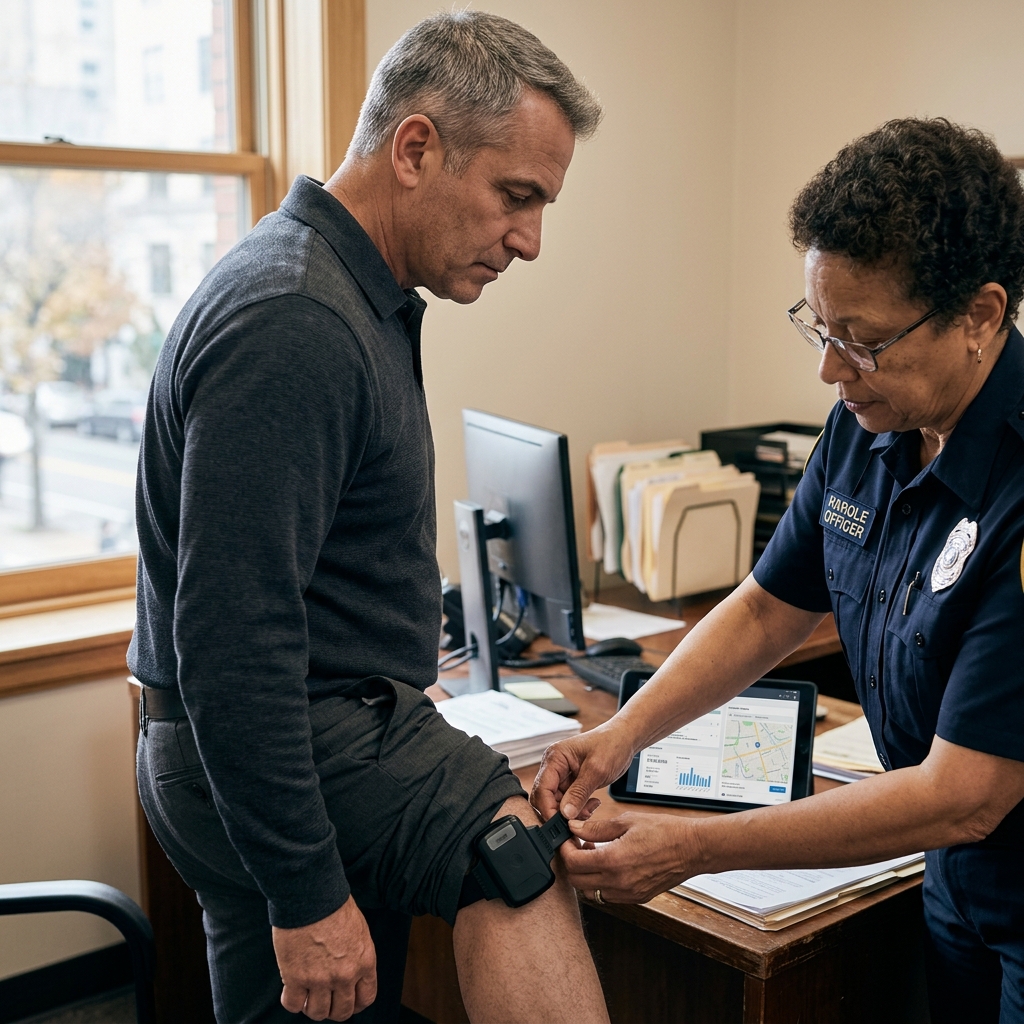
When a person convicted of a sexual offense leaves prison, their sentence is not truly over. Most jurisdictions in the United States place sex offenders under intensive community supervision, combining registration requirements, electronic monitoring, treatment, and strict rules about where they can live and work. These measures aim to reduce the risk of future offending while balancing constitutional rights and practical challenges of reentry.
Understanding Post‑Release Sex Offender Management
Sex offender management after prison is built around a central goal: protecting community safety while allowing individuals to reintegrate and rebuild their lives. Corrections agencies, law enforcement, treatment providers, and victim advocates typically work together in what is often called a “containment” or multi-disciplinary model.
- Public safety focus – preventing new sexual offenses is the primary objective.
- Ongoing accountability – offenders must follow detailed supervision rules, often for many years.
- Risk-based approach – higher‑risk individuals receive more intensive monitoring, such as GPS tracking.
- Treatment and support – many systems combine therapy with supervision to address underlying behavior and risk factors.
According to federal data synthesized by the U.S. Department of Justice’s SMART Office, observed sexual recidivism rates among adult sex offenders range roughly from 5% after three years to about 24% after fifteen years. While these figures are lower than many assume, overall reoffending for any crime remains substantial, which supports continued supervision and monitoring.
Core Elements of Sex Offender Monitoring After Prison
Most sex offender management schemes rely on several interlocking components. The exact mix varies by state, but common elements include:
1. Registration and Community Notification
Individuals convicted of qualifying sexual offenses are generally required to register as sex offenders with local law enforcement. Registration typically includes personal information, current address, employment details, and other identifiers.
- Regular updates when a person moves, changes jobs, or attends school.
- Penalties for failing to register or report changes.
- Public access to some information through state sex offender registries.
These registries are meant to help communities remain informed and to support police investigations, though research continues to debate how strongly they affect recidivism.
2. Supervision Through Probation or Parole
Many sex offenders leave prison under probation or parole, which imposes conditions that can be more restrictive than those for other offenses. Typical rules include:
- Curfews and geographic restrictions.
- Limits on contact with minors or specific groups.
- Prohibitions on certain jobs or internet use.
- Mandatory attendance at treatment or counseling.
Violating these conditions can lead to sanctions or return to custody. National data indicate that a significant share of sex offenders are sent back to prison within three years, often for technical violations rather than new sex crimes.
3. Electronic and GPS Monitoring
Electronic monitoring (EM) is one of the most visible tools used to manage sex offenders after release. Technology can include GPS ankle bracelets, radio-frequency tags, and smartphone-based location monitoring.
| Monitoring Tool | Key Features | Common Uses |
|---|---|---|
| GPS ankle monitor | Real-time location tracking, geofencing alerts. | High-risk offenders, lifetime monitoring in some states. |
| Radio-frequency device | Verifies presence at home during certain hours. | Curfew enforcement and basic supervision. |
| Mobile app monitoring | Smartphone-based location and communication tools. | Supplement or alternative to wearable devices. |
Research summarized by the UK College of Policing and U.S. agencies indicates that GPS monitoring can be associated with lower recidivism among high‑risk sex offenders compared with traditional supervision alone. In one California study cited by the National Institute of Justice, individuals on GPS had significantly lower rates of reoffending than similar parolees without GPS, despite slightly higher daily costs.
4. Treatment and Behavioral Interventions
Evidence-based sex offender treatment typically focuses on changing patterns of thinking and behavior that contribute to offending. Under containment-style programs, therapy is integrated with supervision and monitoring.
- Cognitive-behavioral therapy to address distorted beliefs and risk factors.
- Relapse prevention planning to manage high-risk situations.
- Use of specialized assessments to evaluate risk and needs.
Treatment participation has been linked to lower recidivism for sexual offending, particularly over longer follow-up periods, compared to similar offenders who receive no structured intervention.
Legal Framework: How Laws Shape Monitoring
State and federal laws define the boundaries of sex offender monitoring. Some legislation is particularly influential because it establishes lifetime GPS tracking, extended parole, or strict residency restrictions.
Jessica’s Law and Similar Statutes
In California, for example, “Jessica’s Law” increased penalties for certain sexual offenses, broadened definitions, removed some early-release credits, and mandated lifelong GPS monitoring for high‑risk sex offenders. Similar laws in other states require long-term or lifetime GPS tracking for specific offenses.
Nationally:
- At least 22 states have enacted laws requiring GPS technology to track sex offenders.
- At least seven states mandate lifetime GPS monitoring for some sexual offenses.
These measures raise important questions about proportionality, privacy, and cost, but they reflect strong public and legislative interest in long-term oversight for serious sexual crimes.
The Containment Model in Law and Policy
California’s Sex Offender Management Program (SOMP) illustrates how law and policy come together in practice. The program uses a containment model with four key elements: supervision, treatment, polygraph testing, and victim advocacy.
- Supervision – coordinated oversight by parole officers and other agents.
- Treatment – specialized therapy addressing sexual offending behaviors.
- Polygraph – periodic examinations to encourage honesty and disclose risk-relevant information.
- Victim advocacy – ensuring victims’ perspectives and safety concerns remain central.
This type of integrated approach is increasingly common across jurisdictions to support consistent and informed decision-making about risk.
Balancing Risk, Rights, and Practical Challenges
Monitoring sex offenders after prison involves navigating several difficult trade-offs. Policymakers and practitioners must weigh public protection against individual rights, resource constraints, and the realities of reentry.
Risk and Recidivism
Although some sexual offenders pose significant risk, overall sexual recidivism rates are lower than commonly believed. Analyses of large samples of released sex offenders have reported sexual rearrest rates of around 5% over three years and higher rates of reoffending for non-sexual crimes.
- Sexual recidivism: roughly 5–6% at three years in some large studies.
- Any new offense: around 40–50% rearrested within three years.
- Many returns to prison stem from technical violations (breaking supervision rules) rather than new sexual crimes.
These figures support targeted monitoring strategies: intensive surveillance for those assessed as high risk, combined with tailored treatment and supervision for others.
Homelessness and Housing Restrictions
Housing is a major challenge for sex offenders returning to the community. Residency restrictions near schools, parks, or other locations frequented by children can make it extremely difficult to find legal housing, occasionally contributing to homelessness.
For homeless sex offenders, traditional supervision that relies on a known residential address may be less effective. Some researchers argue that GPS and other electronic monitoring tools can provide an alternative way to maintain consistent oversight and manage risk for individuals without stable housing.
Costs and Resource Allocation
GPS monitoring is more expensive than standard probation or parole supervision on a daily basis, but studies have suggested that the added cost may be justified by reductions in reoffending and improved compliance.
- Daily costs for GPS supervision in California have been reported at roughly higher than traditional supervision.
- Despite extra cost per day, reduced recidivism may lower overall societal and system costs related to new crimes.
These cost-benefit questions remain central to debates about expanding electronic monitoring programs.
Public Perceptions and Myths
Public attitudes toward sex offender monitoring are shaped by strong emotions, media coverage, and misconceptions about typical recidivism rates. Research on public perceptions of GPS monitoring for sex offenders has found that:
- Many people view GPS/EM as highly effective in reducing sexual reoffending.
- Belief in common myths (such as very high universal recidivism) can influence support for intensive monitoring.
- Parents may be uncertain about how effective GPS actually is, suggesting a need for clearer public education.
Accurate communication about risk, evidence, and limitations is critical for informed public debate.
Experiences of Sex Offenders on Supervision
Qualitative research with sex offenders on parole highlights the human side of post-release monitoring. Participants often describe the process of community reintegration as stressful, highly regulated, and at times stigmatizing, but also as an opportunity to change.
- Heavy restrictions on movement and social contact can create isolation.
- Compliance with strict rules may feel burdensome, yet noncompliance carries serious consequences.
- Treatment and supervision can provide structure and support, helping some individuals maintain stable lives without reoffending.
These perspectives underscore the importance of designing monitoring systems that are firm but fair, and that support genuine rehabilitation in addition to surveillance.
Emerging Technologies and Future Directions
Advances in technology are changing what is possible in sex offender monitoring. In addition to traditional GPS ankle monitors, agencies are exploring combinations of location tracking, biometric data, and mobile platforms to enhance supervision.
- Improved GPS accuracy and battery life for wearable devices.
- Mobile apps that allow secure communication, check-ins, and data sharing.
- Data analytics to identify patterns of behavior that may signal elevated risk.
As these tools evolve, policymakers will need to evaluate their real-world impact on reoffending, costs, privacy, and fairness. Evidence-based decision-making, drawing on rigorous research rather than assumptions, will be essential.
Practical Takeaways for Communities and Policymakers
- Combine supervision, treatment, and monitoring rather than relying on any single strategy.
- Use risk assessment to match monitoring intensity to individual risk.
- Address housing and employment barriers to reduce instability and homelessness among sex offenders.
- Provide transparent information to the public about evidence, limitations, and realistic expectations.
Thoughtful, evidence-driven policies can help ensure that sex offender monitoring after prison protects the public without unnecessarily undermining the possibility of lawful, stable reentry.
FAQs About Sex Offender Monitoring After Prison
Do all sex offenders wear GPS monitors after release?
No. GPS monitoring is typically reserved for higher-risk offenders or those convicted of particular offenses, depending on state law. Some states require lifetime GPS tracking for certain crimes, while others use GPS only during a period of parole or probation.
Does GPS monitoring eliminate the risk of reoffending?
GPS monitoring cannot eliminate risk, but studies suggest it can reduce recidivism compared with traditional supervision alone, especially for high-risk groups. It also improves compliance with supervision conditions by quickly flagging violations.
Are sexual recidivism rates as high as many people believe?
Large-scale research indicates that sexual recidivism rates are generally lower than common public estimates. Some studies report around 5% sexual rearrest over three years, with higher rates for non-sexual crimes. Nonetheless, ongoing monitoring is used because the consequences of sexual reoffending are serious.
Why are residency restrictions controversial?
Residency rules that bar sex offenders from living near schools, parks, or other locations can make it difficult to find housing and may contribute to homelessness. Critics argue that unstable housing can undermine effective supervision, while supporters see these rules as necessary for child safety.
What role does treatment play in sex offender management?
Treatment is a central component of many management programs. Evidence-based therapies, combined with supervision and monitoring, aim to reduce risk by addressing the specific behaviors, attitudes, and circumstances that led to offending.
References
- Electronic Monitoring of Homeless Sex Offenders — Cicero Institute. 2021-06-01. https://ciceroinstitute.org/research/electronic-monitoring-of-homeless-sex-offenders/
- Reintegration with Freedom for Registered Sex Offenders in California — Corrections1 / National Institute of Justice summary. 2023-03-15. https://www.corrections1.com/probation-and-parole/reintegration-with-freedom-for-registered-sex-offenders-in-california
- Chapter 5: Adult Sex Offender Recidivism — U.S. Department of Justice, SMART Office. 2017-01-01. https://smart.ojp.gov/somapi/chapter-5-adult-sex-offender-recidivism
- Public Perceptions of GPS Monitoring for Convicted Sex Offenders — DC Justice Lab. 2024-05-01. https://dcjusticelab.org/wp-content/uploads/2024/05/Public_Perceptions_of_GPS_Monitoring_for_Convicted.pdf
- Sex Offender Information – Division of Adult Parole Operations — California Department of Corrections and Rehabilitation (CDCR). 2022-08-10. https://www.cdcr.ca.gov/parole/sex-offender-facts/
- The Challenges of GPS and Sex Offender Management — Federal Probation / U.S. Courts. 2010-09-01. https://www.uscourts.gov/sites/default/files/74_2_8_0.pdf
- Results from a Qualitative Study with Sexual Offenders on Parole — Journal of Offender Rehabilitation, via PubMed Central. 2015-06-01. https://pmc.ncbi.nlm.nih.gov/articles/PMC12214287/
Similar Articles








Read full bio of Sneha Tete




