
Understanding Liability in Rental Car and Pedestrian Accidents
Learn how fault, insurance, and negligence rules work in rental car crashes, pedestrian collisions, and other complex accident scenarios.
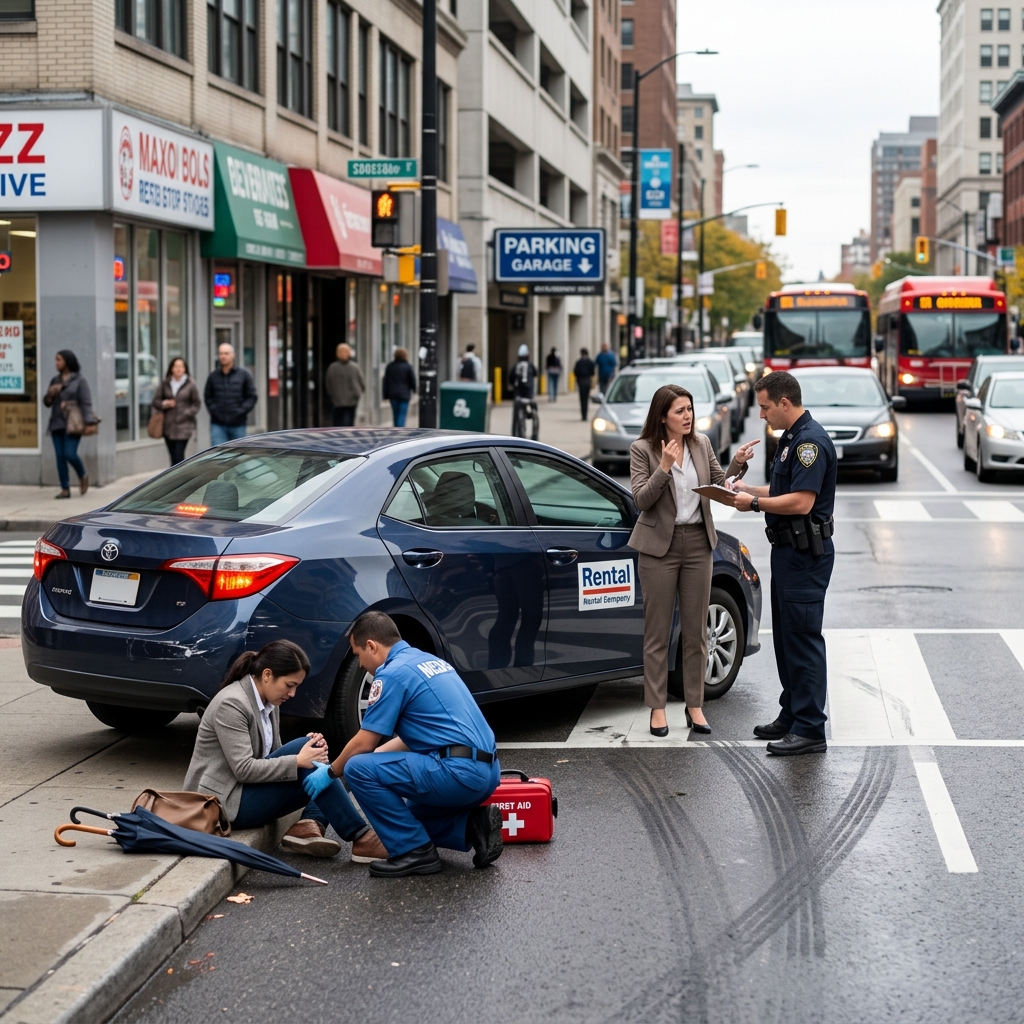
Motor vehicle collisions are rarely straightforward, and certain situations raise especially complex questions about fault, insurance coverage, and legal responsibility. Rental car crashes, accidents involving pedestrians or cyclists, and multi-party collisions often require a careful look at state law, insurance policies, and the behavior of everyone involved.
This guide explains how liability typically works in these special cases, what kinds of insurance policies may apply, and practical steps you can take to protect your rights if you are injured or accused of causing a crash.
Key Types of Complex Motor Vehicle Accidents
While every collision is unique, certain categories frequently raise additional legal and insurance complications beyond a standard two-car crash.
- Rental car accidents involving personal or business use
- Pedestrian collisions when a person on foot is hit by a vehicle
- Bicycle accidents where cyclists share the road with motor vehicles
- Multi-party accidents in which fault is divided among several people
In all of these settings, liability depends on who was negligent—that is, who failed to use reasonable care under the circumstances—combined with the specific fault rules of the state where the crash occurred.
How Rental Car Insurance Typically Works
Many drivers assume a rental car comes with full protection, but the reality is more nuanced. Liability and property damage coverage usually depend on a combination of your own auto policy and any optional protection purchased at the rental counter.
Your Personal Auto Policy and Rental Cars
In most states, a driver’s personal auto insurance policy extends to any vehicle they operate, including rental cars used for personal purposes.
- Your liability coverage (for injuries and property damage you cause to others) usually applies to rental vehicles.
- The coverage limits on the rental car are typically the same as the limits on your own vehicle.
- Standard policies often exclude business use; using a rental car for commercial activity may require separate commercial auto insurance.
It is critical to review your policy or speak with your insurer before renting to confirm what is—and is not—covered if an accident occurs.
Liability-Only Policies and Damage to the Rental Vehicle
Many drivers carry liability-only policies, which protect against claims from other people but do not cover damage to the vehicle you are driving.
- If you carry liability-only coverage, your own insurer often will not pay for collision damage to the rental car itself.
- You may be personally responsible for repair bills, loss-of-use charges, or other fees assessed by the rental company if the vehicle is damaged.
- Optional collision damage waivers or loss-damage waivers sold by rental agencies can shift this risk back to the company, subject to contract terms.[10]
Optional Coverage Offered by Rental Car Companies
Rental companies typically offer several forms of optional protection. While names vary, common options include:[10]
- Collision Damage Waiver (CDW): Reduces or eliminates your obligation for physical damage to the rental car, with exceptions for certain conduct (such as reckless driving).
- Supplemental Liability Insurance: Provides additional liability coverage beyond your personal policy limits.
- Personal Accident Insurance: Offers limited medical and death benefits to you and passengers.
Choosing among these options depends on your existing insurance, your risk tolerance, and the state’s minimum coverage requirements. Comparing the terms and exclusions before you sign can prevent surprises if a crash occurs.[10]
Business Use, Commercial Policies, and Rental Cars
Insurance rules often change when a vehicle is used for business purposes. Many personal policies exclude coverage for commercial activities such as deliveries or ride-for-hire services.
| Use Type | Likely Coverage Source | Common Issues |
|---|---|---|
| Personal leisure travel | Personal auto policy; optional rental coverage | Liability usually covered; property damage depends on policy and waivers. |
| Business travel for employer | Employer’s commercial policy; personal policy as secondary | Disputes over primary vs. excess coverage and scope of employment. |
| Delivery or ride-hailing work | Special commercial or platform-specific policies | Personal auto policies often exclude this type of use. |
Fault and Liability When Someone Else Drives Your Rental
Rental agreements typically list authorized drivers. If someone else operates the vehicle and causes a crash, liability can extend to both the driver and the person who rented the car, depending on state law and contract terms.
- The driver who was operating the car at the time of the collision is usually primarily responsible for injuries and property damage.
- The renter may share legal responsibility, particularly for damage to the rental vehicle under the rental contract.
- The driver’s personal auto insurance often provides the first layer of coverage, while the renter’s policy or rental-company coverage can be secondary.[10]
If an unauthorized driver uses the car, coverage can be more limited and the renter may face additional contractual liability to the rental company.[10]
Pedestrian and Cyclist Accidents: Presumptions and Proof of Fault
Collisions involving pedestrians or cyclists are especially serious and often involve complex questions of fault, medical damages, and long-term impact. Some states adopt legal presumptions about driver responsibility, while others simply apply general negligence rules.
Presumption of Fault When Vehicles Strike Pedestrians or Cyclists
A number of jurisdictions treat accidents involving vulnerable road users—such as pedestrians and bicyclists—as presumptively the driver’s fault, particularly when traffic laws were violated.
- If a driver hits a pedestrian while disobeying a traffic signal or speed limit, fault may be presumed against the driver.
- This presumption can sometimes be challenged if evidence shows the pedestrian or cyclist acted negligently, such as darting into traffic unexpectedly.
- Police reports, witness statements, and video footage often play a key role in determining whether the presumption stands.
Even where no formal presumption exists, drivers have a duty to exercise particular care around crosswalks, school zones, and other areas where pedestrians are likely to be present.
Pedestrian Claims and Available Insurance Coverage
An injured pedestrian frequently has multiple potential sources of insurance coverage, depending on the state and the circumstances.
- They may file a claim against the driver’s liability policy for medical bills, lost wages, and pain and suffering.
- In some no-fault states, pedestrians can access personal injury protection (PIP) benefits even if they do not own a car or have their own policy.
- Additional coverage may be available through their own health insurance or uninsured/underinsured motorist benefits, depending on policy terms.
Navigating these options often requires legal advice, especially when multiple insurers dispute who should pay or how much.
Comparative and Contributory Negligence: How Shared Fault Affects Recovery
When more than one person contributes to an accident, states use different systems to decide whether an injured party can still recover compensation and how much their damages should be reduced. The most common approaches are modified comparative negligence and pure contributory negligence.
Modified Comparative Negligence
Under modified comparative negligence, an injured person can recover damages only if their share of fault remains below a specific threshold—often 50% or 51%.
- If you are less than 50% at fault, you may recover damages, but the amount is reduced in proportion to your responsibility.
- If you are 50% or more at fault, some states bar recovery entirely, meaning you collect nothing from the other party or their insurer.
- These rules apply in many types of accidents, including rental car crashes and pedestrian collisions, whenever both sides share blame.
Pure Contributory Negligence
A handful of states use a much stricter doctrine called pure contributory negligence. In these jurisdictions, even minimal fault by the injured person can prevent any recovery.
- If you are found to be even 1% at fault, you may be barred from recovering damages from other parties.
- This rule can have serious consequences for pedestrians or cyclists, who may be accused of contributing to the collision by their actions.
- Because the standard is so strict, proving that the other party bears 100% of the blame becomes especially important.
Regardless of the doctrine, accident victims generally benefit from gathering strong evidence and consulting legal counsel to clarify how fault will affect their case.
Practical Steps After a Rental Car or Pedestrian Accident
Immediate actions after an accident can significantly influence both safety outcomes and the strength of any later claim or defense. Many experts and legal guides recommend a similar set of steps for rental car crashes and pedestrian collisions.[10]
Safety and Emergency Response
- Check for injuries and call emergency services (911) if anyone appears hurt or if there is significant property damage.[10]
- Move to a safe location if possible, but avoid leaving the scene before law enforcement arrives.
- Render reasonable aid to injured persons while awaiting medical professionals.
Documentation and Information Gathering
- Exchange names, phone numbers, addresses, and insurance details with drivers, vehicle owners, and injured pedestrians.[10]
- Collect contact information from witnesses who saw the crash occur.[10]
- Take photographs of vehicles, skid marks, traffic signals, crosswalks, and any visible injuries.[10]
- Request a copy of the police report or note the report number for reference.
Communicating with Insurers and Rental Companies
- Notify your auto insurance company promptly and provide truthful information about the crash.[10]
- Contact the rental car company using the phone number in your rental agreement if a rental vehicle is involved.[10]
- Avoid admitting fault or making speculative statements; stick to facts and let investigations determine liability.[10]
Legal Advice and Representation
When injuries are significant, or liability is disputed, consulting an attorney experienced in motor vehicle and pedestrian accidents can be critical.[10]
- A lawyer can help identify all potential defendants and insurance policies that might provide coverage.
- They can negotiate with insurers, gather evidence, and file a lawsuit if a fair settlement is not offered.
- In states with short statutes of limitations, timely legal action is essential to preserve your rights.
Frequently Asked Questions (FAQ)
1. Does my personal auto insurance always cover rental car accidents?
In many states, a personal auto policy extends to rental cars used for personal reasons, providing liability coverage up to your existing limits. However, coverage for damage to the rental vehicle itself may be limited, especially if you have liability-only insurance, and business use may be excluded. Reviewing your policy and speaking with your insurer before renting is the safest approach.
2. If I hit a pedestrian, am I automatically at fault?
Some jurisdictions presume fault on the part of a driver who hits a pedestrian or cyclist, particularly if traffic laws were violated. Even without a formal presumption, drivers must exercise heightened care around people on foot. That said, pedestrians can also be negligent—for example, by entering traffic unexpectedly—and the final determination of liability usually depends on all the evidence.
3. Can a pedestrian recover compensation if they were partly at fault?
In states that follow modified comparative negligence, a pedestrian can recover damages as long as their share of fault remains below a threshold such as 50%. Their award is reduced by their percentage of responsibility. In pure contributory negligence states, even a small degree of fault may bar recovery altogether. Understanding the local fault rules is crucial.
4. What should I do if my friend causes a crash while driving my rental car?
If your friend is listed as an authorized driver, they are typically primarily liable for injuries and property damage, and their personal auto insurance should respond first. As the renter, you may still have contractual responsibility to the rental company for damage to the vehicle, depending on the terms of the rental agreement and any waivers you purchased.[10]
5. Why is comparative negligence important in rental and pedestrian accidents?
Comparative negligence rules determine how damages are divided when multiple parties share fault. In rental car and pedestrian cases, it is common for both the driver and the injured person to bear some responsibility. These rules affect whether an injured party can recover anything and how much their compensation is reduced, making accurate fault assessment essential.
References
- Liability in Unique Motor Vehicle Accidents: FAQ — FindLaw. 2024-01-15. https://www.findlaw.com/injury/car-accidents/special-cases-rentals-pedestrians-and-more.html
- Car Accidents With Pedestrians — Anthem California EAP. 2023-06-01. https://www.anthemeap.com/anthem-california/find-legal-support/resources/consumer-rights/legal-assist/car-accidents-with-pedestrians
- Michigan Pedestrian Accident Lawyer — Buckfire Law Firm. 2023-03-10. https://buckfirelaw.com/case-types/pedestrian-accidents/
- When an Accident Occurs in a Rental Car — Whit A. Thomas, Attorney at Law. 2022-07-18. https://www.wathomaslaw.com/blog/when-an-accident-occurs-in-a-rental-car/
- The Ultimate Guide to Rental Car Accidents — TorkLaw. 2023-09-05. https://www.torklaw.com/guides/rental-car-accident-guide/
- Michigan Pedestrian Accident Attorneys — Grewal Law PLLC. 2023-04-20. https://www.4grewallaw.com/personal-injury/pedestrian-accidents/
- Liability for Rental Car Accident Caused by Friend in CA? — Justia Ask a Lawyer. 2025-09-19. https://answers.justia.com/question/2025/09/19/liability-for-rental-car-accident-caused-1076612
Similar Articles








Read full bio of Sneha Tete


