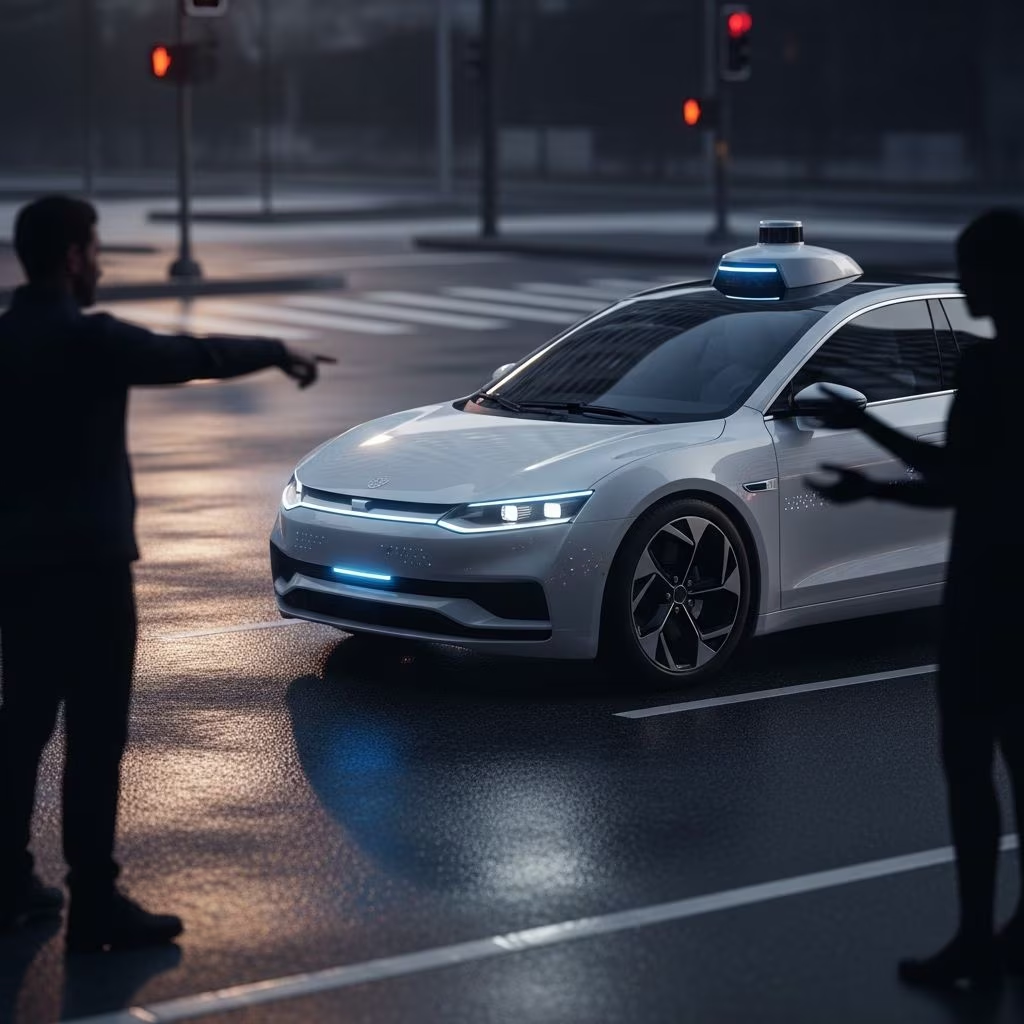
Autonomous vehicles, once the stuff of science fiction, now share roads with traditional cars, raising profound questions about responsibility when crashes occur. Unlike conventional accidents where fault typically falls on a negligent driver, self-driving car incidents involve layers of technology, software algorithms, and human oversight, complicating the path to compensation. This article delves into the evolving legal landscape, helping victims understand their options and the parties potentially held accountable.
Understanding Levels of Vehicle Automation
Grasping the degree of automation is crucial for pinpointing liability. The Society of Automotive Engineers (SAE) defines six levels, from no automation (Level 0) to full self-driving capability (Level 5). Most vehicles today operate at Levels 2 or 3, where human drivers must remain attentive and ready to intervene.
- Level 2 (Partial Automation): Features like adaptive cruise control and lane-keeping assist require constant human supervision.
- Level 3 (Conditional Automation): The car handles most driving tasks but demands driver takeover in complex scenarios.
- Level 4/5 (High/Full Automation): No human input needed, even in adverse conditions, shifting blame primarily to the system’s designers.
In lower levels, drivers bear primary responsibility for monitoring systems; failures to do so can lead to negligence claims. Higher levels point fingers at manufacturers for algorithmic or sensor shortcomings.
Key Parties Potentially Liable in AV Accidents
Determining fault in autonomous vehicle (AV) crashes often involves multiple entities. Here’s a breakdown:
| Party | Potential Liability | Examples |
|---|---|---|
| Human Driver/Owner | Failure to supervise, improper maintenance, or overriding systems negligently | Not intervening when alerted; skipping software updates |
| Vehicle Manufacturer | Design defects in hardware like sensors or brakes | Faulty LiDAR causing misread obstacles |
| Software Developer | Algorithmic errors leading to poor decision-making | Software glitch ignoring traffic signals |
| Insurance Provider | Coverage disputes over AV-specific policies | Denying claims citing experimental tech |
| Infrastructure/Third Parties | Potholes, misleading signs, or other drivers’ negligence | Construction zone not detected due to poor markings |
Liability may be shared under comparative fault rules prevalent in many states, where compensation adjusts based on each party’s contribution.
Fault Determination: Human vs. Machine
Proving what caused an AV crash demands forensic analysis. Black box data—equivalent to airplane recorders—logs speed, braking, sensor inputs, and decision pathways. Experts dissect this to discern if a reasonable human driver would have avoided the incident.
Challenges arise in ‘inexplicable’ crashes where no clear defect exists, yet the AV errs. Courts may apply a ‘reasonable driver’ standard: if a human would have swerved, the manufacturer faces strict liability, even sans proven negligence. This protects victims without requiring impossible proof of internal code flaws.
State variations matter. Missouri’s pure comparative fault allows recovery regardless of victim fault percentage, while Kansas bars claims if over 50% at fault. Texas emphasizes product liability for defects mimicking traditional auto claims.
Insurance Challenges in the AV Era
Traditional auto policies may not suffice for AVs. Insurers grapple with novel risks, often mandating enhanced coverage for autonomous features. Ride-share fleets like Waymo carry commercial policies dwarfing personal limits.
- Owners must verify AV endorsements in policies.
- Manufacturers may self-insure or require proof from operators.
- Post-crash, data preservation is vital as logs can overwrite quickly.
Victims should notify insurers immediately but consult attorneys before statements, as companies may pivot blame to minimize payouts.
Landmark Cases Shaping AV Liability
Recent verdicts set precedents. In 2025, a Miami federal jury held Tesla one-third liable in a fatal crash, awarding $243 million for misleading safety claims and design flaws—a bellwether for strict product liability in semi-autonomous systems.
Studies from think tanks highlight trends: AVs could clarify negligence via data trails but heighten strict liability exposure due to opaque AI decisions. Courts increasingly demand transparency from tech firms on training data and failure rates.
Steps to Take After an AV Crash
Immediate actions safeguard claims:
- Ensure Safety: Move to safety, call 911, seek medical aid even for minor injuries.
- Document Everything: Photos, videos, witness contacts; note AV status (e.g., autopilot engaged).
- Preserve Evidence: Request vehicle data download before reset; avoid tampering.
- Notify Stakeholders: Police, your insurer, the AV owner/manufacturer.
- Consult a Specialist: AV accident attorneys coordinate with engineers for technical analysis.
Delays risk evidence loss, as software auto-updates can erase crash logs.
State-Specific Legal Frameworks
Laws differ widely:
- Missouri: Comparative fault; manufacturers liable for tech malfunctions alongside operators.
- Kansas: Modified comparative (under 50% fault recoverable); testing permits scrutinize company oversight.
- Texas: Product liability for defects; owner liable for maintenance neglect.
- Colorado: Emphasizes evidence preservation against shifting blame.
Federal guidelines lag, but NHTSA monitors AV safety, influencing state adaptations.
Future Regulatory and Tech Developments
As AV adoption surges, expect unified standards. Proposals include mandatory event data recorders and no-fault insurance hybrids. AI explainability—algorithms justifying decisions—could streamline fault attribution.
Legislators eye strict liability for Level 4+ vehicles, treating them as products rather than driver-operated. Victims benefit from this shift, but manufacturers push back citing innovation stifling.
Frequently Asked Questions
Who is primarily responsible if a fully autonomous car crashes?
The manufacturer or software provider, under strict product liability, if no human was in control. Courts assess if the system met ‘reasonable care’ benchmarks.
Does my standard car insurance cover AV accidents?
Often not fully; check for AV riders. Commercial policies for fleets provide broader protection.
Can I sue a self-driving car company?
Yes, via product liability for defects or negligence in design/testing. Expert testimony bolsters claims.
What evidence is key in AV lawsuits?
Event data recorders, sensor logs, video footage, maintenance records, and engineering analyses.
Will AVs reduce overall accident liability disputes?
Potentially, through data transparency, but initial waves will test courts as precedents form.
References
- How to Handle Car Accidents Involving Self-Driving Vehicles: Legal Implications — Denning Law Firm. 2024. https://denninglawfirm.com/blog/how-to-handle-car-accidents-involving-self-driving-vehicles-legal-implications/
- Setting the Standard of Liability for Self-Driving Cars — Brookings Institution. 2023-10-12. https://www.brookings.edu/articles/setting-the-standard-of-liability-for-self-driving-cars/
- What Drivers Need to Know About Autonomous Car Liability — Clifford Law Offices. 2025-08-15. https://www.cliffordlaw.com/what-drivers-need-to-know-about-autonomous-car-liability/
- Who Is Liable in a Self-Driving Car Accident? — NST Law. 2024. https://www.nstlaw.com/faqs/who-is-liable-in-a-self-driving-car-accident/
- Liability in Self-Driving Car Accidents: Who’s Responsible? — McCoy & Sparks. 2024. https://www.mccoyandsparks.com/blog/liability-in-self-driving-car-accidents-whos-responsible/