
LGBTQ+ Renters and Housing Discrimination Protections
Understand your rights as an LGBTQ+ renter, how fair housing laws protect you, and what to do if you face discrimination.
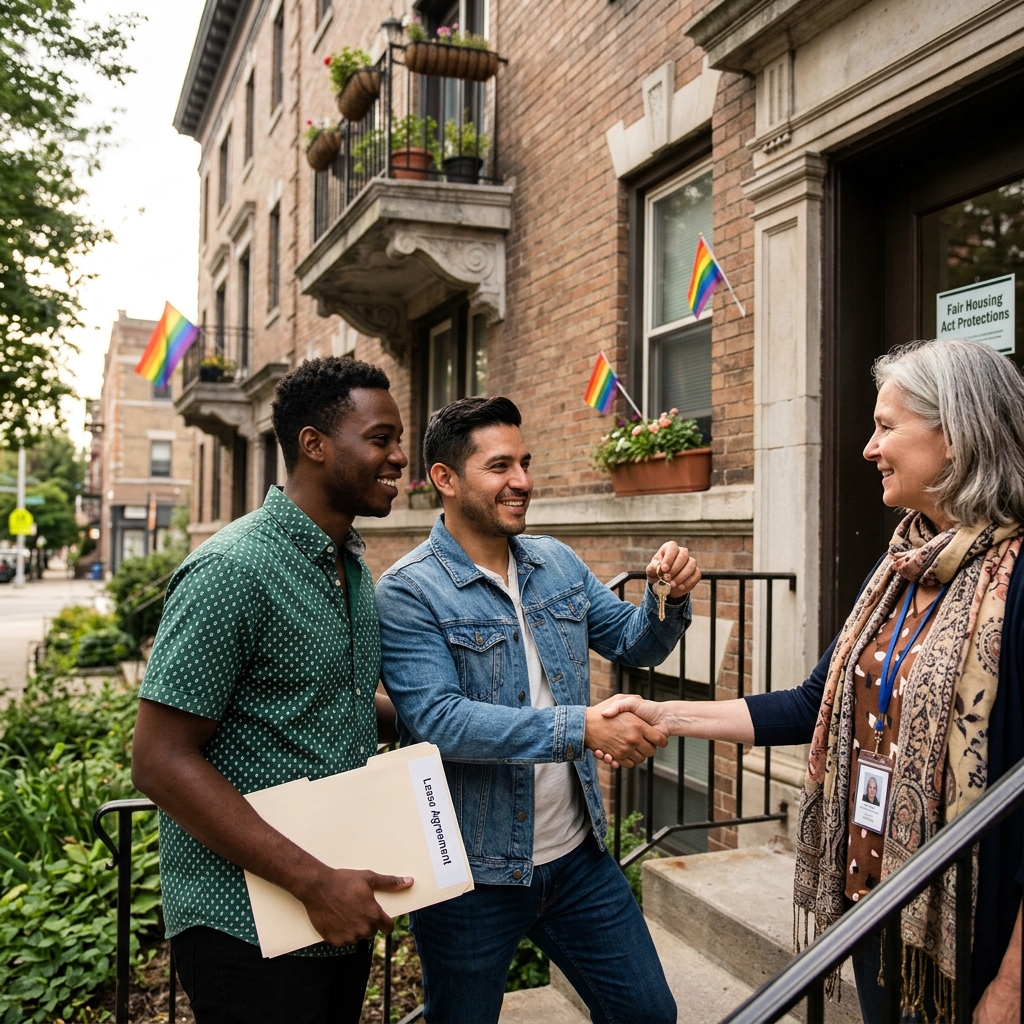
Finding safe, stable housing is difficult enough without having to worry that your sexual orientation or gender identity will be used against you. For many LGBTQ+ renters, discrimination is still a daily reality, but existing laws and recent policy changes offer significant tools to fight back.
This guide explains, in practical terms, how housing discrimination protections work for LGBTQ+ renters in the United States, where those protections are strongest, and how to respond if a landlord or housing provider treats you unfairly because of who you are.
1. Why Housing Protections Matter for LGBTQ+ People
Research consistently shows that LGBTQ+ people experience higher rates of housing instability, discrimination, and homelessness than non-LGBTQ people.
- Discrimination in renting and buying: LGBTQ+ renters report being denied apartments, steered to less desirable neighborhoods, or subjected to higher fees when landlords learn they are queer or transgender.
- Homelessness risk: LGBTQ+ youth and adults are overrepresented among people experiencing homelessness, often due to family rejection, employment discrimination, or hostile shelter environments.
- Limited explicit protections: Only a minority of states and localities explicitly ban housing discrimination based on sexual orientation and gender identity, leaving many people to rely on federal sex discrimination protections and local policies.
Because housing is the foundation for work, education, and health, clear legal protections are critical. Knowing what the law says can help you recognize illegal conduct and take informed action.
2. Core Legal Framework Protecting LGBTQ+ Renters
In the United States, protections against housing discrimination come from a combination of federal law, state statutes, and local ordinances. Understanding how these layers interact is key to asserting your rights.
2.1 The Fair Housing Act and Sex Discrimination
The primary federal law governing housing discrimination is the Fair Housing Act (FHA). The FHA prohibits discrimination in most housing-related activities based on:
- Race
- Color
- National origin
- Religion
- Sex
- Disability
- Familial status (having children under 18, pregnancy, etc.)
The statute does not explicitly list sexual orientation or gender identity, but courts and federal agencies now interpret the ban on sex discrimination to include many forms of anti-LGBTQ+ discrimination.
2.2 The Impact of Bostock and HUD’s 2021 Policy
In 2020, the U.S. Supreme Court held in Bostock v. Clayton County that discrimination against employees because of sexual orientation or gender identity is discrimination “because of sex” under Title VII, the federal workplace discrimination law.
Building directly on that reasoning, the U.S. Department of Housing and Urban Development (HUD) issued a memorandum in February 2021 stating that:
- Discrimination based on sexual orientation or gender identity is a form of sex discrimination under the FHA.
- Effective immediately, HUD will accept and investigate complaints alleging such discrimination as FHA violations.
- This interpretation applies nationwide, including to state and local agencies participating in HUD’s fair housing enforcement programs.
In practical terms, this means that, even though “sexual orientation” and “gender identity” are not yet listed by name in the statute, federal enforcement agencies treat many anti-LGBTQ+ housing actions as illegal sex discrimination.
2.3 Equal Access Rules in HUD-Funded Programs
In addition to its interpretation of the FHA, HUD has adopted “Equal Access” rules. These rules generally require that HUD-funded or HUD-insured programs and properties provide equal access regardless of sexual orientation, gender identity, or marital status.
Examples of covered programs include:
- Public Housing Authorities
- HUD-funded homeless shelters and transitional housing
- Properties with HUD-insured mortgages or project-based assistance
Under these rules, HUD-funded entities cannot deny housing, restrict admissions, or impose different conditions because someone is LGBTQ+.
3. State and Local LGBTQ+ Housing Protections
Federal law sets a baseline, but state and local nondiscrimination laws often provide clearer and broader protections.
3.1 States with Explicit LGBTQ+ Housing Protections
According to analysis by advocacy and research organizations, only a minority of states explicitly prohibit housing discrimination based on both sexual orientation and gender identity.
| Type of Protection | Typical State Approach | Impact for LGBTQ+ Renters |
|---|---|---|
| Explicit coverage for sexual orientation and gender identity | State law names both traits as protected in housing. | Clear right to file complaints under state law and seek remedies. |
| Sexual orientation only | Some states protect sexual orientation but not gender identity. | Gay, lesbian, and bisexual renters have explicit state protection; transgender and nonbinary renters rely more on federal sex discrimination protections. |
| No explicit LGBTQ+ mention | Many states do not name sexual orientation or gender identity in housing laws. | Renters must rely on federal FHA interpretation, local ordinances, or constitutional/other legal theories. |
Local jurisdictions—cities and counties—may also adopt ordinances that cover LGBTQ+ renters even when state law does not. Checking both state and local codes is therefore essential.
3.2 Why State Law Still Matters Under Federal Policy
Even with HUD treating anti-LGBTQ+ discrimination as sex discrimination, state and local non-discrimination laws offer several advantages:
- Broader coverage: Some state laws apply to smaller landlords or more housing-related services than the FHA.
- Additional remedies: State law may allow for specific damages, civil penalties, or attorney’s fees that differ from federal remedies.
- Local enforcement: States and cities often have human rights commissions or fair housing agencies that can investigate and mediate complaints closer to home.
However, state law can also fall short. As of 2023, advocacy groups reported that only 23 states, one U.S. territory, and the District of Columbia explicitly protect both sexual orientation and gender identity in housing, leaving large gaps in coverage.
4. What Counts as Housing Discrimination Against LGBTQ+ Renters?
Housing discrimination is not limited to outright refusals to rent. Under the FHA and parallel laws, many subtle and indirect practices can be illegal when motivated by a protected characteristic, including sexual orientation or gender identity.
4.1 Common Discriminatory Practices
LGBTQ+ renters may encounter discrimination at any stage of the housing process. Potentially unlawful examples include:
- Refusing to rent or sell a home after learning that an applicant is in a same-sex relationship or is transgender.
- Advertising housing as being available only to “married man and woman” or otherwise signaling a preference against LGBTQ+ people.
- Imposing different terms, such as higher security deposits, stricter guest rules, or additional screening requirements for LGBTQ+ tenants.
- Harassment and hostile environment by landlords or other tenants that is tolerated or encouraged by the housing provider.
- Steering LGBTQ+ applicants toward certain buildings or neighborhoods perceived as “more appropriate.”
Discrimination can also occur in related services, such as mortgage lending, homeowners insurance, and housing counseling. Federal laws like the Equal Credit Opportunity Act operate alongside the FHA to address some of these issues.
4.2 Harassment and Failure to Protect Tenants
Courts have held that a housing provider can be liable when it knows that LGBTQ+ tenants are being harassed by neighbors and fails to take reasonable steps to stop it.
Examples of harassment that may trigger landlord responsibilities include:
- Repeated anti-LGBTQ+ slurs or threats from other residents
- Targeted vandalism, such as damage to pride flags or personal property
- Intimidation aimed at forcing a tenant to move out
If a landlord responds promptly and appropriately to stop the harassment, they are less likely to be liable. Ignoring complaints or retaliating against the victim, on the other hand, may violate federal and state fair housing laws.
5. How to Recognize Possible Discrimination
Housing discrimination often happens quietly, without explicit statements about sexual orientation or gender identity. Renters should watch for patterns and document suspicious behavior.
5.1 Warning Signs to Watch For
- You are told a unit is “no longer available,” but it is still being advertised or shown to others.
- A landlord’s tone changes after meeting you or learning about your partner or gender identity.
- You receive different explanations or conditions than non-LGBTQ+ prospective tenants.
- The landlord asks intrusive questions only about your gender transition, medical treatment, or relationship status.
- Neighbors make hostile comments about your identity, and property management dismisses your complaints.
None of these facts alone guarantee that discrimination occurred, but together they may support a fair housing complaint, especially if you can compare your treatment to that of similar non-LGBTQ+ applicants.
5.2 Documentation Tips
If you suspect unlawful discrimination, it helps to keep detailed records:
- Save listings, emails, text messages, and application forms.
- Write down phone calls and in-person conversations immediately afterward, including dates, times, names, and what was said.
- Note the names of witnesses who saw or heard discriminatory actions.
- Preserve any harassing notes, voicemails, or online messages.
This documentation can strengthen a complaint to HUD, a state or local agency, or a lawyer.
6. Steps to Take If You Experience LGBTQ+ Housing Discrimination
There is no single correct way to respond to discrimination. Your safety comes first. When you feel secure enough to act, consider the following options.
6.1 Filing a Federal Complaint with HUD
Under HUD’s current interpretation of the FHA, you may file a fair housing complaint alleging discrimination based on sexual orientation, gender identity, or other protected characteristics.
Key points to know:
- Time limits: Complaints to HUD must generally be filed within one year of the discriminatory act.
- Information needed: Names and contact information for the housing provider, the address of the property, a description of what happened, and important dates.
- Investigation process: HUD or a state/local partner agency will review the complaint, investigate, and attempt conciliation; if they find cause, the case may proceed to an administrative hearing or federal court.
There is no cost to file a HUD complaint, and you do not need to have a lawyer, though legal advice can be helpful.
6.2 Using State and Local Complaint Procedures
If your state or city has its own housing nondiscrimination law, you may have additional options:
- File a complaint with a state civil rights commission or human rights agency.
- Seek remedies specific to state law, which might include damages, civil penalties, or policy changes.
- In some jurisdictions, pursue claims in state court.
Sometimes HUD will refer your complaint to a state or local agency for investigation under a “fair housing assistance” partnership, but you can also contact such agencies directly.
6.3 Consulting an Attorney or Legal Aid Organization
Because housing law can be complex and varies by location, many renters benefit from speaking with a lawyer who handles fair housing or LGBTQ+ civil rights cases. An attorney can:
- Evaluate whether the facts support a discrimination claim under federal, state, or local law.
- Help you file complaints or represent you during investigations and hearings.
- File a lawsuit for damages or injunctive relief where appropriate.
Low-income renters can often obtain free or reduced-cost assistance from legal aid organizations or fair housing nonprofits.
7. Current Gaps and Ongoing Policy Debates
Despite recent federal advances, LGBTQ+ renters still face legal uncertainties and uneven protections across the country.
7.1 Lack of Uniform Federal Statutory Coverage
While HUD interprets the FHA to cover sexual orientation and gender identity as forms of sex discrimination, the law itself still does not list those terms explicitly.
In 2025, members of Congress introduced the “Fair and Equal Housing Act” to formally add sexual orientation and gender identity as protected categories under the FHA, but as of recent reports, there is still no comprehensive statute that consistently protects LGBTQ+ people from housing discrimination nationwide.
7.2 Patchwork of State and Local Laws
Because state and local protections vary widely, an LGBTQ+ renter may be well-protected in one jurisdiction and far more vulnerable in another.
- Some states and cities aggressively enforce LGBTQ+ housing protections and provide strong remedies.
- Others have no explicit protections, and sometimes even laws that restrict the ability of local governments to adopt LGBTQ+ nondiscrimination ordinances.
This patchwork makes it especially important for renters to learn the law in their specific state and municipality.
8. Practical Tips for LGBTQ+ Renters
While no set of steps can fully eliminate the risk of discrimination, there are practical measures that may help protect your housing and strengthen any future legal claims.
- Know your rights: Familiarize yourself with federal fair housing protections and any state or local LGBTQ+ nondiscrimination laws that apply where you live.
- Keep everything in writing: When possible, communicate with landlords and property managers by email or text and keep copies.
- Bring a witness: Having another person present during key conversations or viewings can help corroborate your account if problems arise.
- Report problems early: Document concerns and send written complaints to landlords or property managers promptly, especially in harassment situations.
- Seek support: Local LGBTQ+ centers, fair housing organizations, and legal aid clinics can offer guidance, referrals, or advocacy.
9. Frequently Asked Questions (FAQs)
Are LGBTQ+ renters protected everywhere in the United States?
No. Federal law, through the FHA and HUD’s interpretation, offers nationwide protection against many forms of anti-LGBTQ+ housing discrimination as sex discrimination. However, explicit protections in state and local laws vary widely, and not every jurisdiction names sexual orientation and gender identity in its statutes.
Can a landlord legally ask about my sexual orientation or gender identity?
Questions about sexual orientation or gender identity are generally unnecessary for making a housing decision. While asking alone may not always be illegal, using that information to deny housing or impose different terms can violate federal and state fair housing laws.
Does the Fair Housing Act apply to all landlords?
The FHA covers most housing, but there are limited exemptions for certain owner-occupied buildings with few units and some religious or private organizations. Even when an exemption applies, state and local nondiscrimination laws may still provide protections.
What if the discrimination happens in a homeless shelter or public housing?
HUD’s Equal Access rules generally require HUD-funded shelters, public housing authorities, and other HUD-assisted programs to serve people without discrimination based on sexual orientation or gender identity. Many of these programs must also follow the FHA and other civil rights laws.
Is retaliation illegal if I file a complaint?
Yes. The FHA prohibits housing providers from retaliating against any person for reporting discrimination, assisting in an investigation, or asserting fair housing rights. Retaliation can include eviction, rent increases, harassment, or other adverse actions taken because you exercised your rights.
References
- Housing Discrimination Laws Protecting LGBTQ+ Individuals — Justia. 2023-01-01 (approximate, based on page update). https://www.justia.com/lgbtq/housing-discrimination/
- HUD Announces Sexual Orientation & Gender Identity are Protected by the Fair Housing Act — Fair Housing Project of Legal Aid of North Carolina. 2021-02-11. https://www.fairhousingnc.org/newsletter/hud-announces-sexual-orientation-gender-identity-are-protected-by-federal-fair-housing-act/
- Nondiscrimination Laws – Housing — Movement Advancement Project. 2024-01-01 (policy map regularly updated). https://mapresearch.org/equality-map/nondiscrimination-laws/
- Housing Discrimination Remains a Big Barrier for the LGBTQ+ Community — American Civil Liberties Union of Illinois. 2021-08-09. https://www.aclu-il.org/news/housing-discrimination-remains-big-barrier-lgbtq-community/
- Bipartisan Bill Introduced to Extend Fair Housing Act Protections to LGBTQ+ People — National Low Income Housing Coalition. 2025-06-10. https://nlihc.org/resource/bipartisan-bill-introduced-extend-fair-housing-act-protections-lgbtq-people-0
- LGBT People and Housing Affordability, Discrimination, and Homelessness — The Williams Institute, UCLA School of Law. 2020-05-01. https://williamsinstitute.law.ucla.edu/publications/lgbt-housing-instability/
Similar Articles








Read full bio of Sneha Tete


