
Lexapro Lawsuits: Risks, Allegations, and Legal Claims
Understanding the legal and medical concerns tied to Lexapro and birth defect lawsuits.
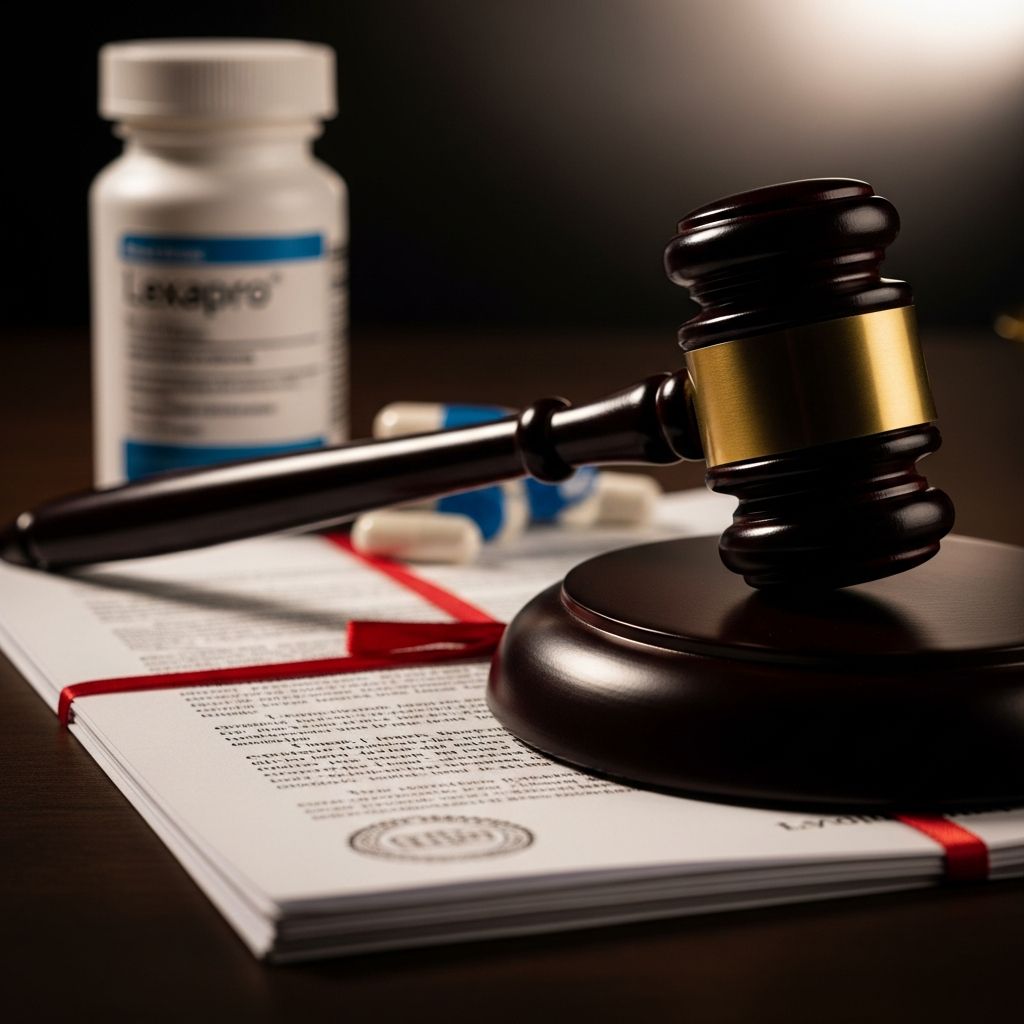
Understanding the Lexapro Legal Landscape
Lexapro, the brand name for escitalopram, is a selective serotonin reuptake inhibitor (SSRI) widely prescribed for major depressive disorder and generalized anxiety disorder. While it has helped many manage their mental health, growing scrutiny has focused on its safety during pregnancy and the conduct of its manufacturer, Forest Laboratories (now part of Allergan). Over the past two decades, a series of legal actions, regulatory settlements, and scientific studies have raised serious questions about whether patients—especially pregnant women—were adequately warned about potential risks, including birth defects and neonatal complications.
What Is Lexapro and How Is It Used?
Lexapro belongs to the SSRI class of antidepressants, which work by increasing serotonin levels in the brain to improve mood and reduce anxiety. It was approved by the U.S. Food and Drug Administration (FDA) for adults with depression and generalized anxiety disorder. Over time, it became one of the most commonly prescribed antidepressants in the United States, with annual sales exceeding hundreds of millions of dollars at its peak.
Because depression and anxiety are common in women of reproductive age, many patients taking Lexapro are or may become pregnant. This has led to increased concern about how the drug affects fetal development and newborn health. While SSRIs can be important tools in managing mental illness, their use during pregnancy requires careful risk-benefit analysis, especially when long-term safety data are limited or conflicting.
Birth Defects and Neonatal Risks Linked to Lexapro
Several studies and regulatory reviews have examined whether SSRIs like Lexapro are associated with an increased risk of birth defects and neonatal complications. While not every study reaches the same conclusion, a body of evidence suggests that exposure to certain SSRIs during pregnancy may be linked to a higher chance of certain serious conditions in newborns.
Among the complications that have been studied in connection with SSRI use during pregnancy are:
- Cardiac defects: Including ventricular and atrial septal defects, coarctation of the aorta, and other structural heart abnormalities.
- Neural tube defects: Such as spina bifida, which occur when the spinal column does not close properly during early development.
- Cleft lip and cleft palate: Facial malformations that may require multiple surgeries and long-term care.
- Omphalocele: A condition in which abdominal organs protrude through the belly button.
- Persistent pulmonary hypertension of the newborn (PPHN): A serious lung condition in which a newborn’s circulation continues to bypass the lungs after birth, leading to breathing difficulties and sometimes long-term disability.
These conditions can result in significant medical interventions, hospitalizations, and lifelong care needs. Families affected by such outcomes often face substantial emotional and financial burdens, which has led some to pursue legal action against the drug’s manufacturer.
Allegations Against the Manufacturer
Forest Laboratories, the original maker of Lexapro, has faced multiple legal and regulatory challenges related to its marketing and disclosure practices. One of the most significant actions came from the U.S. Department of Justice, which investigated the company’s promotion of Lexapro and its related drug Celexa.
Key allegations included:
- Marketing the drugs for uses not approved by the FDA, particularly in children and adolescents, despite limited safety data in these populations.
- Failing to disclose negative clinical trial results that might have raised concerns about safety or efficacy.
- Providing improper financial incentives to healthcare providers, such as cash payments disguised as consulting fees, expensive meals, and entertainment, to encourage prescribing.
In 2010, Forest Pharmaceuticals, a subsidiary of Forest Laboratories, agreed to pay more than $313 million to resolve criminal and civil charges related to these practices. The settlement covered allegations involving Lexapro, Celexa, and another drug, Levothyroxin, and included charges of obstructing justice and submitting false claims to government healthcare programs.
Off-Label Promotion and Its Consequences
Off-label use of medications is common and not inherently illegal; doctors may prescribe drugs for conditions or patient groups not specifically approved by the FDA based on clinical judgment. However, it is illegal for drug manufacturers to actively promote such uses.
In the case of Lexapro, regulators and whistleblowers alleged that Forest Laboratories engaged in aggressive off-label marketing, particularly targeting pediatric and adolescent populations. This is significant because:
- Children and teens may metabolize drugs differently than adults, potentially increasing the risk of side effects.
- Long-term effects on brain development are not always well understood at the time of approval.
- Marketing to this population may have contributed to widespread use in women of childbearing age without sufficient warnings about pregnancy-related risks.
When a drug is heavily promoted for off-label uses, especially in vulnerable groups, questions arise about whether the manufacturer fulfilled its duty to test the drug thoroughly and to communicate known or emerging risks to both prescribers and patients.
Failure to Warn and Product Liability
Under product liability law, pharmaceutical companies have a legal obligation to ensure their drugs are reasonably safe and that adequate warnings are provided about known or reasonably foreseeable risks. This includes:
- Conducting appropriate pre-market testing, including animal and human studies.
- Monitoring adverse event reports after the drug is on the market.
- Updating labeling and providing clear, prominent warnings when new safety concerns emerge.
In the context of Lexapro, plaintiffs in various lawsuits have argued that the manufacturer:
- Did not adequately study the drug’s effects on pregnant women and developing fetuses.
- Ignored or downplayed signals from adverse event reports suggesting a higher rate of birth defects.
- Failed to follow FDA guidelines for evaluating risks of drug exposure during pregnancy.
- Did not provide sufficiently clear warnings to doctors and patients about the potential for serious birth defects and neonatal complications.
These allegations form the basis of many product liability claims, which seek compensation for medical expenses, pain and suffering, and other damages suffered by families affected by birth defects or other serious outcomes.
Types of Legal Claims Involving Lexapro
Individuals and families affected by Lexapro-related complications have pursued several types of legal actions, including:
Product Liability Lawsuits
These claims argue that Lexapro was defectively designed, inadequately tested, or came with insufficient warnings. Plaintiffs typically allege that:
- The drug posed an unreasonable risk of harm when used as intended.
- The manufacturer knew or should have known about the risks but failed to warn.
- The lack of proper warnings led to harm that could have been avoided with better information.
Failure to Warn Claims
A subset of product liability, these cases focus specifically on the adequacy of the drug’s labeling and promotional materials. Plaintiffs may argue that:
- The prescribing information did not clearly describe the risk of birth defects or neonatal complications.
- The warnings were buried in fine print or not emphasized enough for prescribers to recognize the seriousness of the risk.
- Marketing materials downplayed risks while emphasizing benefits, potentially influencing prescribing decisions.
Wrongful Death and Personal Injury Claims
In some cases, families have filed wrongful death lawsuits after a child died due to complications believed to be linked to Lexapro exposure in utero. Other personal injury claims seek compensation for:
- Medical bills and ongoing care costs.
- Lost wages and future earning capacity (for caregivers).
- Pain and suffering, both for the child and the parents.
- Emotional distress and loss of companionship.
Key Legal Developments and Settlements
Over the years, several major legal developments have shaped the Lexapro litigation landscape:
- 2010 DOJ Settlement: Forest Pharmaceuticals paid over $313 million to resolve criminal and civil charges related to off-label marketing of Celexa and Lexapro, as well as false claims to government healthcare programs.
- MDL-2067: A federal multidistrict litigation (MDL) in Massachusetts consolidated numerous Lexapro and Celexa lawsuits, primarily focused on off-label marketing and inadequate warnings. Most of these cases were resolved through settlements, with individual payouts varying based on the specifics of each claim.
- Birth Defect MDLs: While some SSRI birth defect MDLs (such as those involving Zoloft) were ultimately dismissed due to challenges in proving causation, similar allegations have been raised in connection with Lexapro, leading to individual lawsuits and smaller group actions.
It is important to note that many of these cases were settled confidentially, so the exact terms and number of resolved claims are not always publicly available. However, the existence of these settlements reflects the seriousness with which courts and regulators have treated the allegations.
Scientific Evidence and Causation Challenges
One of the most complex aspects of Lexapro birth defect lawsuits is proving causation—demonstrating that the drug, rather than other factors, caused a specific birth defect. This is complicated by:
- The multifactorial nature of many birth defects, which can result from genetic, environmental, and lifestyle factors.
- Variability in study designs, populations, and definitions of exposure and outcomes.
- Differences in how courts evaluate scientific evidence, particularly expert testimony.
In some SSRI birth defect MDLs, courts have excluded expert witnesses whose methods were deemed insufficiently reliable under legal standards for scientific evidence. This has made it difficult for plaintiffs to meet their burden of proof, even when epidemiological studies suggest an association between SSRI use and certain defects.
Despite these challenges, many families continue to pursue claims, arguing that the manufacturer had a duty to provide clearer warnings so that patients and doctors could make more informed decisions about the risks of using Lexapro during pregnancy.
What Affected Families Should Know
If you or a loved one took Lexapro during pregnancy and your child was born with a serious birth defect or neonatal condition, you may have legal options. Key considerations include:
- Timing: Statutes of limitations vary by state and can limit how long you have to file a lawsuit after discovering harm.
- Medical records: Detailed records of Lexapro use, prenatal care, and the child’s diagnosis are crucial for building a strong case.
- Expert evaluation: A qualified attorney can help determine whether your situation may support a product liability or failure-to-warn claim.
- Compensation: Potential damages may include past and future medical expenses, therapy and special education costs, pain and suffering, and other related losses.
Consulting with an experienced pharmaceutical litigation attorney can help you understand your rights and whether pursuing a claim is appropriate in your situation.
Questions to Ask a Lexapro Injury Lawyer
If you are considering legal action, it can be helpful to ask an attorney the following questions:
- Have you handled cases involving SSRIs and birth defects before?
- What types of damages might be recoverable in my case?
- What is the statute of limitations in my state?
- Will my case be part of a larger group action or handled individually?
- What are the costs and fees involved in pursuing a claim?
Frequently Asked Questions
Can I sue if my child has a birth defect after I took Lexapro during pregnancy?
It may be possible, depending on the specific circumstances, the nature of the defect, and applicable laws in your state. An experienced attorney can review your medical records and the details of your case to determine whether a product liability or failure-to-warn claim is viable.
What kind of birth defects are linked to Lexapro?
Conditions that have been studied in connection with SSRI use during pregnancy include heart defects, neural tube defects (like spina bifida), cleft lip and palate, omphalocele, and persistent pulmonary hypertension of the newborn (PPHN). Not every study finds a strong link, but these are among the complications that have been raised in legal and medical discussions.
Is Lexapro still on the market?
Lexapro is still available by prescription, though the original manufacturer, Forest Laboratories, has been acquired by Allergan (now part of AbbVie). Generic versions of escitalopram are also widely available. The drug’s labeling includes warnings about potential risks during pregnancy, but the adequacy of those warnings has been the subject of legal scrutiny.
What did the $313 million settlement involve?
The 2010 settlement resolved federal criminal and civil charges against Forest Pharmaceuticals for off-label marketing of Celexa and Lexapro, obstructing justice, and submitting false claims to government healthcare programs. It did not specifically resolve individual birth defect claims but reflected serious regulatory concerns about the company’s conduct.
How do I know if Lexapro caused my child’s condition?
Establishing a direct cause can be complex and often requires medical and scientific evaluation. Legal claims typically focus not on absolute proof of causation but on whether the manufacturer failed to provide adequate warnings, depriving patients and doctors of the ability to make informed decisions about the risks.
Are there class action lawsuits for Lexapro birth defects?
While there have been multidistrict litigations (MDLs) consolidating similar SSRI cases, many Lexapro-related claims are pursued as individual lawsuits or smaller group actions. An attorney can advise whether joining an existing group action or filing an individual case is the best approach for your situation.
References
- United States Department of Justice Press Release: Drug Maker Forest Pleads Guilty; To Pay More Than $313 Million to Resolve Criminal Charges and False Claims Act Allegations — U.S. Department of Justice. 2010-07-01. https://www.justice.gov/archives/opa/pr/drug-maker-forest-pleads-guilty-pay-more-313-million-resolve-criminal-charges-and-false
- MDL No. 2067: In re Celexa and Lexapro Marketing and Sales Practices Litigation — United States Judicial Panel on Multidistrict Litigation. https://www.jpml.uscourts.gov/cases/celexa-and-lexapro-marketing-and-sales-practices-litigation-mdl-2067
- SSRI Use During Pregnancy and Risk of Birth Defects — U.S. Food and Drug Administration. https://www.fda.gov/drugs/postmarket-drug-safety-information-patients-and-providers/ssri-use-during-pregnancy-and-risk-birth-defects
Similar Articles








Read full bio of medha deb


