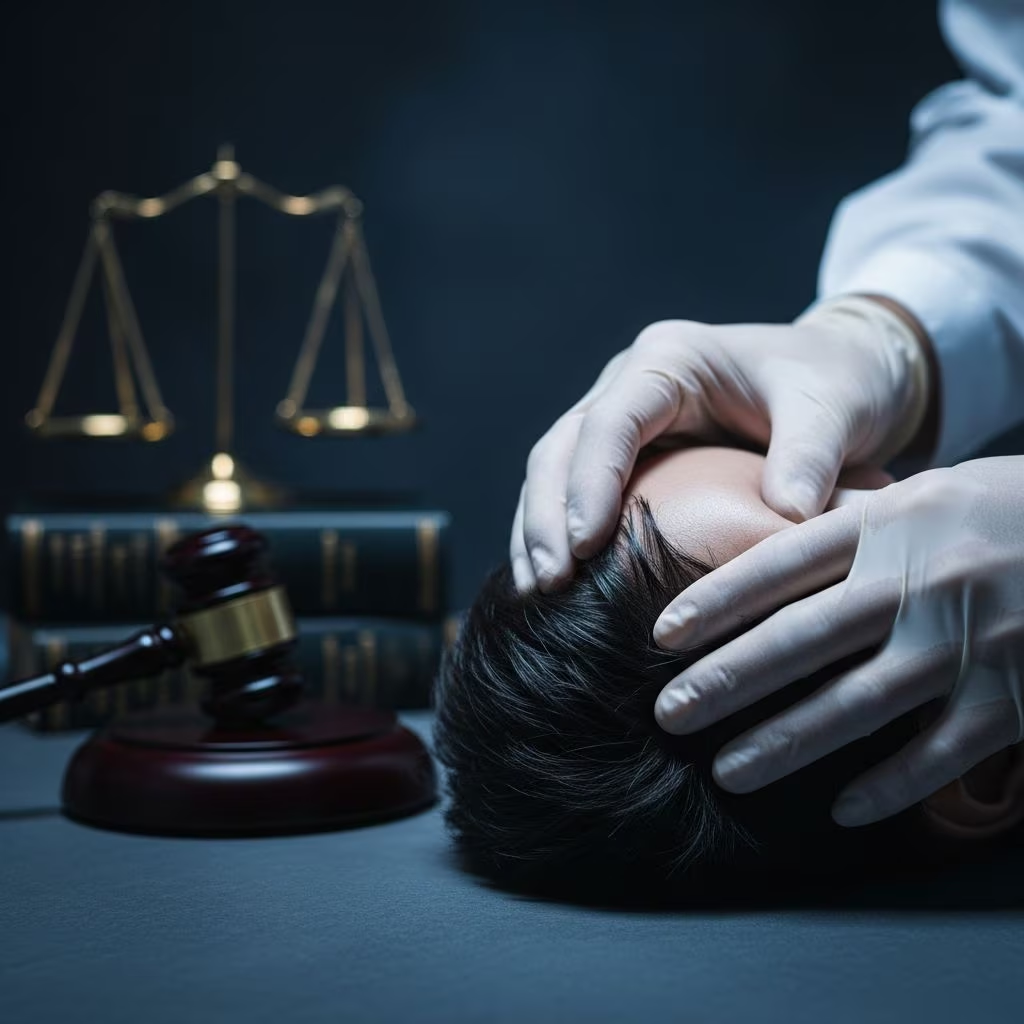
Autopsies serve as critical tools in determining the cause and manner of death, particularly when circumstances raise questions of foul play, public safety, or unexplained events. Across the United States, statutes dictate specific situations where medical examiners or coroners must conduct these examinations, overriding family objections in the interest of justice and health. This article explores the primary legal mandates, variations by state, procedural details, and implications for families navigating loss.
Core Circumstances Requiring Autopsies Nationwide
Nearly every state mandates autopsies for deaths deemed suspicious, unusual, or unnatural, ensuring thorough investigations into potential crimes or hazards. For instance, homicides, suicides, and accidents universally trigger this requirement, as do cases without recent medical supervision.
Key national patterns emerge from statutory frameworks:
- Sudden and Unexpected Deaths: When a seemingly healthy individual dies without explanation, authorities investigate to rule out hidden pathologies or external factors.
- Absence of Medical Oversight: Deaths occurring without a physician’s recent attendance prompt autopsies to certify the cause accurately.
- Public Health Risks: At least 27 states require examinations for potential contagious outbreaks or environmental threats like contaminated food.
These mandates prioritize societal protection over individual preferences, reflecting a balance between privacy and public welfare.
High-Risk Scenarios: Violence, Accidents, and Trauma
Violent or traumatic deaths form the cornerstone of mandatory autopsy laws. Gunshots, stabbings, electrocutions, burns, drownings, falls, and similar events necessitate detailed forensic analysis to document injuries and establish manner of death.
| Trauma Type | Typical Jurisdictions Requiring Autopsy | Rationale |
|---|---|---|
| Firearm or Stab Wounds | All states | Distinguish homicide, suicide, or accident |
| Motor Vehicle Crashes | Nationwide, esp. if fatal injuries unclear | Assess contributing factors like impairment |
| Drowning or Asphyxiation | FL, HI, WA counties | Often unwitnessed; rules out foul play |
| Workplace Incidents | TX, AZ, PA | Evaluates occupational hazards |
In Florida, for example, complete autopsies are standard for all traumatic deaths, regardless of survival duration post-injury. This thoroughness aids wrongful death litigation and insurance claims by providing irrefutable evidence.
Deaths in Custody and Institutional Settings
Incarcerated individuals or those under police supervision receive heightened scrutiny. Every state requires autopsies for jail, prison, or custody deaths to prevent cover-ups and ensure accountability.
- Police Action: Shootings, restraints, or pursuits ending in death trigger immediate forensic review.
- Correctional Facilities: Mississippi mandates autopsies for all prison deaths; New Jersey exempts only hospitalized cases with known conditions.
- State Institutions: Deaths in behavioral health centers or hospitals within 24 hours of admission often qualify.
These protocols, rooted in civil rights protections, document potential neglect, abuse, or excessive force, informing lawsuits and policy reforms.
Protecting the Vulnerable: Infants, Children, and the Elderly
Sudden deaths among children demand urgent investigation. Unexpected infant or child fatalities, especially unexplained ones, require autopsies to identify Sudden Unexplained Infant Death (SUID) or abuse indicators.
Mississippi law exemplifies this by mandating exams for children under two with unknown causes. Similarly, elderly deaths without care or in suspicious contexts fall under coroner purview in states like Pennsylvania, covering drug overdoses or neglect.
State-by-State Variations in Autopsy Mandates
While common threads exist, statutes differ significantly. Arizona requires autopsies for occupational accidents or anesthetic complications; Hawaii mandates them for any sudden death unattended by a doctor.
Pennsylvania coroners order exams for drownings, therapeutic complications, or abortions resulting in death. Texas empowers Justices of the Peace in smaller counties alongside medical examiners for reportable cases.
- Discretionary Authority: Pathologists may deem autopsies necessary for evidence collection or injury documentation, even absent strict mandates.
- Exemptions: Natural deaths with documented medical history and no trauma often avoid full dissection, opting for external exams.
Families should consult local statutes, as urban counties with medical examiners enforce stricter protocols than rural justice-led systems.
Voluntary Autopsies: When Families Have a Say
Not all examinations are compulsory. Clinical autopsies, requested by physicians for diagnostic confirmation or treatment evaluation, require family consent.
Benefits include:
- Verifying diseases like Alzheimer’s, detectable only post-mortem.
- Assessing drug efficacy at cellular levels, improving future care.
- Alerting relatives to hereditary risks.
These occur ideally within 24 hours before tissue degradation complicates findings.
The Autopsy Process: From Order to Results
Once mandated, a medical examiner or coroner assumes custody. The procedure involves external inspection, internal organ dissection, toxicology, and histology.
- Scene Investigation: Collects context like witness statements.
- Examination: Determines cause (e.g., heart failure) and manner (natural, homicide).
- Testing: Screens for poisons, drugs, or infections.
- Report: Released to families and authorities, often delaying funerals.
Specimens may be retained or cremated post-analysis, minimally impacting viewings if handled promptly.
Rights and Recourse for Families
Mandatory cases limit objections, but families can request private second autopsies or challenge findings legally. In voluntary scenarios, consent is revocable.
Costs vary: public autopsies are taxpayer-funded; private ones range widely. Delays from testing affect burial timelines, so communicate with funeral homes early.
Frequently Asked Questions (FAQs)
Is an autopsy always required for suspicious deaths?
Yes, nearly all states mandate it for suspicious, violent, or unnatural deaths to ensure accurate cause determination.
Can families refuse a mandatory autopsy?
No, public interest supersedes in legally required cases like homicides or custody deaths.
How long after death can an autopsy occur?
Ideally within 24 hours; delays degrade tissues, complicating analysis.
Does an autopsy delay funeral arrangements?
Possibly, due to testing; bodies are typically released post-exam, with specimens handled separately.
Are autopsies required for natural deaths?
Generally no, if medical history supports it and no foul play suspected.
Implications for Justice and Public Safety
Mandatory autopsies underpin criminal prosecutions, civil suits, and health policy. They expose systemic issues like custody abuses or overdose epidemics, fostering accountability. As forensic science advances, these exams yield DNA, toxicology insights vital for closure and prevention.
In wrongful death claims, autopsy reports substantiate negligence or malice, empowering families. Understanding triggers equips individuals to advocate during crises, bridging grief with informed action.
References
- When Is an Autopsy Required? A Forensic Pathologist Explains — Texas Autopsy Services. 2023. https://www.texasautopsyservices.com/blog/when-is-autopsy-required/
- Autopsies: When and Why Are They Done? — WebMD. 2024-10-15. https://www.webmd.com/a-to-z-guides/autopsy-decision
- Under What Circumstances Will an Autopsy be Performed? — Washoe County, NV Official Site. 2025-01-20. https://www.washoecounty.gov/coroner/faq/when_is_autopsy_performed.php
- Autopsy Laws by State 2026 — World Population Review. 2026-04-01. https://worldpopulationreview.com/state-rankings/autopsy-laws-by-state
- When Are Autopsies Required In Pennsylvania? — Ross Feller Casey, LLP. 2024. https://www.rossfellercasey.com/news/when-are-autopsies-required-in-pennsylvania/
- Medical Examiner’s Office – Frequently Asked Questions — City of Philadelphia, PA. 2025. https://www.phila.gov/departments/medical-examiners-office/frequently-asked-questions/
- Autopsy: What It Is & Why It’s Done — Cleveland Clinic. 2024-08-12. https://my.clevelandclinic.org/health/diagnostics/autopsy