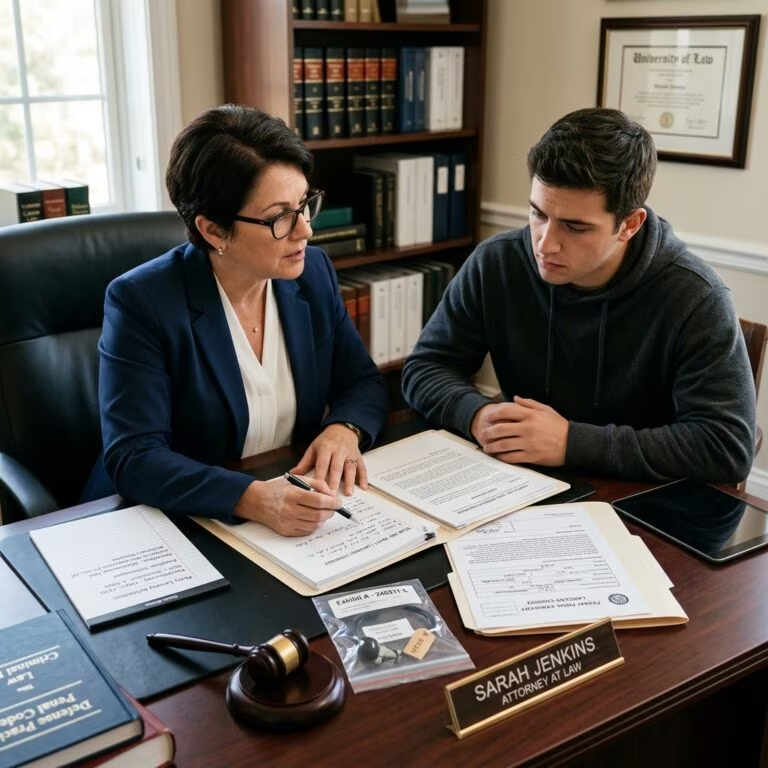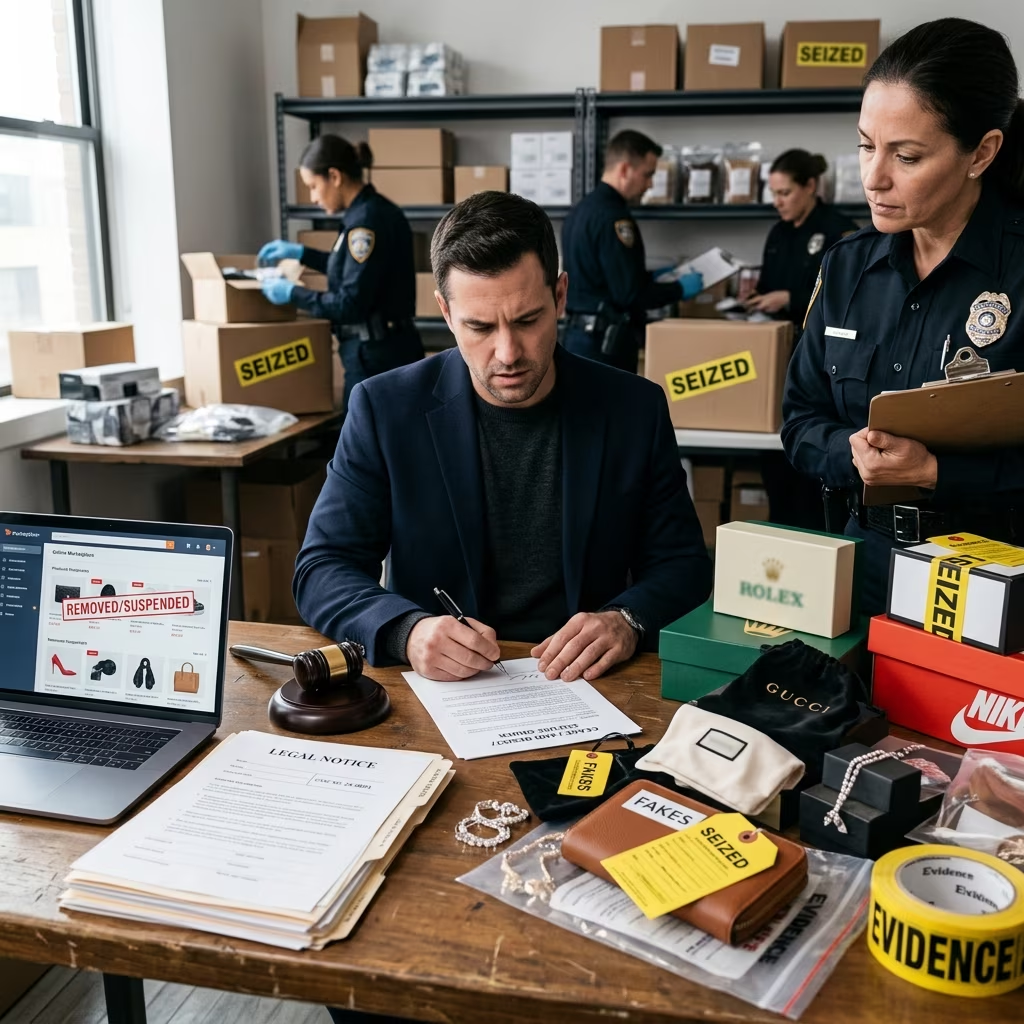
Selling fake or unsafe merchandise through online platforms is not a harmless side hustle. In many cases, it violates trademark and consumer protection laws and can lead to steep fines, lawsuits, and even prison sentences at both the federal and state level. Understanding these risks is critical for anyone who sells products online, whether as a business or as an individual.
What Counts as a “Fake” or Counterfeit Product?
Legal systems distinguish between counterfeit goods, generic items, and lawful replicas. Counterfeiting generally refers to goods that are intentionally branded and designed to look identical to legitimate products to mislead consumers.
- Counterfeit goods: Items using a brand’s logo, name, or distinctive design without permission, in a way that suggests they are genuine.
- Trademark-infringing goods: Products that cause confusion with an existing brand, even if they are not exact copies.
- Non-branded or parody products: Items that do not seek to pass off as the original, but still may raise legal issues if they confuse consumers.
Counterfeiting is considered one of the most serious forms of trademark infringement because it deliberately undermines consumer trust and brand value.
Key Legal Areas Involved in Selling Fakes Online
Several overlapping areas of law may apply when fake merchandise is sold online:
- Trademark law – Protects brand names, logos, and distinctive designs used to identify goods or services.
- Consumer product safety law – Regulates whether products sold to the public meet safety standards; unsafe products can trigger enforcement by agencies such as the U.S. Consumer Product Safety Commission (CPSC).
- Criminal law – Applies when counterfeit or unsafe products are distributed in violation of statutes, sometimes carrying significant prison terms and fines.
Trademark Counterfeiting vs. Ordinary Infringement
Trademark counterfeiting is treated more harshly than ordinary trademark infringement. Under U.S. law, using an identical counterfeit mark intentionally can result in damages up to three times the profits or losses, plus attorney’s fees. Courts view counterfeiters as intentionally deceiving consumers, which justifies these enhanced remedies.
Federal Consequences: Fines and Imprisonment
At the federal level, laws targeting counterfeit and unsafe goods can apply whether the products are sold on a street corner or via an online marketplace. These laws are not limited to large-scale operations; individual sellers can be prosecuted when they knowingly distribute counterfeit or dangerous items.
Trademark Counterfeiting Penalties
Federal criminal laws impose serious penalties for intentional trafficking in counterfeit goods:
- Up to $2 million in fines and up to 10 years in prison for an individual convicted under certain anti-counterfeiting statutes.
- Repeat offenders may face up to $5 million in fines and up to 20 years in prison.
These penalties reflect the government’s view that counterfeiting undermines consumer confidence, harms legitimate businesses, and can be linked to broader organized crime.
Counterfeit Drugs and Health-Related Products
Counterfeit drugs and some health-related items pose unique risks because they can directly threaten health and safety. Federal law governing drugs and medical products (including sections of Title 21 of the U.S. Code) allows criminal prosecution for distributing counterfeit pharmaceuticals.
- Individuals who distribute counterfeit drugs can face up to 10 years in prison under federal law.
- Additional penalties may apply if the counterfeit products cause actual physical harm.
Consumer Product Safety and Online Sales
Fake goods do not only infringe trademarks; they may also violate consumer product safety rules. The U.S. Consumer Product Safety Commission (CPSC) oversees safety standards for a wide range of consumer products, from children’s toys to electronics.
Non-Compliant Products and CPSC Enforcement
If a product fails to comply with the Consumer Product Safety Act (CPSA) or related regulations, the CPSC can pursue both civil and criminal action.
- Civil penalties of up to $100,000 per violation, with total penalties in a related series of violations capped at up to $15 million.
- Criminal penalties, including fines and up to five years in prison, where the seller knew the product violated CPSC rules or the CPSA but sold or distributed it anyway.
This applies equally to online and offline sales; selling through a website does not reduce obligations to meet safety standards.
State-Level Criminal Laws: Example of California
In addition to federal law, most states have their own criminal statutes addressing counterfeit goods. California, for example, has a specific law—Penal Code 350—making it a crime to manufacture, sell, or possess for sale goods bearing counterfeit marks registered with state or federal authorities.
| Type of Case | Conditions | Possible Penalties |
|---|---|---|
| Misdemeanor | Under 1,000 items and total value under $950 | Up to 1 year in county jail; fines up to $10,000 (individual) or $200,000 (business) |
| Felony (“wobbler”) | More than 1,000 items or value over $950 | 16 months to 3 years in county jail; fines up to $500,000 (individual) or $1,000,000 (business) |
A “wobbler” offense means prosecutors can choose to charge the case as a misdemeanor or felony depending on the circumstances. The more extensive the operation, the greater the risk of a felony filing.
Role and Responsibilities of Online Marketplaces
Online marketplaces such as large e-commerce platforms play a central role in the sale of counterfeit goods and have increasingly come under regulatory and legal scrutiny. Both platform operators and individual sellers must navigate complex obligations.
Marketplace Liability for Counterfeit Sales
In some jurisdictions, marketplaces can be held liable for contributory infringement when they knowingly allow counterfeit goods to be sold through their platforms. Liability typically depends on factors such as:
- Whether the marketplace benefits financially from each counterfeit sale.
- Whether it received notice of infringing listings and failed to remove them promptly.
- Whether it had the practical ability to control the seller’s activities.
If any one of these elements is missing, the platform may avoid contributory liability, but the seller can still be directly liable.
New Transparency Rules: INFORM Consumers Act
In the United States, the INFORM Consumers Act imposes specific obligations on online marketplaces with regard to high-volume third-party sellers. The law aims to improve transparency about who is behind certain online listings.
- Marketplaces must collect and verify information such as bank account details, government-issued identification, tax ID numbers, and contact information from sellers that exceed monetary thresholds.
- For sellers with more than a specified amount in annual sales, platforms must present clear information to consumers about the seller’s identity and how to contact them.
- Violations of these requirements can lead to civil penalties exceeding $50,000 per violation, according to the Federal Trade Commission.
These rules make it harder for sellers of counterfeit goods to hide behind anonymity, and they add compliance obligations for platforms that host such sellers.
Practical Risks for Individual Online Sellers
Individual sellers sometimes assume that disclaimers like “replica” or “not authentic” are enough to make the sale of fake goods legal. That assumption is often incorrect:
- Openly admitting an item is fake can demonstrate that the seller knowingly dealt in counterfeit goods, which is a critical element in criminal and civil cases.
- Receipts or proof of purchase do not authorize reselling items that infringe trademarks.
- Even small-scale sales, such as a handful of fake branded items on a marketplace, can trigger enforcement or civil litigation.
Law enforcement and brand owners increasingly monitor online marketplaces and social media for counterfeit listings and may use messaging or posts as evidence of knowledge and intent.
How Brand Owners and Authorities Respond
Brand owners, regulators, and law enforcement agencies use a range of tools to detect and respond to the sale of counterfeit goods online.
- Brand enforcement programs: Companies register trademarks, monitor marketplaces, and bring civil actions against counterfeiters.
- Cease-and-desist letters: Lawyers may demand that sellers stop infringing activity and remove listings immediately.
- Customs and border actions: Trademarks can be recorded with customs to help intercept counterfeit shipments.
- Criminal referrals: In serious cases, brand owners may work with agencies such as the National Intellectual Property Rights Coordination Center in the U.S. to report counterfeit networks.
These measures are designed both to protect consumers and to safeguard the economic and reputational value of legitimate brands.
Reporting Counterfeit Goods Sold Online
Consumers and competitors who suspect that counterfeit goods are being sold online have options for reporting the activity. In the United States, one central hub is the National Intellectual Property Rights Coordination Center, which coordinates enforcement against intellectual property violations.
Reports can typically be submitted online and may include details such as the platform, seller name, listing information, and any purchased goods. Providing thorough information helps authorities and brand owners evaluate the allegation and take appropriate action.
Practical Tips to Avoid Legal Trouble
Anyone selling goods online should take proactive steps to avoid inadvertently dealing in counterfeit or unsafe items:
- Purchase inventory only from reputable sources and official distributors.
- Keep clear documentation of supply chains and product origin.
- Avoid using logos, brand names, or distinctive designs unless you are authorized to do so.
- Check whether products must meet specific safety standards (for example, for children’s products or electronics) and confirm compliance.
- Respond promptly to any complaints, platform notices, or legal letters, and seek legal advice when in doubt.
Frequently Asked Questions (FAQs)
Is it legal to sell “replica” items if I say they are fake?
Simply labeling an item as a “replica” or acknowledging that it is fake does not make the sale lawful. If the product uses another company’s registered trademark or creates confusion about its origin, it can still constitute trademark infringement or counterfeiting, and the seller may face civil or criminal liability.
Can I be prosecuted for selling only a few counterfeit items online?
Yes. While enforcement efforts often focus on larger operations, even small-scale online sales can lead to penalties. Under both federal and state laws, what matters is whether you knowingly trafficked in counterfeit or unsafe goods, not the size of your business.
Do online marketplaces protect me from liability?
No. Marketplaces usually have their own anti-counterfeiting rules and may suspend or ban accounts, but this does not shield sellers from legal action by brand owners, regulators, or law enforcement. Sellers can be directly liable even if the platform itself is also investigated for contributory infringement.
How can I tell if products I am reselling are counterfeit?
There is no single test, but warning signs include prices that are far below normal retail levels, unclear supply chains, missing or low-quality packaging, and inconsistent quality or labeling. Buying only from authorized distributors or the brand itself is one of the best ways to avoid counterfeit stock.
What should I do if I receive a cease-and-desist letter about alleged counterfeit goods?
Do not ignore the letter. Review the claims carefully, consider pausing related listings, and seek legal advice. Courts take counterfeiting seriously, and a failure to respond or continued sales after notice can worsen potential liability.
References
- Selling Fakes Online — FindLaw. 2023-07-11. https://www.findlaw.com/criminal/criminal-charges/selling-fakes-online.html
- Counterfeiting (Intended for a non-legal audience) — International Trademark Association. 2022-02-10. https://www.inta.org/fact-sheets/counterfeiting-intended-for-a-non-legal-audience/
- Making or Selling Counterfeit Goods: California Penal Code 350 — Eisner Gorin LLP. 2021-05-03. https://www.egattorneys.com/theft-crimes/making-or-selling-counterfeit-goods-california-penal-code-350/
- Will You Get in Trouble for Selling Counterfeit Goods? — Law Offices of William Kroger. 2019-08-14. https://sfcriminallawspecialist.com/blog/will-you-get-in-trouble-for-selling-counterfeit-goods/
- The Liability of Online Marketplaces for Sale of Counterfeit Goods — DivinaLaw. 2020-09-09. https://www.divinalaw.com/news-and-updates/liability-online-marketplaces-sale-counterfeit-goods/
- New law aims to protect consumers from counterfeit goods sold online — WKRN / FTC commentary on INFORM Consumers Act. 2023-07-03. https://www.youtube.com/watch?v=Q4xk0bflyCE