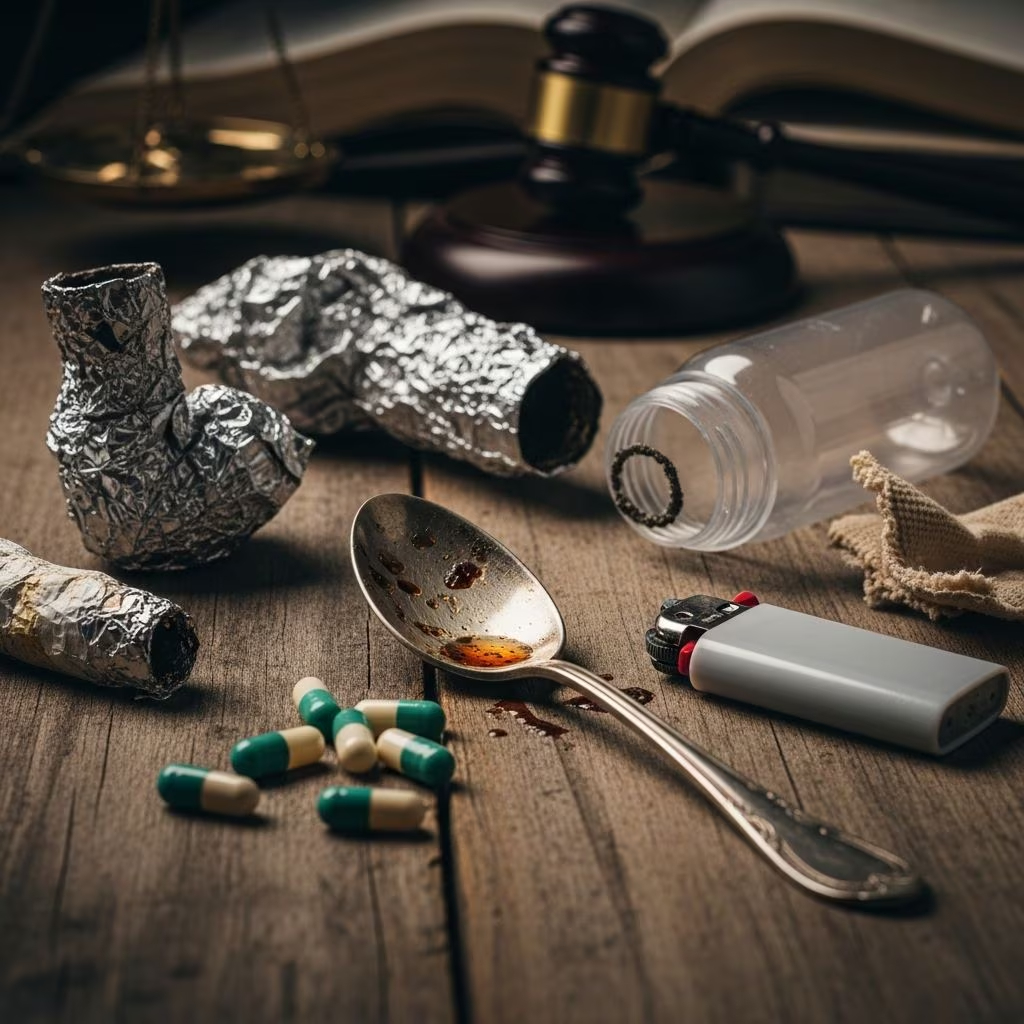
Producing or possessing items intended for illegal drug use carries significant criminal liability under both federal and state statutes. These laws target not only commercial products but also amateur attempts at drug creation or tools designed for consumption, emphasizing public health and safety concerns.
Defining Controlled Substances and Production Activities
The foundation of U.S. drug regulation lies in the Controlled Substances Act (CSA), which categorizes drugs into five schedules based on abuse potential and medical value. Schedule I substances, including many synthetics and hallucinogens, have no accepted medical use and high abuse risk, making their production strictly illegal without authorization.
Drug manufacturing encompasses a wide range of actions: producing, preparing, propagating, compounding, processing, packaging, or labeling controlled substances. This includes growing plants like marijuana (in unauthorized contexts), mixing chemicals for methamphetamine, or synthesizing novel compounds akin to banned synthetics. Even assisting in these processes can trigger charges.
Federal Prohibitions on Unauthorized Drug Creation
Under 21 U.S. Code Section 841, knowingly manufacturing a controlled substance without proper licensing is a felony. Prosecutors must prove intent and direct involvement, but broad definitions capture DIY efforts in home labs or makeshift setups. Counterfeit substances—those falsely labeled to mimic legitimate products—face similar penalties.
Synthetic drugs, such as K2/Spice or bath salts, have prompted specific federal responses. The Synthetic Drug Abuse Prevention Act of 2012 permanently scheduled 26 cannabinoids and cathinones as Schedule I, extending DEA emergency powers to 36 months for rapid response to new variants. The Controlled Substance Analogue Enforcement Act of 1986 treats structurally similar compounds as controlled if they mimic scheduled drugs pharmacologically.
State-Level Regulations and Variations
While federal law sets the baseline, states enforce their own statutes, often mirroring or expanding federal definitions. For instance, Alabama law defines drug paraphernalia as any equipment used or intended for controlled substance activities, from cultivation tools to ingestion devices. Courts evaluate items based on multiple factors:
- Residue of controlled substances on the object.
- Proximity to drug violations.
- Owner’s statements or prior convictions.
- Expert testimony on typical use.
- Instructional materials or advertising.
California’s Health and Safety Code Section 11379.6 prohibits similar manufacturing acts for specified substances, with enhancements for operations near schools or parks. New York targets methamphetamine production explicitly. Nearly all states ban paraphernalia, including homemade versions like altered pipes or syringes, treating them as misdemeanors or felonies depending on context.
Paraphernalia: From Store-Bought to DIY Creations
Drug paraphernalia laws extend to objects facilitating use, such as bongs, scales, or needles. Homemade items aren’t exempt; courts assess intent through circumstantial evidence. Factors like display near precursors, sales volume, or community reputation as a supplier influence determinations. In Alabama, possession is a Class A misdemeanor (up to 1 year jail, $6,000 fine), escalating to Class C felony for sales (10 years, $15,000).
| Factor | Description | Legal Impact |
|---|---|---|
| Residue Presence | Traces of controlled substances | Strong evidence of use |
| Owner Statements | Admissions of purpose | Direct proof of intent |
| Proximity to Drugs | Found near violations | Circumstantial link |
| Expert Analysis | Testimony on design | Establishes typical function |
Severe Penalties for Manufacturing Offenses
Penalties scale with substance type and quantity. Federal guidelines under Section 841 impose 5-40 years for mid-level amounts (e.g., 50-500g meth, 100g-1kg heroin mixtures). State penalties vary: Schedule V manufacturing might be a misdemeanor (1 year max), but enhancements near protected zones add time.
Sales or delivery of paraphernalia or precursors amplify charges. Repeat offenders face mandatory minimums, asset forfeiture, and supervised release. Federal overrides state leniency in conflicts, though marijuana reforms show evolving federal deference.
Defenses and Legal Strategies
Defendants can challenge charges by disputing intent, proving legitimate use (e.g., medical needles), or suppressing evidence from unlawful searches. Expert witnesses may reframe items as non-drug related. Motions to dismiss based on vague statutes or entrapment succeed in some cases. Consulting a criminal defense attorney early is crucial for negotiating pleas or trial preparation.
Evolving Landscape: Reforms and Exceptions
The War on Drugs faces criticism for disproportionate impacts, prompting reforms. As of 2023, 38 states legalized medical marijuana, 22 plus D.C. recreational, and 31 decriminalized simple possession. Federal acts like the Fair Sentencing Act (2010) and First Step Act (2018) reduced crack disparities retroactively. However, manufacturing remains heavily penalized, especially synthetics.
State cannabis laws don’t blanket homemade production; unlicensed grows still violate statutes in legal states if exceeding limits or lacking permits.
Frequently Asked Questions
Is possessing a homemade pipe illegal?
Yes, if linked to controlled substances via residue, intent, or expert opinion; courts determine based on evidence.
What counts as drug manufacturing?
Any production, processing, or preparation of controlled substances without authorization, including chemical synthesis or plant cultivation.
Are synthetic drugs always Schedule I?
Many are, per federal scheduling; analogues resembling scheduled drugs are treated similarly.
Can I get charged for helping make drugs?
Yes, aiding or offering assistance qualifies under manufacturing statutes.
Do marijuana laws affect other drug charges?
Reforms apply mainly to cannabis; other substances face unchanged strict enforcement.
Navigating Charges: Next Steps
If facing accusations, document everything, avoid statements without counsel, and seek specialized legal help. Understanding these laws empowers informed decisions amid complex enforcement.
References
- Homemade drug paraphernalia – is it illegal? — Bhawley Law. 2023-12-13. https://www.bhawleylaw.com/homemade-drug-paraphernalia-is-it-illegal/
- Synthetic Drugs (a.k.a. K2, Spice, Bath Salts, etc.) — White House Archives (ONDCP). 2013-04-12. https://obamawhitehouse.archives.gov/ondcp/ondcp-fact-sheets/synthetic-drugs-k2-spice-bath-salts
- What to Know About Drug Manufacturing Laws — ESB Law. 2018-06-25. https://www.eshlaw.net/2018/06/25/what-to-know-about-drug-manufacturing-laws/
- Drug Manufacturing — Justia Criminal Law Center. N/A. https://www.justia.com/criminal/offenses/drug-crimes/drug-manufacturing/
- Drug Laws in the U.S.: Schedules, Crimes, and Penalties — Nolo. N/A. https://www.nolo.com/legal-encyclopedia/drug-laws-drug-crimes-32252.html
- Drug Law Reform — National Association of Criminal Defense Lawyers (NACDL). 2023-10. https://www.nacdl.org/Landing/DrugLaw