
Legal Rights of Children Born Outside Marriage in BC
Understand how British Columbia law protects children born to unmarried parents, including parentage, support, guardianship, and inheritance.
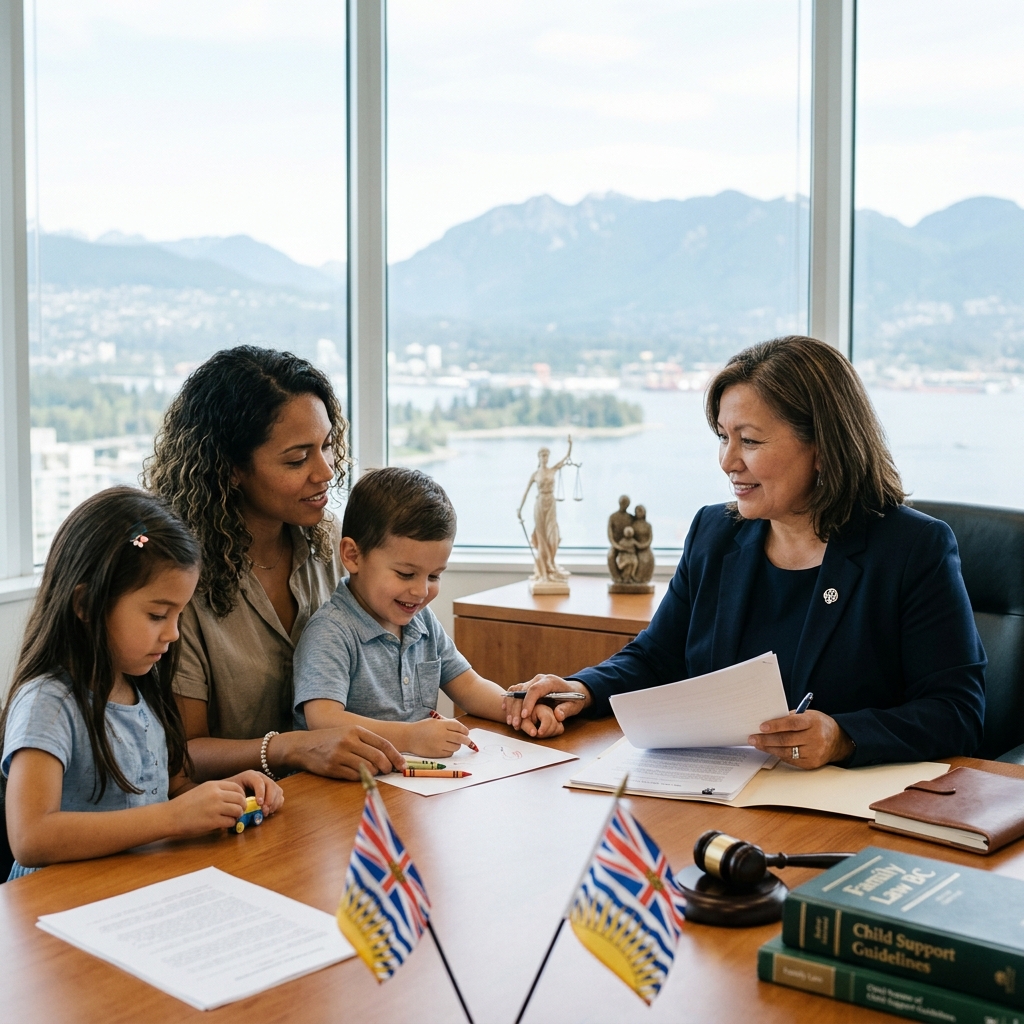
In British Columbia, children who are born to parents who are not married have the same legal status and core protections as children whose parents are married. Modern family law focuses on the child’s relationship with their parents and caregivers, not on the parents’ marital status. This guide explains how the law in BC approaches parentage, guardianship, decision-making, support, and inheritance when a child is born outside marriage.
1. Equal Status: No Legal Distinction Based on Marriage
Historically, the law often labeled children born outside marriage as “illegitimate” and restricted their rights, especially in inheritance and family law. Over several decades, reforms across Canada have abolished these distinctions. Today, in BC and elsewhere in Canada:
- Children have equal legal status regardless of whether their parents are married, in a common‑law relationship, separated, divorced, or never lived together.
- They are entitled to protection from discrimination based on their birth status, consistent with international human rights standards such as the UN Convention on the Rights of the Child.
- Key rights include financial support, inheritance, and participation in decisions about their care and upbringing.
In other words, the law is designed so that a child does not lose rights because their parents did not marry.
2. Parentage: Who Is Legally Recognized as a Parent?
“Parentage” is about the legal relationship between an adult and a child. It is separate from who the child actually lives with (guardianship) or who makes daily decisions (parental responsibilities). In BC and across Canada, legislation and case law generally use biological connection as the starting point for establishing parent–child status, with some important exceptions for adoption and assisted reproduction.
2.1 Presumptions of Parentage
When a child is born, certain presumptions help determine who is legally a parent, particularly in relation to the person who is not giving birth. Common presumptions (simplified) include:
- The person who gives birth is automatically a legal parent.
- A person who was in a conjugal relationship with the birth parent at the time of conception or birth may be presumed to be a parent under provincial family law rules.
- Where assisted reproduction is involved, written agreements and legislation determine who is a parent and who is a donor (for example, sperm or egg donors are generally not parents if the law and agreements say so).
Presumptions can be challenged. If there is a dispute about whether someone is a child’s parent, the court can look at evidence and make a formal declaration of parentage.
2.2 Proving Parentage
If parentage is uncertain or disputed—for example, if one person denies being the child’s parent—courts can use several types of evidence:
- Documentary evidence: birth registration forms, acknowledgment of parentage, immigration or school records.
- Genetic testing: DNA tests are frequently used to confirm or rule out biological parentage.
- Behavior and history: evidence of the adults’ relationship, their involvement with the child, or their actions toward the child.
Courts usually decide parentage on the balance of probabilities, meaning whether it is more likely than not that the person is the child’s parent. A declaration of parentage helps clarify responsibilities such as child support and the child’s right to inherit.
3. Birth Registration, Names, and Identity
Registering a child’s birth is crucial for establishing their legal identity. It allows the child to obtain a birth certificate, health coverage, school registration, and other benefits.
3.1 Registering a Child Born Outside Marriage
In BC, a child’s birth must be registered with the provincial vital statistics agency. The process is essentially the same whether parents are married or not:
- Parents complete a birth registration form soon after the child is born.
- One or more legal parents can be listed, depending on the circumstances and the rules on parentage.
- There is no legal requirement that the parents be married to register the birth or to be named as parents on the registration.
3.2 Choosing the Child’s Surname
Unmarried parents have the same options for surnames as married parents. Common possibilities include:
- Using the birth parent’s surname
- Using the other legal parent’s surname
- Combining both parents’ surnames (for example, hyphenated or in another agreed format)
The choice is typically made at the time of birth registration. Changing a child’s name later usually requires legal procedures and, in many cases, the consent of all guardians or an order of the court.
4. Guardianship, Decision-Making, and Parenting Time
Parentage answers who is legally a parent, but guardianship and parental responsibilities determine who actually makes decisions for the child and who the child lives with. In disputes, BC family law focuses on the best interests of the child as the only or primary consideration.
4.1 Guardianship and Parental Responsibilities
Guardians are the adults who have legal authority and responsibility for a child’s care. Guardianship includes:
- Deciding where the child lives
- Making important decisions about health care and medical treatment
- Choosing schooling, extracurricular activities, and religious or cultural upbringing
- Managing significant property or financial interests belonging to the child
In BC, either one or both parents may be guardians. The mere fact that parents were never married does not mean one parent has automatic priority. Legislation and courts treat parents as having equal potential to act as guardians, so long as this serves the child’s best interests.
4.2 Parenting Time and Contact
When parents live apart, the law distinguishes between:
- Parenting time: the time a guardian spends with the child, with responsibility for the child’s care during that time.
- Contact: time a non‑guardian (for example, a grandparent or other family member) spends with the child.
Courts and agreements can establish flexible schedules, from equal shared time to limited supervised visits, depending on the circumstances. The guiding principle is always the child’s needs and safety, not the parents’ marital status.
4.3 How Courts Decide Parenting Arrangements
When unmarried parents cannot agree on where the child will live or who will make important decisions, courts consider factors such as:
- The child’s physical, emotional, and psychological safety and well‑being
- The strength of the child’s relationships with each parent and other significant people
- The history of care: who has been responsible for daily routines and major decisions
- Any family violence, substance use issues, or other risks
- The child’s views and preferences, where appropriate for their age and maturity
Marriage or lack of marriage is not a deciding factor. The focus is on what arrangement will best support the child’s development and stability.
5. Financial Support: Child Support Obligations
One of the most important protections for children born outside marriage is the right to financial support from their parents. Across Canada, legislation makes clear that every parent has a duty to support their child, regardless of marital status.
5.1 Who Has to Pay Child Support?
A person who has been declared or is presumed to be a parent can be required to provide support. Key principles include:
- The duty to support a child exists whether or not the parents ever lived together.
- Support normally continues at least until the child reaches the age of majority and may continue longer, for example if the child is still in school or has a disability.
- Both parents can be responsible, not just the parent the child does not live with.
5.2 How Child Support Is Calculated
In most Canadian jurisdictions, including BC, child support is calculated primarily using the Federal Child Support Guidelines, which set out standard amounts based on the paying parent’s income and the number of children. Courts may adjust amounts in certain situations, such as shared parenting time or special expenses.
Relevant factors include:
- The paying parent’s annual income (verified with tax returns, pay stubs, or other financial documents)
- The number of children who need support
- Extra costs such as childcare, medical expenses, or educational programs
- Any undue hardship that strict application of the guidelines would create
The guiding policy is that children should benefit from their parents’ financial resources as if the family were intact. This applies whether the parents are married, separated, divorced, or never married.
6. Inheritance and Property Rights
Historically, children born outside marriage had reduced or no rights to inherit from their parents’ estates under common law and older statutes. Modern Canadian succession law has changed this. Provinces have amended legislation so that children inherit on the same terms regardless of their parents’ marital status.
6.1 Inheriting from Parents
Broadly speaking, current law in Canada provides that:
- Children born outside marriage are treated as the same class of heirs as children of married parents.
- If a parent dies without a will (intestate), the child can inherit under provincial succession rules, provided parentage is established.
- If there is a valid will, the child’s rights depend on the terms of the will, although some provinces allow dependants to claim support from the estate in limited situations.
Documents such as birth certificates, parentage declarations, or DNA evidence may be used to prove the family relationship when inheritance is at stake.
6.2 Related Benefits and Claims
Legal recognition of a parent–child relationship can also affect other rights, including:
- Eligibility for survivor benefits under public pensions or private plans
- Claims under wrongful death or fatal injury legislation
- Access to insurance proceeds or registered plans where a “child” is a designated beneficiary
Law reform bodies have recommended systematically removing any remaining distinctions in legislation that treat children differently based on their birth status. This ensures consistent protection across multiple areas of law.
7. Social Trends: More Children Born Outside Marriage
The legal shift toward equal treatment has taken place alongside major social changes. In recent decades, a growing proportion of children in Canada and other developed countries has been born outside marriage.
| Indicator | 1970s | Mid‑1990s | Recent data (around 2023) |
|---|---|---|---|
| Average share of births outside marriage across OECD countries | About 7% | About 23% | Above 40% |
| Trend | Relatively rare | Becoming more common | In many countries, births outside marriage are close to or above half of all births |
According to data collected by the Organisation for Economic Co‑operation and Development (OECD), the proportion of children born outside marriage has increased sharply in most member countries since 1970, with averages now above 40%. Canadian federal research also shows that by the late 1990s, nearly one‑third of Canadian children were born outside marriage, many to parents living in common‑law unions.
These social changes have helped drive legal reforms that focus on children’s rights and interests rather than the parents’ marital status.
8. Practical Steps for Unmarried Parents in BC
If you are an unmarried parent in British Columbia, or expecting a child, there are several practical steps you can take to protect both your child and yourself legally.
8.1 Before or Shortly After Birth
- Ensure the birth is properly registered with vital statistics.
- Discuss and agree on the child’s surname and how parents will be listed.
- Consider signing any required forms that acknowledge parentage where appropriate.
- If there is a disagreement about who is a parent, seek legal advice early and consider applying for a declaration of parentage.
8.2 Agreements on Parenting and Support
- Draft a written parenting agreement that deals with guardianship, parenting time, and decision‑making.
- Set out how child support will be calculated and paid, using the applicable guidelines as a starting point.
- Review your agreement periodically as the child grows and circumstances change.
8.3 Planning for the Future
- Prepare or update your will to reflect your wishes about guardianship and inheritance.
- Designate your child as a beneficiary on life insurance, pension plans, or registered savings if appropriate.
- Keep important documents (birth certificate, parentage orders, agreements) organized and accessible.
While many of these steps are the same for married and unmarried parents, they are especially important when parents do not share a household or formal legal status.
9. Frequently Asked Questions
9.1 Does my child have fewer rights because I was not married?
No. Under modern Canadian and BC law, children are not disadvantaged because their parents are unmarried. They have equal rights to support, protection, and inheritance, subject to the same rules that apply to all children.
9.2 Can the other parent refuse to be listed on the birth registration?
If there is disagreement, the parent who gives birth can still register the child. Whether the other parent is listed may depend on proof of parentage and provincial rules. If the other parent denies being a parent, you may need a court order declaring parentage, which can rely on evidence such as DNA testing.
9.3 Who gets custody if we were never married?
There is no automatic rule that unmarried mothers or fathers get custody. Courts and legislation treat parents as potentially equal guardians, and decisions are made based on the child’s best interests, including their safety, stability, and existing caregiving arrangements.
9.4 Do I still have to pay child support if I never lived with the other parent?
Yes. The obligation to support a child does not depend on whether you ever lived with the other parent or were married. If you are a legal parent, you can be required to contribute to your child’s financial needs, usually in accordance with guideline amounts.
9.5 Can a child born outside marriage inherit if there is no will?
Yes. Canadian succession laws have been modernized so that children born outside marriage are treated as equal heirs. If parentage is established and the parent dies without a will, the child can inherit under provincial intestacy rules, just like any other child.
References
- Knowing the Legal Rights of a Child Born to Unmarried Parents — Pathfinder Law. 2020-06-01. https://pathfinderlaw.ca/knowing-legal-rights-of-child-born-to-unmarried-parents/
- The Legal Status of the Child Born Outside of Marriage in Nova Scotia – Final Report — Law Reform Commission of Nova Scotia. 2002-06-01. https://lawreform.ns.ca/wp-content/uploads/2020/04/status-of-the-child-final-report.pdf
- The “Illegitimate” Heir: How Canadian Law Treats Children Born Outside of Marriage — Faber LLP. 2019-10-15. https://faberllp.ca/the-illegitimate-heir-how-canadian-law-treats-children-born-outside-of-marriage/
- Top Five Points on the Law Relating to Children Born Outside of Marriage — FamilyLLB Blog. 2012-01-19. https://familyllb.com/2012/01/19/top-five-points-on-the-law-relating-to-children-born-outside-of-marriage/
- Illegitimacy in British Columbia, Saskatchewan, Ontario, and Nova Scotia — Allard Research Commons (Emeritus Publications). 1982-01-01. https://commons.allard.ubc.ca/emeritus_pubs/8/
- The Changing Family Environment at Birth — Department of Justice Canada. 2004-11-01. https://www.justice.gc.ca/eng/rp-pr/fl-lf/divorce/2004_6/p1.html
- SF2.4: Share of births outside of marriage — OECD Family Database. 2023-07-01. https://webfs.oecd.org/els-com/Family_Database/SF_2_4_Share_births_outside_marriage.pdf
Similar Articles








Read full bio of medha deb


