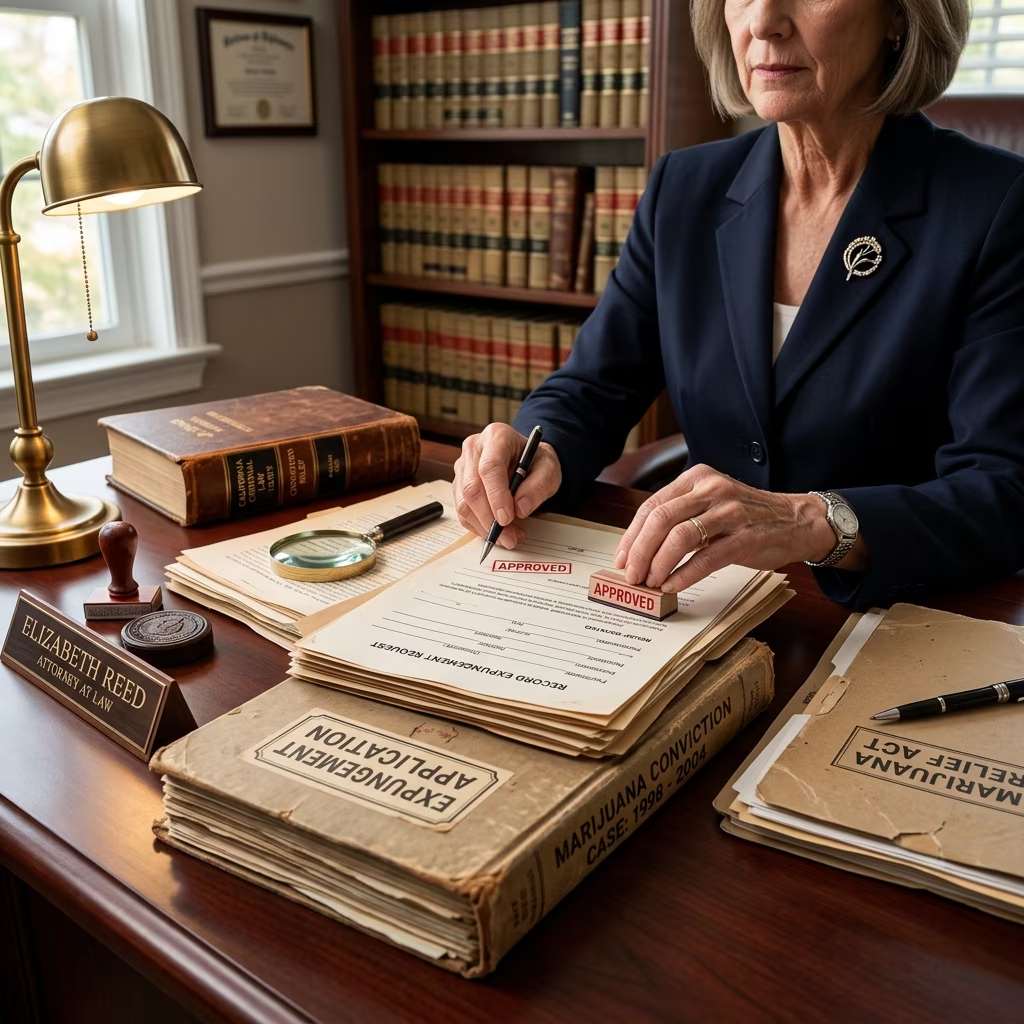
What Changes When Marijuana Laws Evolve?
When a state reduces penalties for marijuana or legalizes limited possession, older convictions do not automatically disappear unless lawmakers create a specific relief process. That means a person who was convicted years ago may still face barriers to housing, work, licensing, and immigration even after the conduct is no longer treated as seriously under current law.
The good news is that many jurisdictions now provide some path to clear or reduce the impact of marijuana-related records. These remedies may be called expungement, sealing, vacatur, pardon, or automatic relief. The exact option depends on the state, the offense, and whether the law includes retroactive relief for past convictions.
- Expungement usually removes or destroys a record, or makes it unavailable in most routine checks.
- Sealing hides a record from public view while preserving it for limited government use.
- Vacatur sets aside a conviction, often because the law has changed or a legal defect exists.
- Pardons are executive acts that forgive the offense but may not erase the record.
In practice, the best remedy depends on how the state defines eligibility and how far the legislature has gone in making relief automatic or petition-based. Research on cannabis record clearing shows that many states use general expungement systems rather than marijuana-specific ones, and petition requirements, waiting periods, and fees remain common even where relief is available.
Common Paths to Relief
People seeking to clean up an older marijuana conviction usually start by checking whether their state offers one of four basic routes. Each route works differently, and the legal consequences are not identical.
| Remedy | What it does | Common limits |
|---|---|---|
| Expungement | Removes or hides the record from ordinary access | May require a petition, waiting period, or payment of fees |
| Sealing | Makes the record inaccessible to the public | Often still visible to courts, prosecutors, or licensing agencies |
| Vacatur | Sets aside the conviction as legally invalid or obsolete | Usually tied to specific offenses or statute changes |
| Pardon | Shows official forgiveness by the executive branch | Does not always remove the conviction from all records |
According to a national review of cannabis record clearing laws, most states with decriminalization or legalization now offer some type of expungement or related relief, but the procedures vary widely and are often not automatic. Some states have also created automatic expungement systems that do not require a petition, which can be especially helpful for people who cannot afford a lawyer or do not know they are eligible.
Why Older Convictions Still Matter
Even a minor marijuana conviction can have consequences long after any sentence is finished. A record may show up during a background check, affect access to jobs or apartments, complicate professional licensing, or create problems in custody and immigration matters. These consequences can persist even when the same conduct would now be treated as a civil offense or not prosecuted at all.
That gap between old law and new law is one reason many reform efforts now include retroactive record relief. Lawmakers have recognized that changing future penalties alone does not address the harm caused by past enforcement. The National Conference of State Legislatures reports that many jurisdictions have adopted record clearing laws that may apply to cannabis offenses, and a growing number have moved toward automatic mechanisms.
- Employment: employers may still see the conviction unless it is sealed or expunged.
- Housing: landlords often use screening systems that pick up older records.
- Education: some schools and scholarship programs ask about criminal history.
- Professional licensing: boards may require disclosure of convictions even if they are old.
How States Structure Eligibility
Eligibility rules usually turn on the type of offense, the amount of marijuana involved, the date of conviction, and whether the person has completed the sentence. Some states limit relief to simple possession. Others also include low-level sale, paraphernalia, or intent-to-distribute offenses if the conduct would no longer be criminal or would be punished less severely today.
The Lawyers’ Committee toolkit explains that three common post-conviction routes are expungement, sealing, and vacating convictions. That framework reflects how states often separate relief for old cases from broader criminal justice reform. In some places, the law provides relief only after a waiting period. In others, the person must demonstrate compliance with probation or payment of court obligations before relief is granted.
Eligibility may also depend on whether the conviction was for a misdemeanor or felony. Some states allow relief only for possession under a small threshold amount. Other states have gone further and created cannabis-specific programs for broader categories of offenses.
Automatic Relief Versus Petition-Based Relief
One of the biggest differences among state systems is whether a person must apply for relief or whether the state must clear records on its own. Automatic systems are simpler for the public because they reduce paperwork, cost, and delay. Petition systems require the individual to take action, gather records, and often appear in court.
Recent policy materials from the NCSL show that many jurisdictions are increasingly adopting automatic expungement mechanisms for certain cannabis offenses. Even so, petition-based systems remain common nationwide, and studies of cannabis record clearing found that most programs still require some form of application, waiting period, or financial compliance.
- Automatic relief is faster and less burdensome, but it may only cover narrow categories of cases.
- Petition-based relief can reach more people, but it usually takes more time and effort.
- Administrative barriers such as fees and waiting periods may exclude some eligible people.
Practical Steps for a Person Seeking Relief
A person with an older marijuana conviction should begin by identifying the court, the exact offense, the date of conviction, and the final sentence. Those details determine which law applies and whether the person is already eligible for relief. If the state has an automatic system, the person may still need to confirm that the record was actually cleared.
If the state uses a petition system, the next step is usually to obtain certified copies of the case record and review any outstanding obligations. Some programs require that all fines, fees, or restitution be paid before a petition can succeed. Others require the completion of a waiting period or a period of law-abiding behavior.
- Collect the judgment and sentencing documents.
- Check the current state statute and court rules.
- Confirm whether the offense qualifies under the marijuana-specific or general record relief law.
- Review whether waiting periods, fees, or completed supervision are required.
- File the petition or verify that automatic relief has been processed.
- Request updated background check results after the order is entered.
For many people, the most difficult part is not the legal standard itself but tracking down the paperwork and understanding which agency holds the record. Where relief is available, legal aid organizations and post-conviction clinics can often help navigate the process.
What the Research Says About Reform
National research suggests that cannabis reform and record clearing now go hand in hand in many states. A recent review found that among states with cannabis decriminalization or legalization, most provided some form of conviction expungement, though the details differed significantly. Another policy overview found that dozens of jurisdictions have record-clearing laws that may apply to cannabis-related offenses, and a smaller but growing number have adopted automatic expungement systems.
Those findings point to a clear trend: lawmakers increasingly see record relief as part of the policy response to marijuana reform, not an optional afterthought. At the same time, the data show that people still face practical obstacles. Petition systems, waiting periods, and fees can limit access, especially for low-income individuals who are most likely to benefit from relief.
How to Think About Pardons and Executive Relief
A pardon can be a valuable option when statutory record clearing is unavailable or too narrow. Governors in several states have issued pardons for low-level marijuana convictions, and state policy discussions continue to treat pardons as one tool for correcting the effects of outdated drug laws. However, a pardon is not always the same as expungement. It may remove some legal disabilities, but the record can still remain visible unless another process also applies.
Because pardon procedures are governed by executive offices rather than courts, the application process may be separate from any expungement or sealing request. In some cases, a person may need to pursue both avenues, especially if they want both formal forgiveness and a cleaner public record.
Frequently Asked Questions
Does legalization erase all old marijuana convictions?
No. Legalization or decriminalization changes the law going forward, but old convictions usually remain unless the state has a retroactive relief process such as expungement, sealing, vacatur, or pardon.
Is expungement the same as sealing?
Not always. Expungement often means the record is removed or treated as if it no longer exists for most purposes, while sealing usually keeps the record intact but hidden from the public. The exact effect depends on state law.
Do I need a lawyer to clear a marijuana conviction?
Not necessarily. Some systems are simple enough for self-representation, especially if the state has automatic relief. But a lawyer or legal aid provider can help if the case involves multiple offenses, unpaid fines, immigration concerns, or an unclear eligibility rule.
What if my state has automatic expungement?
You may not need to file anything, but it is still wise to verify that the record was cleared. Some systems do not notify individuals when relief is granted.
Can a low-level felony ever qualify for relief?
Yes, in some states. Eligibility varies, and some laws cover certain nonviolent felonies or broader cannabis offenses, while others are limited to simple possession.
Why This Area of Law Keeps Changing
Marijuana record relief is still a moving target because states are changing their laws at different speeds and using different policy tools. Some are focused on fairness and racial equity. Others are focused on reducing court burden or helping people reenter the workforce. The result is a patchwork system where one person may get automatic relief in one state but have to file a petition in another.
For that reason, anyone with an older conviction should not assume the law works the same way it did a few years ago. The best approach is to look at the current statute, confirm whether the offense is eligible, and determine whether the state offers a petition, automatic clearing, or a separate executive remedy. In many places, help is available, but the process is rarely identical from one jurisdiction to the next.
References
- Expungment now: A post-conviction toolkit for attorneys and advocates — Lawyers’ Committee for Civil Rights Under Law. 2020-11-30. https://lawyerscommittee.org/wp-content/uploads/2020/11/Post-Cannabis-Conviction-toolkit-2020.30.11.pdf
- Clearing cannabis criminal records — Proceedings of the National Academy of Sciences / PMC. 2024-11-18. https://pmc.ncbi.nlm.nih.gov/articles/PMC12502637/
- Options to decriminalize marijuana possession — North Carolina Department of Justice. 2020-11-04. https://ncdoj.gov/wp-content/uploads/2023/12/Marijuana-Decrim-Options-11.4.20.pdf
- Cannabis Overview — National Conference of State Legislatures. 2025-01-15. https://www.ncsl.org/civil-and-criminal-justice/cannabis-overview
- The Case For Marijuana Decriminalization — Baker Institute for Public Policy, Rice University. 2019-04-01. https://www.bakerinstitute.org/research/case-marijuana-decriminalization
- How Will Marijuana Legalization Affect My Client’s Criminal Record? — Legal Services of Long Island. 2021-03-01. https://legalservicesli.org/how-will-marijuana-legalization-affect-my-client-s-criminal-record/