
Eviction: 6 Legal Reasons Landlords Can Remove Tenants Safely
Learn the most common lawful grounds for eviction and how landlords should document them.
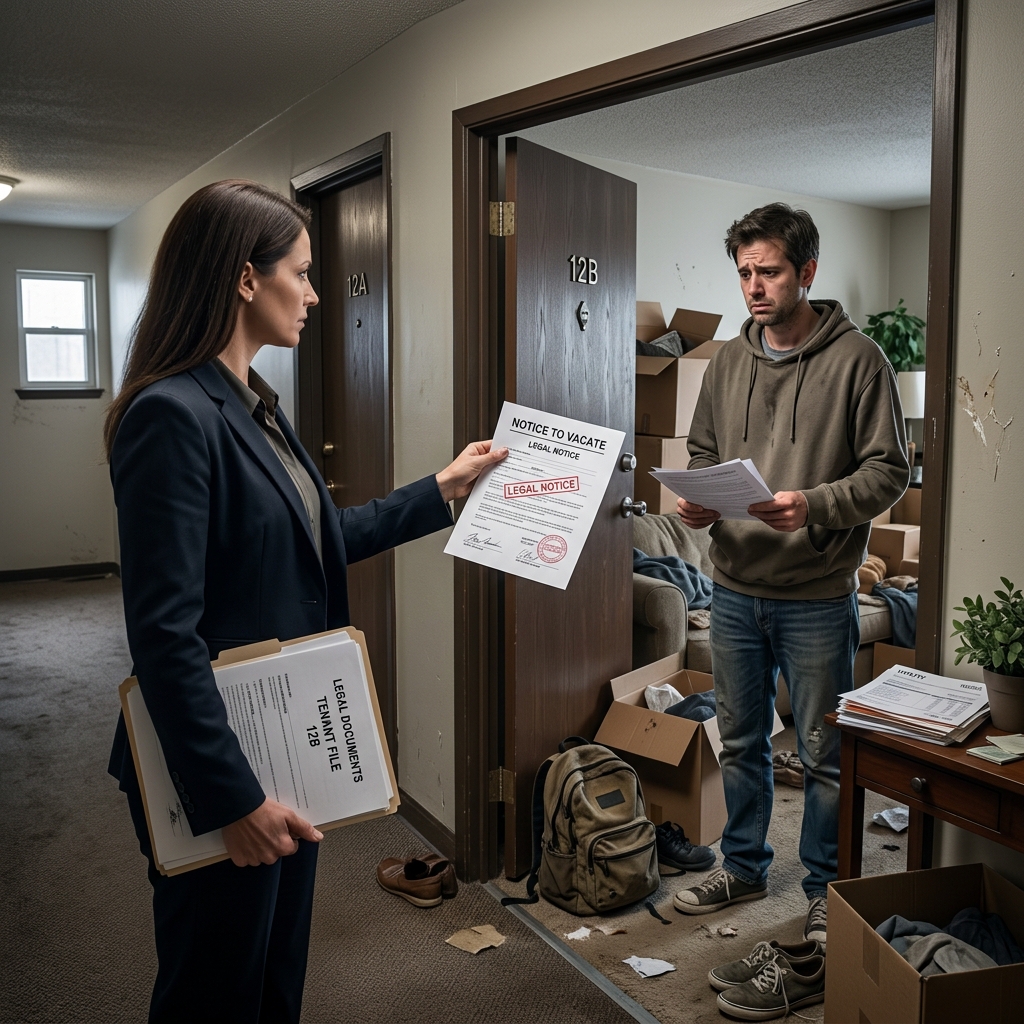
When eviction is legally allowed
Eviction is not a shortcut for ending an uncomfortable rental relationship. In most places, a landlord must have a lawful ground, give the tenant proper notice, and follow the court process before removing anyone from the home. Housing rules vary by state and city, but the most common eviction grounds are similar across many jurisdictions: unpaid rent, serious lease violations, property damage, nuisance behavior, illegal activity, and staying after the lease ends. Legal rules and tenant protections may also require additional steps before a notice can be served or a case can be filed.
For that reason, a landlord should begin with the lease, the local housing code, and a careful record of what happened. The reason for eviction matters because it determines the kind of notice needed, how much time the tenant gets to respond, and whether the issue can be fixed before the case goes to court. In many situations, a well-documented notice and a clear paper trail are as important as the reason itself.
Common grounds that can support an eviction
There are several recurring reasons landlords rely on when seeking possession of a rental unit. The exact wording may differ by state, but the substance of the claim usually falls into a few main categories. Some grounds are based on a tenant’s conduct, while others arise when the lease term has expired and the tenant does not leave voluntarily.
| Ground for eviction | Typical issue | Possible evidence |
|---|---|---|
| Nonpayment of rent | Rent is late, missing, or returned unpaid | Ledger, bank records, bounced check, notice history |
| Lease violation | Unauthorized pets, extra occupants, subletting, or rule breaches | Lease clause, photos, witness statements, written warnings |
| Property damage | Conduct causes more than ordinary wear and tear | Photos, repair invoices, inspection reports |
| Nuisance or disturbance | Noise, threats, unsafe conduct, or repeated disruption | Complaints, incident logs, police reports |
| Illegal activity | Criminal conduct or unlawful use of the unit | Police records, notices, testimony, surveillance records if lawful |
| Holdover tenancy | Tenant remains after lease expiration or termination | Lease end date, termination notice, communication records |
Failure to pay rent on time
Nonpayment is the most widely recognized basis for eviction. A landlord may have a claim when rent is not paid on the due date, when the tenant pays only part of the amount owed, or when a rent payment is returned unpaid. Some leases and local rules treat repeated late payment as a serious issue even if the tenant eventually catches up. In subsidized or rent-regulated housing, additional rules may control how and when a late payment can become grounds for removal.
A landlord should keep a complete ledger showing what was due, what was paid, and when payments were received. If the tenant disputes the balance, that record often becomes the most important evidence in the case. If the jurisdiction requires a pay-or-quit notice, the notice must usually state the amount owed and the deadline for payment with precision.
Violations of the lease agreement
A lease is a binding contract, so breaking a material term can justify eviction. Common examples include keeping an unauthorized pet, adding occupants without permission, subletting when it is prohibited, using the unit for a business, or refusing to follow building rules that are written into the rental agreement. Not every minor annoyance qualifies. Courts often look for a meaningful breach that affects the landlord’s rights, the property, or other residents.
Before acting, a landlord should check whether the lease allows the tenant to fix the problem. Many agreements and local statutes require notice and an opportunity to cure certain violations. A strong case usually includes the lease clause itself, a written warning, and evidence that the tenant did not correct the issue in time.
Damage beyond ordinary wear and tear
Some damage is expected in any occupied property, but intentional destruction, reckless conduct, or neglect that causes significant repair needs can support eviction. Broken doors, ruined flooring, removed fixtures, or repeated water damage caused by misuse may go well beyond normal aging. The more the damage threatens safety, habitability, or the value of the property, the more likely it is to be treated as a lawful reason for removal.
To make this type of claim credible, a landlord should document the condition of the property before and after the incident. Photos, inspection notes, contractor estimates, and repair invoices help distinguish true damage from ordinary wear and tear. If the tenant claims the problem was caused by a building defect or a maintenance failure, the landlord’s maintenance records may become equally important.
Noise, nuisance, and disruption
A tenant may be evicted for creating a nuisance or repeatedly disturbing neighbors when the conduct is severe enough to interfere with safety, quiet enjoyment, or the basic use of the building. Loud parties, harassment, threats, dangerous activity in common areas, and repeated complaints can all become part of a nuisance claim. The key question is usually not whether one complaint occurred, but whether the behavior was ongoing, serious, and supported by evidence.
Landlords should approach nuisance cases carefully because isolated conflicts do not always justify eviction. A stronger file usually includes dated complaints, warning letters, and notes showing that the tenant was given a chance to stop the behavior. In some jurisdictions, nuisance claims also overlap with lease violations or unlawful conduct, which can strengthen the case if the facts support more than one basis.
Illegal use of the property
Using a rental unit for unlawful purposes is a serious ground for eviction. Examples may include drug activity, storage of contraband, fraud-related operations, or any other illegal conduct that occurs on the premises or involves the unit itself. In many places, criminal activity is treated more seriously than ordinary lease violations because it may threaten neighbors, the landlord, and the property.
That said, a landlord should avoid assumptions. Allegations of illegal activity should be supported by reliable records such as police reports, formal notices, or other evidence that can withstand scrutiny in court. Because these cases may involve safety concerns and accelerated timelines, a landlord should follow local notice rules exactly and avoid any self-help action.
Staying after the lease ends
Sometimes eviction is based not on wrongdoing, but on the tenant’s refusal to leave after the rental agreement expires or after a valid termination notice ends the tenancy. This is often called a holdover situation. If a lease is month-to-month or the fixed term has ended, the landlord may have the right to end the tenancy with proper notice, unless local rent rules or a protected tenancy require a specific reason.
In holdover cases, the core issue is possession, not rent arrears or misconduct. The landlord must still prove that notice was served correctly and that the required waiting period passed before filing. A dated lease, a termination notice, and proof of service are often the key documents.
When notice-and-cure rules matter
Many eviction grounds are not immediately actionable. The law may require the landlord to give notice and an opportunity to correct the problem before filing in court. This is common for lease violations, noise issues, and some maintenance-related problems caused by the tenant. Even when cure is not allowed, the notice often must still specify the reason, the deadline, and the legal basis for the action.
Because notice defects can derail an eviction case, landlords should make sure the written notice matches local law exactly. A notice that is too vague, missing a deadline, or served the wrong way may force the landlord to start over. Careful compliance is often less expensive than fighting a dismissed case.
What landlords should document before filing
- Copies of the lease, addenda, and house rules
- Rent ledgers and payment records
- Photos or video of damage, when legally obtained
- Written complaints from neighbors or staff
- Repair invoices, inspection reports, and maintenance logs
- Copies of notices served on the tenant
- Proof of service showing how and when the notice was delivered
Good documentation does more than support the landlord’s story. It also helps show that the landlord acted consistently and gave the tenant a fair chance to comply. That can matter greatly if the tenant argues that the eviction is retaliatory, discriminatory, or otherwise improper under local or federal law.
Legal limits that can override the landlord’s reason
Even a valid eviction ground may not be enough if the landlord violates tenant-protection rules. Some jurisdictions require “just cause” for certain tenancies. Others limit when a landlord may evict in subsidized housing, rent-controlled housing, or after a tenant has lived in the unit long enough to gain special protection. Federal fair housing rules also prohibit eviction based on protected characteristics or as retaliation for asserting legal rights.
That means the same event can have different legal outcomes depending on location, tenancy type, and the tenant’s status. A landlord who is unsure whether a ground is legally sufficient should review state and local law before sending a notice. In close cases, getting legal advice early can prevent expensive mistakes later.
Frequently asked questions
Can a landlord evict someone for any reason?
No. In many places, the landlord must have a lawful ground or a valid reason tied to the end of the tenancy. Some jurisdictions also require just-cause eviction rules for certain tenants.
Is late rent the same as nonpayment?
Often yes, if the rent is unpaid by the due date. However, local law may distinguish between a single late payment, repeated lateness, partial payment, and a bounced check.
Does ordinary wear and tear count as damage?
No. Ordinary wear and tear is expected over time. Eviction claims usually depend on damage that is intentional, negligent, or much more serious than normal use.
Can verbal complaints support eviction?
They can help, but written records are stronger. Emails, letters, incident logs, photos, and official reports are usually much more persuasive in court.
Do landlords have to go to court?
In most cases, yes. A landlord generally cannot lawfully lock out a tenant, shut off utilities, or remove belongings without a court order and proper process.
Practical approach before starting an eviction
Before filing, a landlord should confirm the ground, review the lease, check the notice rule, and gather proof. A tenant may be able to cure the problem, negotiate a move-out date, or raise a legal defense that changes the strategy. Careful preparation helps a landlord choose the right notice, avoid technical errors, and move forward with a case that is based on facts rather than frustration.
When handled correctly, eviction is a legal remedy for a specific problem, not a general response to conflict. The strongest cases are the ones that are documented, timely, and grounded in the lease and local housing law.
References
- 6 Legal Reasons To Evict A Tenant — Innago. 2025. https://innago.com/6-legal-reasons-to-evict-a-tenant/
- Eviction — Cornell Law School, Legal Information Institute. 2025. https://www.law.cornell.edu/wex/eviction
- Eviction | Know Your Rights — California Rural Legal Assistance, Inc. 2025. https://crla.org/get-help/housing/evictions-and-lockouts/know-your-rights-eviction
- California Limits When a Landlord Can Evict Renters — Legal Aid Society of San Bernardino. 2025. https://lsnc.net/self-help/housing/california-limits-when-landlord-can-evict-renters
- Legal Reasons for Eviction — Los Angeles Housing Department. 2024-11. https://housing.lacity.gov/wp-content/uploads/2024/11/Legal-Reasons-for-Eviction-English.pdf
- Evictions in Nevada — Nevada Legal Services. 2025. https://nevadalegalservices.org/evictions-in-nevada/
Similar Articles








Read full bio of medha deb


