
Undefined: Legal And Ethical Risks Of Gifting A Pet, Checklist
A practical legal guide to giving dogs, cats, and other pets as gifts while protecting the animal, the recipient, and yourself.
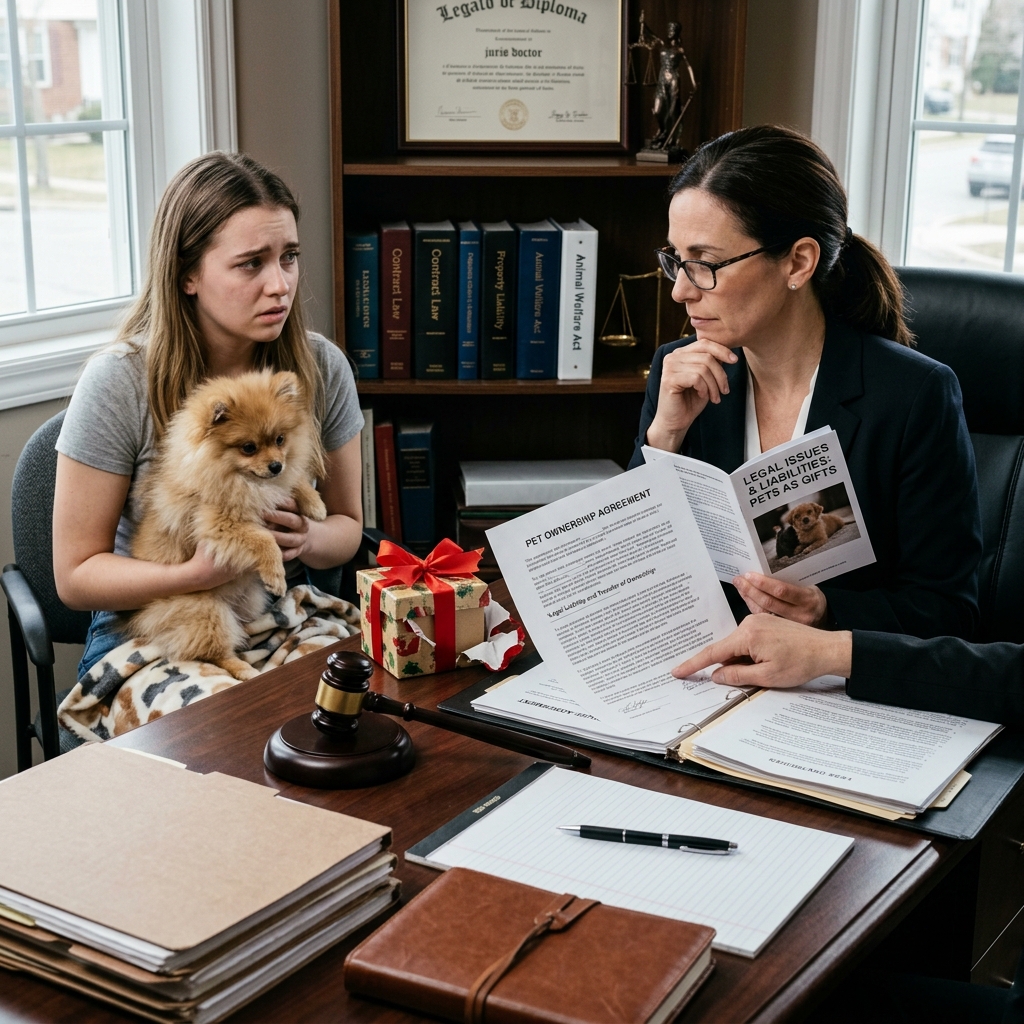
Surprising someone with a new puppy, kitten, or other companion animal can feel like the ultimate heartwarming gesture. Yet, behind the cute reveal, there are serious legal and ethical issues that can affect the animal, the recipient, and the person giving the gift. Understanding these risks before you wrap a crate or tie a bow around a collar helps ensure your generosity does not accidentally lead to cruelty charges, ownership disputes, or a stressed and unwanted pet.
Why Pet Gifts Are Legally Different from Other Presents
Most gifts are simple: you hand over an item, and the recipient owns it. Pets, however, occupy a complicated space in the law. In many jurisdictions, animals are treated as personal property, but they are also living beings subject to animal welfare and cruelty laws. This dual status means that giving a pet involves more than just transferring ownership; it also implicates duties of care and potential liability.
- Property rules: The law typically treats pets as property, so ownership must be clearly transferred, just as with a car or furniture.
- Welfare rules: Animal cruelty and neglect statutes impose obligations on owners and sometimes others who handle or transport animals.
- Liability rules: Owners may be responsible for injuries or damage caused by the animal, and in some situations, the giver can also be implicated.
Because these different legal regimes intersect, a seemingly simple holiday or birthday surprise can create lasting legal consequences.
First Question: Should You Give a Pet as a Gift at All?
Before tackling contracts or ownership paperwork, consider whether gifting a pet is appropriate in the first place. Major animal welfare organizations caution that pets should only be given to people who have shown a sustained interest in owning one and have the capacity to care for the animal. When this basic threshold is not met, the consequences can be severe for both the animal and the human recipient.
Key Factors to Consider Before Gifting a Pet
- Clear desire for a pet
Has the recipient consistently expressed that they want a pet, and do they understand the long-term commitment involved? - Time and lifestyle
Does the recipient have a schedule that allows for daily care, training, and attention? A demanding job, frequent travel, or unstable housing may make pet ownership unrealistic. - Financial capacity
Pet ownership involves ongoing costs for food, veterinary care, insurance, and equipment. Shock gifts can saddle recipients with expenses they did not plan for. - Household support
In homes with children, the adults must be prepared to assume responsibility; a pet gift to a child without parental buy-in is a common source of neglect cases.
When these elements are missing, animals often end up surrendered to shelters, rehomed multiple times, or neglected, which can also trigger legal consequences for the people involved.
Ownership: Who Legally Owns the Gifted Pet?
One of the most common legal issues with gifted pets is uncertain ownership. Because pets are legally viewed as property, courts frequently decide disputes by looking at who has title, whose name is on the purchase or adoption paperwork, and who has paid for care.
How Courts Typically Determine Pet Ownership
| Evidence Type | How It Can Affect Ownership |
|---|---|
| Purchase or adoption contract | The person named on the paperwork is often presumed to be the legal owner, even if someone else claims the pet was a gift. |
| Payment of expenses | Long-term payment of vet bills, food, and supplies can support a claim of ownership in disputes. |
| Registration and microchip records | Licenses, microchip registrations, and insurance policies in a particular name can help establish legal ownership. |
| Written gift documentation | A written statement that the pet was given as a gift, signed by the prior owner, can support the recipient’s claim. |
Without documentation, arguments over “who really owns the dog” can escalate into court cases, particularly after breakups, divorces, or when family members disagree.
Practical Steps to Clarify Ownership When Gifting a Pet
- Put the recipient’s name on all primary paperwork
Whenever possible, have the adoption agreement, bill of sale, or shelter contract list the intended recipient as owner or co-owner. - Use a short written statement of gift
Ask the giver (or current owner) to sign a dated note stating that the pet is permanently given to the recipient. This does not have to be complex to be useful evidence. - Align registrations and records
Register the microchip, local pet license, and vet records in the recipient’s name as soon as the gift is made. - Keep evidence of the gifting event
Photos or messages showing the pet presented as a gift (for example, at a birthday or holiday) can help corroborate the recipient’s ownership claim.
These simple steps reduce the risk of later disputes and make it easier for courts to recognize the intended owner if conflicts arise.
Contracts and Agreements with Shelters and Breeders
Where the pet comes from significantly affects the legal landscape. Adoption organizations, rescues, and breeders often use contracts that specify who owns the animal, what guarantees exist, and what happens if the placement fails. If you plan to gift the pet, you need to ensure those contracts are consistent with the recipient’s role.
Critical Clauses to Check Before You Gift
- Ownership and transfer terms
Some contracts restrict transfer or rehoming without consent from the shelter or breeder. If you intend to gift the pet, verify that this is permitted and documented. - Return policies and health guarantees
Many breeders or shelters offer limited guarantees regarding health or behavior, as well as return options. Clarify whether the recipient can exercise these rights or only the original signatory. - Care obligations and inspection rights
Contracts may impose minimum care standards or allow follow-up checks. The recipient should understand and agree to these obligations before accepting the pet.
To protect the recipient, it is often preferable to have them sign the adoption or purchase paperwork directly or be named as a beneficiary in the contract.
Animal Cruelty Risks: The Hidden Danger of “Cute” Surprises
Some of the most legally hazardous gifting practices arise from attempts to create dramatic reveals. Boxing a pet with limited air, mailing animals, or leaving them unattended in cars or on doorsteps can cross the line into animal cruelty under state law. Many jurisdictions have strengthened cruelty statutes, making certain acts a criminal offense that can result in fines or jail time.
High-Risk Gifting Behaviors to Avoid
- Sealed or poorly ventilated boxes
Placing an animal in an enclosed container without adequate airflow or supervision can cause injury or death and may be prosecuted as cruelty or neglect. - Transporting animals as packages
Attempting to ship or air-mail animals through regular postal channels is unsafe and often violates postal and animal welfare rules. - Leaving pets outdoors as surprises
Leaving a pet tethered outside, in a vehicle, or on a porch without confirming the recipient’s presence and readiness can lead to exposure, injury, or abandonment issues.
Safer options include placing the animal in a well-ventilated carrier, minimizing confinement time, and supervising the pet continuously during the gifting event. The desire for a dramatic reveal should never outweigh the animal’s safety and legal protections.
Liability for Injuries and Damage After the Gift
Once a pet is gifted, who is legally responsible if it bites a neighbor, causes property damage, or injures someone? In general, the legal owner bears primary responsibility, but situations involving recent gifts can be complicated.
Common Liability Scenarios
- Bites or attacks shortly after gifting
If a dog bites someone soon after being given as a gift, the law usually looks at who owned and controlled the animal at the time of the incident. In some cases, both the giver (as former owner) and the recipient (as new owner) may be scrutinized. - Property damage in shared households
Where multiple adults share a home, courts may examine who accepted responsibility for the pet and who allowed it access to the damaged property. - Failure to disclose known risks
Gifting a dog with a known history of aggression or a pet with serious contagious disease without informing the recipient can expose the giver to claims of negligence or misrepresentation.
To reduce liability, disclose all known health or behavior issues, ensure the recipient knowingly accepts responsibility, and encourage early training and supervision.
Estate Planning and Gifts of Pets Through Wills
Gifted pets are not only a concern during holidays or birthdays; they often feature in estate planning. People frequently want to leave their animals to a specific person or provide funds for their care. Because the law treats pets as property and does not allow animals to own property or money themselves, these gifts must be carefully structured.
Limits on Direct Gifts to Pets
- Pets cannot directly own property
Courts generally hold that a direct gift “to” an animal is void because an animal cannot be a legal owner or trust beneficiary. - Giving money to a caregiver is not guaranteed care
When funds are gifted to a person with a hope they will use them for the pet, that money legally becomes the person’s property, and they are not always obligated to spend it on the animal.
Better Tools: Pet Clauses and Pet Trusts
- Designating a new owner in your will
You can name a specific caregiver to receive your pet as part of your estate. This clarifies legal ownership when you die and avoids uncertainty. - Creating a pet trust or protection agreement
Specialized pet trusts and agreements allow funds to be managed by a trustee for the pet’s benefit, with enforceable duties regarding how money is used and how the animal is cared for.
For long-lived or high-need animals, working with an attorney on a formal pet trust can provide more reliable protection than informal promises.
Ethical and Emotional Dimensions: Beyond the Law
Law sets minimum standards, but responsible gifting goes further. Ethics and emotional realities often dictate whether a pet gift becomes a source of joy or regret. Animals that are repeatedly rehomed can develop anxiety and behavioral issues, while recipients may feel guilt, stress, and family conflict when they cannot meet the animal’s needs.
- Impact on the animal
Frequent transitions between homes and inconsistent care can lead to stress, fear, and behavioral challenges that persist even when a stable home is eventually found. - Impact on the recipient
Individuals who are surprised with a pet they cannot care for may feel shame for surrendering it, strain in relationships, and a lasting reluctance to adopt again.
Thinking through these softer factors before gifting a pet can prevent emotional harm that legal solutions cannot easily fix.
Checklist for Responsible Pet Gifting
To balance generosity with legal and ethical responsibility, consider following this practical checklist:
- Confirm the recipient genuinely wants a pet and understands the commitment.
- Assess the recipient’s time, housing stability, and financial capacity to provide ongoing care.
- Loop in all adult members of the household, especially if the gift is intended for a child.
- Choose reputable shelters, rescues, or breeders, and review their contracts carefully.
- Put the recipient’s name on adoption or purchase paperwork whenever possible.
- Document the gift with a brief written statement or other evidence to clarify ownership.
- Avoid any gifting method that could endanger the animal (sealed boxes, mailing, unattended confinement).
- Disclose known health and behavior issues to the recipient and provide complete records.
- Encourage the recipient to consider estate planning for the pet, particularly for long-lived species.
Frequently Asked Questions About Gifting Pets
Is it legal to give a dog or cat as a surprise gift?
In most places, it is not inherently illegal to gift a dog or cat, even as a surprise. However, you must still comply with animal welfare laws, ensure safe handling, and transfer ownership properly. Major organizations advise limiting pet surprises to people whose interest and capacity to care are well-established.
Can I be charged with animal cruelty for how I present the gift?
Yes, in extreme cases. If the way you contain, transport, or reveal the animal causes suffering, injury, or risk of death, authorities may treat it as cruelty or neglect. Examples include sealed boxes with poor ventilation or leaving the pet in dangerously hot or cold conditions.
Who owns the pet if my name is on the adoption paperwork but I gave the animal to someone else?
Courts often look first to whose name appears on official documents to determine ownership. If there is no written evidence of a gift, you may be treated as the legal owner despite your informal intention. Written confirmation and updated registrations can help align legal ownership with reality.
Can I leave money directly to my pet in my will?
No. Because pets are considered property and cannot be legal beneficiaries, you cannot leave money directly to an animal. Instead, you can designate a caregiver and, ideally, use a pet trust or similar arrangement to ensure funds are used for the animal’s benefit.
What if the recipient later decides they cannot keep the pet?
Ideally, the recipient should return the animal to the shelter, rescue, or breeder if the contract allows, or work with a responsible rehoming process. Some agreements require a return instead of private rehoming. Planning for this possibility in advance, and discussing contingencies, reduces harm to the animal and legal friction among parties.
References
- Position Statement on Pets as Gifts — ASPCA. 2013-12-01. https://www.aspca.org/about-us/aspca-policy-and-position-statements/position-statement-pets-gifts
- Pet Laws Involving Ownership, Liability, and Disabilities — Justia. 2023-04-10. https://www.justia.com/real-estate/home-ownership/owning-a-home/homeowners-insurance/pets/
- Estate Planning for Pets: Secure Their Future — LegalShield. 2022-08-15. https://www.legalshield.com/blog/estate-planning-for-pets
- Protect Your Pet’s Future: Pet Trusts and Pet Protection Agreements — National Association of Estate Planners & Councils Journal. 2014-01-01. https://www.naepcjournal.org/journal/issue19f.pdf
- Should I Give a Pet as a Gift? — VetTechColleges.com. 2021-11-05. https://www.vettechcolleges.com/blog/pets-as-holiday-gifts
- Gifting Dogs, Cats, or Other Pets: Are There Legal Risks? — FindLaw. 2018-12-20. https://www.findlaw.com/legalblogs/law-and-life/gifting-dogs-cats-or-other-pets-are-there-legal-risks/
- The Legal Implications of Gifting Pets: What You Need To Know — Dog Bite Quote. 2020-12-01. https://www.dogbitequote.com/the-legal-implications-of-gifting-pets-what-you-need-to-know-dog-liability-insurance/
Similar Articles








Read full bio of medha deb


