
Legal Options When Kickstarter Projects Don’t Deliver
Understand your rights, risks, and practical legal steps when a Kickstarter creator fails to deliver rewards after a successfully funded campaign.
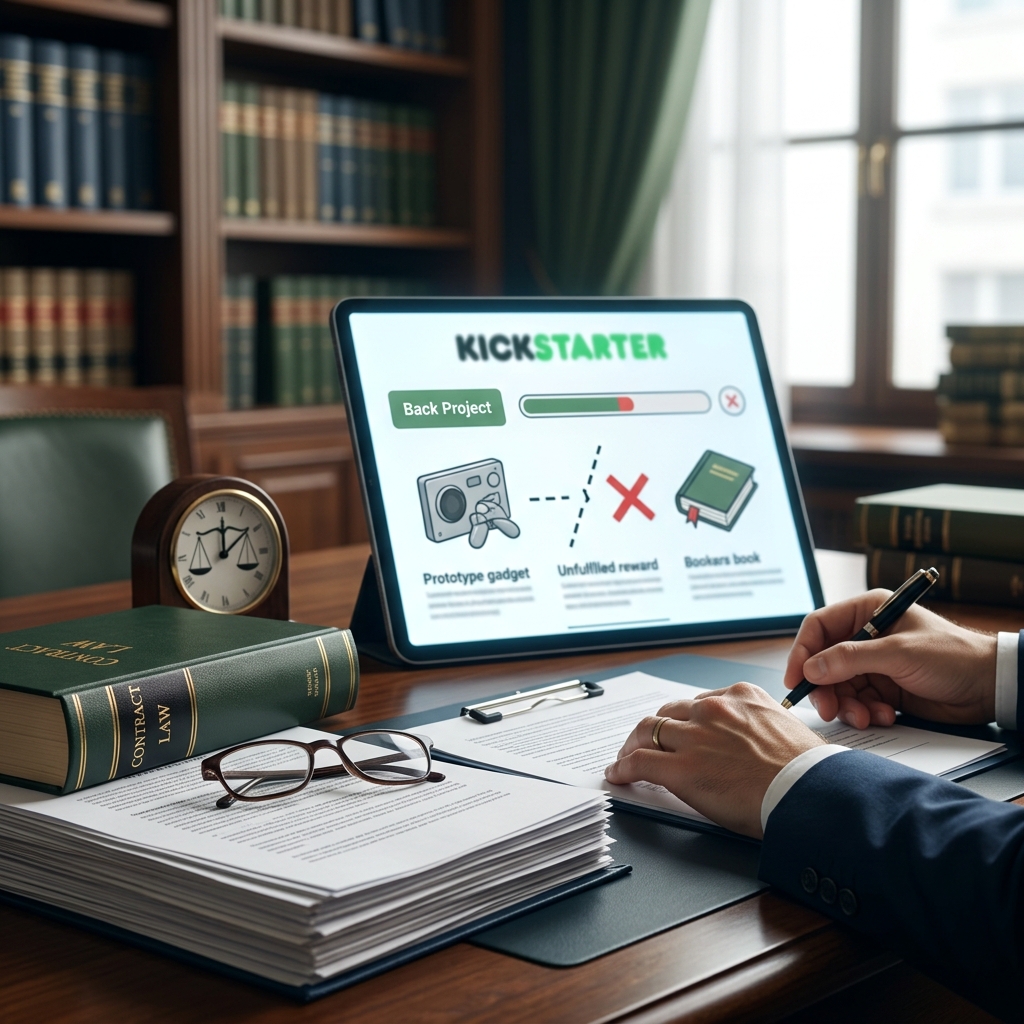
Crowdfunding platforms like Kickstarter make it easy to support creative projects, products, and ideas. But when a successfully funded campaign never delivers the promised rewards, backers are left wondering: do I have any legal recourse? This article explains how Kickstarter is structured, what legal obligations creators typically have, and the realistic options backers may have when projects fail to deliver.
How Kickstarter Works: Backers, Creators, and the Platform
To understand your rights, it helps to start with Kickstarter’s basic structure and the role each party plays. Kickstarter presents itself as a platform for creators to raise money from backers, but it is not a traditional retailer or marketplace. According to public descriptions of its terms and policies, Kickstarter positions itself as a host, not as the seller of the goods or rewards.
Key roles in a Kickstarter campaign
- Backers contribute money in exchange for promised rewards, such as a product, digital content, or special perks.
- Creators propose projects, set funding goals, and promise to deliver particular rewards if the campaign is successfully funded.
- Kickstarter provides the platform and payment infrastructure and takes a percentage of successfully funded campaigns, but does not hold the funds in long-term custody or manage fulfillment.
When a project reaches its funding goal, the funds flow to the project creator, subject to payment processing, fees, and the platform’s terms of use. Those terms generally state that creators are expected to either deliver the promised rewards or refund backers whose rewards cannot be fulfilled.
Kickstarter is not usually the defendant
Because Kickstarter is typically described as a neutral platform and not the seller of the rewards, its terms of use commonly limit its own liability for failed projects. The legal relationship is primarily between the backer and the creator. As a result, any claim for undelivered rewards usually targets the creator, not Kickstarter itself.
Is Backing a Kickstarter Project a Contract?
When you pledge money in exchange for a reward, you are typically entering into an agreement with the project creator. Many legal analyses treat this as a kind of contract, where the backer provides funds and the creator agrees to deliver specified rewards, subject to the project’s timeline and conditions.
Elements of a contract in the crowdfunding context
- Offer: The creator sets out the project description, funding goal, and rewards in the campaign page.
- Acceptance: Backers choose a reward tier and pledge funds based on the project description.
- Consideration: Money from backers and performance (delivery of rewards, development of the project) by the creator.
Kickstarter’s published policies and terms reinforce the idea that creators have legal obligations. For example, public materials have stated that creators are required “to fulfill all rewards” or refund any backer whose reward they cannot fulfill. This language can support arguments that a binding agreement exists between creator and backer.
Limitations and uncertainties
Even if the pledge-reward relationship looks like a contract, practical enforcement can be challenging. Backers may need to prove:
- What exactly was promised in the campaign description and reward tiers.
- That the creator did not make a good-faith effort to complete the project.
- The value of their loss (often the amount pledged).
Furthermore, the creator may have spent the funds on legitimate project costs, leaving little or no remaining money to repay backers even if a court finds a breach. In many cases, the legal right to recover exists in theory, but recovery is limited by practical realities.
Kickstarter’s Terms of Use and Creator Obligations
Kickstarter publishes terms of use that creators must accept before launching a campaign. While the exact language changes over time, these terms typically include key obligations that may be legally significant.
Common obligations described in Kickstarter terms
- Deliver rewards: Creators must make a good-faith effort to finish the project and deliver rewards as described.
- Refund if unable to fulfill: If creators cannot deliver rewards, they are expected to refund backers whose rewards cannot be fulfilled.
- Transparency: Creators may be expected to update backers, explain setbacks, and account for how funds were used.
These platform terms are not just internal rules; they can serve as evidence of what both parties understood the relationship to be. Legal commentators note that such terms can form part of the contract between the creator and backers by spelling out obligations and expectations.
Kickstarter’s limited role in enforcement
While the terms of use require creators to fulfill rewards or issue refunds, enforcement is not usually handled directly by Kickstarter. Legal analyses emphasize that Kickstarter has stated it does not get involved in disputes over failed projects and does not issue refunds itself. Instead, platform policies encourage backers to work things out with creators or pursue legal avenues if necessary.
Potential Legal Theories Against Creators
If a creator takes funds and fails to deliver rewards, backers may consider different legal theories. The appropriate claim depends on the facts, the creator’s conduct, and the law of the relevant jurisdiction.
1. Breach of contract
Many backers frame their claim as breach of contract. The argument is that:
- The campaign promises rewards in exchange for pledges.
- The backer paid the pledged amount.
- The creator did not deliver the promised reward, or did not refund the pledge.
Courts assessing such a claim may examine the campaign description, reward tiers, and platform terms to determine what obligations the creator undertook. Contract-based claims often seek recovery of the pledge amount and possibly additional damages, if permitted under local law.
2. Misrepresentation or fraud
In more serious cases, where a creator appears to have intentionally deceived backers, there may be grounds to allege misrepresentation or fraud. For example:
- False statements about the project’s status, manufacturing, or distribution.
- Promises made with no realistic plan to fulfill them.
- Use of funds for personal expenses unrelated to the project.
Legal commentary notes that when conduct rises to the level of fraud, law enforcement or regulators such as the Federal Trade Commission (FTC) or a state attorney general may be willing to investigate. Fraud claims generally require showing that the creator knowingly made false statements and that backers relied on those statements when pledging money.
3. Consumer protection statutes
State and federal consumer protection laws often prohibit unfair or deceptive practices. Crowdfunding campaigns that collect money but fail to deliver promised goods can be viewed as unfair or deceptive acts under certain circumstances.
For example, the Washington State Attorney General brought what it described as the first consumer protection lawsuit involving crowdfunding against the company behind the “Asylum Playing Cards” Kickstarter campaign. The complaint alleged that the company took consumer money and failed to deliver the promised cards and other rewards. The state sought restitution, civil penalties under its Consumer Protection Act, and attorneys’ fees. This enforcement action illustrates that regulators can treat failed campaigns as consumer protection issues.
Jurisdiction, Venue, and Practical Barriers
Even when a backer appears to have a solid claim, practical hurdles can make lawsuits difficult. Many creators are individuals or small businesses with limited assets. Backers may be scattered across multiple states or countries, and the pledged amounts may be relatively small.
Where can a backer sue?
In most situations, a backer must bring any civil claim in a court that has personal jurisdiction over the creator. Legal analysis of Kickstarter disputes points out that this usually means suing in the creator’s home state or country. Platform provisions about choice of law or venue often apply only to disputes with Kickstarter itself, not with individual creators.
| Issue | Typical rule | Implication for backers |
|---|---|---|
| Personal jurisdiction | Court must have authority over the defendant (creator). | Often requires suing where the creator lives or does business. |
| Venue | Case is filed in a proper geographic location based on law and facts. | Backers may need to litigate far from their own location. |
| Choice-of-law clauses | May govern disputes with Kickstarter, not necessarily with creators. | Local law where the creator resides may control contract and consumer claims. |
Statutes of limitations
Claims must be brought within the statute of limitations, the legal deadline for filing suit. Legal commentary notes that, in many U.S. jurisdictions, contract claims may have limitations periods of several years—often around six years from the date of the breach, though exact periods vary by state and type of contract. Missing these deadlines can bar recovery, even if the underlying claim is valid.
Collectability and costs
Even if a backer wins in court, collecting the judgment may be difficult. Many failed projects have already spent the pledged funds on development, manufacturing attempts, or other costs. Legal analyses of Kickstarter failures emphasize that lack of remaining assets often limits practical recourse for backers. Litigation itself can be costly, and the amount at stake for individual backers may be relatively small compared to attorney’s fees and court costs.
Regulators and Enforcement Actions: Lessons from Washington State
Individual backers are not the only parties who can take action. State attorneys general and federal agencies sometimes investigate crowdfunding campaigns, especially where they appear to involve widespread harm or deceptive practices.
Washington’s case against a failed Kickstarter project
In 2014, the Washington State Attorney General filed what it described as the first consumer protection lawsuit in the nation involving a crowdfunding campaign. The case targeted the “Asylum Playing Cards” Kickstarter project, alleging that the company and its principal took consumer money and failed to deliver the promised rewards. The complaint sought:
- Restitution for affected consumers.
- Civil penalties of up to $2,000 per violation under Washington’s Consumer Protection Act.
- The state’s costs and attorneys’ fees.
Media coverage noted that the enforcement action resulted in penalties and restitution for Washington-based backers. This case illustrates that state regulators can bring actions on behalf of consumers, potentially achieving relief where individual lawsuits might be impractical.
Role of the FTC and other authorities
In egregious cases, regulators such as the FTC or state attorneys general may view a failed campaign as a deceptive trade practice. Legal commentary highlights that contacting law enforcement or regulators may be the most meaningful option when conduct appears fraudulent or widespread. While not every failed project rises to this level, enforcement actions send a clear signal that creators cannot simply take money without serious efforts to deliver.
Practical Steps for Backers When a Project Fails
If you are a backer and your project appears to be stalled or abandoned, there are practical steps you can consider before deciding whether to pursue formal legal action.
Document the project’s history
- Save the campaign page, including reward descriptions and timelines.
- Download or screenshot updates, comments, and messages from the creator.
- Keep records of your pledge amount, payment confirmation, and any direct communications.
This documentation can be important if you later consult an attorney or file a complaint with regulators.
Communicate with the creator
- Send polite but clear messages asking for status updates and realistic timelines.
- Request a refund if you no longer wish to wait and the promised delivery date has passed.
- Consider whether the creator appears to be acting in good faith, even if facing genuine obstacles.
Many projects experience delays; not every delay is a breach. The key issue is whether the creator is making honest efforts and communicating transparently.
Explore collective action
- Coordinate with other backers to share information and discuss options.
- Consider whether a group demand letter or joint consultation with an attorney is feasible.
- For large campaigns, explore whether a class action might be appropriate under applicable law.
Group action can sometimes increase leverage and reduce individual costs, though it also introduces complexity and the need for legal guidance.
Consult a consumer lawyer
For substantial pledges or particularly troubling conduct, consulting a lawyer who focuses on consumer law or civil litigation can help clarify your options. An attorney can:
- Review the campaign materials and platform terms relative to your situation.
- Explain relevant contract and consumer protection laws in the creator’s jurisdiction.
- Assess the likelihood of recovery versus litigation costs.
Legal advice is especially important if you believe the creator’s conduct may involve fraud or deceptive practices.
Risk Management for Future Backers
Because legal remedies for failed campaigns are uncertain and sometimes difficult to enforce, preventive steps are critical. Backers can reduce the risk of disappointment by carefully evaluating campaigns before pledging.
Due diligence before pledging
- Research the creator: Look for prior projects, business history, and reputation.
- Assess feasibility: Consider whether timelines, budgets, and manufacturing plans appear realistic.
- Review terms and conditions: Read the platform’s terms so you understand your rights and the creator’s obligations.
- Consider the risk profile: Treat crowdfunding more like a high-risk investment than a guaranteed purchase.
Legal analyses emphasize that Kickstarter is not a traditional store and that creators may have limited ability to refund if the project fails. Backers should pledge only what they can afford to lose, especially for ambitious or unproven projects.
Recognize the difference between donation and purchase
In many jurisdictions, donation-based crowdfunding (such as typical Kickstarter campaigns) differs legally from investment or equity crowdfunding. Legal commentary notes that laws like the U.S. JOBS Act primarily address investment-based crowdfunding where backers receive equity, not typical Kickstarter-style campaigns. Understanding that your pledge is more like support for an idea than a guaranteed purchase can help set realistic expectations.
Frequently Asked Questions
Can I sue Kickstarter itself if a project fails?
Generally, backers do not have strong claims against Kickstarter when a creator fails to deliver. The platform’s terms of use typically limit its liability and emphasize that the agreement is primarily between backers and creators. Legal claims usually target the creator, not the platform.
Is a delayed project automatically a breach of contract?
Not necessarily. Many projects face legitimate delays. Whether a delay is a breach depends on the campaign’s promises, the length of the delay, and whether the creator is acting in good faith and communicating transparently. Courts may consider the totality of circumstances rather than strict deadlines alone.
What if the creator spent the funds but the project failed?
Creators often spend pledged funds on development, prototyping, and manufacturing. If the project fails despite genuine efforts, there may be little money left to refund. Legal commentators note that these practical limits can make recovery difficult, even if there is a theoretical right to sue.
Can regulators help me if I am a backer?
In serious cases, yes. State attorneys general and federal agencies such as the FTC sometimes investigate crowdfunding campaigns that appear deceptive or involve widespread consumer harm. The Washington “Asylum Playing Cards” case shows that regulators can seek restitution and penalties for failed projects that violate consumer protection laws.
What should I do if I suspect fraud?
If you believe a creator has intentionally misled backers or misused funds, you can document the conduct, notify the platform, and consider submitting complaints to regulators such as your state attorney general or the FTC. Legal commentary indicates that law enforcement may be the most effective avenue in egregious cases of fraud.
References
- The Failed Kickstarter – Legal Ramifications — Nerdly Pleasures. 2025-02-01. http://nerdlypleasures.blogspot.com/2025/02/the-failed-kickstarter-legal.html
- Kickstarter Legal Guide — NW Corporate Law. 2013-06-01. https://www.nwcorporatelaw.com/kickstarter-legal-guide/
- Right on the Kickstarter FAQ page – “Is a creator legally obligated to …” — Hacker News discussion quoting Kickstarter FAQ. 2014-05-31. https://news.ycombinator.com/item?id=7687955
- Attorney General files lawsuit against company behind Asylum Playing Cards — Washington State Office of the Attorney General. 2014-04-30. https://www.atg.wa.gov/news/news-releases/attorney-general-files-lawsuit-against-company-behind-asylum-playing-cards
- Washington State Sued a Failed Kickstarter Project and Won — Seattle Met. 2015-10-19. https://www.seattlemet.com/news-and-city-life/2015/10/washington-state-sued-a-failed-kickstarter-project-and-won
Similar Articles








Read full bio of medha deb


